

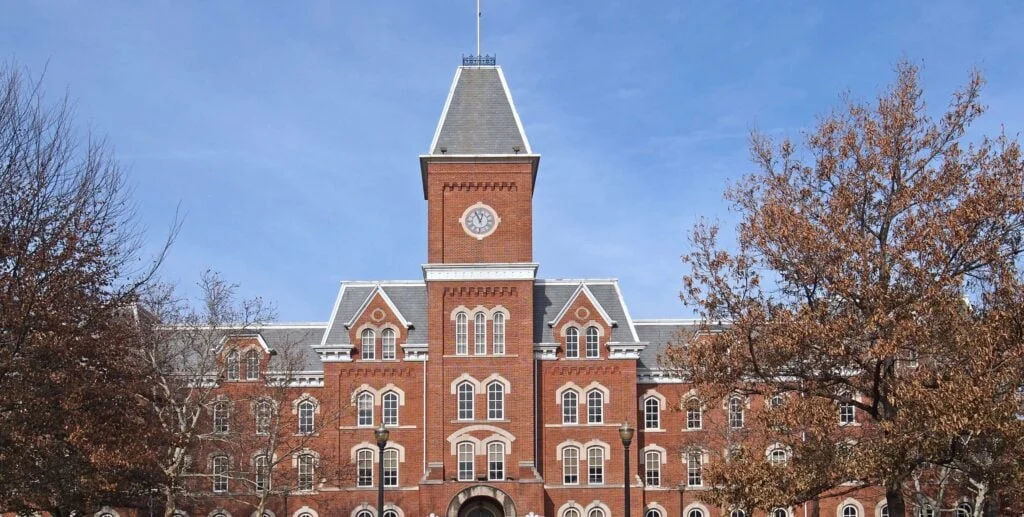
The traditional landscape of American real estate investment is undergoing a significant transformation as capital migrates from overvalued coastal metros toward the stable, recession-resistant economies of inland college towns. Recent data indicates that while major metropolitan areas grapple with the dual pressures of high mortgage rates and stagnant price growth, secondary and tertiary markets anchored by large public and private universities are experiencing a surge in demand and valuation. This shift is not merely a byproduct of general housing shortages but is driven by a unique confluence of high student enrollment, corporate investment in technology, and a regulatory environment that is increasingly favoring small-scale landlords over institutional giants.
The Emerging Market Dynamic
According to a comprehensive analysis by Redfin, several inland college towns are currently outperforming national averages in both price appreciation and the speed of sales. Markets such as Morgantown, West Virginia; Syracuse, New York; and Tuscaloosa, Alabama, have all recorded double-digit year-over-year increases in home prices. This trend is particularly notable because it occurs at a time when many of the nation’s most expensive college towns—often located on the coasts—are seeing prices soften as buyers reach the limits of affordability.
Yingqi Xu, a senior economist at Redfin, noted that the most successful college towns are those that offer a rare combination of entry-level affordability and a reliable foundation of demand. "Many of the college towns with home prices rising the fastest are also among the most affordable places to buy a home right now," Xu stated. This dynamic attracts a diverse pool of buyers, ranging from investors seeking high-yield rentals to families priced out of larger metropolitan centers.
In State College, Pennsylvania, home to Pennsylvania State University, the market has reached a level of intensity that rivals the most competitive suburbs in the country. Homes in the area went under contract in a median of just five days during the period ending May 2026, significantly faster than the national average of 49 days. This velocity, paired with a 10.6% year-over-year price gain, underscores a fundamental supply-demand imbalance that shows no signs of abating.
A Chronology of Post-Pandemic Enrollment Recovery
The current heat in the college town real estate sector can be traced back to the post-pandemic recovery of higher education institutions. Following a period of uncertainty and remote learning, campus life has seen a robust resurgence. Data from the real estate consulting firm Capright indicates that total U.S. college enrollment reached 19.4 million students in the fall of 2025. This represents a 1% year-over-year increase and the highest enrollment level recorded since 2018.
This steady climb in enrollment has a direct and immediate impact on housing demand. By March 2026, Capright reported that 52.3% of student beds across tracked campuses were already pre-leased for the 2026-2027 academic year. This is a substantial jump from the 45.6% pre-leasing rate seen at the same time the previous year. For properties located more than a mile from campus—the primary domain of single-family residential investors—RealPage data showed that nearly 40% of beds were pre-leased as early as January.
The geographical concentration of this growth is particularly visible in the South and Midwest. Jonathan Rivera, a director at Capright, highlighted that population shifts toward these regions have bolstered university populations, creating a self-reinforcing cycle of growth. As more students move to these areas, the local housing stock remains constrained, driving up both rents and property values.
The Tech-Education Nexus: Syracuse as a Case Study
While student populations provide a baseline of demand, the "hottest" markets are those where university activities intersect with massive private-sector investment. Syracuse, New York, serves as a primary example of this phenomenon. Beyond the presence of Syracuse University, the region is poised for a multi-decade economic transformation fueled by the semiconductor industry.
Micron Technology has committed to investing up to $100 billion in the Syracuse area through the mid-2040s to build a massive semiconductor manufacturing complex. This investment, largely driven by the global demand for AI-capable hardware, is expected to create tens of thousands of jobs. For real estate investors, this means the demand for housing will extend far beyond the student body to include highly paid engineers, researchers, and support staff. Syracuse has already seen a 12.5% growth in home sales, a figure that many analysts believe is just the beginning of a long-term upward trajectory.
Similar trends are appearing in other regions where tech giants are partnering with academic institutions. Carnegie Mellon University in Pittsburgh, for instance, has recently deepened its collaborations with Alphabet (Google) and Nvidia to lead research in robotics and artificial intelligence. These partnerships ensure that the local economy remains anchored by high-growth industries, making the surrounding residential real estate a safer bet for long-term appreciation.
Regulatory Shifts and the Opportunity for Small Investors
A critical component of the renewed interest in college towns is the shifting regulatory landscape. New government policies, such as the proposed measures to bar corporate investors who own more than 350 single-family homes from acquiring additional properties, are designed to curb the influence of Wall Street in the residential market.
While critics argue these policies may not significantly impact the national housing shortage, they create a distinct opening in student-heavy markets. Large institutional investors have historically targeted high-density student housing, but the single-family "rent-by-the-room" model has remained largely the province of "mom-and-pop" landlords. With institutional competition potentially constrained by new regulations, small investors have more room to maneuver in acquiring properties that can be converted into high-yield student rentals.
The Financial Mechanics: Yields and Cap Rates
From a financial perspective, the appeal of inland college towns lies in their superior yield compared to traditional multifamily investments. Capright estimates that national student housing cap rates currently fluctuate between 5.5% and 6.5%. This is approximately 25 to 50 basis points higher than conventional multifamily properties in the same regions.
The "rent-by-the-room" strategy is the primary driver of these enhanced yields. By leasing individual bedrooms and utilizing parental guarantees, landlords can often generate significantly higher gross income than they would from a single-family lease to a traditional household. However, this model requires a more intensive management approach. Successful investors in this space often employ specialized leases that hold tenants individually accountable while maintaining the right to evict or seek payment from guarantors if terms are breached.
Despite the high yields, experts warn against conflating high demand with a guaranteed return. In markets like Boston or the San Francisco Bay Area, the presence of elite universities does not always translate into good cash flow for new investors. The entry price in these markets is so high that even with premium rents, the debt service on a leveraged property can result in negative cash flow. This is why the "inland" aspect of the current trend is so vital; the lower cost of entry in states like Ohio, Michigan, and West Virginia allows the math to work in favor of the investor.
Addressing the Student Experience and Mental Health
The evolution of the college town rental market is also being shaped by a growing focus on the student experience. The 2026 State of the Student Housing Industry Report by StarRez highlighted that housing-related stress and tenant conflicts are becoming major concerns for university administrations. High-density, institutional dormitories often struggle to provide the "home away from home" environment that modern students and their parents’ desire.
Jason Day, CEO of StarRez, emphasized that the path forward for the industry is not just about increasing capacity but about improving the quality of the residential experience. This creates a unique niche for private landlords who can offer well-maintained, curated living spaces. Students are increasingly willing to pay a premium for properties that offer privacy, modern amenities, and a sense of community without the institutional friction of large-scale dorms.
Landlords who treat their properties with the attention to detail found in high-end short-term rentals—providing quality furnishings and proactive maintenance—are finding that they can attract more responsible student groups. These tenants are often more likely to renew their leases for multiple years, reducing turnover costs and vacancy rates.
Broader Implications and Future Outlook
The rise of inland college towns as real estate hotspots has broader implications for regional development. As these towns grow, they often attract "tertiary" businesses, including medical centers, retail hubs, and professional services, which further stabilizes the local economy. This diversification makes these markets less vulnerable to the boom-and-bust cycles seen in cities reliant on a single industry.
However, the "studentification" of these towns also presents challenges. Local governments are increasingly tasked with balancing the needs of permanent residents with the demands of an expanding student population. Zoning changes, "u-plus-one" occupancy limits, and noise ordinances are common tools used to manage this tension, and investors must remain vigilant about local legislative changes that could impact their business models.
Looking ahead to the remainder of the decade, the stability of higher education as an economic anchor remains a compelling thesis for real estate investment. While the "demographic cliff"—a projected decline in the college-age population—is a concern for some smaller private colleges, large state universities and tech-aligned institutions are expected to remain in high demand. For the savvy investor, the inland college town represents a rare intersection of affordability, consistent demand, and the potential for significant capital appreciation.
