

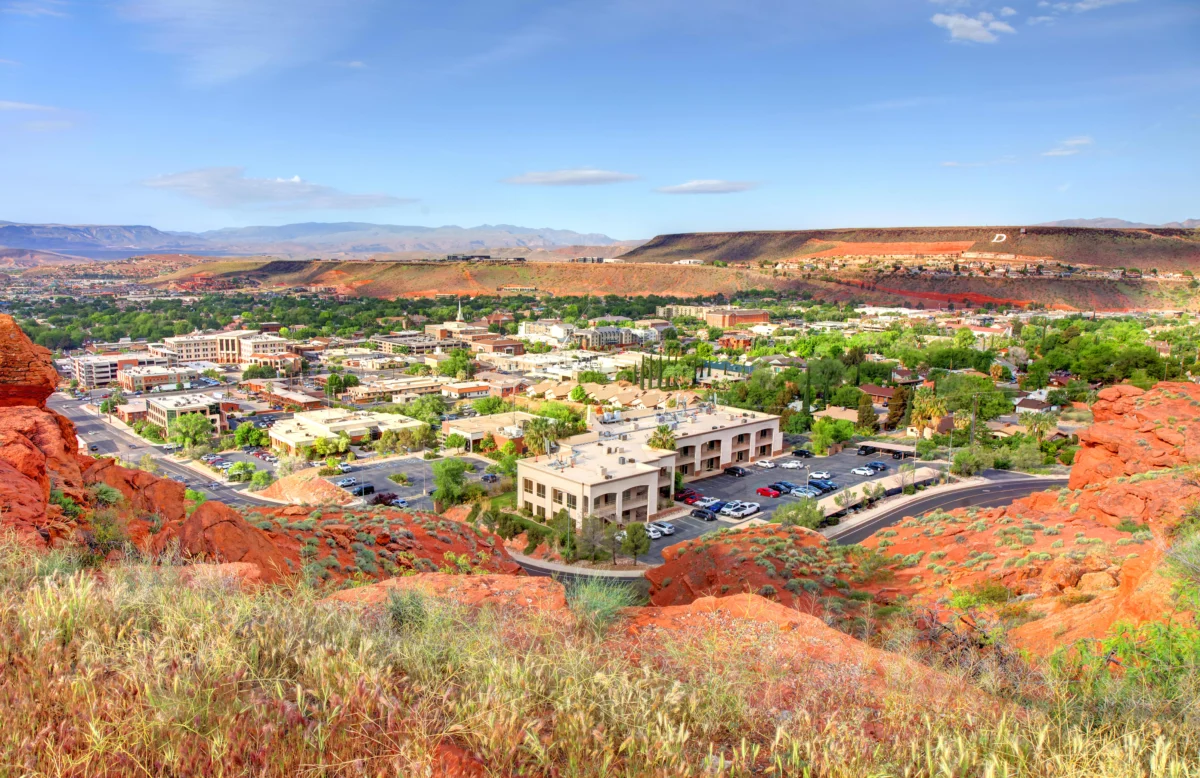
The National Association of Realtors (NAR) has unveiled a groundbreaking new Commercial Real Estate Market Potential Index, designed to serve as a strategic compass for investors navigating the complex and rapidly evolving landscape of the American property market. This innovative index offers a forward-looking perspective, pinpointing regions poised for significant future demand across key commercial sectors. In its inaugural findings, the index highlights South Carolina as the state with the highest future potential demand for commercial real estate, while St. George, Utah, emerges as the strongest metropolitan market nationwide.
This new analytical tool arrives at a critical juncture for the commercial real estate sector. The past few years have witnessed unprecedented shifts, driven by the lingering effects of the pandemic, the widespread adoption of remote work, persistent inflation, and a volatile interest rate environment. These factors have fundamentally altered demand patterns, challenging traditional investment strategies and creating both uncertainty and new opportunities. The NAR index aims to cut through this complexity by offering a data-driven "crystal ball" that indicates where economic momentum and real estate demand are genuinely building.
Unpacking the Methodology: A Data-Driven Approach to Market Forecasting
The NAR Commercial Real Estate Market Potential Index is a comprehensive analytical framework that scrutinizes over 300 metropolitan markets across the United States. Its methodology is robust, incorporating more than 30 distinct economic factors to gauge the health and future trajectory of local economies. Crucially, the index provides separate measures for the office, industrial, retail, and multifamily sectors, recognizing the unique drivers and challenges inherent to each.
To ensure the highest degree of reliability and objectivity, the index relies exclusively on government data sources, primarily from the Bureau of Labor Statistics and the Census Bureau. These agencies provide critical insights into population dynamics, migration patterns, and employment trends, which are foundational to understanding real estate demand. By leveraging these authoritative datasets, the NAR index aims to offer an unbiased and factual assessment of market potential, distinguishing it from more speculative analyses.
Nadia Evangelou, principal economist and director of real estate research at NAR, emphasized the practical utility of the index. "It doesn’t say, ‘OK, go there and just buy property,’ but it says… where the data shows that the momentum is building, the demand is building," Evangelou stated. This distinction underscores the index’s role as a guide for strategic allocation rather than a definitive directive for specific property acquisitions. It is designed to inform investors about the underlying economic conditions that will likely drive future property performance, empowering them to conduct more targeted due diligence.
The sector-specific indicators are meticulously chosen to reflect the most impactful drivers of demand in today’s economy:
- Office Sector: The index primarily examines growth in professional and business services employment. This metric is critical in the post-pandemic era, as it directly correlates with the need for office space. While remote work has altered traditional office utilization, robust growth in these service industries still indicates a healthy white-collar workforce, often requiring collaborative spaces or specialized facilities, even if the footprint per employee has shifted.
- Industrial Sector: For industrial real estate, the focus is on manufacturing, transportation, and warehousing employment growth. The boom in e-commerce, the strategic push for supply chain reshoring, and the ongoing need for efficient logistics infrastructure have made these employment figures key indicators of industrial demand. Regions with expanding manufacturing bases or those serving as vital distribution hubs are likely to see continued strength in this sector.
- Retail Sector: The index measures growth in retail trade as well as leisure and hospitality employment. These figures directly reflect consumer spending habits and the vitality of local economies. As retail continues its evolution, with a greater emphasis on experiential offerings and hybrid online-offline models, growth in leisure and hospitality also becomes a significant bellwether for the overall health of a region’s consumer-facing economy.
- Multifamily Sector: This sector incorporates population growth and net migration, encompassing both domestic and international inflows. The persistent housing affordability crisis and demographic shifts, such as millennials forming new households and Gen Z entering the workforce, make population dynamics paramount. Markets experiencing robust population influx face increased demand for rental housing, driving opportunities for multifamily developers and investors.
The Shifting Landscape: From Coastal Hubs to Emerging Markets
The NAR index provides a stark illustration of the profound shifts occurring in the American commercial real estate landscape, particularly when comparing current conditions to the peak of the pandemic migration boom in 2022. Historically, major coastal hubs like New York and San Francisco, along with rapidly growing tech centers, commanded the lion’s share of investment and development. However, the pandemic accelerated a demographic and economic reallocation that continues to reshape market potential.
According to the index, Raleigh, North Carolina, stands out as the only major U.S. market that has strengthened its position since 2022. This resilience can be attributed to its strong technology and research sectors, a well-educated workforce, and a relatively high quality of life at a more accessible cost compared to traditional tech hubs. Raleigh’s consistent growth underscores the enduring appeal of dynamic, diverse economies that can adapt to changing circumstances.
Conversely, formerly "superhot" markets such as Austin, Texas; Miami, Florida; and Naples, Florida, have all experienced a marked decline in their potential demand rankings since 2022. These cities saw explosive growth during the pandemic, fueled by remote workers seeking lower costs of living, warmer climates, and more business-friendly environments. However, as interest rates rose, inflation tightened household budgets, and some companies began to encourage a return to the office, the pace of growth in these markets has moderated. The initial surge, while transformative, appears to have settled into a more sustainable, albeit less feverish, trajectory.
This broader trend highlights a significant reallocation of capital and population away from the most expensive and congested urban centers towards areas offering a better balance of affordability, quality of life, and economic opportunity. The index thus serves as a confirmation of the "flight to quality" and "flight to affordability" narratives that have dominated real estate discussions over the past few years, but with a new layer of data-driven specificity.
Spotlight on Top Performers: South Carolina and St. George, Utah
The NAR index’s findings unequivocally point to South Carolina as the state with the highest future potential demand for commercial real estate. This ranking reflects a confluence of favorable economic conditions and demographic trends. South Carolina has long been a magnet for manufacturing, particularly in the automotive and aerospace industries, with major players like BMW and Boeing establishing significant presences. Its strategic location on the Atlantic coast, with bustling ports like Charleston, makes it a critical hub for logistics and international trade. Furthermore, the state benefits from a robust tourism sector, attractive coastal communities, and a steady influx of retirees and new residents seeking a lower cost of living and a warmer climate. This broad-based economic vitality creates diverse demand across all commercial sectors, from industrial and retail to office and multifamily.
At the metropolitan level, St. George, Utah, emerges as the undisputed leader in the index, securing the No. 1 position nationwide. This southwestern Utah city, nestled near the Arizona border, demonstrates exceptional strength across multiple indicators. According to the index, St. George boasts the strongest office employment growth in the nation. This remarkable growth is often driven by an expanding professional services sector, healthcare industry advancements, and emerging tech companies attracted by the region’s quality of life and business-friendly environment.
Beyond office demand, St. George exhibits very strong population growth and in-migration. This influx of new residents is fueled by a compelling combination of factors: stunning natural beauty (proximity to Zion National Park), a favorable climate, a strong sense of community, and a comparatively lower cost of living than major West Coast cities. These demographic trends directly translate into heightened demand for multifamily housing and retail services to support the expanding population. Moreover, St. George’s industrial demand is notably above average, likely benefiting from its strategic location along major transportation corridors and its role as a regional hub for goods and services in southwestern Utah and parts of Arizona and Nevada. As Nadia Evangelou noted, "St. George, for example, is the No. 1, because one industry happened to have a good year, so there is a broader momentum over there." This indicates a diversified and robust economic foundation, rather than reliance on a single, volatile sector.
The Rise of Small and Mid-Sized Markets: Untapped Potential
A key takeaway from the NAR index is the profound potential residing in small and mid-sized metropolitan markets. While large, traditional gateway cities continue to grapple with high costs, legacy infrastructure, and shifting work patterns, these emerging markets offer compelling opportunities for savvy investors. Evangelou explicitly highlighted several such cities as prime examples of this trend.
- Fayetteville, Arkansas: This city is experiencing broad-based growth, underpinned by the presence of the University of Arkansas, which acts as a powerful economic engine, fostering innovation and attracting talent. Fayetteville’s status as a regional hub for commerce and culture in Northwest Arkansas further fuels demand across sectors.
- Huntsville, Alabama: Known as "Rocket City," Huntsville boasts one of the strongest multifamily scores in the nation. This is largely due to its thriving aerospace and defense industry, anchored by NASA’s Marshall Space Flight Center and the U.S. Army’s Redstone Arsenal. These institutions attract a highly skilled workforce, driving consistent demand for quality housing.
- Spartanburg, South Carolina: Complementing South Carolina’s statewide potential, Spartanburg stands out for its industrial strength. Its robust manufacturing base, strategic location for logistics, and access to port facilities make it an attractive market for industrial development and investment.
These examples underscore a broader narrative: investors are increasingly looking beyond the traditional, often overheated, markets. Smaller and mid-sized cities frequently offer lower entry costs, potentially higher cap rates, and less competition, while still possessing strong local economies, growing populations, and improving infrastructure. This segment of the market represents a fertile ground for those willing to look beyond the conventional wisdom.
Sector-Specific Strengths Across the Nation
The granularity of the NAR index also allows for insights into specific sectoral strengths, revealing unexpected hotbeds of demand. For instance, Salem, Oregon, and Fairbanks, Alaska, are ranked highest for industrial demand. Salem’s strength likely stems from its role as a state capital and an agricultural processing hub, coupled with its proximity to major transportation routes in the Pacific Northwest. Fairbanks, while geographically remote, serves as a critical logistical and service hub for Alaska’s vast interior, supporting resource extraction industries, military installations, and regional distribution networks. These examples highlight that industrial demand is not solely concentrated in traditional manufacturing belts but also emerges in strategic locations crucial for regional supply chains and specialized economic activities.
Overall, the index reinforces the observation that large coastal markets, such as New York and San Francisco, are generally weaker compared to the fast-growing Sunbelt and smaller markets. This divergence is a testament to the ongoing rebalancing of economic activity and population distribution across the country, driven by factors ranging from technological advancements to evolving lifestyle preferences.
Implications for Investors and Policymakers
The launch of the NAR Commercial Real Estate Market Potential Index carries significant implications for a diverse range of stakeholders. For investors, it provides a crucial, data-driven framework for strategic capital deployment in an increasingly uncertain market. It encourages a diversification strategy that looks beyond saturated, expensive markets towards regions exhibiting robust economic fundamentals and strong growth potential. This shift necessitates thorough due diligence, but the index offers a powerful starting point, helping investors to identify promising geographies and sectors for long-term value creation.
For state and local policymakers, the index serves as an invaluable tool for economic development and urban planning. Cities and states identified as having high potential demand can leverage these findings to attract further business investment, plan for necessary infrastructure improvements, and address growing housing needs. Understanding the specific drivers of demand in their regions—whether it’s manufacturing, tech, or tourism—allows policymakers to craft targeted strategies to foster sustainable growth and enhance quality of life for their residents.
Looking ahead, the NAR index will undoubtedly become a living document, continually reflecting and informing the dynamic commercial real estate landscape. It underscores the enduring appeal of affordability, quality of life, and robust local economies in shaping where people and businesses choose to locate. While no predictive tool is infallible, especially in a volatile global economy, this index provides a significant step forward in offering clarity and actionable insights. It signals a clear trend: the future of commercial real estate investment is increasingly decentralized, gravitating towards markets that demonstrate genuine, data-backed momentum beyond the traditional urban centers. Investors who embrace this shift and leverage such sophisticated analytical tools will be best positioned to capitalize on the opportunities presented by this evolving economic geography.
