

In a significant move for the European energy and automotive sectors, Volkswagen Group subsidiary Elli has officially announced the market readiness of its Vehicle-to-Grid (V2G) charging ecosystem. Unveiled at the Power2Drive trade fair in Munich, the initiative marks a pivotal transition for the Volkswagen Group, moving beyond vehicle manufacturing into the realm of integrated energy management. Developed in collaboration with Volkswagen, Volkswagen Commercial Vehicles, and CUPRA, the new product package aims to integrate electric vehicle (EV) batteries into the broader electricity grid, effectively turning parked cars into decentralized energy storage units. The initial rollout is targeted at the German market, with a comprehensive suite of hardware, software, and energy tariffs designed to make bidirectional charging a seamless experience for consumers.
The core of this offering is a sophisticated product bundle consisting of the Elli BiDi Charger, the Volkswagen Naturstrom V2G Flow tariff, and the Elli BiDi App. This ecosystem allows EV owners to not only draw power from the grid but also feed stored energy back into it during periods of high demand. By participating in this energy exchange, customers can significantly offset their mobility costs. According to Volkswagen, participants in Germany may be eligible for a "plug-in bonus" of up to €720 in the first year of their contract, provided they meet specific usage parameters. This financial incentive is intended to accelerate the adoption of V2G technology and demonstrate the economic viability of treating EVs as active components of the energy infrastructure.
The Technological Foundation of Bidirectional Charging
Bidirectional charging represents a paradigm shift in how vehicles interact with the built environment. While traditional "V1G" charging involves simply managing the timing and speed of energy intake, Vehicle-to-Grid (V2G) technology requires advanced power electronics and communication protocols that allow energy to flow in two directions. The Volkswagen Group is leveraging its Modular Electric Drive Matrix (MEB) platform to bring this technology to the mass market. Currently, approximately one million MEB-based vehicles are on European roads, with 360,000 in Germany alone. Many of these vehicles are technically equipped for bidirectional functionality, provided they are running the appropriate software versions.
To utilize the new V2G service, customers must own a compatible vehicle—specifically ID. models equipped with ID. Software 3.5 or higher and a battery capacity of at least 77 kWh, or future models featuring ID. Software 6. The Elli BiDi Charger acts as the critical hardware link, facilitating the DC (direct current) transfer of energy between the car and the grid. Unlike AC-based bidirectional systems, which rely on the vehicle’s onboard inverter, the DC-to-DC approach used by Elli offloads much of the conversion work to the wallbox, which can improve efficiency and reduce wear on vehicle components.
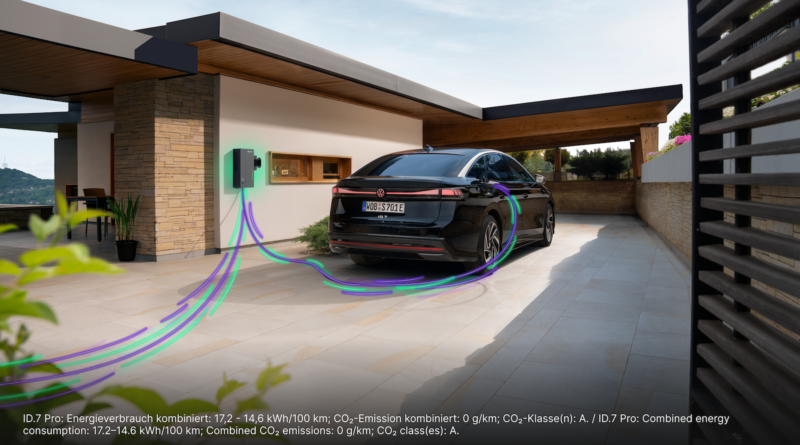
Thomas Schmall, Member of the Group Board of Management responsible for Technology at Volkswagen AG, emphasized that the distinction between internal combustion engine vehicles and electric cars will increasingly be defined by their role in the digital energy system. "The electric car will become part of a digital energy and mobility system: it can store electricity, charge in a controlled manner, feed energy back and thus also create economic added value while parked," Schmall stated. He noted that the standardized vehicle platforms and Elli’s energy expertise provide the necessary scale to move V2G from niche pilot projects to a volume-market reality.
Strategic Partnerships and the Virtual Power Plant Concept
The implementation of V2G at scale requires more than just hardware; it necessitates a sophisticated backend capable of communicating with energy markets in real-time. To achieve this, Elli has partnered with The Mobility House Energy, a technology service provider with extensive experience in integrating EVs into international energy markets. The Mobility House Energy provides its "FlexEngine" platform, which aggregates the battery capacities of thousands of individual vehicles.
By bundling these decentralized batteries, Elli can create a "Virtual Power Plant" (VPP). In the context of the energy transition, VPPs are essential for balancing the intermittency of renewable energy sources like wind and solar. When the sun is shining or the wind is blowing, the VPP can instruct connected vehicles to charge, soaking up excess green energy that might otherwise be wasted. Conversely, during peak demand hours or when renewable production drops, the VPP can draw small amounts of energy from thousands of vehicle batteries simultaneously, stabilizing the grid without requiring the activation of fossil-fuel-based "peaker" plants.
Giovanni Palazzo, CEO of Elli, highlighted the untapped potential of stationary EVs. "The energy transition needs storage, and much of it is already standing in our customers’ garages," Palazzo said. By connecting these batteries to the energy market, Elli is creating a connected ecosystem that balances individual customer benefits with systemic grid stability.
Economic Context and the European Energy Transition
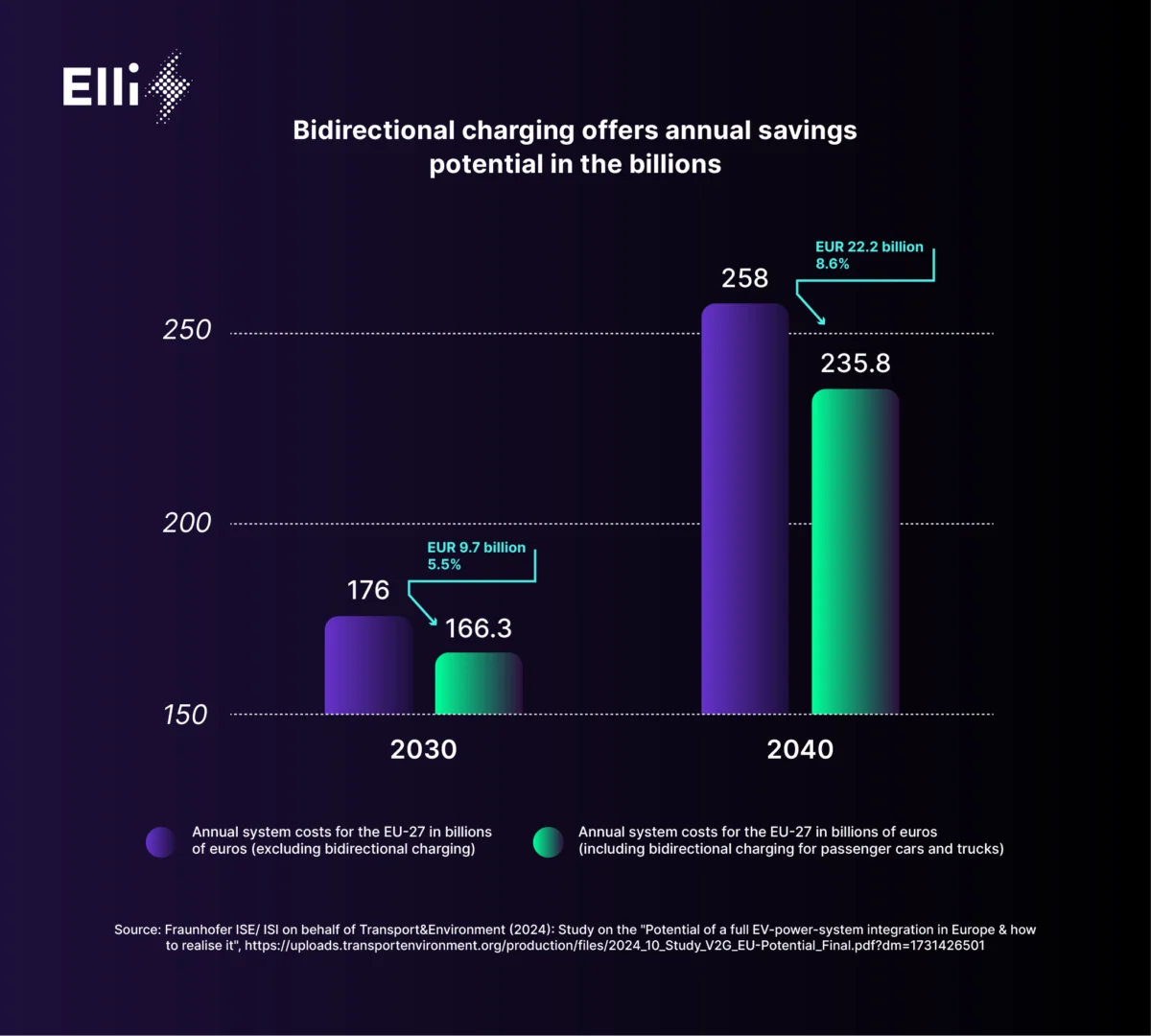
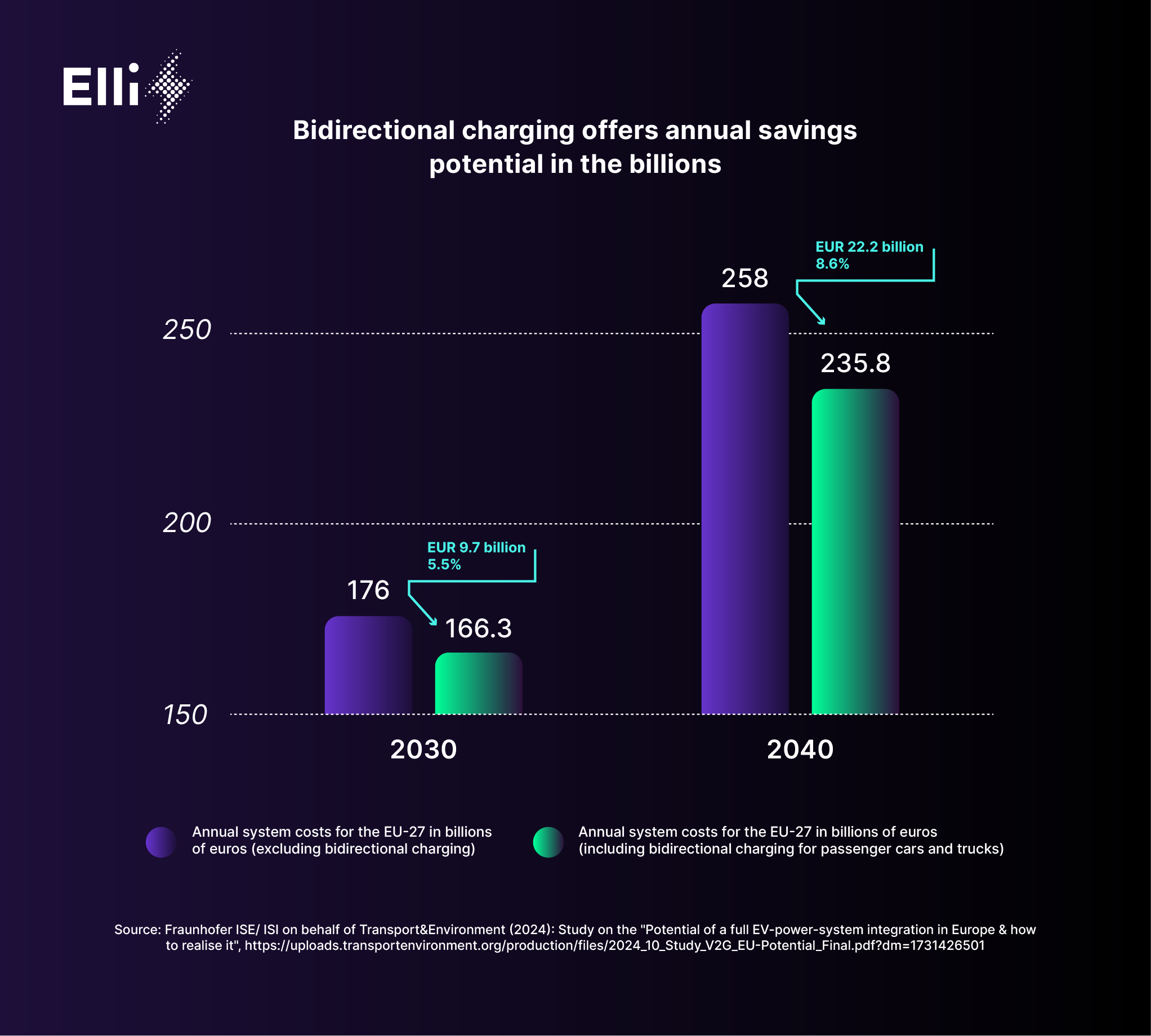
The launch of Elli’s V2G ecosystem comes at a critical time for the European energy landscape. As the continent shifts toward a carbon-neutral grid, the volatility of energy prices and the need for flexible storage have become primary concerns. Data from Fraunhofer ISI and Fraunhofer ISE, commissioned by Transport & Environment, suggests that bidirectional charging could reduce annual system costs in Europe by up to €22 billion by 2040. Cumulatively, the savings between 2030 and 2040 could reach €175 billion.
In Germany specifically, the challenge of "curtailment" remains a significant hurdle. In 2024 alone, approximately 9,374 GWh of renewable energy was curtailed—meaning it was generated but could not be used or stored because the grid was at capacity. This volume of wasted energy is enough to power roughly three million battery-electric vehicles for an entire year. V2G technology offers a direct solution to this inefficiency by providing the necessary "buffer" to store renewable energy at the source.
For the consumer, the Elli BiDi App simplifies the complexity of energy trading. Users can set a minimum state of charge (SoC) to ensure the vehicle always has enough energy for their daily commute, as well as a "ready-by" time. The system then manages the charging and discharging cycles in the background to maximize financial returns while respecting the user’s mobility needs. This "set-and-forget" approach is vital for consumer acceptance, as it removes the need for owners to manually track electricity prices or grid demand.
A Chronology of Development and Future Expansion
The announcement at Power2Drive is the culmination of several years of research and pilot testing by the Volkswagen Group. In 2022, Volkswagen began rolling out software updates to enable bidirectional charging on its ID. family of vehicles. This was followed by pilot projects in Sweden, where ID.4 and ID.5 models were integrated into a residential energy management system. These early tests were primarily focused on Vehicle-to-Home (V2H) applications—using the car to power a house—but they provided the technical foundation for the more complex V2G grid integration launched today.
Following the initial launch in Germany, Volkswagen and Elli plan to expand the offering to other major European markets, including France and the United Kingdom. However, this expansion is contingent on local regulatory frameworks and the readiness of national energy markets to accept decentralized flexibility. Germany has recently made strides in this area with new regulations regarding "smart meter gateways" and flexible grid fees, making it the ideal laboratory for Elli’s commercial rollout.
Interested customers in Germany can now register their interest on the Elli website. While the official ordering phase for the DC bidirectional charger and the V2G Flow tariff is expected to begin at the end of the year, the registration phase allows the company to gauge demand and prepare for the logistics of a nationwide rollout.

Analysis of Implications for the Automotive Industry
Volkswagen’s move into V2G signifies a broader trend where automotive OEMs (Original Equipment Manufacturers) are reinventing themselves as energy companies. As profit margins on hardware face pressure from global competition, recurring revenue streams from energy management and software services become increasingly attractive. By controlling the entire chain—the vehicle, the charger, the software, and the energy tariff—Volkswagen is positioning itself as an indispensable partner in the energy transition.
Furthermore, V2G could significantly improve the total cost of ownership (TCO) for electric vehicles. If an owner can earn several hundred euros a year simply by keeping their car plugged in while at home, the effective cost of a vehicle lease or loan is reduced. This could be a deciding factor for middle-income consumers who are currently on the fence about switching to electric mobility.
However, challenges remain. The cost of bidirectional DC chargers is currently higher than standard AC wallboxes, and widespread adoption will require continued standardization of communication protocols (such as ISO 15118-20). Additionally, there are ongoing discussions regarding battery degradation; while modern lithium-ion batteries are increasingly robust, the long-term impact of frequent micro-cycling for grid services is a point of scrutiny for both manufacturers and consumers. Volkswagen has addressed this by integrating protective algorithms into the V2G Flow system to ensure that the battery’s health is prioritized over grid services.
As the energy and transport sectors continue to converge, the success of Elli’s V2G ecosystem will likely serve as a blueprint for other manufacturers. The transformation of the automobile from a passive consumer of energy to an active participant in the grid is no longer a theoretical concept—it is becoming a market reality on the streets of Germany.
