

In a significant strategic pivot that could redefine the landscape of financial advisory services, Vanguard, the titan of low-cost investing, has agreed to acquire Altruist, a burgeoning fintech firm specializing in RIA (Registered Investment Advisor) custody and technology. This $4.6 billion cash transaction, announced recently, marks Vanguard’s most substantial acquisition to date and signals a determined push beyond its traditional strengths in mutual funds and ETFs into the complex and competitive world of wealth management. The move is seen by industry observers as a calculated effort to secure a more direct channel to financial advisors and their clients, potentially replicating the disruptive "Vanguard Effect" that Jack Bogle ignited decades ago.
The Genesis of The Vanguard Effect and Vanguard’s Evolution
The seeds of Vanguard’s current trajectory were sown in the mid-1970s when Jack Bogle, driven by a vision of democratizing investing, pioneered low-cost index funds at an asset manager owned by its investors. This innovative approach fostered an environment of reduced fees that fundamentally reshaped the investment industry. Vanguard’s subsequent growth has been nothing short of meteoric. The firm, which recently commemorated the 50th anniversary of its first index fund launch, evolved into a dominant force in mutual funds and later embraced the explosive growth of Exchange Traded Funds (ETFs). Today, Vanguard consistently ranks among the top U.S. ETF managers, often vying with BlackRock for the title of largest manager, overseeing an astounding $4.7 trillion in ETF assets alone. Across its entire product suite, including mutual funds and other investment vehicles, Vanguard manages a staggering $12 trillion in assets.
However, in recent years, Vanguard’s leadership has increasingly articulated a strategic ambition that extends beyond product management. CEO Salim Ramji, who assumed leadership approximately three years ago, has consistently highlighted the firm’s commitment to expanding access to financial advice. "Far more people could benefit from access to financial advice than the industry can serve today," Ramji has stated in numerous interviews and press releases, underscoring a perceived gap in the market and Vanguard’s potential to fill it.
The Altruist Acquisition: A Strategic Game-Changer
The acquisition of Altruist is the tangible manifestation of this strategic shift. Sources familiar with the deal indicate the substantial $4.6 billion cash outlay underscores the seriousness of Vanguard’s intentions. If the transaction receives regulatory approval and closes, Altruist will become Vanguard’s second-ever acquisition in its 50-year history, a telling statistic in itself. More importantly, it positions Vanguard directly against established legacy custodians like Charles Schwab and Fidelity Investments, as well as other prominent asset managers with RIA custody offerings such as SEI and Goldman Sachs.
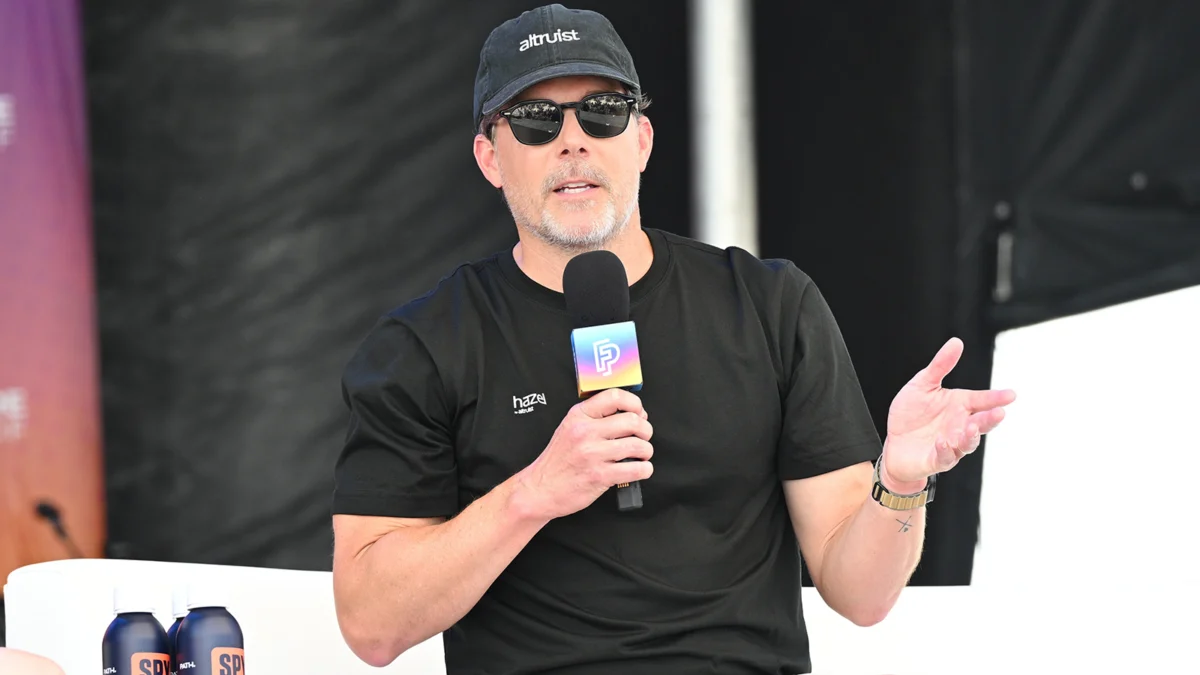
The acquisition was not entirely unexpected by industry analysts. Vanguard already held a minority stake in Altruist, and former CEO Bill McNabb had served on Altruist’s board. Furthermore, Altruist founder and CEO Jason Wenk had frequently expressed his admiration for Jack Bogle and the principles of The Vanguard Effect, creating a foundational alignment of philosophies. Wenk’s vision for Altruist has centered on leveraging technology to create a unified and cost-effective ecosystem for advisors, encompassing custody, client onboarding, portfolio management, and financial planning.
What did surprise some observers was the timing of the deal, occurring relatively soon after Vanguard had already made a concerted effort to penetrate the RIA channel through its Vanguard Financial Advisor Services offerings. These services include access to model portfolios, direct indexing capabilities, and valuable data insights into RIA practices.
H2: Navigating a Competitive Landscape
Vanguard’s deeper foray into serving RIAs is poised to encounter formidable competition. Established players like Schwab and Fidelity have spent decades building deep relationships and robust infrastructure within the advisor community. There is also the potential for skepticism from advisors who may view Vanguard, with its vast base of over 50 million investors and $12 trillion in assets, as a direct competitor, particularly given Vanguard’s own expanding suite of financial advice services marketed directly to consumers.
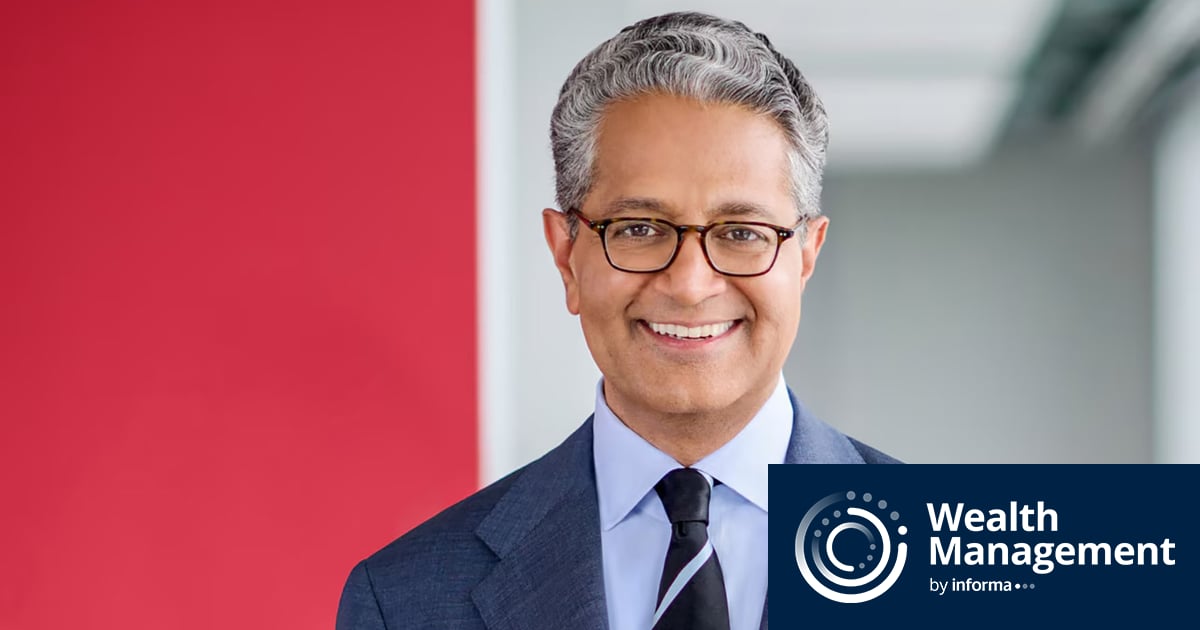
Shri Bhashyam, a veteran of private markets and co-founder of EquityZen, suggests that the custody play offers Vanguard immediate revenue diversification. "This custody play gives Vanguard new revenue streams for its relatively low-margin core fund business: namely, net interest revenue from custody assets, lending and platform revenue," Bhashyam explains. However, he also notes that custody itself is a low-margin business, and Vanguard’s ultimate objective is likely to be financial advice. Bhashyam posits that this acquisition is strategically focused on "the next generation of advisor," anticipating that the long-term upside lies in capturing new advisory relationships formed through this custodial offering. He points to Altruist’s technological prowess in "day-zero customer acquisition" as a key differentiator.
The potential market extends beyond newly formed RIAs to include advisors transitioning from wirehouses and broker-dealers, as well as retiring advisors seeking a home for their client books. These segments could represent significant opportunities for Vanguard fund adoption. "Vanguard originates market-leading index fund and ETF products, but with Altruist, it moves much closer to the advisors who distribute these products," Bhashyam adds.
Vanguard’s official statement on the acquisition emphasized its commitment to serving investors and advisors. A spokesperson stated that acquiring Altruist is "the best way to serve Vanguard investors, accelerate innovation for advisors, and help drive more competition and innovation in the RIA custody space." The firm also indicated that Altruist is expected to remain a standalone business unit, retaining its existing processes, people, and business strategy, and continuing its focus on advisor client needs.
H3: The Wenk Effect and Technological Synergies
Jason Wenk’s vision for Altruist has consistently revolved around a technology-driven approach to reducing fees for advisors and their clients. By creating a unified ecosystem that spans custody, onboarding, portfolio management, and financial planning, Altruist aimed to streamline operations and enhance efficiency. Even with multiple rounds of fundraising, achieving this ambitious goal presented challenges. The infusion of Vanguard’s substantial financial resources and long-term perspective could significantly accelerate Wenk’s aspirations.
Nick Beim, a partner at venture capital firm Venrock and an early investor in Altruist, believes the acquisition makes the vision more attainable. "If Jack Bogle were alive, he would love Altruist," Beim remarked, highlighting the perceived complementarity between Vanguard’s mission and Wenk’s goals. Beim sees a direct alignment with Vanguard’s long-standing commitment to low-cost financial products and its expanding focus on providing low-cost advice, amplified by advancements in artificial intelligence. He anticipates a "golden age of advisor productivity" in the coming decade, with Altruist uniquely positioned to capitalize on this trend due to its integrated technology stack, which Beim considers more powerful than those of legacy custodians.
However, not all industry experts view the move solely through the lens of service enhancement. Tim Welsh, president and CEO of Nexus Strategy, characterizes the broader trend of asset managers entering the RIA custody space, including Vanguard’s move, as primarily a product distribution strategy. "Typically, asset management firms have to pay for shelf space, but if you own the store, you don’t have to," Welsh observes. He suggests that Vanguard, by owning Altruist, can now ensure preferential placement for its own funds within the Altruist platform. "Vanguard now has their own store. They show up on Altruist, which they own, and they populate that all over the place. Now, because of the technology that Altruist has… you just fill them up with Vanguard funds," Welsh elaborates, implying a potential for subtle bias towards Vanguard’s offerings.
Welsh also suggests that Vanguard may be motivated by a desire to mitigate costs associated with its funds being distributed through competing custodians like Fidelity and Schwab. He notes that these custodians have previously imposed markups on ticket charges for Vanguard funds, costs that are ultimately passed on to investors. Vanguard’s acquisition of Altruist could enable them to regain control over these distribution costs and potentially engage in a more aggressive pricing war. "Advisors hate it because, ‘I like Vanguard. It’s the right thing for my clients. I’m a fiduciary. Why are you making them pay more just for the convenience of trading it and buying it through my custody platform?’ Now, Vanguard says, ‘Fantastic, you can go right to Altruist. We’re back in the game,’" Welsh concludes, predicting a potentially contentious period in the industry.
Vanguard, however, has publicly denied that the custody channel is intended as a product distribution pipeline. The spokesperson reiterated that the transaction is "about helping advisors deliver better advice, not directing which products they recommend."
H2: A History of Evolving Ambitions: Vanguard’s Wealth Management Journey
Vanguard’s interest in the advisor space is not new, though its approach has evolved significantly. The firm previously exited the advisor custody business in 2003, deeming it not a core competency and selling the operation to TD Waterhouse. A more substantial push into wealth management began in 2011 with its Personal Financial Advisor Services division, which offered practice management tools and research to RIAs, aiming to bolster its fund distribution efforts.
Unlike publicly traded competitors driven by shareholder returns, Vanguard’s ownership structure—by its member funds, ultimately owned by fund shareholders—allows it to prioritize lowering expense ratios by returning excess earnings to investors. This unique model influences its strategic decisions.
In 2015, Vanguard entered the direct-to-investor advice space with Personal Advisor Services, a hybrid model combining digital and human guidance for clients with a minimum of $50,000. In 2020, it further embraced digital solutions with the launch of Digital Advisor, a robo-advice platform accessible to clients with as little as $100. These services are managed through Vanguard Advisors Inc., an internal RIA that holds approximately $344 billion in assets and serves nearly 800,000 accounts.
The appointment of Salim Ramji as CEO in May 2024, a veteran from BlackRock’s ETF and index investing division, signaled a renewed emphasis on wealth management. In December 2024, Vanguard announced the formation of a new advice and wealth management division, led by industry veteran Joanna Rotenberg, tasked with serving a broad spectrum of investors. Recent technological advancements include the launch of generative AI tools for financial advisors in May 2025, providing features like client conversation summaries and portfolio analysis.
On the product side, Vanguard has also expanded its offerings to cater to advised clients, introducing custom model portfolios and increasing its presence in active ETFs and private market interval funds through joint ventures. Neil Bathon, managing partner of FUSE Research Network, views these moves as logical "overlay services" designed to enhance platform and advisor access. He argues that in today’s competitive environment, asset managers must offer more than just individual investment strategies; they need to provide comprehensive services and the underlying infrastructure—the "plumbing"—to attract and retain assets.
H3: The Altruist Acquisition: A Pragmatic Solution
The decision to acquire Altruist, rather than developing a proprietary custodian and clearinghouse, reflects a strategic assessment of time, investment, and expertise. "Altruist combines a proven platform, specialized talent, advisor relationships and years of expertise that would take significant time and investment to replicate internally," a Vanguard spokesperson stated. The acquisition of Altruist’s technology platform and client base is seen as a faster route to achieving Vanguard’s wealth management ambitions.
The timing of the acquisition also aligns with Altruist’s recent innovations, including its AI-driven tax tool, Hazel, which generated significant attention and reportedly disrupted the stock market for financial services firms. Altruist’s beta-stage RIA affiliation model further suggests a strategic vision that complements Vanguard’s broader goals.
H3: Can It Work? Navigating Independence and Profitability
A key concern for RIAs and industry observers is whether Altruist will maintain its independence and neutrality under Vanguard’s ownership. Will Trout, director of securities and investments at Datos Insights, highlights the potential risk: "On independence, there’s a real risk, and RIAs will watch closely for whether Altruist stays neutral or starts favoring Vanguard’s own products and services." He notes that advisors chose Altruist precisely because it was not owned by an asset manager with potential conflicts of interest. Any perceived favoritism towards Vanguard’s offerings or a shift in Altruist’s roadmap to align with Vanguard’s distribution goals could lead RIAs to seek alternatives.
Despite these concerns, both Wenk and Vanguard have emphasized their commitment to maintaining Altruist’s independence, suggesting an understanding of the critical importance of this attribute to the RIA community.
The question of whether custody is an inherently profitable business also looms large. Mark Tibergien, former CEO of BNY Pershing and an industry consultant, expresses skepticism: "The margins are thin; the volatility is high; the client/advisor satisfaction is a challenge; and you’ve got custodians like Schwab and Fidelity who pay a lot to recruiters to send them breakaway brokers." He questions the strategic choice of entering a business with such inherent difficulties.
Furthermore, Tibergien points to Vanguard’s substantial retail investor base as a potential point of friction for RIAs. "As a company that serves investors and consumers directly, they may create angst among potential RIA custody relationships because they are very much a competitor for client assets," he explains. While Schwab and Fidelity have navigated this dynamic by capturing market share, Tibergien suggests that firms may be reluctant to switch custodians mid-stream.
He also notes that many of Altruist’s current advisors are smaller firms, which can be less profitable for custodians. This mirrors the trajectory of TD Ameritrade, which eventually capitulated and sold to Schwab after serving smaller advisors. Tibergien posits that Altruist’s focus on technology and standardization might make it economically viable to serve this segment, but it has yet to prove its critical mass.
Despite these challenges, FUSE Research Network’s Neil Bathon views Vanguard’s moves as necessary for its long-term viability and influence. He argues that while Vanguard’s low-cost product offering is a strong foundation, it is increasingly becoming a commodity that competitors can match. Expanding into services that enhance advisor access and client delivery—the "overlay services"—is crucial for sustained growth and differentiation. Bathon believes that by getting closer to where advice is delivered, Vanguard is positioning itself for future success, recognizing that growth is "severely limited" if it remains solely a product provider. The acquisition of Altruist represents a significant step in that strategic expansion, demonstrating Vanguard’s commitment to evolving beyond its foundational principles to meet the changing demands of the financial advisory industry.
