

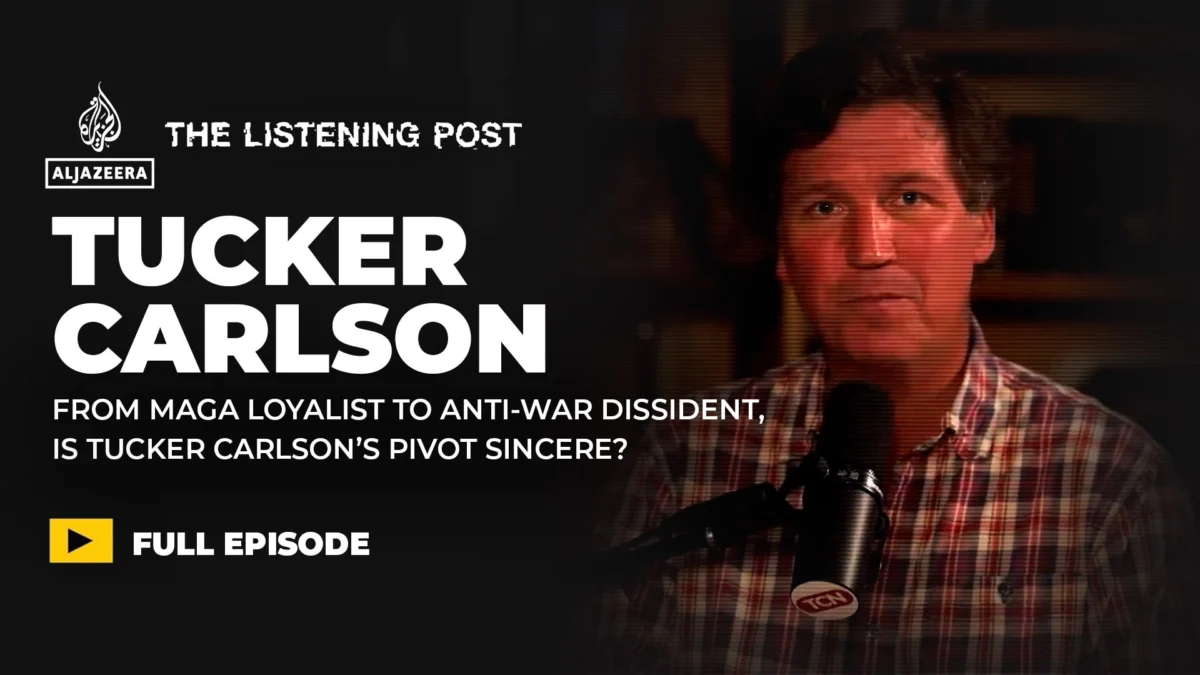
The global landscape of media and politics is currently experiencing profound shifts, exemplified by the evolving public persona of Tucker Carlson, contentious media narratives surrounding protests in the United Kingdom, and the mainstreaming of the "Greater Israel" concept. These disparate yet interconnected developments underscore a critical juncture where media influence, political ambition, and geopolitical aspirations converge, challenging established norms and reshaping public discourse. From the United States, where a prominent media figure navigates a strategic reinvention amidst speculation of a presidential bid, to the United Kingdom, where a localized incident ignites a national debate on media responsibility and protest, and finally to the Middle East, where a once-fringe territorial vision gains significant institutional traction, these narratives demand rigorous journalistic scrutiny to understand their underlying currents and broader implications.
Tucker Carlson’s Political Metamorphosis: From MAGA Stalwart to Anti-War Critic
Tucker Carlson, a figure long synonymous with conservative media and staunch loyalty to former President Donald Trump’s MAGA movement, has undergone a noticeable and widely discussed pivot, transitioning into a vocal anti-war dissident. This transformation, characterized by his increasingly critical stance on U.S. foreign policy, particularly concerning the relationship with Israel, has fueled extensive speculation about its sincerity and potential political motivations. Washington, D.C., observes with keen interest as Carlson’s rising popularity across independent media platforms suggests he might be charting a course toward a presidential campaign.
The Unfolding Narrative: A Shift in Focus
Carlson’s shift is marked by a departure from the traditional Republican foreign policy hawkishness that often aligns with a robust U.S.-Israel alliance. Historically, Carlson championed a populist, America First agenda that, while skeptical of globalist interventions, largely refrained from direct criticism of core U.S. alliances. His recent commentary, however, has increasingly questioned the financial and strategic commitments of the United States to Israel, a position that places him at odds with significant segments of both the Republican and Democratic establishments. This evolving viewpoint has seen him engage with voices and perspectives he once routinely dismissed, including certain elements within The New York Times, indicating a deliberate effort to broaden his appeal and intellectual bandwidth. Analysts like Wajahat Ali, cohost of the Democracy-ish Podcast, and Briahna Joy Gray, host of the Bad Faith Podcast, have pointed to this broadening as either a genuine ideological evolution or a calculated strategy to tap into a growing segment of the electorate disaffected with conventional foreign policy.
A Career Defined by Evolution
Carlson’s career trajectory has always been one of adaptability. Beginning in mainstream journalism, he transitioned through various cable news networks, including CNN and MSNBC, before finding his definitive platform at Fox News. His tenure at Fox, particularly with Tucker Carlson Tonight (2016-2023), saw him become one of the most influential and watched figures in cable news. At its peak, his show often garnered over 3 million viewers nightly, making him a kingmaker within the conservative movement and a consistent amplifier of Trump’s agenda. His departure from Fox News in April 2023, under circumstances that remain largely undisclosed, marked a significant turning point. Since then, he has leveraged platforms like X (formerly Twitter) and his own subscription-based "Tucker Carlson Network" to maintain and expand his audience, demonstrating the power of independent media in the digital age. This move freed him from network constraints, allowing for more provocative and unconventional takes on foreign policy and domestic issues.
Challenging the Bipartisan Consensus
The U.S.-Israel relationship has historically been a bedrock of bipartisan consensus, with strong congressional support for aid and diplomatic backing. Carlson’s recent critiques challenge this long-standing norm. He has questioned the scale of U.S. aid to Israel, the strategic benefits of the alliance, and the influence of pro-Israel lobbies in Washington. This position resonates with a segment of the American public, particularly younger voters and those on both the populist right and progressive left, who express growing skepticism about extensive foreign interventions and financial commitments abroad. Jude Russo, managing editor of The American Conservative, suggests that Carlson is tapping into a latent anti-interventionist sentiment that transcends traditional political divides, positioning himself as a voice for those who feel unheard by the political establishment.
Independent Platforms and Amplified Voices
Post-Fox, Carlson has embraced independent media with fervor. His interviews on X, some reaching tens of millions of views, have featured a diverse array of guests, from controversial figures to academics and journalists typically outside the mainstream conservative echo chamber. This engagement with a broader spectrum of voices, including those from progressive or anti-establishment backgrounds, has further underscored his pivot. By engaging with figures like Glenn Greenwald or Matt Taibbi, who share his skepticism of establishment narratives but often from a left-leaning perspective, Carlson is effectively building a coalition of the disaffected, blurring traditional ideological lines in a manner reminiscent of historical populist movements.
The White House Whisper: Presidential Speculation
The speculation surrounding a potential presidential bid by Tucker Carlson is not new, but it has intensified with his increased visibility and evolving platform. His ability to draw massive audiences independently of traditional media infrastructure, coupled with his willingness to challenge bipartisan foreign policy orthodoxies, positions him as a potentially disruptive force in American politics. A Carlson candidacy, whether as a Republican primary challenger or an independent, could redraw the electoral map, potentially siphoning votes from both major parties. His populist appeal, combined with his anti-war stance, could attract voters who feel alienated by both the Democratic Party’s perceived globalism and the Republican Party’s traditional interventionism. Ana Kasparian, executive producer and host of The Young Turks, has highlighted the strategic advantage of Carlson’s independent platform, allowing him to cultivate a dedicated base without the vetting or scrutiny inherent in traditional party structures.
Implications for the Republican Party and Beyond
Carlson’s evolving stance and potential political ambitions carry significant implications for the Republican Party. It could further deepen the divide between the party’s traditional foreign policy establishment and its populist, nationalist wing. Should he run, he would likely force other candidates to address issues like U.S. aid to allies and military interventions with greater nuance, potentially pushing the party further towards an isolationist or non-interventionist foreign policy. Beyond the GOP, his influence underscores the increasing fragmentation of media consumption and political allegiance, where powerful individual voices can shape narratives and mobilize significant constituencies outside of established party structures. This phenomenon represents a challenge to traditional political gatekeepers and a testament to the power of personal branding in the digital age.
UK Media and the Weaponization of Narrative: Protests, Attacks, and Blame
In the United Kingdom, a distressing knife attack in North London, which left two Jewish men hospitalized, rapidly became entwined with a highly charged political and media narrative. Days after the incident, a significant portion of the country’s political and media class began to attribute blame, not to the perpetrator directly, but to broader anti-genocide protests and, controversially, to Zack Polanski, the only Jewish leader in British politics and a prominent figure in the Green Party. This swift alignment of blame underscores the perilous role of media framing in times of heightened social tension, as dissected by Meenakshi Ravi.
The North London Attack and Its Aftermath
Details surrounding the knife attack, which occurred in a context of elevated communal tensions following recent international events, remain critical. While police investigations typically focus on individual culpability, the public discourse quickly broadened. The incident itself, a violent act against members of the Jewish community, understandably provoked fear and condemnation. However, the subsequent media and political response shifted the focus to external factors, creating a narrative that drew a direct, if unsubstantiated, link between the attack and the wider anti-genocide protest movement. This immediate leap to a broader causal link raises questions about the motivations behind such swift pronouncements.
The Controversy of Conflation
Anti-genocide protests, often large-scale and driven by diverse groups concerned with humanitarian crises, have been a regular feature in British cities. These demonstrations generally involve calls for peace, justice, and an end to violence, reflecting a range of political and ethical viewpoints. The conflation of these protests with an act of violence, however isolated, risks delegitimizing legitimate expressions of dissent and collective concern. By suggesting a causal link, the media narrative risked painting a broad movement, involving hundreds of thousands of individuals, with the brush of extremism and violence. This approach can stifle free speech and create an environment where public protest is viewed with suspicion rather than as a democratic right.
Zack Polanski: A Target Amidst Tensions
Perhaps most striking was the singling out of Zack Polanski, a prominent Jewish politician and co-leader of the Green Party, as being partly responsible for the atmosphere that allegedly led to the attack. Polanski, as a visible Jewish leader, has consistently condemned antisemitism while also advocating for peace and human rights, often participating in discussions around the Gaza conflict from a nuanced perspective. To attribute blame to him, based on his participation in, or support for, anti-genocide protests, represents a deeply problematic form of scapegoating. This narrative not only undermines his efforts to bridge divides but also contributes to the dangerous trend of holding individuals from specific communities responsible for the actions of others, particularly when those individuals are actively working against hatred.
The Broader Context of UK Protests and Tensions
The UK has witnessed a significant rise in both antisemitic and anti-Muslim hate crimes since October 2023, according to organizations like the Community Security Trust (CST) and Tell MAMA. This volatile environment provides fertile ground for misinterpretations and deliberate misrepresentations. The anti-genocide protests themselves have been massive, reflecting widespread public concern. While fringe elements and isolated instances of antisemitic rhetoric have been documented at some protests, these do not represent the vast majority of participants or the stated aims of the organizing bodies. The media’s selective focus, however, can amplify these isolated incidents, creating a skewed perception of the entire movement.
Media Scrutiny and Public Discourse
Meenakshi Ravi’s analysis of the media coverage is crucial for understanding how narratives are constructed and disseminated. Her work likely highlights instances where nuance was lost, where speculative connections were presented as fact, and where the complexity of the situation was reduced to a simplistic blame game. In a highly competitive media landscape, the pressure to break news and shape public opinion can sometimes override journalistic principles of careful verification and balanced reporting. The speed with which this narrative took hold suggests a pre-existing bias or a readiness within certain media and political circles to attribute blame to specific ideological camps.
The Peril of Narrative Control
The implications of such narrative control are far-reaching. It risks demonizing legitimate protest, silencing dissenting voices, and exacerbating communal tensions. When political figures and media outlets conflate acts of violence with broad social movements or with specific community leaders, it undermines the very fabric of democratic debate. It creates an environment where fear and division can flourish, diverting attention from the root causes of violence and the complex issues at hand. This episode serves as a stark reminder of the immense power of media in shaping public perception and the critical need for vigilance against the weaponization of narratives.
"Greater Israel": From Fringe Ideology to Mainstream Policy Push
The concept of "Greater Israel" (Eretz Israel HaShlema), once a fringe ideology predominantly espoused by radical settler groups and ultranationalist factions, has demonstrably moved into the mainstream of Israeli political and institutional life. This shift is not merely academic; it has profound implications for the future of the region, influencing key Israeli institutions, including the media, and actively driving a political agenda focused on territorial expansion and annexation. The Listening Post‘s Tariq Nafi’s report highlights the rapid normalization of this potent and controversial idea.
Historical Roots of a Controversial Vision
The "Greater Israel" concept traces its origins to both religious and Zionist interpretations of biblical and historical claims to the Land of Israel, encompassing territories beyond Israel’s 1948 borders, including the West Bank, Gaza Strip, and sometimes even parts of neighboring countries. Historically, mainstream Zionist movements prioritized establishing and securing a state for the Jewish people, often accepting pragmatic borders. However, after the 1967 Six-Day War, when Israel occupied the West Bank, Gaza, East Jerusalem, and the Golan Heights, the "Greater Israel" ideology gained significant momentum among religious Zionists and right-wing nationalists who viewed these territories as integral parts of a divinely promised land.
The Settler Movement’s Ascendancy
The Israeli settler movement has been the primary vehicle for advancing the "Greater Israel" agenda. What began as a relatively small, ideologically driven movement in the late 1960s and 1970s, particularly with groups like Gush Emunim, has blossomed into a powerful political force. Today, over 500,000 Israeli settlers reside in the West Bank (excluding East Jerusalem), living in hundreds of settlements, many of which are recognized by the Israeli government, and dozens of illegal outposts. This growth has been facilitated by successive Israeli governments, which have provided extensive infrastructure, security, and economic incentives. The settler movement’s success lies not only in its demographic expansion but also in its increasing political representation and lobbying power within the Knesset and various ministries.
Institutional Capture and Media Influence
The normalization of "Greater Israel" is evident in its growing influence over key Israeli institutions. Religious Zionist parties, historically aligned with the settler movement, have gained unprecedented power in recent coalition governments, holding crucial portfolios that impact settlement policy, legal administration in the West Bank, and even national security. This institutional leverage allows for the allocation of resources, the promulgation of laws, and the implementation of policies that actively promote the "Greater Israel" vision.
Crucially, the media landscape has also been reshaped. A "constellation of voices," as described in the report, including right-wing news outlets, influential pundits, and social media activists, actively promotes the narrative of territorial expansion. This includes legitimizing settlements, downplaying international condemnation, and often demonizing Palestinian resistance. Ben Reiff, deputy editor of +972 Magazine, and Maya Rosen, assistant editor of Jewish Currents, have consistently documented how this media ecosystem works to normalize annexationist rhetoric and shift public opinion, making what was once considered radical, a part of mainstream political discourse. Polling data, for instance, has shown an increasing number of Israelis supporting annexation of parts or all of the West Bank, a direct reflection of this media and political conditioning.
Political Ramifications and International Reactions
The ascendancy of the "Greater Israel" concept has profound political ramifications, both domestically and internationally. Domestically, it cements the power of the religious Zionist right and marginalizes voices advocating for a two-state solution or territorial compromise. It reshapes the national identity debate within Israel, pushing it towards a more religiously and ethnically exclusive vision. Internationally, this normalization directly challenges the two-state solution, which remains the stated policy goal of most of the international community, including the United States, the European Union, and the United Nations. Continued settlement expansion and rhetoric of annexation are widely considered violations of international law and a significant impediment to peace. Statements from Palestinian officials and international bodies consistently condemn these actions as undermining the prospects for a viable Palestinian state and exacerbating regional instability.
The Erosion of the Two-State Paradigm
The "Greater Israel" agenda directly contributes to the erosion of the two-state solution. By continuously expanding settlements, fragmenting Palestinian territory, and asserting sovereignty over disputed lands, the physical and political space for an independent Palestinian state diminishes. The intricate network of settlements, bypass roads, and military zones in the West Bank makes the practical implementation of a two-state framework increasingly difficult, if not impossible. This reality has led some analysts to suggest that the two-state solution is already functionally dead, replaced by a de facto one-state reality with deeply unequal rights.
A Future Redefined: Implications for Regional Peace
The normalization of "Greater Israel" redefines the future of the Israeli-Palestinian conflict and the broader regional peace. It signals a hardening of positions, a reduced appetite for compromise, and an increased likelihood of continued conflict. For Palestinians, it represents the permanent loss of self-determination and the entrenchment of occupation. For Israel, it raises critical questions about its democratic and Jewish character if it continues to govern a large Palestinian population without equal rights. The ongoing push for "Greater Israel" by powerful political and media forces ensures that this once-fringe fantasy will remain at the very heart of the conflict, with far-reaching consequences for stability and human rights in the Middle East.
In conclusion, the narratives surrounding Tucker Carlson’s political evolution, the UK media’s contentious framing of protests, and the mainstreaming of "Greater Israel" collectively illustrate a volatile global environment where media power, political ambition, and ideological shifts are profoundly impacting societies and international relations. These developments necessitate a critical and sustained examination of how information is disseminated, how public opinion is shaped, and how these forces ultimately influence the course of geopolitical events and the future of democratic discourse. The intricate interplay between these elements demands an informed and nuanced understanding to navigate the complexities of our contemporary world.
