

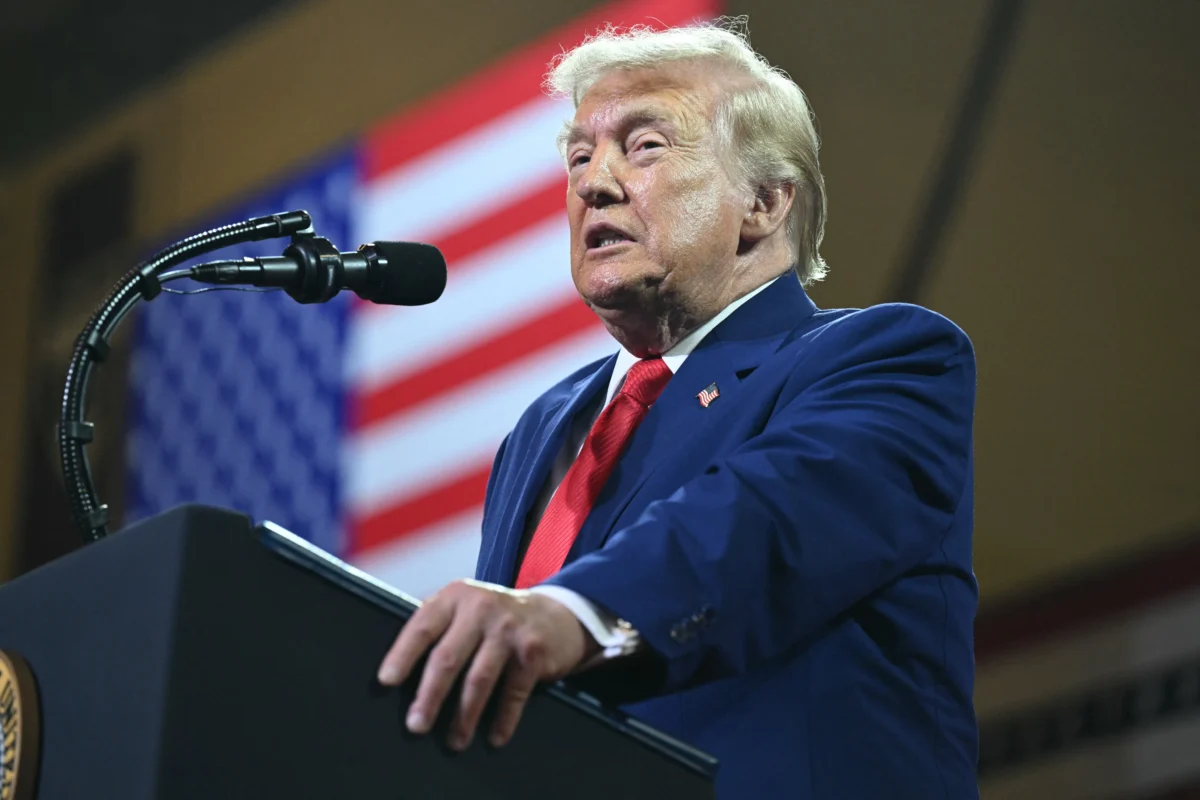
U.S. trading partners from Canberra to Brasília have rejected the forced labor rationale behind President Donald Trump’s new global tariffs, while most signaled they would keep negotiating rather than retaliate. The Office of the U.S. Trade Representative on Thursday took action under Section 301 of the Trade Act of 1974, imposing tariffs on 60 economies for what Washington called their failure to impose and enforce bans on goods made with forced labor. The duties—10% for partners that have adopted or committed to import prohibitions, 12.5% for those that haven’t—cover the top 60 U.S. trade partners and 99.4% of American imports. The measure replaces a temporary 10% global tariff imposed under Section 122 of the trade act, which expires July 24, a stopgap put in place after the Supreme Court ruled Trump’s emergency-powers tariffs unlawful in February. The forced labor probes give the administration a more durable legal foundation for a baseline tariff that the courts had challenged.
A New Front in Trade Policy: The Forced Labor Imperative
The Trump administration’s latest move to implement global tariffs, ostensibly to combat goods produced by forced labor, has ignited a firestorm of international criticism and skepticism. On July 23, 2026, the U.S. Trade Representative (USTR) announced sweeping tariff increases affecting a vast array of imports, citing a perceived failure by numerous nations to adequately address the issue of forced labor within their supply chains. This action, framed as a moral imperative by the administration, has been met with strong pushback from many of the targeted countries, who argue that the tariffs are not only unjustified but also inconsistent with existing trade agreements and their own robust efforts to combat modern slavery.
The USTR’s action under Section 301 of the Trade Act of 1974 is a significant escalation of trade policy, moving beyond traditional arguments of unfair trade practices to incorporate human rights concerns, albeit in a manner that critics argue serves as a pretext for broader protectionist aims. The tariffs, set at 10% for countries that have implemented or committed to import bans on forced labor goods, and a higher 12.5% for those that have not, represent a substantial economic lever. These measures are designed to encompass 99.4% of American imports from the top 60 U.S. trading partners, signaling a broad-based application of this new trade doctrine.
This initiative effectively replaces a temporary 10% global tariff that was enacted under Section 122 of the trade act and was set to expire on July 24. That earlier tariff served as a temporary measure following a significant legal setback for the administration in February, when the Supreme Court declared certain emergency-powers tariffs unlawful. The current forced labor-focused tariffs are intended to establish a more legally defensible and enduring framework for imposing baseline tariffs, an approach that has been challenged in the courts.
International Rejection and Counterarguments
The rationale behind these tariffs has been broadly rejected by U.S. trading partners, who argue that they are already leading the charge against forced labor. Australia, a key ally and significant trading partner, was among the first to voice its strong opposition. Australian Trade Minister Don Farrell issued a stern statement asserting, "These tariffs are unjustified, inconsistent with our free trade agreement, and should be removed." He emphasized Australia’s strong record in combating forced labor and modern slavery, stating, "Australia’s measures to combat forced labor and modern slavery are among the strongest in the world, and we are recognized globally, including in the U.S., for our leadership."
The U.S. imposed the higher 12.5% tariff on imports from a select group of nations, including Australia, China (and its special administrative region, Hong Kong), Singapore, and South Korea. The USTR’s justification for this higher rate was the alleged failure of these countries to prevent goods produced through forced labor from entering the American market.
Meanwhile, other major Asian economies, such as Malaysia, Taiwan, Indonesia, and India, are facing an additional 10% tariff. While these countries are not explicitly accused of the same level of non-compliance as the first group, they are still subject to the broader tariff regime.
Economic Impact and Strategic Exemptions
Despite the widespread imposition of tariffs, the immediate economic impact on major Asian economies is anticipated to be limited, according to Tianchen Xu, senior economist at the Economist Intelligence Unit. Xu noted that "Asia will continue to benefit from tariff carve-outs, which include most types of electronics from consumer devices to chips." He further elaborated that "these goods have consistently been exempt under U.S. tariffs under the second Trump administration," suggesting a strategic application of these tariffs that avoids disrupting key sectors of the global supply chain that are critical to U.S. consumers and industries. This selective exemption points towards a more nuanced, or perhaps politically driven, approach to tariff implementation, potentially aimed at minimizing domestic economic fallout while still projecting an assertive trade stance.
A Timeline of Trade Tensions and Legal Battles
The current tariff imposition is not an isolated event but rather the latest chapter in a protracted period of trade disputes and legal challenges involving the Trump administration.

- February 2026: The Supreme Court rules against the legality of certain emergency-powers tariffs implemented by the Trump administration, forcing the administration to seek alternative legal justifications for its trade actions.
- March – June 2026: The U.S. Trade Representative’s Office initiates investigations into the forced labor practices of various economies, laying the groundwork for the new tariff regime. This period is characterized by intensive data gathering and diplomatic engagements, though often framed with a confrontational undertone.
- July 15, 2026: The U.S. imposes a temporary 10% global tariff under Section 122 of the trade act as a stopgap measure while the forced labor investigations conclude and a more permanent strategy is formulated. This temporary tariff was set to expire on July 24, 2026.
- July 23, 2026: The USTR announces the imposition of new global tariffs under Section 301 of the Trade Act of 1974, replacing the temporary measure and targeting 60 economies for their alleged failure to ban goods made with forced labor. The tariffs are differentiated based on the level of commitment to import prohibitions, ranging from 10% to 12.5%.
- July 24, 2026: The temporary Section 122 tariffs expire, and the new Section 301 tariffs officially come into effect for the targeted economies.
Broader Repercussions and Unanswered Questions
The implications of these new tariffs extend beyond immediate economic consequences. The administration’s framing of the issue, while ostensibly humanitarian, has been viewed by many analysts as a strategic maneuver to exert pressure on global trade partners and potentially to circumvent previous legal rulings. The Peterson Institute for International Economics, a prominent think tank, offered a critical perspective, suggesting that the investigation is "not a labor-standards exercise but a mechanism for exporting America’s import ban on Chinese goods, as well as an attempt to recreate the tariff regime struck down by the Supreme Court." This interpretation highlights a persistent concern that the forced labor issue is being leveraged as a tool in a broader trade conflict, particularly with China.
Diverse Reactions from Key Trading Partners
Beyond Australia, other nations have voiced strong objections and sought to clarify their positions.
Brazil, which faces a 12.5% tariff, condemned the measures as "arbitrary" and "unjustified." President Luiz Inácio Lula da Silva expressed openness to negotiations but warned that Brazil would explore alternative markets if it could not secure access to the U.S. market. This new duty is stacked on top of a separate 25% Section 301 tariff imposed on Brazilian goods earlier in July, effectively rebuilding a significant trade barrier of 37.5%, a rate that was previously struck down as unlawful last year. This suggests a pattern of the administration seeking to reinstate or increase tariffs through different legal justifications.
Chile’s government articulated its disagreement with the U.S. action, stating that the measure was inconsistent with the country’s labor standards and the evidence it had provided throughout the investigation. A statement from Chile’s trade undersecretariat in Santiago emphasized that the U.S. resolution does not allege that Chile exports goods made with forced labor. The Chilean government indicated its intention to press for exclusions for its key export products, signaling a defensive strategy to mitigate the impact on its economy.
Canada, placed in the lower 10% tier with an exemption for goods compliant with the United States-Mexico-Canada Agreement (USMCA), adopted a more measured response. Minister for Canada-U.S. Trade Dominic LeBlanc described the move as "not unexpected" and affirmed that Ottawa shares Washington’s objectives regarding forced labor. He assured that Canada would "continue engaging constructively" in the coming weeks, suggesting a preference for diplomatic dialogue over confrontation.
New Zealand’s foreign ministry, in a market report, made it clear that Wellington disagrees with the investigation’s findings and will continue to communicate its position to the U.S. government. Crucially, existing exemptions that cover approximately 30% of New Zealand’s exports to the U.S., including significant products like beef and kiwifruit, remain in place, indicating that the impact on New Zealand may be less severe than for some other nations.
A Lack of Retaliatory Measures, For Now
Significantly, no major U.S. trading partner has yet announced retaliatory countermeasures in response to these forced labor tariffs. This suggests a widespread inclination among these nations to pursue diplomatic channels and negotiations rather than escalate the trade conflict. The focus for many appears to be on seeking exemptions, clarifying their compliance, and engaging in dialogue to resolve the dispute. The absence of immediate retaliatory actions could be a strategic decision, allowing these countries to assess the full impact of the tariffs and the U.S. administration’s long-term intentions before committing to a tit-for-tat approach.
The Strategic Ambiguity of "Forced Labor"
The administration’s reliance on Section 301, a provision originally intended to address unfair trade practices and intellectual property theft, for tariffs based on forced labor raises questions about the broader strategic objectives. Critics argue that this broad application of trade enforcement tools, regardless of the stated justification, serves to increase U.S. leverage in trade negotiations and to protect domestic industries from foreign competition. The inclusion of China in the higher tariff bracket, despite the purported focus on forced labor, further fuels speculation that this action is intertwined with ongoing trade tensions between the two economic superpowers.
The legal precedent set by the Supreme Court’s earlier ruling continues to cast a shadow over the administration’s trade actions. The forced labor probes are an attempt to establish a more durable legal foundation for baseline tariffs, but the ultimate success of this strategy will likely depend on how these measures withstand future legal scrutiny and international challenges. The coming weeks and months will be critical in determining whether these new tariffs lead to a genuine improvement in global labor standards or merely represent another complex maneuver in the evolving landscape of international trade.
