

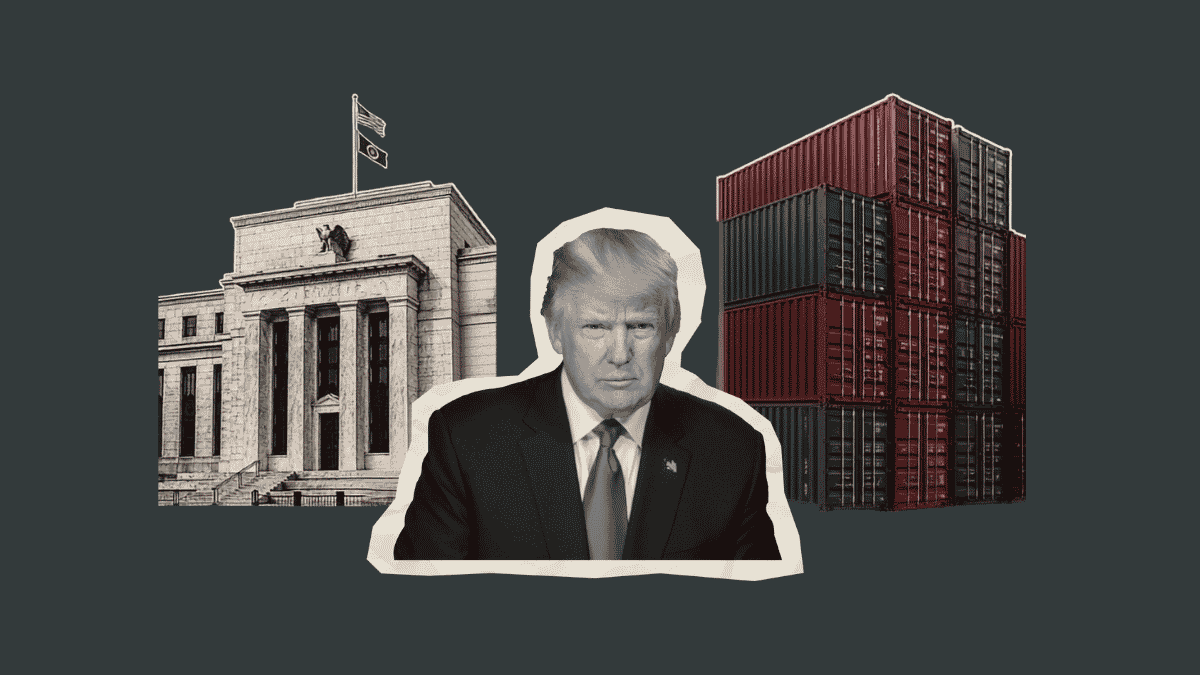
President Donald Trump issued a sweeping ultimatum to the Federal Reserve on Friday, threatening to unilaterally suspend trade with any nation maintaining a trade deficit with the United States unless the central bank implements immediate and aggressive interest rate reductions. The demand, delivered via a series of statements on his Truth Social platform, represents a significant escalation in the administration’s ongoing campaign to influence monetary policy and marks a novel attempt to link executive trade authority with the historically independent functions of the nation’s central bank.
The President’s comments were triggered by the release of the August payrolls report, which provided a complex backdrop for the administration’s economic narrative. While economists had forecasted a modest addition of 56,000 jobs, the Department of Labor reported that employers added 162,000 positions—nearly triple the anticipated figure. Despite this evidence of a resilient labor market, the national unemployment rate remained steady at 4.1%. In the immediate aftermath of the report, the 10-year Treasury yield and mortgage rates remained largely stagnant, suggesting that fixed-income markets had already priced in much of the current economic volatility.
In his social media communications, President Trump directly challenged Federal Reserve Chairman Kevin Warsh and the Fed’s Board of Governors to "get smart" and pivot toward a low-interest-rate environment. The President argued that the current strength of the U.S. economy should be rewarded with lower borrowing costs rather than the restrictive rates currently in place. "We should have the LOWEST RATE of any country in the World, like ‘the old days,’" the President wrote, signaling a desire to return to the near-zero interest rate policies that characterized much of the previous decade.
The Trade Ultimatum and Executive Authority
The most provocative aspect of the President’s Friday morning communications was the explicit link between monetary policy and international commerce. Trump articulated a strategy that would bypass traditional tariff mechanisms in favor of total trade suspensions. "LOWER THE RATE OR I’LL STOP TRADING WITH COUNTRIES WITH WHICH WE HAVE A DEFICIT," he declared.
To justify this potential move, the President cited a recent U.S. Supreme Court decision regarding tariffs. According to the administration’s interpretation, the Court’s ruling acknowledged that the President possesses an "absolute right" to manage trade relations in the interest of national economic security. Trump characterized the prospect of halting trade as a more potent and efficient tool than his previous reliance on import duties, stating, "IT’S BETTER THAN TARIFFS!"
Legal analysts and trade experts note that such a move would be unprecedented in the modern era. The United States currently runs trade deficits with dozens of its most significant partners, including China, Mexico, and several European Union members. A blanket suspension of trade with these nations would effectively decouple the United States from the global supply chain, with profound implications for domestic consumer prices, manufacturing inputs, and international diplomacy.
The Hawkish Turn at the Federal Reserve
The President’s demands come at a moment of heightened tension within the Federal Reserve. Chairman Kevin Warsh, whom Trump appointed to lead the bank after a contentious period with his predecessor, recently signaled a "hawkish" stance during the Jackson Hole Economic Policy Symposium. Warsh argued that inflation remains stubbornly high and laid the blame for 65 months of elevated prices at the feet of previous central bank hesitancy.
Following Warsh’s remarks at Jackson Hole, market expectations for a rate hike shifted dramatically. According to the CME Group’s FedWatch Tool, the implied probability of a 25-basis-point rate hike at the Federal Reserve’s upcoming September meeting surged from 35.4% to 55.7% within 24 hours. By Friday afternoon, following the stronger-than-expected jobs report, that probability had climbed further to 58.4%.
The divergence between the President’s call for the "lowest rates in the world" and the Fed’s apparent trajectory toward further tightening has created a significant rift in Washington. While the President views low rates as a catalyst for continued expansion, the Fed board appears focused on the long-term goal of cooling price growth, which remains above the bank’s 2% target.
A Chronology of Institutional Conflict
The current friction is the latest chapter in a long-standing battle between the Trump administration and the Federal Reserve, a conflict that intensified at the start of 2025.
- January 2025: Shortly after the President’s inauguration, the administration began exerting public pressure on then-Chair Jerome Powell. The Department of Justice served the Federal Reserve with grand jury subpoenas and threatened a criminal indictment related to Powell’s Congressional testimony from the previous summer.
- July 2025: President Trump publicly stated he would "likely" fire Powell. While he eventually moved toward a "for cause" removal strategy—citing alleged cost overruns on the renovations of the Federal Reserve’s Washington D.C. headquarters—the probe was eventually dropped when Powell’s term ended and Warsh was confirmed.
- August 2025: The administration targeted Fed Governor Lisa Cook, attempting to remove her over allegations of mortgage fraud. Cook successfully challenged the removal in court. A federal judge, and subsequently a federal appeals court, ruled that the President had not demonstrated sufficient cause for her dismissal.
- Late June 2025: The U.S. Supreme Court issued a ruling that limited the President’s ability to fire Fed governors without notice, mandating that the administration provide an opportunity for the accused to respond to allegations.
- Late 2025: The pressure on the board led to several departures. Governor Adriana Kugler resigned in August, and Atlanta Fed President Raphael Bostic announced in November that he would retire at the conclusion of his term in February.
Global Economic Divergence
The President’s threat to halt trade comes at a time of significant global economic shifts. While Trump is pushing for lower rates, other major economies are moving in the opposite direction to combat their own inflationary pressures.
On September 3, a Reuters poll of economists indicated that the European Central Bank (ECB) is poised to raise interest rates on September 10. This would mark the second and final hike in what is expected to be its shortest tightening campaign in 15 years. Similarly, the Bank of Japan is currently debating a rate hike for September, a move that has already sent ripples through the bond markets. The 10-year Japanese bond recently rose past 3% for the first time since 1996, and the German 10-year bond hit 3.33%, its highest level since 2011.
The U.S. has also taken an increasingly aggressive stance on trade independently of monetary policy. In late August, the administration imposed 50% tariffs on approximately $20 billion worth of Canadian goods following the collapse of trade negotiations. Canada has vowed to retaliate with matching tariffs beginning in September, raising fears of a North American trade war that could further complicate the Federal Reserve’s efforts to stabilize the economy.
Implications for the Housing Market and Borrowing Costs
For the average American, the standoff between the White House and the Federal Reserve has immediate consequences for borrowing costs, particularly in the housing sector. Despite the President’s demands, mortgage rates have remained elevated, mirroring the "higher-for-longer" sentiment prevailing among Fed officials.
If the President were to follow through on his threat to halt trade with deficit nations, economists warn of a potential "supply shock." By cutting off imports from major partners, the cost of goods—ranging from electronics to construction materials—would likely skyrocket. This would create a paradoxical situation where the Federal Reserve might feel compelled to raise rates even higher to combat the resulting "trade-halt inflation," directly opposing the President’s stated goal of lowering borrowing costs.
Furthermore, the stability of the 10-year Treasury yield is paramount for mortgage pricing. Significant geopolitical or trade-related instability typically drives investors toward the safety of government bonds, which can lower yields. However, if such instability is perceived as damaging to the long-term health of the U.S. dollar or the independence of the central bank, yields could rise as investors demand a higher risk premium.
Conclusion and Future Outlook
The Federal Reserve is scheduled to meet in mid-September to decide the fate of interest rates. With the August jobs report providing the "hawkish" wing of the board with more ammunition to justify a hike, the pressure from the White House is expected to intensify.
The President’s strategy of using trade as a cudgel against the central bank represents a fundamental shift in how the executive branch interacts with independent agencies. Whether the Supreme Court’s previous rulings on tariffs provide enough legal cover for a total trade suspension remains a matter of intense debate among constitutional scholars. As the September meeting approaches, the financial world remains on high alert, watching for whether the Federal Reserve will maintain its independence or if the threat of a global trade freeze will force a shift in the nation’s monetary trajectory.
