

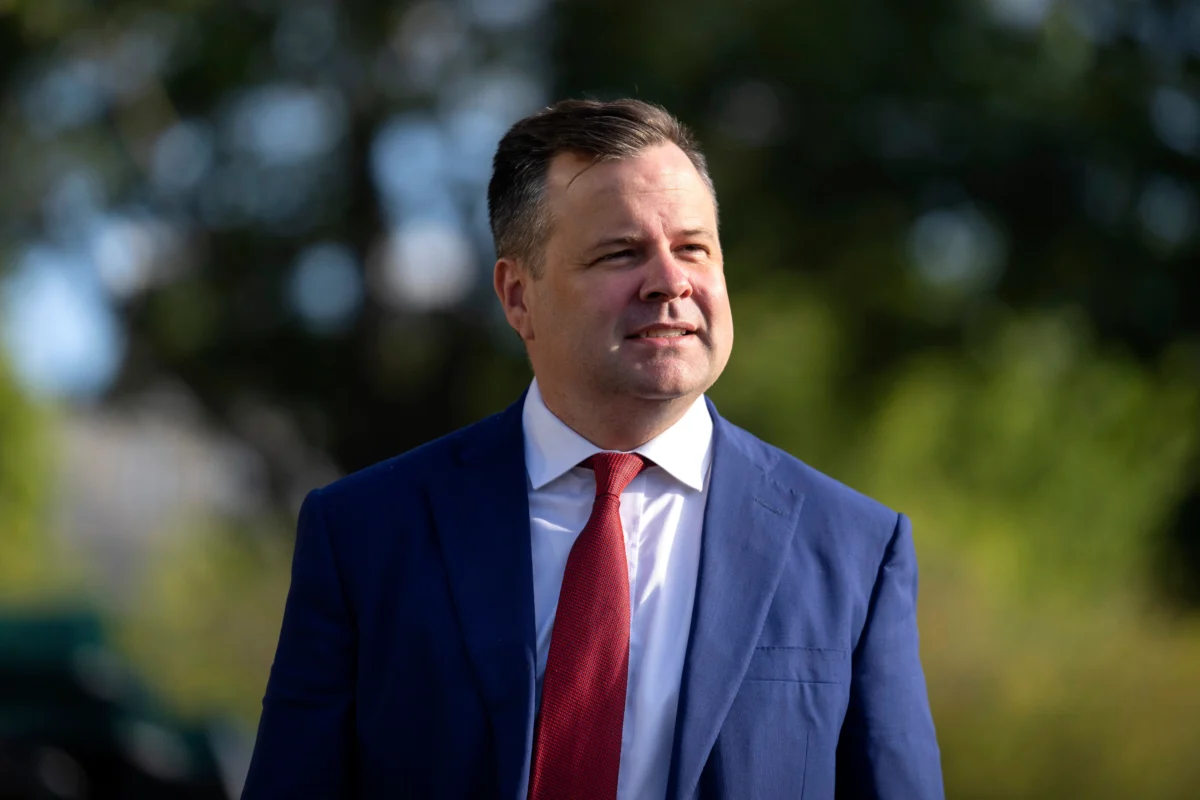
President Donald Trump on Tuesday announced the appointment of Bill Pulte, the current head of the Federal Housing Finance Agency (FHFA), to serve as the acting Director of National Intelligence (DNI), succeeding the outgoing DNI Tulsi Gabbard. The decision immediately ignited a firestorm of criticism across the political spectrum, largely due to Pulte’s conspicuous lack of any known prior intelligence experience and his contentious history as a political operative within the administration. The move places a figure known for his aggressive pursuit of the President’s perceived adversaries at the helm of the sprawling U.S. intelligence community, which encompasses critical agencies such as the Central Intelligence Agency (CIA) and the National Security Agency (NSA).
The Unprecedented Appointment: Pulte Steps into DNI Role
The formal announcement came via a Truth Social post from President Trump, highlighting Pulte’s existing leadership roles. According to the President, Pulte will simultaneously continue his duties as FHFA director and chairman of the mortgage giants Fannie Mae and Freddie Mac. Trump’s post lauded Pulte’s "deep experience managing the most sensitive matters in America, the safety and soundness of the Markets, and over 10 Trillion Dollars at Fannie Mae/Freddie Mac, a substantial increase from where it was just 12 months ago." This justification, however, immediately struck critics as a significant mismatch, equating financial oversight with the complex, nuanced demands of national security intelligence.
Pulte replaces Tulsi Gabbard, who had previously announced her resignation from the DNI post, slated for June 30. Gabbard cited deeply personal reasons for her departure, stating on May 22 that she needed to step down to support her husband following his diagnosis of "an extremely rare form of bone cancer." While her departure was understood, the subsequent choice of Pulte, rather than a traditional intelligence professional or even the previously announced Principal Deputy Director of National Intelligence Aaron Lukas, signaled a stark departure from conventional appointments to this critical national security role. The White House did not respond to requests for clarification on when Pulte’s tenure as acting DNI would commence, nor on the status of Lukas.
A Track Record of Political Confrontation: Pulte’s Tenure at FHFA
Bill Pulte’s tenure at the Federal Housing Finance Agency has been anything but low-profile, marked by a series of high-profile controversies where he leveraged his regulatory authority to target perceived political opponents of President Trump. His actions have solidified his reputation as an "attack dog" for the administration, raising significant questions about his impartiality and judgment – qualities typically considered paramount for an intelligence chief.
One of the most notable incidents involved Federal Reserve Governor Lisa Cook. Pulte last year filed a criminal referral against Cook, alleging mortgage fraud. The basis of the accusation was Cook allegedly claiming two different properties as her primary residence simultaneously. This referral was made amidst President Trump’s long-standing, vocal criticisms of the Federal Reserve and its chairman, Jerome Powell, for not lowering interest rates to his satisfaction. Trump subsequently attempted to fire Cook based on these mortgage allegations. Cook, however, challenged her dismissal in court, and her case is currently pending before the Supreme Court, highlighting the extraordinary nature of Pulte’s actions and their ripple effects across different branches of government. The episode underscored concerns that Pulte was using his official capacity not for regulatory oversight but for political retribution.
Similarly, Pulte initiated a criminal referral against New York Attorney General Letitia James, accusing her of falsifying bank documents and property records in connection with a home mortgage she obtained in 2020. James, a frequent adversary of President Trump, was subsequently charged in October with bank fraud and making false statements to a financial institution. However, the case against James was dismissed in November by a federal judge, who ruled that the interim U.S. attorney who brought the indictment, Lindsey Halligan, was invalidly appointed. Halligan herself had a prior connection to Trump as his former lawyer, further fueling accusations that Pulte’s referrals were politically motivated and part of a broader campaign to harass the President’s critics through legal channels, even if the legal processes themselves were questionable.
These actions at the FHFA prompted a congressional watchdog, the Government Accountability Office (GAO), to launch an investigation into Pulte’s handling of sensitive financial information and the propriety of his criminal referrals. This ongoing scrutiny from Congress further illustrates the contentious nature of his leadership at the housing agency and the concerns surrounding his methods. Critics argue that Pulte’s readiness to "weaponize" regulatory bodies for political purposes makes him fundamentally unsuitable for a role that demands strict non-partisanship and adherence to factual intelligence.
The Director of National Intelligence: Role, Mandate, and Expectations
The Director of National Intelligence holds one of the most critical and sensitive positions within the U.S. government. Established by the Intelligence Reform and Terrorism Prevention Act of 2004 in the wake of the 9/11 attacks, the DNI’s primary mandate is to serve as the head of the U.S. Intelligence Community (IC), overseeing and coordinating the activities of its 18 disparate agencies. These agencies include not only the CIA and NSA but also intelligence elements within the Department of Defense, State Department, FBI, and others. The DNI is responsible for integrating foreign, military, and domestic intelligence, providing timely and objective intelligence briefings to the President and other senior policymakers, and ensuring the overall effectiveness of the National Intelligence Program.
The statutory requirements for the DNI are rigorous, emphasizing the need for "extensive national security experience," a deep understanding of intelligence operations, and the ability to maintain objectivity and independence from political influence. The role demands a leader who can command the respect of career intelligence professionals, navigate complex geopolitical landscapes, and provide unvarnished assessments of threats and opportunities to the nation’s highest leadership. A DNI without relevant experience or a history of politicized actions could undermine the credibility of intelligence assessments, damage morale within the IC, and potentially compromise national security by allowing political agendas to supersede objective analysis. The position is fundamentally about safeguarding national interests through informed decision-making, not political advocacy.
Widespread Condemnation: Bipartisan Alarm Bells Ring
The appointment of Bill Pulte as acting DNI drew immediate and forceful condemnation from both sides of the aisle, underscoring the severity of concerns regarding his qualifications and potential impact on the intelligence community. The bipartisan nature of the criticism was particularly striking for an administration often accustomed to unified opposition from Democrats.
Senate Majority Leader John Thune (R-S.D.), a prominent Republican voice, expressed significant unease. "We don’t need a weaponized DNI, we need professionals there," Thune told reporters on Capitol Hill, directly challenging the perceived political motives behind Pulte’s selection. He further indicated that he was "seeking more information from the Trump administration about the current state of their thinking about that position," signaling a willingness to scrutinize the appointment despite his party affiliation. Thune’s remarks were a clear indication that even within Republican ranks, there was apprehension about placing an overtly partisan figure without intelligence bona fides in such a critical, non-political role.
Senate Minority Leader Chuck Schumer (D-N.Y.) was equally scathing in his assessment, taking to X (formerly Twitter) to denounce the choice. Schumer called Pulte "a partisan thug with no experience in intelligence." He continued, "He is another unqualified Trump appointee that will make our country less safe. And you won’t hear a word from the Republicans who claim to care about national security," directly criticizing the perceived hypocrisy of some GOP members.
Senator Mark Warner (D-Va.), the Vice Chairman of the Senate Intelligence Committee, issued a strong statement highlighting the statutory concerns. "Mr. Pulte lacks the ‘extensive national security experience’ required by statute for the job," Warner asserted. More profoundly, he added, "It is that he appears to have been selected precisely because the White House believes he will provide the narrative it wants, not the intelligence we need." This sentiment captured the core fear: that the DNI role was being filled to serve a political agenda rather than the objective intelligence requirements of the nation.

Senator Elizabeth Warren (D-Mass.), a vocal critic of Pulte’s actions at the FHFA, echoed these concerns. As the ranking member of the Senate Banking, Housing, and Urban Affairs Committee, she noted Pulte had spent his time at the FHFA "abusing his authority to attack the President’s perceived political enemies, prompting the congressional watchdog to investigate his handling of sensitive financial information." Warren concluded her statement with a rhetorical question loaded with apprehension: "Today, President Trump is rewarding his lackey – who has no national security experience – with a perch atop our nation’s intelligence community. What could go wrong?"
The sheer volume and intensity of these condemnations, crossing party lines and emanating from key figures in national security and oversight committees, underscored the extraordinary nature of Pulte’s appointment and the profound concerns it raised about the integrity and independence of the U.S. intelligence apparatus.
The White House Stance: Defending the Controversial Choice
Despite the widespread outcry, the White House remained steadfast in its defense of Bill Pulte’s appointment. White House spokesman Davis Ingle issued a statement reiterating the administration’s confidence in the choice. "The President chooses the best and most talented people to serve in his Cabinet," Ingle stated. "That is why this Administration has achieved record successes for the American people. Bill Pulte is a great selection and he will do a great job on behalf of the American people." This defense adhered to a familiar administration pattern of emphasizing executive prerogative and a belief in the President’s ability to identify talent, irrespective of traditional qualifications.
President Trump’s own justification on Truth Social further elaborated on this perspective, attempting to bridge the gap between Pulte’s financial experience and the demands of national intelligence. His claim that Pulte has "deep experience managing the most sensitive matters in America, the safety and soundness of the Markets, and over 10 Trillion Dollars at Fannie Mae/Freddie Mac" appears to frame the DNI role as primarily an administrative and financial management position. This interpretation, however, largely ignores the core functions of the DNI concerning intelligence collection, analysis, counterintelligence, and the complex geopolitical assessments vital for national security. Critics argue that while financial acumen is valuable, it is not a substitute for the specialized knowledge and experience required to lead a diverse and globally focused intelligence community. The administration’s defense, therefore, did little to quell the concerns of those who see the DNI role as fundamentally distinct from financial regulation.
The "Acting" Precedent and Its Impact
The appointment of Bill Pulte as acting Director of National Intelligence also highlights a broader pattern of the administration’s reliance on temporary appointments in critical roles, often circumventing the Senate confirmation process. This strategy, while legally permissible, can lead to instability, uncertainty, and concerns about accountability.
Under the Trump administration, the DNI office has seen several acting directors. Joseph Maguire, a career naval officer and former acting DNI, was replaced by Richard Grenell, then the U.S. Ambassador to Germany, who also served in an acting capacity without traditional intelligence experience. More recently, the administration had announced that Principal Deputy Director of National Intelligence Aaron Lukas would take over as acting DNI after Gabbard’s departure. Pulte’s sudden appointment, seemingly superseding Lukas, further contributes to a sense of unpredictability and potentially undermines the established succession protocols within the intelligence community.
The use of "acting" officials can allow an administration to place loyalists in key positions without enduring the often-rigorous scrutiny and potential opposition of a Senate confirmation hearing. However, it also means these officials lack the full mandate and long-term stability that a confirmed director enjoys, which can impact strategic planning, morale, and the DNI’s standing both domestically and internationally. Career intelligence professionals often prefer stable, Senate-confirmed leadership to ensure continuity and a clear direction for their complex and sensitive work. The lack of clarity from the White House regarding Lukas’s status further exacerbated concerns about the stability and coherence of leadership at the pinnacle of the U.S. intelligence apparatus.
Broader Implications for the Intelligence Community and National Security
The appointment of Bill Pulte as acting DNI carries significant and potentially far-reaching implications for the U.S. Intelligence Community and national security. The primary concern articulated by a wide array of critics is the politicization of intelligence. An intelligence chief perceived as an "attack dog" for the President, rather than an impartial arbiter of facts, could erode trust within the IC, discourage objective reporting, and lead to intelligence assessments tailored to political preferences rather than unvarnished reality. This could severely compromise the quality of information provided to policymakers, risking misinformed decisions on critical national and international security matters.
Furthermore, the erosion of independence within the DNI office could have a devastating impact on the morale and professionalism of the men and women who dedicate their lives to intelligence work. These professionals rely on the DNI to protect their analysis from political interference and to advocate for their resources and capabilities. A DNI without intelligence experience and a reputation for partisan maneuvering might struggle to command the respect and confidence necessary to effectively lead and coordinate 18 diverse agencies. This could lead to internal dissent, challenges in information sharing, and a general weakening of the IC’s cohesion and effectiveness.
On the international stage, the appointment could affect how allies perceive the reliability and integrity of U.S. intelligence. Partners in intelligence sharing agreements rely on the U.S. DNI as a credible and non-political voice. A perceived politicization of the office could lead to a reluctance to share sensitive information, impacting collaborative efforts crucial for global security. Adversaries, conversely, might seek to exploit any perceived weaknesses or divisions within the U.S. intelligence leadership.
The appointment also signals an increased likelihood of congressional scrutiny. Both the Senate Intelligence Committee and the House Permanent Select Committee on Intelligence are expected to demand answers and potentially hold hearings to understand the rationale behind the decision and its implications. This heightened oversight, while necessary, could divert resources and attention from the IC’s core mission. Ultimately, the move raises fundamental questions about the balance between executive authority and the imperative to safeguard the non-partisan integrity of the nation’s intelligence apparatus, particularly in an increasingly complex and volatile global environment.
Conclusion: A Divisive Move at a Critical Juncture
Bill Pulte’s appointment as acting Director of National Intelligence represents a deeply divisive and potentially destabilizing move for the U.S. Intelligence Community. His lack of conventional intelligence experience, coupled with his well-documented history of using his prior regulatory position for political purposes, has triggered widespread alarm across the political spectrum. Critics, including prominent Republicans, fear that this decision signals a dangerous shift towards the politicization of intelligence, undermining the core principles of objectivity, independence, and professionalism that are essential for national security.
While the White House defends the appointment as a selection of "the best and most talented people," the justification offered by President Trump – equating financial oversight with the nuanced demands of intelligence leadership – has failed to assuage concerns. The use of an "acting" designation further complicates the situation, potentially bypassing rigorous Senate scrutiny and contributing to a pattern of instability at the helm of the nation’s intelligence apparatus.
At a time of complex global challenges and heightened geopolitical tensions, the need for a strong, impartial, and experienced leader at the DNI is paramount. Pulte’s appointment, therefore, poses significant questions about the future integrity of intelligence assessments, the morale of career intelligence professionals, and the credibility of U.S. intelligence on the world stage. The coming weeks and months will undoubtedly see intense scrutiny from Congress and the public as the implications of this controversial decision unfold.
