

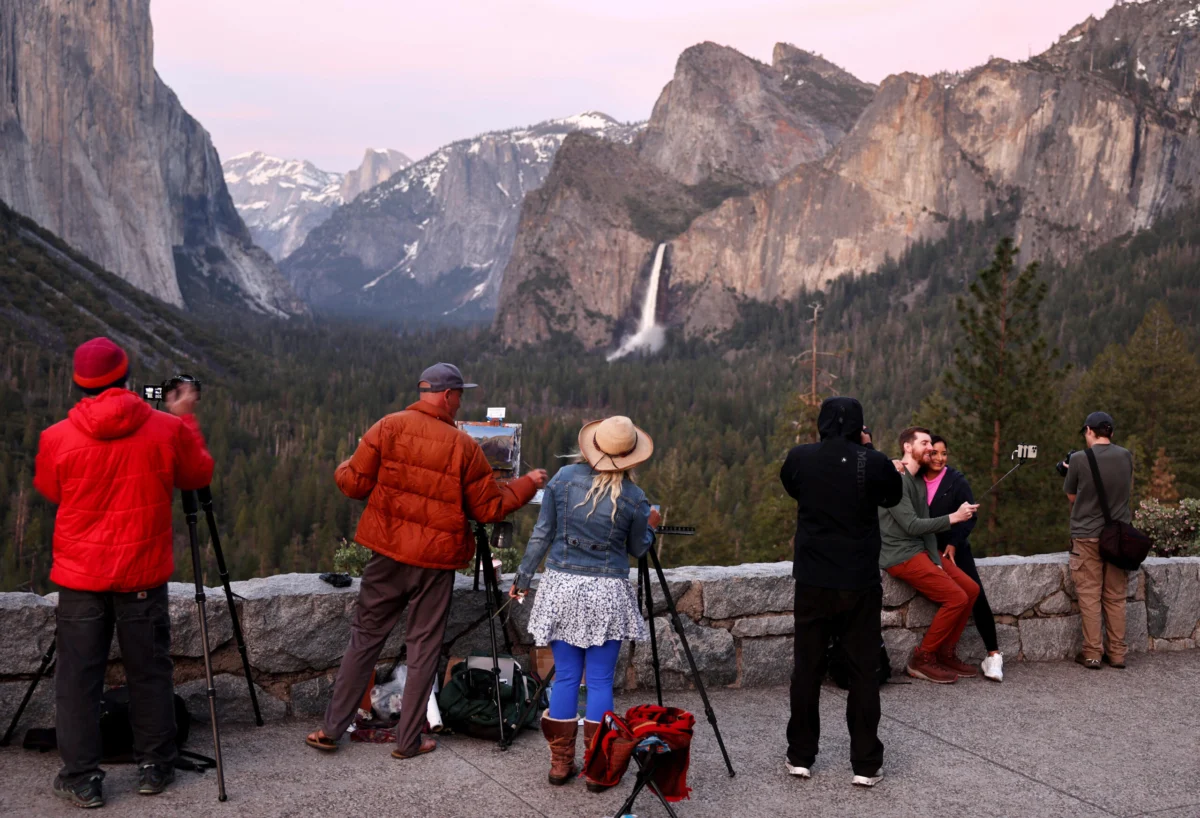
The Trump administration initiated consideration of a highly contentious land swap that could potentially cede a portion of Yosemite National Park, or an interest therein, to a private developer. This proposed exchange, aimed at facilitating a new access road for a private parcel, has ignited a fierce debate among conservationists, government watchdogs, and the public, raising significant questions about the sanctity of national park lands and the principles of public trust. The Interior Department and legal representatives for the developer, Kingsbarn Realty Capital, confirmed these discussions, which, if materialized, would represent an unusual precedent for the National Park Service (NPS).
At the heart of the proposal lies an 83-acre parcel historically known as Hazel Green Ranch, located near Yosemite’s western boundary. This property is owned by Nevada-based Kingsbarn Realty Capital, which seeks to construct an access road, reportedly "under a mile" in length, to connect its private holding to a Yosemite entrance. Lanny Davis, an attorney representing Kingsbarn, presented the developer’s rationale, framing the proposed shorter access route as an environmentally beneficial initiative that would purportedly reduce driving distances and vehicle emissions. However, this justification has been met with widespread skepticism and outright condemnation from leading environmental advocacy organizations.
Yosemite National Park: A Crown Jewel of American Conservation
To fully grasp the magnitude of this proposal, it is essential to understand Yosemite National Park’s profound significance. Established in 1890, following the pioneering efforts of figures like John Muir, Yosemite stands as one of America’s earliest and most revered national parks. It encompasses nearly 1,200 square miles (approximately 759,620 acres) of breathtaking wilderness, characterized by its iconic granite cliffs, giant sequoia groves, powerful waterfalls, and diverse ecosystems. Annually, Yosemite attracts millions of visitors, contributing substantially to California’s tourism economy and serving as a global symbol of natural beauty and wilderness preservation. In 1984, it was designated a UNESCO World Heritage site, further underscoring its universal value.
The National Park Service, which manages Yosemite, operates under a dual mandate: to conserve the scenery and the natural and historic objects and the wild life therein, and to provide for the enjoyment of the same in such manner and by such means as will leave them unimpaired for the enjoyment of future generations. This foundational principle, enshrined in the NPS Organic Act of 1916, places a high bar on any action that could compromise park integrity, especially the direct transfer of park land for private development.
The Mechanics of a Land Swap and Kingsbarn’s Proposal
Land exchanges are not uncommon within the vast federal land management system, particularly involving agencies like the Bureau of Land Management (BLM) or the U.S. Forest Service. These exchanges typically aim to consolidate public land holdings, improve management efficiency, or acquire ecologically sensitive private parcels within or adjacent to public lands. A core tenet of such exchanges is that the lands involved must be of "equal value," often determined by independent appraisals.
In this specific case, Kingsbarn Realty Capital proposes to purchase land of equal value elsewhere in California and then convey it to the National Park Service in exchange for the Yosemite parcel or an interest in it. Documents reviewed by NOTUS, which first broke the story, outlined this framework. However, the exact location and ecological characteristics of the proposed replacement land remain unspecified. Critics immediately raised concerns about the comparability of value, arguing that the irreplaceable ecological and scenic value of a national park parcel cannot be simply equated with acreage elsewhere, regardless of monetary appraisal. The inherent public trust associated with national park land adds another layer of complexity that goes beyond mere market value.
A History of Access Disputes: The Hazel Green Ranch Precedent
The current proposal is not the first attempt to secure enhanced access to the Hazel Green Ranch property. The parcel’s former owner previously pursued legal avenues to obtain easement rights over existing roads leading towards Yosemite. This legal battle culminated in a federal appeals court ruling in 2012, which affirmed the dismissal of those claims. The court’s decision effectively denied the previous owner the desired access, highlighting the legal complexities and the strong protections afforded to national park boundaries. This historical precedent is a critical component of the current debate, suggesting that any new attempt to secure private access through park land would likely face significant legal hurdles and scrutiny.
The Trump administration’s consideration of this proposal comes within a broader context of its public lands policies. Throughout its term, the administration pursued initiatives that often prioritized resource extraction and commercial development on public lands, frequently drawing criticism from environmental groups. This included efforts to reduce the size of national monuments, streamline environmental review processes, and increase leasing for oil and gas development. While the administration asserted these actions were aimed at economic growth and reducing regulatory burdens, conservationists viewed them as a systematic weakening of environmental protections and an erosion of the public trust doctrine.
Official Responses and Regulatory Safeguards
A spokesperson for the Interior Department issued a statement emphasizing that "no final decision has been made" regarding the Yosemite land swap. The department further clarified that "any land exchange or access proposal involving National Park Service lands would be subject to all applicable federal laws, regulations and Departmental policies, including required environmental review and public notification processes." They added that if a proposal were to advance, the department would "follow established procedures" to ensure transparency and public involvement "consistent with federal law."
These procedural assurances, while standard, are viewed with a degree of apprehension by conservation groups. Federal laws such as the National Environmental Policy Act (NEPA) mandate thorough environmental impact assessments and public comment periods for major federal actions. However, critics often argue that these processes can be influenced by political will and that the spirit of conservation may be overridden by development interests. The commitment to "transparency and public involvement" would be tested through the extent and genuine consideration of public feedback during any formal review process.
Widespread Condemnation from Conservation Groups
The mere consideration of the land swap triggered an immediate and forceful backlash from prominent environmental and conservation organizations.
The Sierra Club, one of the nation’s oldest and largest environmental advocacy groups, unequivocally rebuked the plan, labeling it a "corrupt back-room deal." In a strongly worded press release, the organization asserted that such a move would "break with a longstanding commitment to protect Yosemite for the public good" by effectively handing over national park land to a private developer. They emphasized that national parks are held in trust for all Americans and should not be treated as commodities for private gain.
Similarly, the National Parks Conservation Association (NPCA), a leading advocate for the national park system, issued an equally scathing condemnation. The NPCA declared that the proposal "attempts to dismantle America’s conservation legacy," portraying it as a direct assault on the fundamental principles underpinning the national park system. Their statement went further, asserting that "This is an attack on the American people that own this national park. It would also be unlawful, and a court previously rejected a road development proposal." This highlights their conviction that the proposal is not only ethically dubious but also legally indefensible, given the previous court ruling regarding access rights to the Hazel Green Ranch.
Local communities, park visitors, and broader environmental coalitions are also expected to voice strong opposition should the proposal move forward. The perception of privatizing or carving out pieces of national parks for commercial interests often generates significant public outcry, rooted in the deep emotional and cultural connection many Americans have to these protected spaces.
Analysis of Implications and Potential Challenges
The implications of a successful land swap for an access road within Yosemite are far-reaching, extending beyond the immediate parcel in question.
- Legal Scrutiny and Challenges: Given the 2012 federal appeals court ruling on access rights for the Hazel Green Ranch, any new proposal for a road through park land would undoubtedly face intense legal challenges. Environmental groups have demonstrated a willingness and capacity to litigate perceived violations of environmental law and public trust doctrine, and the precedent set by the previous court decision would be a powerful tool in their arsenal.
- Erosion of Park Integrity and Precedent: The most significant concern for conservationists is the precedent such a deal could establish. Allowing a private access road into a national park, particularly for a commercial venture, could be seen as "chipping away" at the inviolability of national park boundaries. Critics fear it could open the door for similar requests in other national parks, gradually eroding the wilderness character and protected status of these invaluable landscapes.
- Environmental Impact: While the developer’s attorney suggested environmental benefits, the construction and maintenance of any new road, even a short one, within a sensitive ecosystem like Yosemite carries inherent environmental risks. These include habitat fragmentation, increased runoff, potential for invasive species introduction, visual blight, and increased human-wildlife conflict. Furthermore, improved access to a private parcel within the park’s periphery could lead to increased traffic and associated impacts on air quality, noise levels, and visitor experience within the park itself.
- Public Trust and Commercialization: The core argument against the proposal centers on the public trust doctrine, which posits that certain natural and cultural resources are held by the government in trust for the benefit of all citizens. Transferring national park land for private commercial development is seen by many as a betrayal of this trust, prioritizing private profit over the collective public good and the long-term preservation of national heritage.
- Transparency and Influence: The report by NOTUS highlighted that Jeff Pori, CEO of Kingsbarn, made regular, mostly small-dollar donations to President Donald Trump’s campaign committee between 2017 and 2020 (adjusting the reported dates of 2024-2025 to align with the Trump administration’s tenure and the article’s publication date in April 2023). While CNBC reported finding no evidence that these contributions directly influenced the administration’s consideration of the proposal, the optics of a developer seeking a significant land deal with the federal government while simultaneously donating to the sitting president’s campaign naturally raise questions about potential influence and fair process. This perception of potential impropriety fuels public distrust and strengthens the arguments of those who characterize the deal as a "back-room" arrangement.
Conclusion
The proposed land swap involving a piece of Yosemite National Park for a private access road represents a flashpoint in the ongoing national debate between development interests and conservation imperatives. While the Interior Department maintains that no final decision has been made and that any process would adhere to federal laws and ensure transparency, the mere consideration of such a deal has provoked a powerful and unified opposition from environmental and conservation groups. The historical significance of Yosemite, the legal precedents set by previous access disputes, and the fundamental mission of the National Park Service combine to create a formidable barrier to the proposal’s advancement. As discussions continue, the future of this contested parcel of Yosemite land will serve as a critical test case for the enduring strength of America’s commitment to its national parks and the principles of public land stewardship. The outcome will undoubtedly have lasting implications for how the nation balances economic development with the preservation of its most cherished natural treasures.
