

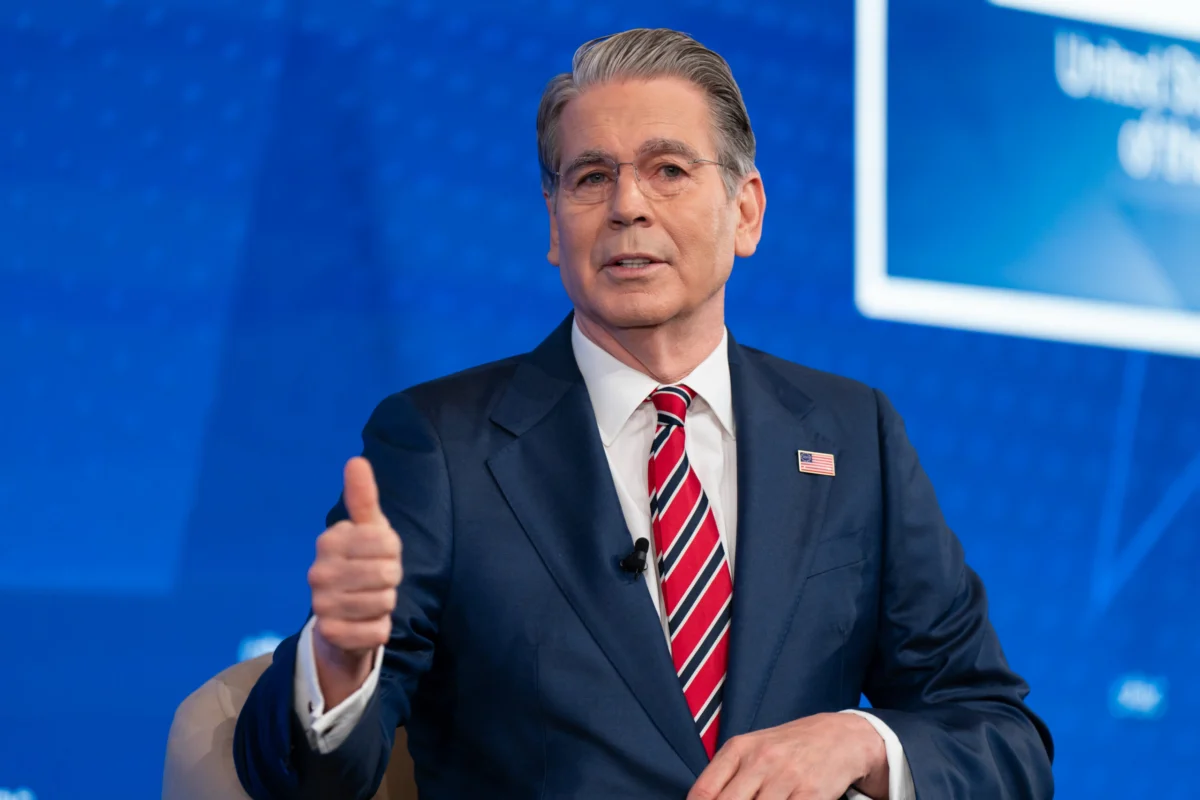
Even as a wave of concerning inflation data has dominated recent headlines, Treasury Secretary Scott Bessent expressed a firm conviction on Thursday that price pressures are poised to abate significantly in the near future. Speaking to CNBC, Bessent anticipates a reversal of the current energy-driven inflation surge, attributing it to a forthcoming stabilization of global oil supplies. This optimistic outlook coincides with a significant leadership transition at the Federal Reserve, with a new chair set to assume the helm.
Bessent articulated his belief that the recent uptick in energy costs, exacerbated by geopolitical tensions, is inherently temporary. He pointed to the United States’ ongoing commitment to robust oil production as a key factor that will help alleviate supply-side shocks. "I firmly believe that nothing is more transient than a supply shock," Bessent stated in an interview with CNBC’s Joe Kernen. He emphasized that prior to the escalation of the conflict involving Iran, core inflation had been on a downward trajectory, suggesting that underlying inflationary forces remain manageable.
The Treasury Secretary’s remarks were made on the sidelines of President Donald Trump’s summit with Chinese President Xi Jinping, a high-profile diplomatic event underscoring the complex global economic landscape. Bessent’s confidence stems from his assessment that "core inflation will continue coming down," a projection that contrasts with the most recent economic indicators.
Recent Inflationary Trends Paint a Mixed Picture
The optimistic forecast from Secretary Bessent comes at a time when official inflation figures have presented a challenging reality. This week’s releases painted a stark picture:
- Consumer Price Index (CPI): The Bureau of Labor Statistics reported that the CPI rose by a significant 0.6% in April. Even when excluding the volatile categories of food and energy, core CPI saw an increase of 0.4%. On a year-over-year basis, overall inflation stood at 3.8%, with core inflation at 2.8%. This marks a notable acceleration from previous months, raising concerns about persistent price pressures impacting household budgets.
- Producer Price Index (PPI): Further highlighting inflationary pressures upstream in the supply chain, the PPI, which measures prices received by domestic producers for their output, surged by a substantial 1.4% in April. This brought the 12-month PPI inflation rate to 6%, the highest level observed since late 2022. This surge in wholesale prices often serves as a leading indicator for future consumer price increases.
- Import and Export Prices: The inflationary shock was also evident in international trade. Import and export price indexes both posted their highest readings in approximately four years, indicating that rising costs are being transmitted through global supply chains and impacting the domestic economy.
Despite these unfavorable readings, Bessent reiterated his expectation that the economy will experience "one or two more hot inflation numbers, but then I think we’re going to see substantial disinflation." This suggests a belief that the current inflationary impulses are temporary and will be quickly unwound by underlying economic forces and policy adjustments.
The "Warsh Fed" Era Begins: A New Chapter for Monetary Policy
Bessent’s optimistic outlook is also closely tied to the impending leadership change at the Federal Reserve. He referred to the forthcoming period as the "Warsh Fed," a nod to incoming Chair Kevin Warsh. Warsh, a former member of the Federal Reserve’s Board of Governors, received Senate confirmation on Wednesday and is slated to succeed Jerome Powell, whose term concludes on Friday. This transition marks a significant moment for monetary policy, as the Fed grapples with the challenge of taming inflation without derailing economic growth.
The appointment of Warsh has been met with a range of reactions. Some analysts anticipate a more hawkish stance from the new chair, potentially leading to more aggressive interest rate hikes or a prolonged period of tighter monetary policy. Others believe that Warsh’s experience and understanding of market dynamics will allow for a balanced approach, carefully navigating the delicate path between inflation control and economic stability. The market will be closely watching for any early indications of Warsh’s policy inclinations and his approach to current economic challenges.
Historical Context and Lessons Learned
Secretary Bessent’s current stance draws a contrast with the inflationary episode experienced in 2021-2022. During that period, a confluence of factors, including unprecedented fiscal and monetary stimulus in response to the Covid-19 pandemic, significant supply and demand imbalances, and the impact of the Russian invasion of Ukraine on energy markets, fueled a dramatic surge in inflation. At its peak, inflation exceeded 9%, leading to widespread criticism of the Federal Reserve for initially characterizing the price increases as "transitory" and for being slow to implement a robust monetary tightening response.

Bessent explicitly distanced himself from the "transitory" narrative that characterized the earlier inflation surge. "I was never on team transitory during Covid," he stated, acknowledging the persistent nature of those price pressures. His current optimism, however, suggests a belief that the current inflationary drivers are fundamentally different and more amenable to a swift resolution. He anticipates that "energy inflation will come back down," a crucial factor given its outsized impact on headline inflation figures.
Supporting Data and Broader Economic Implications
The Treasury Secretary’s expectation of disinflation relies on several key assumptions about the underlying economy and future market dynamics. The reversal of energy price shocks is a critical component of this forecast. The price of West Texas Intermediate (WTI) crude oil, a benchmark for U.S. oil prices, has seen volatility in recent months, influenced by geopolitical events and OPEC+ production decisions. Should global oil production increase and geopolitical tensions ease, a significant downward pressure on energy prices could materialize, directly impacting CPI and PPI figures.
Furthermore, the concept of "core inflation" is central to Bessent’s argument. Core inflation, which excludes food and energy prices, is often seen as a better indicator of underlying, persistent inflationary trends. The fact that core inflation, while still elevated, has shown a more moderate increase compared to headline inflation provides some support for the Treasury Secretary’s optimism. However, the persistent rise in services inflation, a component of core inflation that is less susceptible to immediate supply shocks, remains a concern for many economists.
The implications of Bessent’s forecast are far-reaching. If substantial disinflation materializes as predicted, it would provide the incoming Federal Reserve Chair with a more favorable operating environment. A declining inflation rate would reduce the pressure for aggressive interest rate hikes, potentially lowering the risk of a recession and allowing for a smoother economic transition.
Conversely, if inflation proves more stubborn than anticipated, the new Fed chair could face a more challenging mandate, potentially requiring difficult policy decisions with significant consequences for financial markets and economic growth. The ability of businesses to absorb or pass on higher input costs, consumer spending patterns in the face of persistent price increases, and the overall resilience of the labor market will all play a crucial role in shaping the disinflationary narrative.
Analysis of Key Factors Influencing Disinflation
Several factors will be critical in determining whether Bessent’s prediction of substantial disinflation comes to fruition:
- Global Energy Markets: The trajectory of oil and gas prices remains paramount. Geopolitical stability in major oil-producing regions, decisions by OPEC+ regarding production quotas, and the pace of the global transition to renewable energy sources will all influence energy inflation. The recent de-escalation of tensions in the Middle East, following earlier concerns about the Iran conflict, has already provided some relief to oil markets, a trend Bessent likely anticipates will continue.
- Supply Chain Resilience: While energy supply shocks are seen as transient, broader supply chain disruptions can have more lasting inflationary effects. The ongoing efforts to diversify supply chains, reshore manufacturing, and improve logistical efficiencies will be important in mitigating future price pressures. Data on shipping costs, port congestion, and inventory levels will provide insights into the health of global supply chains.
- Labor Market Dynamics: Wage growth is a significant component of service-sector inflation. A cooling labor market, characterized by a gradual decrease in job openings and a stabilization of wage increases, would contribute to disinflation. Conversely, continued tightness in the labor market could fuel wage-price spirals. Recent employment figures, including unemployment rates and average hourly earnings, will be closely monitored.
- Consumer Demand: The strength of consumer demand plays a vital role in determining how much pricing power businesses possess. Should consumer spending remain robust, businesses may be more inclined to pass on higher costs. A moderation in consumer spending, potentially due to higher interest rates or reduced disposable income, could temper inflationary pressures. Consumer sentiment surveys and retail sales data will offer clues in this regard.
- Federal Reserve Policy: The monetary policy decisions made by the Federal Reserve under its new leadership will be a primary determinant of inflation. The pace and magnitude of any interest rate adjustments, as well as communication regarding future policy intentions, will significantly influence inflation expectations and economic activity. The market will be dissecting every statement and action from the Fed in the coming months.
Broader Economic Outlook and Investor Sentiment
The Treasury Secretary’s optimistic outlook, if borne out, could foster a more stable economic environment. A significant reduction in inflation would alleviate pressure on the Federal Reserve, potentially allowing for a pause or even a reversal of interest rate hikes sooner than previously anticipated. This, in turn, could boost investor confidence, support equity markets, and reduce borrowing costs for businesses and consumers.
However, the path to disinflation is rarely smooth. The possibility of "one or two more hot inflation numbers" suggests an acknowledgment of ongoing volatility. Investors and policymakers will need to remain vigilant, monitoring economic data closely and adapting strategies as circumstances evolve. The resilience of the U.S. economy in the face of these inflationary headwinds and the effectiveness of the Federal Reserve’s policy response will be critical determinants of the economic trajectory in the coming months and years. The transition at the Federal Reserve, coupled with the ongoing global economic shifts, sets the stage for a period of intense scrutiny and careful navigation by economic leaders.
