

Investors have begun to price in a heightened likelihood of future inflation, a development that has emerged in the days following the Treasury Department’s announcement of expanded debt buyback operations. This market reaction has raised questions about the broader policy implications of the Treasury’s move, particularly as it aims to enhance liquidity within the government debt market. The key indicator of this shift in sentiment is the rise in the breakeven rate, a market-based metric reflecting inflation expectations and the compensation investors demand for inflation risk.
The breakeven rate, derived from the difference between nominal Treasury yields and those of inflation-protected securities of the same maturity, has ascended across the yield curve. This upward trend culminated in its highest levels in over two months, signaling a growing unease among market participants regarding inflationary pressures. For instance, at the 10-year horizon, the breakeven rate reached 2.34% on Thursday, a mark not seen since June 10. Similarly, five-year breakevens mirrored this figure, hitting their highest point since June 16. While these metrics remain within historical bounds and do not suggest an imminent inflationary surge, their upward trajectory underscores a palpable increase in inflation worries.
This heightened concern follows a significant announcement from the Treasury Department on Wednesday, revealing plans to at least double the size of its routine debt buyback operations. Typically conducted with a $2 billion allocation, these operations, initiated in 2024, are designed to support market liquidity for longer-dated government debt.
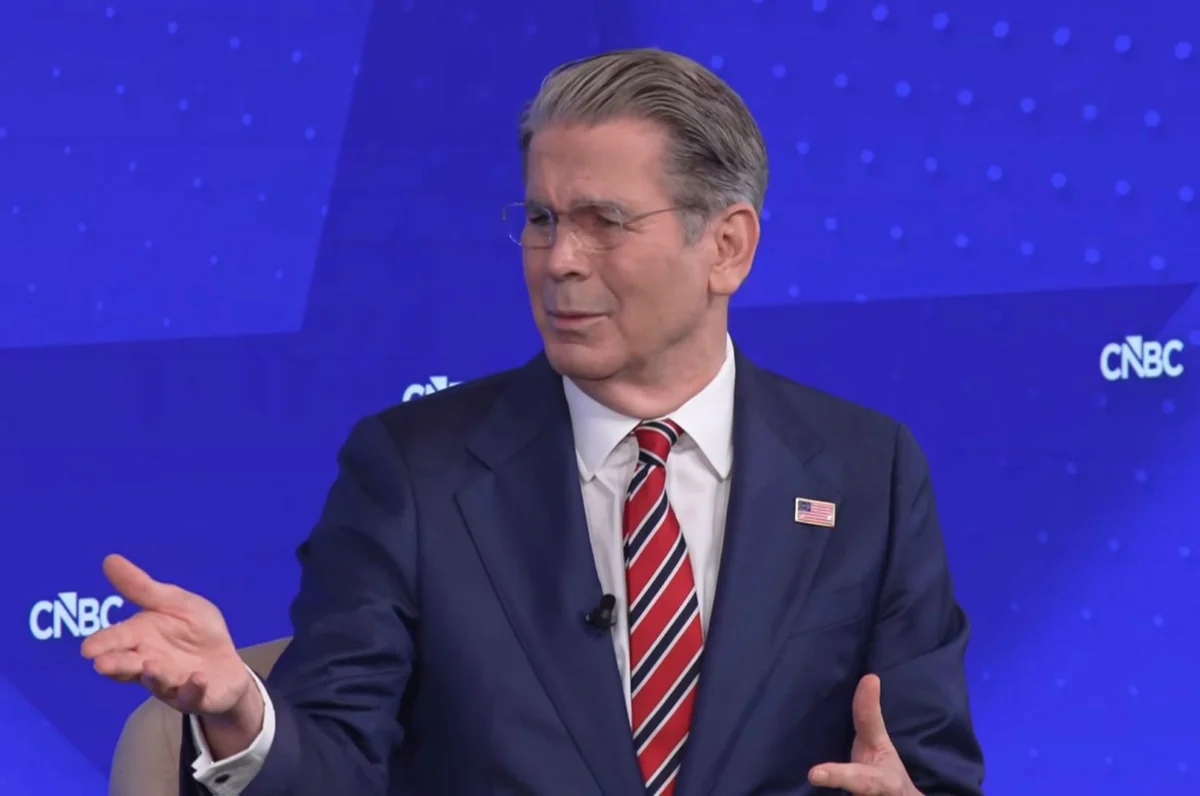
Treasury Secretary Scott Bessent, speaking at the CNBC Invest in America Forum in Washington, D.C., on April 15th, 2026, maintained that the expanded buyback operation was not intended as a direct effort to suppress yields. However, the timing of the announcement is noteworthy. It arrived shortly after both 10-year and 30-year Treasury yields had climbed to levels not witnessed since before the global financial crisis of 2008, a period characterized by significant market upheaval and profound economic shifts.
Van Hesser, chief strategist at KBRA, a prominent credit and bond rating agency, characterized the current market environment as "very unforgiving at the moment," citing a "cocktail of concerns that has risen up." He elaborated that the market’s pricing in of higher inflation aligns with a broader sentiment of apprehension. "These things sort of come and go," Hesser observed. "I think there are all of these these risks have been out there, and many of them for some time now. They they flare up from time to time and manifest themselves in markets."

Negative Market Reaction to Treasury’s Move
The uptick in market-based inflation expectations is part of a broader pattern that has unfolded throughout the week. While long-dated Treasury yields initially experienced a decline on the day of the buyback announcement, they subsequently rebounded. By Thursday, yields were on the rise again, a trend that continued into Friday’s trading sessions. The benchmark 10-year Treasury yield stood at 4.73% in early afternoon trading on Friday, marking an increase of 3.4 basis points for the day and surpassing its pre-announcement level.
Similarly, the 30-year Treasury yield climbed 3.6 basis points to 5.27%. Yields on shorter-dated Treasury securities also saw an increase. This phenomenon is partly attributed to the Treasury’s operational requirement to offset the buybacks of long-dated debt through the issuance of shorter-term bills, a mechanism that can influence the broader yield curve dynamics.
The recent surge in Treasury yields is not attributable to a single factor, with inflation fears emerging as a prominent concern. However, other forces are also at play, intensifying the competition for investor capital. U.S. Treasurys are now contending with higher-yielding government debt offerings in Asian and European markets. Furthermore, a record-setting surge in issuance from hyperscale companies investing heavily in artificial intelligence infrastructure has injected a significant volume of new debt into the market. Coupled with a general rise in term premiums – the additional yield investors demand for holding longer-dated U.S. debt – these factors contribute to the upward pressure on yields. This week also saw the total U.S. government debt surpass the $40 trillion mark for the first time, a milestone that underscores the scale of the nation’s borrowing.
Dollar Weakness Amidst Yield Increases
Intriguingly, while Treasury yields have been climbing, the U.S. dollar has simultaneously weakened. This trend has persisted throughout the week, with the greenback losing nearly 0.9% of its value. Thierry Wizman, global foreign exchange and rates strategist at Macquarie Group, suggested that this dollar depreciation might also be a consequence of the Treasury announcement and its perceived implications for Federal Reserve policy.
"Upon the announcement of the buyback increase and the ‘signaling effect’ it mustered, the 10-year breakeven rose by about 6-7 bps – not insignificant," Wizman noted. "That’s as if to say that something about the announcement was ‘inflationary.’" The Treasury Department officials did not respond to a request for comment regarding these observations.
Fed Chairman Warsh’s Upcoming Address Adds to Market Scrutiny
The market’s reaction to the Treasury’s actions has amplified the significance of Federal Reserve Chairman Kevin Warsh’s upcoming keynote address. Scheduled for August 28th at the central bank’s annual symposium in Jackson Hole, Wyoming, Warsh’s remarks are closely anticipated by market participants.

Warsh’s previous statements, particularly those endorsing a reduced role for the Federal Reserve in market management, have been interpreted by the market as dovish on inflation. Wizman cautioned that if Warsh were to signal a continued "dovish" stance indefinitely, it could prove counterproductive for both himself and the Treasury. Such a signal might lead to further increases in inflation breakevens, potentially undermining the stability in long-term nominal yields that Treasury Secretary Scott Bessent appears to be pursuing.
Alternative Perspectives on Yield Movements
Despite the prevailing concerns about inflation and market reactions, some analysts maintain a more sanguine outlook on the recent movements in Treasury yields. David Zervos, chief market strategist at Jefferies, pointed out in a recent CNBC interview that the 10-year Treasury note has been trading within "one of the tightest ranges" observed over the past two decades. "It’s not running away from anybody," he asserted.
Zervos also highlighted a perceived shift in Treasury Department strategy. "What we’re seeing is a different kind of Treasury secretary, someone who’s willing to come in and be more tactical, and that is something new for the market, and the market’s going to have to adjust to that," he stated. This perspective suggests that Secretary Bessent’s more active approach to market management might be a deliberate strategy designed to foster greater market stability and predictability over the long term.
Echoing this sentiment, KBRA strategist Van Hesser suggested that current yield levels are more in line with historical norms. He posited that this represents a return to more natural market functioning after an extended period where the Federal Reserve actively employed its tools to maintain artificially low interest rates.
"A 4 to 5% 10-year is a very constructive level of rates in a thriving economy," Hesser remarked. "I think a 4 to 5% tenure is a very healthy rate that allows interest rates to do what interest rates are supposed to do, and that is moderate capital flows through the economy." This view implies that current yield levels, while higher than recent historical lows, are indicative of a healthy and functioning economy where interest rates are playing their traditional role in guiding investment and consumption decisions. The Treasury’s buyback operations, from this perspective, could be seen as an effort to normalize market conditions and facilitate these natural economic processes.
