

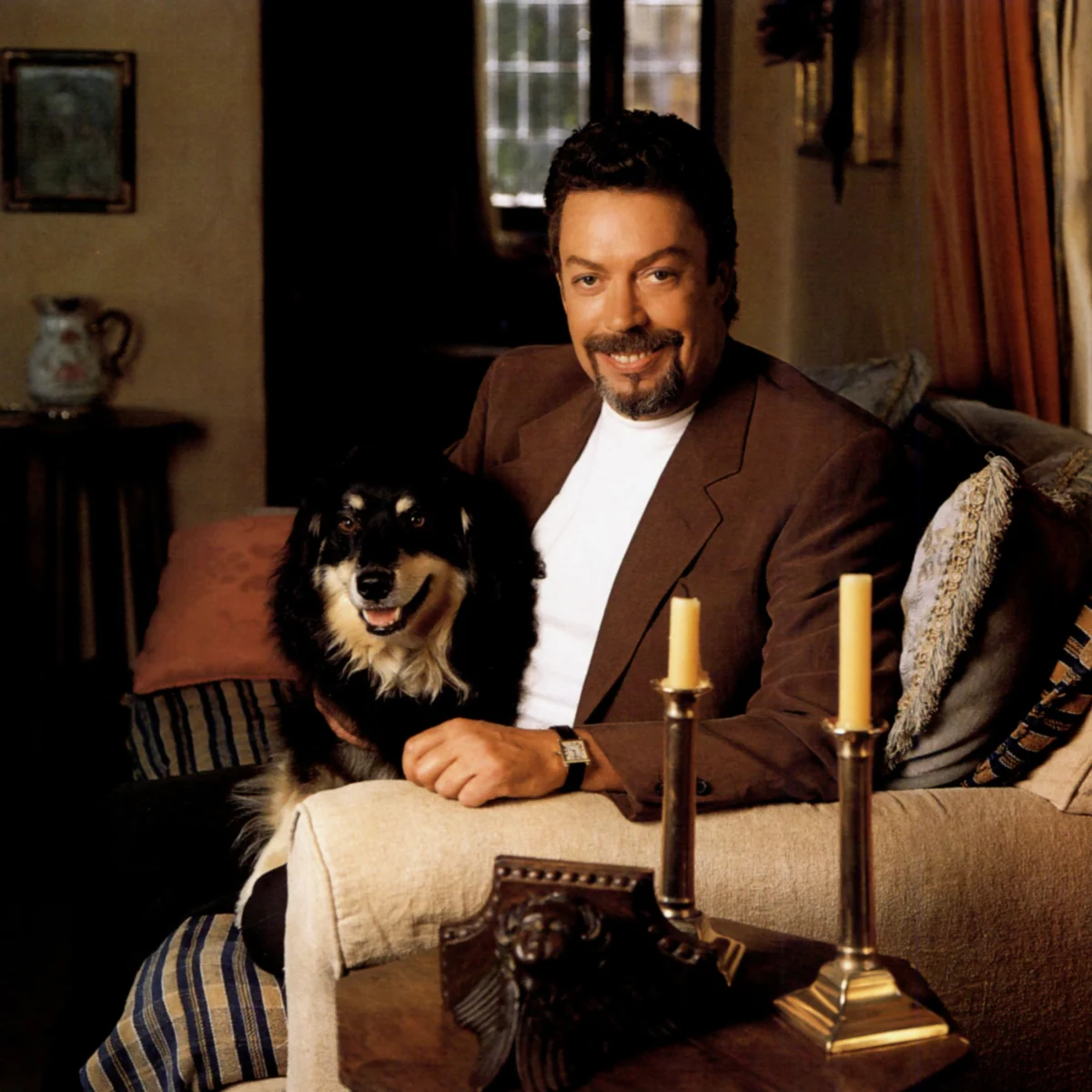
Tim Curry, the classically trained British actor whose transformative performances spanned from the avant-garde stages of London to the heights of Hollywood cult stardom, passed away today at the age of 80 in his Los Angeles home. Known for a career that defied easy categorization, Curry’s passing marks the end of an era for both the theatrical world and the film industry. His representatives confirmed that the actor died peacefully, surrounded by the reminders of a life dedicated to the arts, horticulture, and a profound appreciation for the "engine of myth" that is the silver screen.
Curry’s legacy is inextricably linked to his portrayal of Dr. Frank-N-Furter, the "sweet transvestite" scientist in Richard O’Brien’s The Rocky Horror Show. After originating the role in the 1973 London stage production, Curry reprised it for the 1975 film adaptation, The Rocky Horror Picture Show. The film, which initially saw a modest release, eventually transformed into the longest-running theatrical release in film history, cementing Curry as a foundational figure in counter-culture and queer cinema. Beyond the fishnets and corsets of Rocky Horror, Curry’s versatility allowed him to navigate the diverse terrains of musical theater, prestige drama, and high-octane villainy, making him a household name for audiences across multiple generations.

Early Life and the Genesis of a Vocal Powerhouse
Born in Cheshire, England, on April 19, 1946, Timothy James Curry was the son of a Royal Navy chaplain and a school secretary. His upbringing was characterized by frequent relocations, a byproduct of his father’s military service. This itinerant lifestyle instilled in the young Curry an acute sensitivity to environment and a keen "sense of place" that would later inform his passion for architecture and interior design.
Before he was an actor, Curry was a singer. He honed his vocal talents as a boy soprano, a skill that would later serve as the backbone of his theatrical career. After studying Drama and English at the University of Cambridge and later at the University of Birmingham, he made his professional debut in the original London cast of the counter-culture musical Hair in 1968. It was during this production that he met Richard O’Brien, a chance encounter that would lead to the creation of the role that defined his early career.
Throughout the late 1960s and early 1970s, Curry established himself as a formidable presence in the London theater scene. His work with the Royal Shakespeare Company and the National Theatre showcased a range that extended far beyond the flamboyant. He earned critical acclaim for his portrayal of Tristan Tzara in Tom Stoppard’s Travesties and delivered a legendary performance as the title character in Peter Shaffer’s Amadeus, for which he received a Tony Award nomination after the production moved to Broadway.

The Hollywood Transition and the Lure of the Camera
While Curry remained a creature of the stage for the first two decades of his career, the 1980s marked a pivot toward cinema. He famously noted that after twenty years in the theater, he "fell in love with the camera," describing the lens as a "collective psyche" and an "engine of myth." This transition was facilitated by his move to Los Angeles, a city whose "architectural dreamscape" fascinated him.
His filmography grew to include an array of memorable, often menacing, characters. He portrayed the conniving Rooster Hannigan in the 1982 film adaptation of Annie, the Lord of Darkness in Ridley Scott’s 1985 dark fantasy Legend, and the butler Wadsworth in the cult-classic mystery Clue. In 1990, he terrified a new generation of viewers as Pennywise the Dancing Clown in the television miniseries adaptation of Stephen King’s It. His ability to find the humanity—or the exquisite moral attitude—within monstrous characters became his trademark.
The Sanctuary of Stiles Clements: A 1998 Retrospective
In 1998, Architectural Digest provided a rare glimpse into Curry’s private life by touring his Los Angeles residence, a home that served as a testament to his refined aesthetic and his rejection of Hollywood’s "baronial impulse." The house, a 1922 Spanish Colonial Revival designed by the famed architect Stiles Clements, was a masterclass in restraint and historical preservation.

Curry discovered the property with his close friend and fellow actor Annie Potts. At the time, the house was in a state of neglect, painted a jarring "Campbell’s Tomato Soup orange" and slated for demolition by a developer. However, the moment Curry stepped through the French doors and viewed the wild, terraced canyon behind the patio, he was captivated. "Oh my God," he famously recalled, "we’re in Ecuador." He purchased the home immediately, despite learning that a previous bidder had backed out because her psychic claimed the house was haunted.
Under Curry’s stewardship, the home became a "sotto voce" expression of his personality. He worked with the late designer Jim Lassiter to create a palette that honored the home’s original 1920s stencils and Moroccan Art Deco influences. The dining room, painted a dark persimmon, was an homage to the Guinness family home in Dublin, where Curry had once dined. "I do think that red encourages the appetite," Curry noted, reflecting on his "Methodist sensibility" which favored simple earthenware and solid oak over gaudy displays of wealth.
A Life in the Garden: The British Horticulturalist
Off-screen, Curry’s primary passion was horticulture. He viewed gardening not merely as a hobby but as a national birthright. "I think if you’re English, a trowel appears in your hand when you’re 30 like a prosthetic device," he once remarked. His expertise was such that he frequently consulted on the gardens of his friends, most notably working on the grounds of Freddie Mercury’s residence.

In his own Los Angeles home, the garden was an extension of the living space. He lived in his rear courtyard for nine months out of the year, entertaining guests amidst Arts and Crafts wicker furniture and tiles that depicted the story of Don Quixote. For Curry, the garden was a place of contemplation and a necessary counterweight to the artifice of the acting profession.
Chronology of an Extraordinary Career
The timeline of Tim Curry’s life reflects a constant evolution of craft:
- 1946: Born in Cheshire, England.
- 1968: Joins the original London cast of Hair.
- 1973: Originates the role of Dr. Frank-N-Furter at the Royal Court Theatre.
- 1975: The Rocky Horror Picture Show is released, eventually becoming a global phenomenon.
- 1981: Receives a Tony nomination for Amadeus on Broadway.
- 1982: Stars as Rooster Hannigan in Annie.
- 1985: Appears in Clue and Legend.
- 1990: Portrays Pennywise in Stephen King’s It.
- 1991: Wins a Daytime Emmy Award for his voice work as Captain Hook in Peter Pan and the Pirates.
- 1998: Featured in Architectural Digest, highlighting his Los Angeles estate.
- 2012: Suffers a major stroke, leading to a shift toward voice acting and occasional public appearances.
- 2026: Passes away at age 80 in Los Angeles.
Industry Reactions and Broader Implications
The news of Curry’s death has prompted an outpouring of tributes from the entertainment industry. Colleagues have described him as a "polymath" and a "gentle soul" whose Mephistophelian laugh masked a deeply thoughtful and private individual.

"Tim didn’t just play characters; he created icons," said a long-time collaborator in a statement. "He understood the power of the mask, but he also understood the importance of the man behind it. He was a scholar of art, a lover of nature, and the most versatile actor of his generation."
Cultural critics suggest that Curry’s impact on the industry is twofold. First, his work in Rocky Horror provided a template for the "midnight movie" and created a safe space for marginalized communities to celebrate non-conformity. Second, his dedication to the "set for the life you wish to pursue" showed a different side of celebrity—one focused on the curation of a meaningful private existence rather than the pursuit of the marquee.
Final Reflections
In his later years, particularly after a major stroke in 2012 confined him to a wheelchair, Curry remained active in the industry through voice acting, lending his unmistakable baritone to numerous animated series and audiobooks. He remained a fixture at fan conventions, where he was celebrated with the same fervor as he was during the height of his stage career.

Tim Curry’s life was a study in contradictions: the Methodist son who became a symbol of sexual revolution; the stage purist who fell in love with the camera; the Hollywood resident who remained quintessentially British. As he once noted, "Once I stopped rushing about the world… I realized there were more important things in life than a marquee." His home, his gardens, and his vast body of work remain as a lasting "engine of myth" for those he left behind.
