

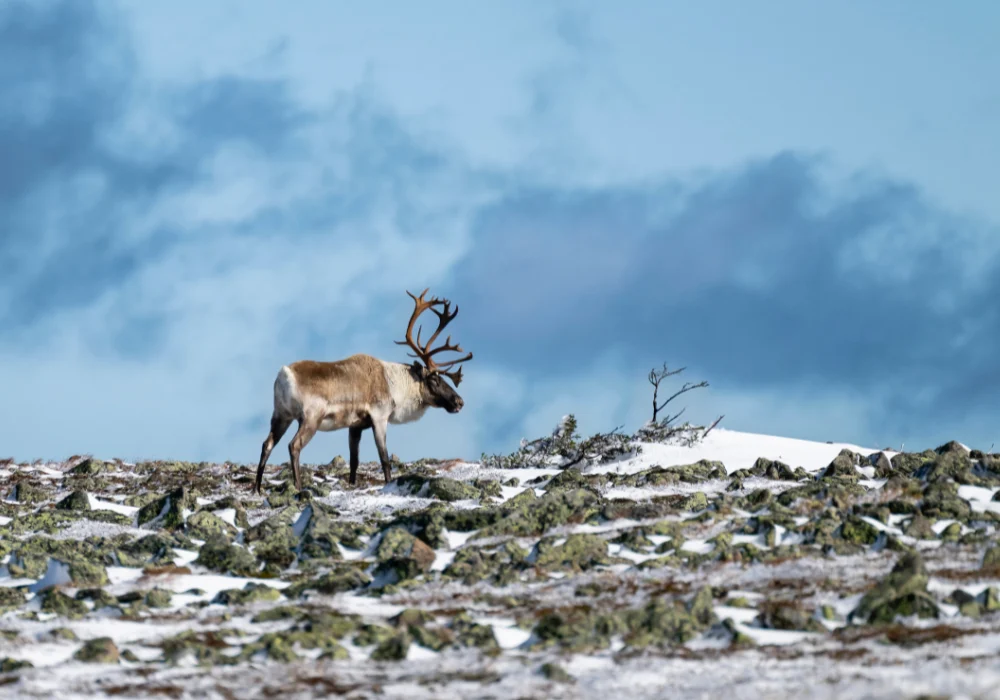
The barren-ground caribou is a creature defined by movement, undertaking the longest seasonal migration of any terrestrial mammal on Earth. Each year, these hoofed mammals, or ungulates, traverse a staggering 1,300 kilometers, navigating a grueling circuit between the protective shelter of subarctic forests in the winter and the windswept expanse of the Arctic tundra in the summer. However, recent scientific observations suggest that the survival of these herds depends on more than just physical endurance; it relies on a fragile, intergenerational "collective memory" that is currently under threat from rapid industrial expansion and a declining population.
As the Canadian Arctic faces a surge in proposed infrastructure projects, most notably a 400-kilometer all-season road designed to link the Northwest Territories to Nunavut, researchers are sounding the alarm. They warn that the disruption of ancient migratory corridors does more than just block a path—it risks erasing the accumulated wisdom of the herd, a loss that could prove catastrophic for a species already reeling from a 98% population collapse in certain key herds.
The Biological Architecture of Collective Memory
The concept of "collective memory" in caribou is not a literal equivalent to human episodic memory, but rather a sophisticated form of social learning and behavioral adaptability. Biologists, including renowned caribou expert Anne Gunn, have spent decades observing how tundra caribou modify their routes based on past environmental pressures. When a traditional path becomes impassable due to unusual icing or poor foraging conditions, the herd does not simply forge ahead blindly. Instead, the leaders—typically older, experienced females—draw upon past experiences to redirect the group toward more viable terrain.
"The average cow lives about 15 years," Gunn explains. "In that time, she has learned the nuances of the landscape from her mother. As a yearling, she followed her mother, who in turn followed her own mother. This creates a chain of knowledge that spans generations. They learn the locations of the best water crossings, the safest mountain passes, and the areas where the lichen remains accessible even under heavy snow. This is their collective memory."
This sociality is the cornerstone of their success in one of the harshest environments on the planet. Unlike many other migratory species that rely purely on instinct, barren-ground caribou demonstrate a high degree of plasticity. However, this plasticity is dependent on a "critical mass" of experienced individuals. When a herd thins out, the library of geographical knowledge thins with it.
The Bathurst Herd: A Population on the Brink
To understand the stakes of this environmental crisis, one must look at the Bathurst herd. Once a symbol of the vastness and fertility of the North, the Bathurst herd has become a cautionary tale of rapid ecological decline. In the mid-1980s, the herd was estimated to number roughly 470,000 individuals. By the early 2000s, numbers began to drop precipitously. According to recent data from the Government of the Northwest Territories and conservation groups, the herd has thinned by a staggering 98%, leaving only a few thousand individuals remaining.
The causes of this decline are multifaceted, involving a "perfect storm" of climate change, increased predation, and habitat fragmentation. A warming Arctic has led to more frequent "rain-on-snow" events, where rain freezes into an impenetrable layer of ice, preventing caribou from reaching the lichen they need to survive the winter. Against this backdrop of natural stress, human-led infrastructure projects are posing a final, existential hurdle.
The Grays Bay Road and the Arctic Economic Corridor
The most immediate threat to the remaining Bathurst caribou is the proposed Grays Bay Road and Port project. This 400-kilometer all-season road is a central component of a massive $40-billion initiative known as the Arctic Economic and Security Corridor. Spearheaded as a "nation-building" project, the corridor aims to link remote mines, military installations, and northern communities to the rest of Canada.
Because the project is classified under a strategic national interest framework, it is eligible for fast-tracked approval processes. While proponents argue the road is essential for Canadian sovereignty and economic development—particularly in the extraction of critical minerals needed for the "green" energy transition—wildlife ecologists point out that the road cuts directly through the heart of the Bathurst herd’s traditional calving grounds and migratory range.
Elie Gurarie, a professor of wildlife ecology at the State University of New York, emphasizes that caribou have a unique aversion to industrial infrastructure. "We know that caribou, especially the barren-ground migratory variety, really do not like crossing roads," Gurarie says. "It isn’t just the physical presence of the gravel; it’s the noise, the dust, the scent of machinery, and the human activity that accompanies it."
Lessons from the Diamond Mines: GPS Data and Behavioral Barriers
The concerns voiced by researchers like Gurarie are not speculative; they are backed by years of GPS-collar data. Researchers have closely monitored caribou behavior near existing, smaller-scale roads that connect the Diavik and Ekati diamond mines to Yellowknife. Although these are private mining roads with restricted public access, the impact on caribou movement is profound.
Data collected by the Northwest Territories’ Department of Environment and Climate Change shows that caribou frequently "bunch up" or pace along the embankments of these roads. During periods of high traffic, the animals often refuse to cross entirely, effectively being "fenced in" by a psychological and physical barrier. This prevents them from reaching optimal foraging grounds, leading to increased calf mortality and lower overall fitness of the herd.
If a private, seasonal mining road can cause such disruption, the impact of a 400-kilometer, all-season public highway would be exponentially greater. The "freedom to move" is not a luxury for the caribou; it is a physiological necessity. When their movement is restricted, their ability to respond to the shifting conditions of a changing climate is neutralized.
Chronology of Habitat Fragmentation in the Canadian North
The current crisis is the result of several decades of incremental encroachment:
- 1990s: The "Diamond Rush" in the Northwest Territories leads to the construction of the first major industrial roads and mine sites in the Bathurst range.
- 2000s: Satellite telemetry begins to show a clear "zone of influence" around mines, where caribou density drops significantly within 20 to 30 kilometers of industrial activity.
- 2010s: The Bathurst herd population crashes below the 20,000 mark, prompting strict harvest bans for Indigenous and non-Indigenous hunters alike.
- 2020-Present: The federal government and territorial leaders prioritize the Arctic Economic and Security Corridor, moving the Grays Bay Road project into the advanced planning and environmental assessment stages.
Mitigating the Impact: A Path Forward?
Despite the dire outlook, experts believe there is still a window of opportunity to safeguard the caribou’s future if development is handled with extreme caution. Elie Gurarie and other scientists suggest three primary pillars of mitigation:
- Collaborative Mapping: The government must move beyond top-down planning and work intimately with local Indigenous wildlife monitoring groups. Organizations such as the North Slave Métis Alliance, the Tlicho Ekwǫ̀ Nàxoèhdee K’è, and the Yellowknives Dene First Nation possess centuries of traditional knowledge regarding caribou behavior. By integrating this "human collective memory" with scientific data, developers can identify the "least-intrusive" routes that avoid critical crossings.
- Infrastructure Design: The physical build of the road matters. High, steep embankments act as walls for caribou. Designing roads with lower, gradual slopes would allow the animals to cross without the physical exertion and fear associated with steep climbs.
- Mandatory Closures: Perhaps the most controversial but effective measure would be the implementation of "migratory windows." This would involve closing the road to all traffic for several weeks during the peak of the spring and fall migrations, ensuring the herd can pass through their ancestral corridors without the deterrent of noise and motion.
The Cost of Losing the Library
The loss of the barren-ground caribou would be more than a biological tragedy; it would be a cultural and systemic collapse. For the Indigenous peoples of the North, the caribou are a "cultural keystone species," providing food, clothing, and a spiritual connection to the land.
From an ecological perspective, caribou are the primary architects of the tundra. Their grazing habits promote nutrient cycling, and they serve as the primary prey base for wolves, grizzly bears, and wolverines. If the caribou disappear because they have "forgotten" how to navigate their world—or because the paths have been blocked—the entire Arctic food web faces destabilization.
"If we don’t look after the herd well enough when they’re declining, and we lose most or all of a herd, all that collective memory of the landscape is lost," Anne Gunn warns. "But the herds are still there, and there are still knowledgeable individuals among them. Not letting a herd go extinct is the most important conservation goal we have in the North right now."
As the Canadian government weighs the economic benefits of the Arctic Economic and Security Corridor against the survival of the Bathurst herd, the decision will ultimately define the future of the Arctic. The "nation-building" projects of the 21st century must decide whether they have room for the ancient, wandering wisdom of the caribou, or if the road to progress will be paved over the memory of the herd.
