

The exchange-traded fund (ETF) landscape in the United States continues to be a fertile ground for innovation and rapid asset accumulation, with the first half of 2026 witnessing the launch of an impressive 728 new ETFs. Amidst this surge of new products, CFRA Research has identified five standout launches that not only demonstrate significant creative energy within the ETF ecosystem but also reflect burgeoning investor interest in specialized and thematic investment categories. These ETFs, ranging from cutting-edge semiconductor technology to the expanding frontiers of space exploration and novel fixed-income strategies, offer a compelling glimpse into the evolving demands of modern investors.
The exceptional performance of the Roundhill Memory ETF (DRAM) has positioned it as the undeniable star of the first half of 2026. This ETF’s success stems from its unique exposure to the High Bandwidth Memory (HBM) industry, a critical and rapidly growing segment of the artificial intelligence hardware supply chain. As of July 7, 2026, DRAM had amassed over $23 billion in assets, a remarkable feat for a newly launched product. Its investment strategy centers on key players in the HBM market, including SK hynix Inc., Samsung Electronics Co. Ltd., and Micron Technology Inc., which collectively command over 90% of the global HBM market share. CFRA views these companies as prime beneficiaries of a multi-year upcycle in AI memory demand. By July 7, 2026, these three giants constituted over 70% of DRAM’s portfolio, underscoring its concentrated bet on the future of AI infrastructure.
What sets DRAM apart from established semiconductor ETFs like the VanEck Semiconductor ETF (SMH) and the iShares Semiconductor ETF (SOXX) is its inclusion of international companies. As of July 9, 2026, neither SMH nor SOXX held SK hynix or Samsung Electronics in their portfolios, leaving a significant gap that DRAM has adeptly filled by offering pure-play exposure to global memory stocks. While the anticipated listing of SK hynix’s American Depositary Receipts (ADRs) on July 10, 2026, may lead to their inclusion in SMH and SOXX, their weight is expected to be considerably lower than in DRAM. DRAM’s consistent weekly inflows since its inception through July 3, and its ranking as the sixth-largest U.S.-listed ETF by first-half inflows, underscore its exceptional market reception.
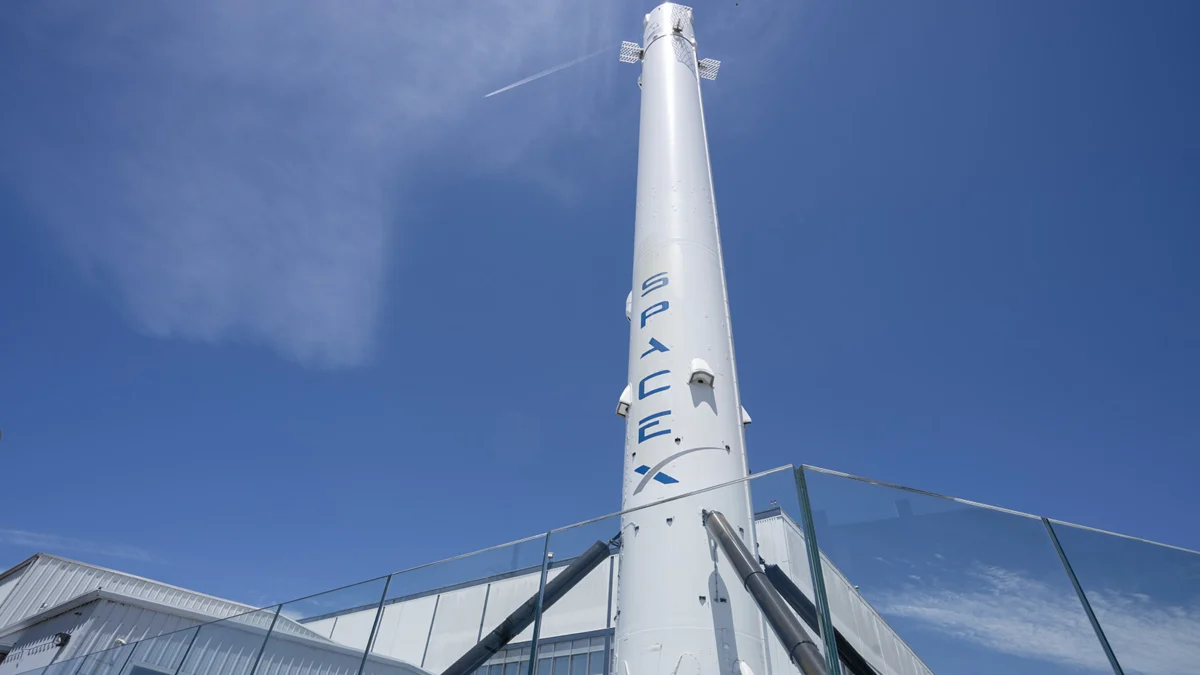
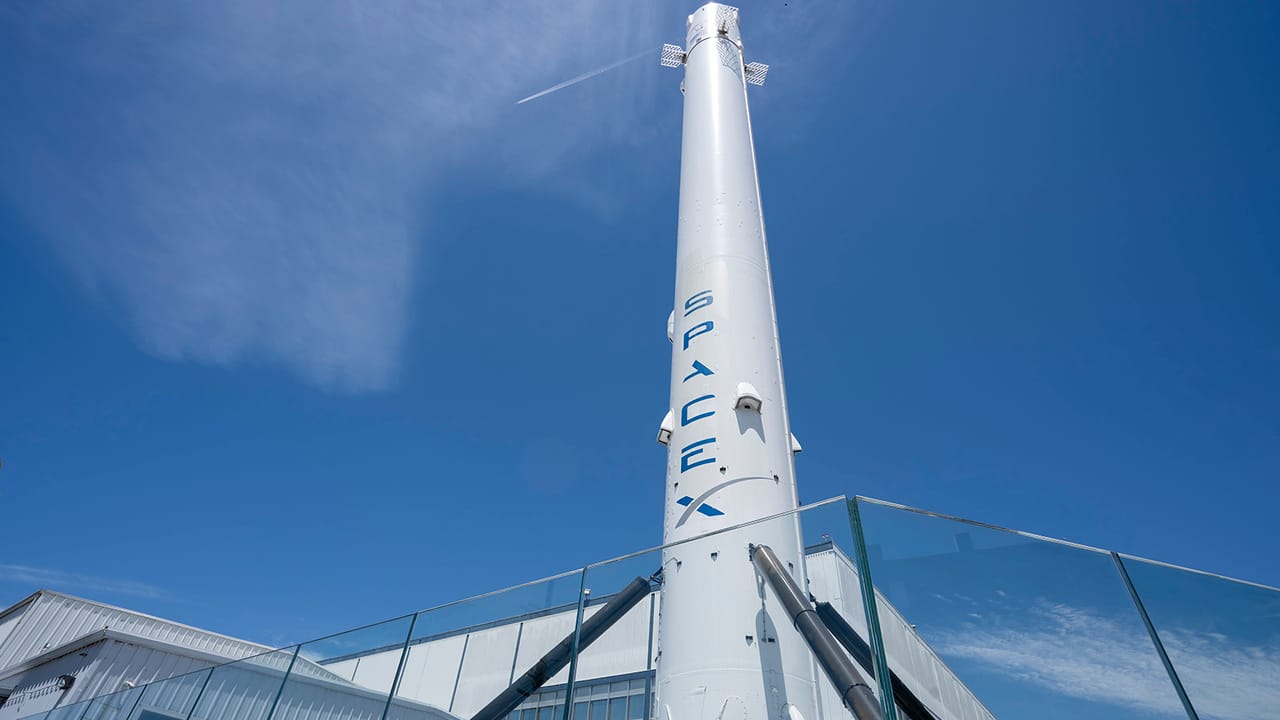
The burgeoning interest in space exploration, significantly amplified by the initial public offering (IPO) of SpaceX, has also fueled the launch of new thematic ETFs. The TEMA Space Innovators ETF (NASA) emerged as the largest among seven new space-themed ETFs introduced in the first half of 2026. Its initial surge in assets was largely driven by pre-IPO exposure to SpaceX, secured through a special purpose vehicle. While other ETFs in the space category have since added SpaceX shares to their portfolios post-IPO, the common stock route is generally preferred due to potential valuation and regulatory complexities associated with special purpose vehicles for private equity exposure.
The broader space thematic ETF category is poised for continued growth, fueled by SpaceX’s ambitious expansion plans and the resultant proliferation of a supporting ecosystem. CFRA’s fundamental equity team anticipates that suppliers of semiconductors, advanced materials, industrial gases, manufacturing equipment, satellite components, and AI infrastructure will significantly benefit from an accelerated launch cadence, the expansion of Starlink’s satellite internet service, and the ramp-up of Starship production. The convergence of Starlink, Starship, and AI infrastructure is expected to create increased demand across the semiconductor and compute supply chain. In the immediate term, companies such as industrial gas provider Linde plc, engineering firm Velo3D, and semiconductor manufacturer STMicroelectronics N.V. are strategically positioned to capitalize on SpaceX’s growth trajectory. As the space economy matures, a wider array of public companies is likely to become eligible for inclusion in specialized space-themed ETFs.
Beyond the realms of memory chips and space, the first half of 2026 also saw the introduction of ETFs addressing the "Heavy Assets Low Obsolescence" (HALO) investment theme. This concept, popularized by Ritholtz Wealth Management CEO Josh Brown, posits that businesses with substantial capital-intensive, real-world assets are less susceptible to disruption by artificial intelligence compared to their digital, capital-light counterparts. While a universally agreed-upon definition of a HALO business is still developing, and the long-term efficacy of this investment thesis remains to be proven, the profound impact of AI is driving increased investor interest in strategies that differentiate between AI beneficiaries and potential losers.
The Roundhill HALO ETF (LOHA) stands as the inaugural U.S. ETF explicitly dedicated to the HALO trade. Employing an index-based methodology, LOHA provides exposure to U.S.-listed companies whose economic value is intrinsically linked to physical goods, commerce, asset leasing, and tangible infrastructure networks. Shortly after LOHA’s launch, the Tuttle Capital Heavy Asset Low Obsolescence ETF (HALX) also debuted. HALX similarly tracks a rules-based index, aiming to hold between 30 to 50 constituents focused on physical assets and capital-intensive operations, including power systems, transportation networks, and industrial automation.
The sector exposures of LOHA and HALX diverge significantly from each other and from the broader market, as represented by the iShares Core S&P 500 ETF (IVV). As of July 7, 2026, LOHA’s exposure was heavily weighted towards the Industrials sector, accounting for 38% of its portfolio, in stark contrast to HALX’s 17% and IVV’s 9%. Similarly, LOHA held a combined 33% in the Consumer Discretionary and Consumer Staples sectors, compared to 19% in HALX and 14% in IVV. Notably, both HALO-themed ETFs exhibited minimal to zero exposure to the Information Technology and Financials sectors, which constitute 37% and 12% of IVV, respectively. This stark difference highlights the distinct investment philosophy of the HALO approach, aiming to sidestep sectors perceived as more vulnerable to technological disruption.
The fixed-income market has also experienced notable innovation, particularly in specialized securitized debt categories. Institutional and retail investors are increasingly turning to securitized debt instruments as a means to achieve higher yields than are typically available from traditional corporate and government debt. The ProShares GENIUS Money Market ETF (IQMM) has made a significant impact, rapidly amassing over $20 billion in assets as of July 7, 2026. This ETF distinguishes itself by adhering to the reserve requirements stipulated by the Guiding and Establishing National Innovation for U.S. Stablecoin (GENIUS) Act. By meeting these stricter standards, which exceed those of the standard Rule 2a-7 applicable to money market funds, IQMM is positioned to serve as a critical intermediary between conventional fixed-income markets and the burgeoning digital asset landscape, particularly for stablecoin issuers seeking compliant reserve assets.
The iShares Securitized Income Active ETF (SECU), listed in January 2026, represents a significant development in this niche. Evolving from a predecessor mutual fund with a history dating back to July 2005, SECU employs an active management strategy focused on higher-yielding securitized credit. Its portfolio is diversified across commercial mortgages (33%), non-agency mortgage-backed securities (31%), collateralized loan obligations (19%), and other asset-backed securities. As of July 7, 2026, SECU offered a compelling yield profile, with a 30-day SEC yield of 5.41% and an average yield to maturity of 6.25%, coupled with a relatively modest effective duration of 3.47 years. To achieve these enhanced yields, the ETF strategically allocates across the credit quality spectrum, with 44% of its portfolio invested in AAA-rated securities. This approach contrasts with the more narrowly focused Janus Henderson AAA CLO ETF (JAAA), which exclusively targets the highest-rated tranches of collateralized loan obligations.
CFRA anticipates that the launch of SECU will be a catalyst for further growth within the non-government securitized credit ETF category. JAAA currently holds a dominant position in this space, with its $29 billion in assets reflecting strong investor demand. However, JAAA’s exclusive focus on AAA-rated securities limits its scope. SECU, alongside peers such as the Janus Henderson Securitized Income ETF (JSI) and the DoubleLine Securitized Credit ETF (DSCO), is expanding the category’s reach by extending exposure to lower-ranking tranches of the capital structure, thereby aiming to generate higher yield premiums. As of July 7, 2026, total assets in U.S. non-government asset-backed security ETFs surpassed $58 billion. This trend suggests a growing investor appetite for specialized, actively managed vehicles as alternatives to more traditional, passive index products like the iShares Core U.S. Aggregate Bond ETF (AGG).
The proliferation of these innovative ETFs in the first half of 2026 underscores a dynamic and evolving ETF market. CFRA’s selection of these five notable launches is based on their distinctiveness and the significant investor interest they have garnered in their respective specialized categories. The emergence of these products highlights the agility of ETF issuers, who are demonstrating a keen ability to monitor investor sentiment—as seen with interest in SpaceX and memory chips—and to respond swiftly to evolving regulatory landscapes, such as those impacting digital assets. As these products and their underlying segments continue to develop, market participants will be keenly observing whether investor demand remains robust. The sustained success of these specialized thematic ETFs will ultimately serve as a crucial indicator of the broader market’s appetite for unique and targeted investment opportunities within the accessible ETF wrapper. The ability of these ETFs to navigate market fluctuations and deliver on their investment theses will be a key determinant of their long-term viability and influence on future ETF product development.
