


In 2013, a seemingly paradoxical observation emerged from the music world: DJ Khaled’s album, "Suffering from Success," captured a unique brand of overwhelmed achievement. This sentiment, while artistically delivered, eerily foreshadowed the trajectory of the infrastructure asset class throughout the 2010s. What began as a triumphant expansion, marked by impressive growth and investor appeal, has evolved into a complex ecosystem demanding a more nuanced understanding.
The infrastructure sector, once a quiet but essential component of institutional portfolios, has experienced an extraordinary surge in managed assets. From a modest $60 billion in 2008, private infrastructure funds commanded an estimated $1.6 trillion by 2026, a compound annual growth rate second only to venture capital among private asset classes. This sustained period of "winning" brought significant capital into the sector, but as DJ Khaled’s album title suggested, this success introduced its own set of challenges and transformations.
The Genesis of Infrastructure’s Boom
The foundations for infrastructure’s rise were laid in the aftermath of the 2008 Global Financial Crisis. Governments, burdened by soaring debt and the urgent need to stabilize financial markets, found themselves unable to allocate sufficient capital to critical infrastructure development and maintenance. Simultaneously, a growing body of research highlighted a substantial funding gap. Stanford University projected a $2.6 trillion shortfall in U.S. infrastructure funding through 2029, while McKinsey & Company estimated global annual infrastructure needs to exceed $9 trillion. This confluence of fiscal constraints and escalating demand created an opening for private investment to fill the void.
From an investor’s perspective, infrastructure emerged as an attractive proposition. It offered tangible assets underpinning essential services, ensuring stable and often inflation-linked cash flows, typically secured through regulatory frameworks or long-term contracts. The inherent monopolistic nature of many infrastructure assets also provided significant pricing power. For investors emerging from the uncertainty of the 2008 crisis, infrastructure presented a compelling blend: the stability of fixed income with the potential for equity-like returns.
This perception was largely validated between 2016 and 2022. Global infrastructure funds averaged approximately 11% annually, exhibiting mark-to-market volatility that more closely resembled public bonds. Their correlation with public markets during this period ranged between 0.6 and 0.8, further cementing their reputation as a stable, uncorrelated asset class. This period solidified infrastructure’s image as a reliable, high-performing investment.
The Inflection Point: Suffering from Success
By the early 2020s, the very success of the infrastructure sector began to manifest as a challenge. In 2021 alone, infrastructure funds raised a record $130 billion. This influx of capital created a competitive environment where General Partners (GPs) were eager to deploy funds, driving up valuations. The "boring" but stable infrastructure assets of the previous decade – mature utilities, toll roads, and essential services that reliably delivered 8-10% Internal Rates of Return (IRRs) – began projecting lower returns, even as their operational complexities remained.

This marked an inflection point for the asset class. The era of readily available, low-risk, high-yield opportunities waned. Investors were faced with a stark choice: accept diminished returns from mature, well-established assets or venture into higher-risk territories that increasingly resembled private equity. The definition of infrastructure itself began to broaden and fragment.
The Expanding Definition of Infrastructure
Historically, infrastructure was defined by a narrow set of tangible assets characterized by long lifespans, stable demand, and predictable cash flows, often derived from regulated or concession-based frameworks. This included toll roads, airports, utilities, and schools – assets that, while perhaps unglamorous, provided essential services and predictable returns.
However, over the past 15 years, the scope of what constitutes "infrastructure" has dramatically expanded. This broadening is where much of the new capital has been directed, leading to a diversification of risk and return profiles within the asset class.
Digital Infrastructure: The New Utility
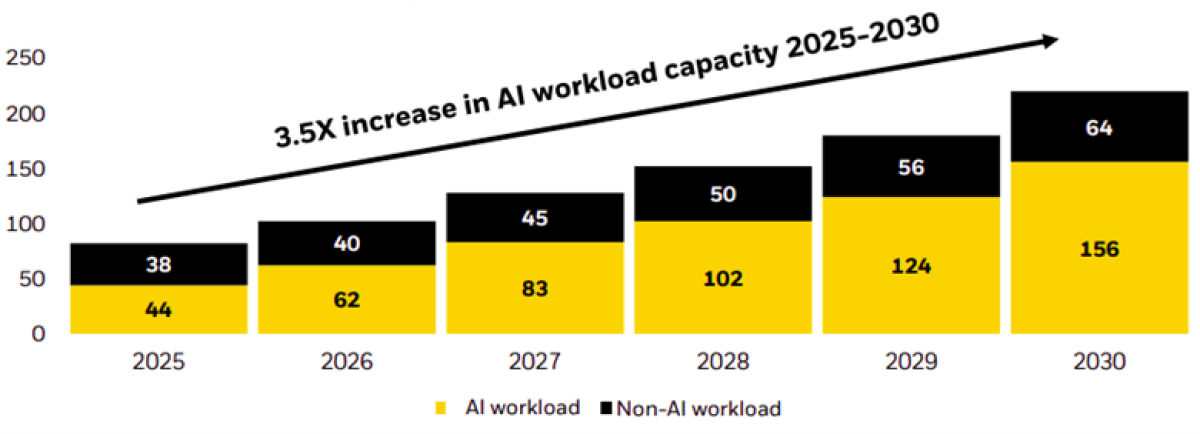
The most striking evolution has occurred within digital infrastructure. Telecom towers, fiber optic networks, and data centers, once considered niche technology-driven projects, are now being reclassified as essential utilities. The exponential growth in data consumption, fueled by cloud computing and the burgeoning adoption of artificial intelligence (AI), has rendered digital connectivity as critical as water or power. This inelastic demand, coupled with long-term contracts and improving risk profiles, has elevated assets like telecom towers and fiber networks from "core-plus" to "core" or even "super-core" status due to their predictable cash flows. McKinsey projects that global data center capacity will nearly quadruple by 2030, underscoring the immense growth potential and strategic importance of this sub-sector. This expansion mirrors the historical impact of the interstate highway system on U.S. productivity, suggesting similar macroeconomic implications for economic growth.
Renewable Energy and Clean Power: The Climate Imperative
Renewable energy and clean power infrastructure have become central to investment allocations. A decade ago, this sector was nascent, heavily reliant on subsidies, and often characterized by venture-like risk. Today, it is a critical pillar in the global effort to "climate-proof" economies. Clean energy has transitioned from subsidy dependence to market competitiveness in many regions. The sheer scale of the energy transition, requiring an estimated $9 trillion annually in physical assets by 2050, has spurred the creation of dedicated energy transition funds. This has led to increased capital allocation towards higher-risk greenfield projects, including offshore wind, energy storage solutions, and grid modernization initiatives, areas where governments alone are often unable or unwilling to bear the full financial burden.
Conventional Energy and Utilities: Navigating Transition Risks
Conventional energy assets, such as natural gas pipelines and fossil-fuel power plants, once considered low-risk cash cows, now face significant transition risks. As economies pivot towards cleaner energy sources, traditional infrastructure like gas distribution networks, previously categorized as "super-core," may require substantial and costly repurposing for alternative fuels like hydrogen. This necessitates a re-evaluation of risk-return expectations and a strategic "facelift" for these assets, focusing on which specific components remain viable and how their risk profiles have been altered by the energy transition.
Transportation and Logistics: Enduring Needs for Modernization
Transportation and logistics, encompassing toll roads, airports, and seaports, remain foundational elements of infrastructure portfolios. However, these sectors face substantial ongoing needs for maintenance and repair. Reports indicate that U.S. bridges require nearly $375 billion in repairs over the next decade, a significant portion of Japan’s roads and tunnels will soon exceed 50 years in age, and approximately 20% of England’s water supply is lost due to leaks. These persistent needs present significant opportunities for brownfield upgrades and reinvestment, essential for maintaining the functional backbone of the global economy.
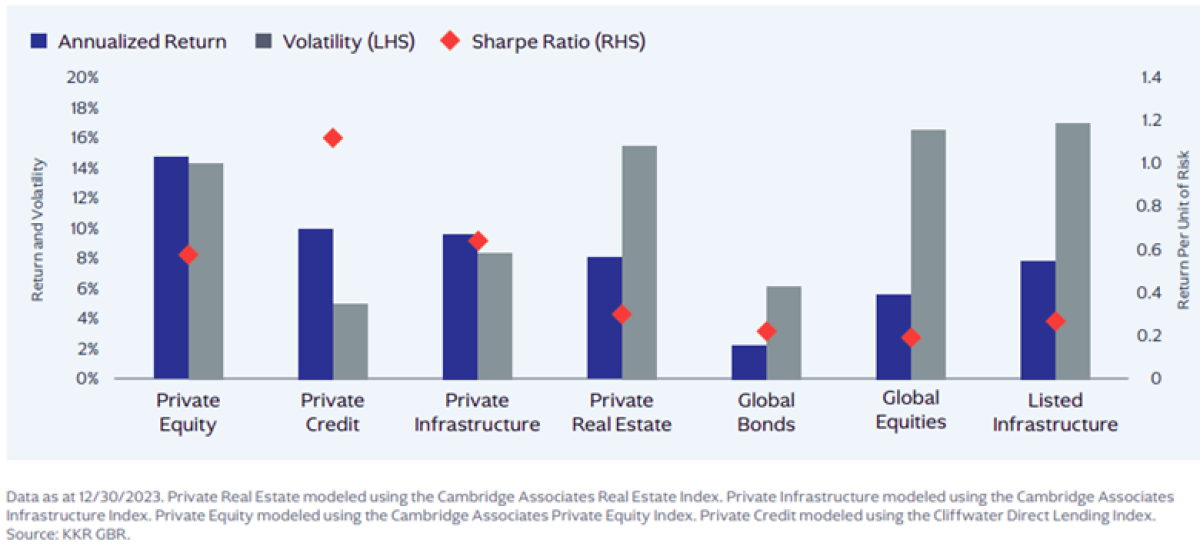
The modern infrastructure landscape thus spans a wide spectrum, from ultra-stable, regulated utilities to speculative greenfield renewable projects and innovation-driving digital connectivity. Investors must now approach infrastructure with the same analytical rigor applied to equity markets, moving beyond the broad label to differentiate by sector and risk profile.
The Political Will Variable: A Growing Determinant
In assessing infrastructure’s role within a portfolio, two parallel investment opportunities emerge: the essential but often unglamorous work of maintaining and upgrading existing physical infrastructure, and the high-growth potential of digital infrastructure, which is becoming as critical as traditional physical networks. Consequently, modern infrastructure portfolios must encompass both.
The performance dispersion across infrastructure sub-sectors has widened significantly. Cambridge Associates data indicates that while diversified infrastructure funds may deliver median returns below 10%, digital infrastructure can yield returns around 14%. More critically, the distribution of returns offers insights into geopolitical risk. Digital infrastructure often exhibits extreme positive skew, akin to venture capital, while renewables and power can present left-skewed distributions.
The interplay of political will further complicates these performance dynamics. Extreme left skews can arise when governmental intervention becomes overly restrictive, leading to project delays or regulatory gridlock, particularly impacting legacy energy and utility assets in politically volatile regions. For instance, Germany’s clearly defined infrastructure agenda can act as an enabler, whereas fragmented decision-making processes in countries like the United States can present significant constraints.
Infrastructure investment has therefore evolved beyond its initial mandate. It now serves as a hybrid asset class, encompassing fixed-income replacement, growth allocation, and increasingly, a bet on the effective implementation of public policy. The political environment is no longer a peripheral consideration but is poised to become a primary driver of asset performance, determining which investments succeed and which falter.
Synthesizing the Future of Infrastructure Investment
In its nascent stages, private infrastructure was envisioned as a dual solution: addressing the governmental funding gap while providing investors with much-needed income and stability. However, the dramatic expansion of the asset class has led to a situation where it now encompasses both the predictable stability initially sought by investors and the inherent complexity and risk profiles associated with private equity. Further compounding this is the rise of geopolitical competition and transformational technological change. Consequently, investing in infrastructure today transcends mere asset acquisition; it involves making a strategic bet on the efficacy and foresight of governmental policies and their ability to navigate these complex dynamics.
The cyclical nature of infrastructure’s success, marked by periods of rapid growth followed by evolving challenges, underscores the need for sophisticated analysis and strategic allocation. While the asset class has weathered "suffering from success" before, its current evolution demands a forward-looking approach that accounts for technological disruption, climate imperatives, and the critical variable of political will. Investors must now grapple with a landscape where infrastructure is not just about concrete and steel, but also about the digital highways of the future and the governmental frameworks that will govern their development and operation.
To gain a deeper understanding of infrastructure’s dynamic evolution, a recent discussion on Capital Decanted delved into its changing landscape, offering further insights into its current and future trajectory.
About the Contributor
Aaron Filbeck, CAIA, CFA, CFP®, CIPM, FDP, serves as the Managing Director of Content & Community Strategy at the CAIA Association. His professional background includes extensive experience in private wealth management, where he was responsible for asset allocation, portfolio construction, and manager research for high-net-worth individuals. He holds a BS with distinction in finance and a Master of Finance from Pennsylvania State University.
Learn more about the CAIA Association and its role in shaping the future of investment by visiting https://caia.org/
References:
[1] Cambridge Associates – Powering the Future: Infrastructure Trends, Performance, and Portfolio Impact (2025).
[2] BCG – Infrastructure Strategy 2025: How Investors Can Gain Advantage as the Asset Class Matures (March 2025).
[3] BlackRock – Infrastructure and Skilled Trades (2026).
[4] McKinsey – The Cost of Compute: A $7 Trillion Race to Scale Data Centers (April 2025).
[5] McKinsey – The Data Center Balance: How US States Can Navigate the Opportunities and Challenges (August 2025).
[6] CAIA Association – Where We’re Going, We Really Need Roads (September 2023).
