

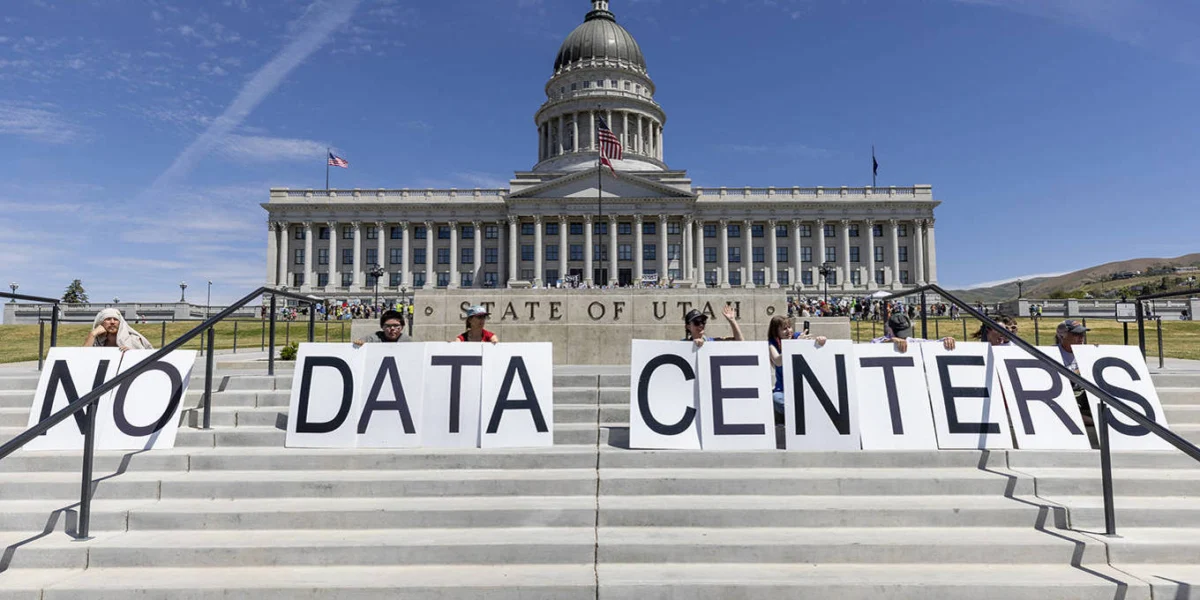
As the insatiable demand for artificial intelligence and cloud computing fuels an unprecedented surge in data center construction across the United States, a growing chorus of local communities and lawmakers is raising alarms, challenging the industry’s narrative of progress and national competitiveness. While tech titans frame these objections as an impediment to American innovation, a look at China’s past experience with rapid industrial expansion reveals the profound and potentially irreversible environmental and economic risks associated with unchecked growth. The burgeoning data center landscape, while promising economic benefits, is increasingly revealing a complex interplay of technological advancement, resource strain, and community resistance, forcing a national reckoning with the true cost of digital infrastructure.
The sheer scale of this expansion is staggering. In the first half of 2024 alone, investment in new data center construction in the U.S. is projected to exceed $100 billion, a significant leap from previous years. This boom is driven by the escalating needs of artificial intelligence, machine learning, and the ever-growing volume of digital data generated by individuals and businesses worldwide. Companies like Amazon Web Services, Microsoft Azure, and Google Cloud are at the forefront, acquiring vast tracts of land and pouring billions into building these colossal facilities that require immense power and water resources.
However, this rapid development is not unfolding without friction. A consistent stream of news highlights American towns and cities grappling with the arrival of these imposing structures. Residents in areas targeted for data center development are voicing significant concerns, ranging from the astronomical increase in electricity consumption and subsequent hikes in utility bills to the alarming rates of water withdrawal, particularly in drought-stricken regions. Furthermore, the constant hum of powerful cooling systems generates significant noise pollution, impacting the quality of life for nearby residents.
A Growing Tide of Local Opposition
The concerns are not merely anecdotal; they are manifesting in organized resistance and legislative action. In states like Virginia, which has become a major data center hub, local governments are struggling to balance economic incentives with the escalating strain on infrastructure and the environment. Loudoun County, often dubbed "Data Center Alley," has seen intense debate over zoning regulations and the environmental impact of its numerous facilities. Similarly, in Oregon, communities have pushed back against proposals, citing concerns over water rights and the agricultural impact of dedicating valuable land to industrial use.
This pushback is not confined to isolated incidents. It represents a systemic challenge to the industry’s expansion model. Local officials, often elected on platforms of community well-being, find themselves caught between the promise of job creation and tax revenue offered by tech giants and the tangible negative externalities experienced by their constituents. The narrative from industry leaders, which often emphasizes the critical role of data centers in maintaining American technological leadership and national security, faces increasing scrutiny when juxtaposed with the immediate realities faced by these communities.
The China Precedent: A Cautionary Tale
To understand the potential long-term implications of this unchecked expansion, it is instructive to examine China’s experience. In the late 2000s and early 2010s, China embarked on an aggressive campaign to build out its digital infrastructure, driven by a similar ambition to become a global technology powerhouse. The result was an explosion of data centers, often with less stringent environmental regulations and oversight than are now being demanded in the U.S.
During this period, China’s data center boom contributed significantly to its energy consumption and carbon footprint. Reports from that era highlighted the immense power required by these facilities, often relying on coal-fired power plants, exacerbating air pollution and greenhouse gas emissions. Furthermore, the water demands of cooling systems placed immense pressure on local water resources, particularly in water-scarce regions of northern China.
While China has since implemented more robust environmental policies and is investing heavily in renewable energy for its data centers, the legacy of its earlier, rapid expansion serves as a potent reminder. The environmental damage, once inflicted, can be difficult and costly to remediate. The U.S. is now at a similar juncture, facing the opportunity to learn from these past mistakes and implement sustainable practices from the outset.
Data-Driven Concerns: Quantifying the Impact
The concerns raised by communities are not without data to support them. A single large-scale data center can consume as much electricity as tens of thousands of homes. For instance, a typical hyperscale data center can use between 10 to 50 megawatts of power, with the larger facilities potentially exceeding 100 megawatts. This massive demand places significant strain on local power grids, potentially leading to increased energy prices for all consumers in the vicinity. The U.S. Energy Information Administration (EIA) has projected that data centers’ electricity consumption could more than double by 2030, a projection that has fueled calls for greater energy efficiency and the use of renewable energy sources.
Water consumption is another critical issue. Data centers utilize vast quantities of water for cooling, often in open-loop systems that discharge heated water back into local water bodies, impacting aquatic ecosystems. In arid regions like the American West, where water is already a precious resource, the competition for water between agricultural needs, municipal use, and industrial development, including data centers, is becoming increasingly acute. Some studies suggest that a large data center can consume millions of gallons of water per day, a figure comparable to the daily water needs of a small city.
Industry Responses and Regulatory Scrutiny
In response to growing public and regulatory pressure, the tech industry is beginning to address some of these concerns. Many companies are now pledging to use renewable energy sources to power their data centers, with ambitious targets for achieving 100% renewable energy use. Some are also investing in more water-efficient cooling technologies, such as closed-loop systems and free cooling, which utilize ambient air to cool the facility.
However, critics argue that these commitments, while positive, are often insufficient or lack clear, verifiable timelines. The pace of data center construction often outstrips the pace of renewable energy deployment, meaning that many new facilities are still reliant on fossil fuel-based energy sources. Furthermore, the definition of "renewable energy" can sometimes be broad, including unbundled renewable energy credits, which critics argue do not directly translate to new renewable energy generation.
Lawmakers are also stepping in. In various states, legislation is being introduced to mandate stricter environmental reviews for data center projects, impose limits on water usage, and incentivize the development of data centers powered by renewable energy. For example, some states are exploring policies that require data centers to offset their water consumption or to locate in areas with abundant renewable energy resources.
Broader Implications for the Economy and Environment
The ongoing debate over data centers has far-reaching implications for the U.S. economy and environment. On one hand, data centers are significant job creators, both during the construction phase and in the long-term operation and maintenance of the facilities. They also contribute to local tax bases, providing revenue for public services. The growth of the digital economy, underpinned by these facilities, is crucial for innovation and competitiveness on a global scale.
However, the potential negative consequences cannot be ignored. A failure to manage the environmental impact of data centers could lead to significant resource depletion, environmental degradation, and increased costs for consumers and businesses. The long-term sustainability of this rapid expansion hinges on finding a balance between technological advancement and environmental stewardship.
The experience of China serves as a stark reminder that prioritizing rapid growth without adequate consideration for environmental and social costs can lead to significant, long-lasting problems. As the U.S. continues its data center build-out, the growing backlash from communities and the increasing scrutiny from lawmakers signal a critical turning point. The industry must move beyond framing opposition as mere obstruction and instead engage in a genuine dialogue about sustainable development, resource management, and the long-term well-being of the communities that host these essential, yet demanding, digital powerhouses. The choices made today will determine the environmental and economic legacy of the AI revolution for decades to come.
