

BEIJING – In a significant escalation of its economic pressure campaign against Iran, the United States is now directly threatening to cut off any businesses, including financial institutions, that facilitate Iran’s evasion of sanctions from the American financial system. This bold move, spearheaded by Treasury Secretary Scott Bessent, has placed China’s major banks in an exceptionally precarious position. While Beijing has publicly vowed to protect its national interests, its largest lenders are deeply integrated into the global financial architecture and have powerful incentives to maintain unfettered access to U.S. dollars, the bedrock of international trade and finance.
The U.S. Treasury’s announcement on Monday, framed as part of what President Donald Trump termed "economic D-Day" against Iran, signaled a new phase of targeted sanctions enforcement. Treasury Secretary Scott Bessent stated unequivocally that "any entity facilitating money laundering or sanctions evasion on behalf of Iran risks being cut off from the U.S. financial system." When pressed specifically about the potential implications for Chinese banks, Bessent articulated the U.S. stance with stark clarity: "If they facilitate transactions and are part of the ecosystem that turns Iranian oil into money, into repression, they will be targeted." This declaration leaves little room for ambiguity, directly implicating any Chinese financial entity found to be enabling Iran’s illicit financial flows.
In response, China’s Ministry of Foreign Affairs issued a firm rebuttal on Tuesday, asserting that Beijing would "take all necessary measures" to safeguard its own interests. A spokesperson for the ministry declared, "China has made clear on many occasions its firm opposition to illicit unilateral sanctions that have no basis in international law or the authorization of the UN Security Council." This statement underscores China’s principled stance against what it views as extraterritorial overreach by the United States, emphasizing its commitment to international law and multilateralism.
The geopolitical backdrop to this financial standoff is complex and fraught with underlying tensions. The U.S. sanctions regime against Iran has been in place for years, aimed at curtailing Tehran’s nuclear program and its regional activities. However, the effectiveness of these sanctions has been significantly challenged by other nations, most notably China, which has remained a crucial economic lifeline for Iran. Prior to the recent escalation of regional conflict, China was Iran’s largest trading partner, absorbing approximately 90% of Iran’s oil exports, which represented about 12% of China’s total crude oil imports, according to an analysis by the U.S.-China Economic and Security Review Commission in March. This substantial trade relationship highlights the economic interdependence that now places China at the epicenter of the U.S. sanctions enforcement efforts.
The latest U.S. action, officially designated "Operation Economic Outcast," has specifically identified several China-based companies and individuals alleged to have assisted the Iranian military. While the U.S. has indicated that countries will be provided with a timeline to cease these identified activities, specific dates have not been publicly disclosed. When questioned about communication regarding this timeline, China’s Foreign Ministry reiterated its close monitoring of the situation and its determination to protect its national interests.
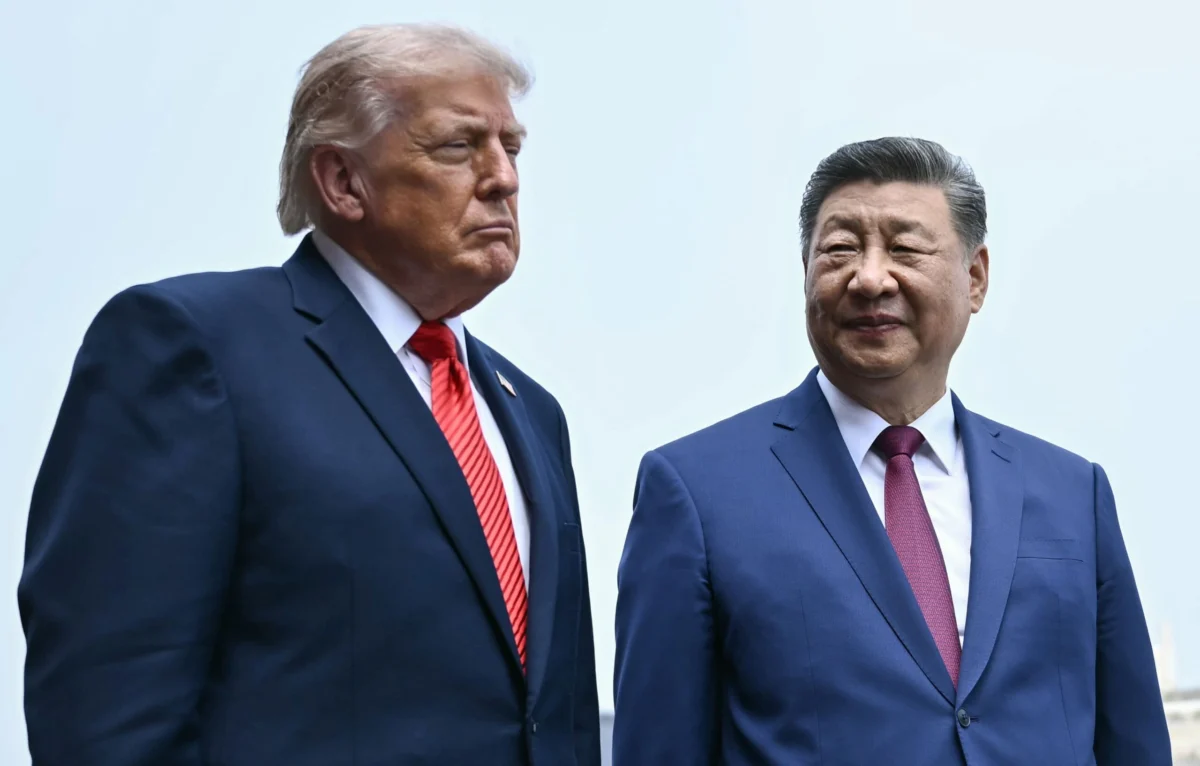
This robust exchange of rhetoric comes at a particularly sensitive time, with a high-profile summit between U.S. President Donald Trump and Chinese President Xi Jinping on the horizon. Following President Trump’s visit to Beijing in May, the two leaders are expected to meet again in the United States later next month. The looming summit adds another layer of complexity, as neither side may wish to derail potentially crucial diplomatic engagement with overly aggressive economic maneuvers.

The Dollar’s Enduring Grip and China’s Strategic Hedging
Despite the escalating rhetoric and China’s efforts to build alternative financial infrastructure, analysts widely agree that Beijing’s primary objective remains to preserve its access to the U.S. dollar-denominated financial system. The U.S. has strategically raised the stakes, compelling countries that rely on dollar transactions to navigate a more challenging landscape. This, in turn, incentivizes diversification away from the dollar, a long-term goal for many nations seeking greater financial autonomy. However, the sheer dominance of the U.S. dollar in global trade and finance makes a complete severance of ties a daunting prospect for any major economy.
In an effort to mitigate its reliance on the dollar and create a more resilient financial ecosystem, China has been actively developing its own cross-border payment system. Peter Alexander, Shanghai-based managing director of advisory firm Z-Ben, highlighted the significance of China’s Cross-Border Interbank Payment System (CIPS). CIPS, initiated by the People’s Bank of China in 2012, represents a strategic move to diversify from dollar-centered finance without entirely abandoning it. The timing of CIPS’s development is notable, coinciding with the U.S. Treasury’s sanctions against China’s relatively small Bank of Kunlun in the same year, reportedly due to its dealings with Iran.
Since the onset of the Russia-Ukraine war in 2022, CIPS transactions have seen a significant uptick, and official figures indicate a general growth trajectory this year. The system currently lists 210 direct participating institutions globally, a substantial portion of which are affiliates of state-owned Chinese banks. This expanding network signifies China’s ambition to create an alternative channel for international payments, potentially reducing its vulnerability to U.S. financial sanctions.
Furthermore, China has been actively forging bilateral currency swap agreements with various countries. This month alone, Argentina and Australia renewed such agreements with China, facilitating the exchange of tens of billions of dollars’ worth of yuan between their respective central banks. These agreements enable countries to settle trade imbalances in their local currencies, bypassing the need for U.S. dollar intermediation. Alexander views these developments not as an immediate attempt to dethrone the U.S. dollar, but rather as a "geopolitical hedging instrument," providing countries with greater flexibility and resilience in an increasingly uncertain global economic landscape.
The Dollar’s Unchallenged Supremacy: Data and Trends
Despite China’s concerted efforts to promote the yuan and develop CIPS, the U.S. dollar continues to hold an unparalleled position in the global financial system. According to data from Swift, the secure interbank messaging system that underpins international banking, the U.S. dollar accounted for over half of global payments in July. In stark contrast, China’s yuan ranked fifth, holding a modest 3.1% share, a decline from over 4% in early 2025.
The picture is even more pronounced in trade finance, where the U.S. dollar’s dominance is even more pronounced. In July, it represented nearly 80% of global trade finance transactions. While China’s yuan has made inroads, ranking second, it still accounts for only 8.4% of this crucial segment of international commerce. These figures underscore the profound challenge China faces in displacing the dollar from its hegemonic position.
Tianchen Xu, a senior economist at The Economist Intelligence Unit, articulated this nuanced reality: "China definitely wants to stay in the dollar system which benefits its trade engine, but that doesn’t mean it will do everything [to] comply with expanding U.S. sanctions." This suggests a strategic balancing act for Beijing, where it seeks to leverage the benefits of dollar access while simultaneously pushing for greater financial independence. Xu further anticipates that China may resort to other forms of retaliation, such as leveraging its control over rare earth minerals, if major Chinese businesses are significantly impacted by U.S. sanctions.

However, the economic relationship between the U.S. and China is characterized by a degree of mutual dependence, particularly concerning critical minerals. China’s significant reserves of rare earth elements, essential for many high-tech industries, create an incentive for the U.S. to maintain a relatively stable economic relationship, despite ongoing tensions. This interdependence adds another layer of complexity to the U.S. sanctions strategy, as a complete breakdown in relations could have significant repercussions for both economies.
The Shadow of the Summit and the Limits of Sanctions
The impending summit between Presidents Trump and Xi looms large over the current financial maneuvering. Analysts suggest that the U.S. may be hesitant to impose overly stringent measures that could derail these crucial diplomatic discussions. Dan Wang, China director at Eurasia Group, observed that the core of the China-U.S. relationship is more deeply rooted in geopolitical issues like Taiwan, and that the China-Iran economic tie is "not nearly as close as outsiders have imagined." She pointed out that Beijing has largely halted state-backed infrastructure investment in Iran since 2018, indicating a potential cooling of their direct economic partnership, at least in certain sectors.
Wang further emphasized the severe consequences for China should a major Chinese bank be removed from the SWIFT system. Such a move, she stated, would "significantly increase devaluation pressure on the Chinese yuan, which is ‘not acceptable’ to Beijing." This underscores the immense strategic importance of maintaining the yuan’s stability and its integration, however limited, into the global financial network.
Historical Context and the Path Forward
The current U.S. sanctions on Iran, and China’s role in potentially circumventing them, are not entirely new phenomena. The U.S. has consistently sought to isolate Iran economically, particularly since the collapse of the Joint Comprehensive Plan of Action (JCPOA) in 2018. China, as a major energy consumer, has historically sought to secure its energy needs, often through imports from countries facing sanctions, including Iran. This has led to recurring friction between Washington and Beijing over the enforcement of U.S. sanctions.
The period following the commencement of the recent Iran war on February 28th has seen a strengthening of the U.S. dollar index, with an approximate 1.5% increase. Concurrently, the Chinese yuan has demonstrated resilience, gaining nearly 2% against the U.S. dollar and over 3% against the euro during the same timeframe. This performance suggests that while the dollar has benefited from global uncertainty, the yuan has also managed to hold its own, indicating a complex interplay of global economic forces.
Earlier this year, China played a role in brokering initial peace talks between Iran and the U.S. in Pakistan. However, analysts at the time cautioned that Beijing possessed neither the "capability nor inclination to pressure either side into negotiating." This assessment suggests that China’s involvement in regional diplomacy may be more focused on maintaining stability than on actively taking sides or exerting significant leverage.
As Peter Alexander noted, "Beijing hasn’t even begun to play hardball with America." This sentiment suggests that while China is building alternative financial systems and asserting its opposition to unilateral sanctions, it may be holding its most potent economic weapons in reserve. The question for the U.S., as Alexander implies, is not necessarily what actions it could take against China’s financial institutions, but rather whether it will ultimately choose to implement such drastic measures, given the potential for severe global economic repercussions and the complex geopolitical landscape. The current standoff represents a critical juncture, where economic power, national interests, and geopolitical strategy converge, with significant implications for the future of global finance and international relations.
