

BEIJING – In a significant escalation of its campaign against Iran’s economic lifelines, the United States has issued a stark warning: any financial institution, regardless of its nationality, that facilitates Iran’s evasion of sanctions risks being severed from the American financial system. This move, spearheaded by U.S. Treasury Secretary Scott Bessent, has placed China in a particularly precarious position. While Beijing has publicly vowed to protect its interests, its largest financial institutions remain deeply intertwined with the U.S. dollar, creating a powerful incentive to maintain access to this global reserve currency.
The threat was formally announced by Treasury Secretary Bessent on Monday as part of a broader initiative dubbed "economic D-Day" against Iran, a strategy championed by U.S. President Donald Trump. Bessent explicitly stated that entities found to be involved in "money laundering or sanctions evasion on behalf of Iran" would face severe repercussions. When pressed on the potential implications for Chinese banks, Bessent was unequivocal: "If they facilitate transactions and are part of the ecosystem that turns Iranian oil into money, into repression, they will be targeted."
In response, China’s Foreign Ministry issued a firm statement on Tuesday, asserting that Beijing "would take all necessary measures" to safeguard its own economic and national interests. A spokesperson for the ministry articulated China’s long-standing opposition to "illicit unilateral sanctions that have no basis in international law or the authorization of the UN Security Council." This assertion underscores China’s commitment to principles of international law and its critique of what it perceives as extraterritorial application of U.S. sanctions.
The backdrop to this diplomatic standoff is the deeply entrenched economic relationship between China and Iran, particularly concerning energy imports. Prior to the recent escalation of regional conflict, China was Iran’s most significant trading partner, importing approximately 90% of Iran’s oil exports. This amounted to a substantial portion, roughly 12%, of China’s total crude oil imports, according to analysis from the U.S.-China Economic and Security Review Commission in March. This reliance makes China particularly vulnerable to U.S. pressure targeting its financial ties to Iran.
The U.S. sanctions initiative, officially designated "Operation Economic Outcast," has identified several China-based companies and individuals accused of aiding the Iranian military. While the U.S. administration indicated it would provide countries with a timeline to cease such activities, specific dates have not been publicly disclosed. When questioned by CNBC about communication regarding these timelines, China’s Foreign Ministry reiterated its close monitoring of the situation and its commitment to protecting national interests.

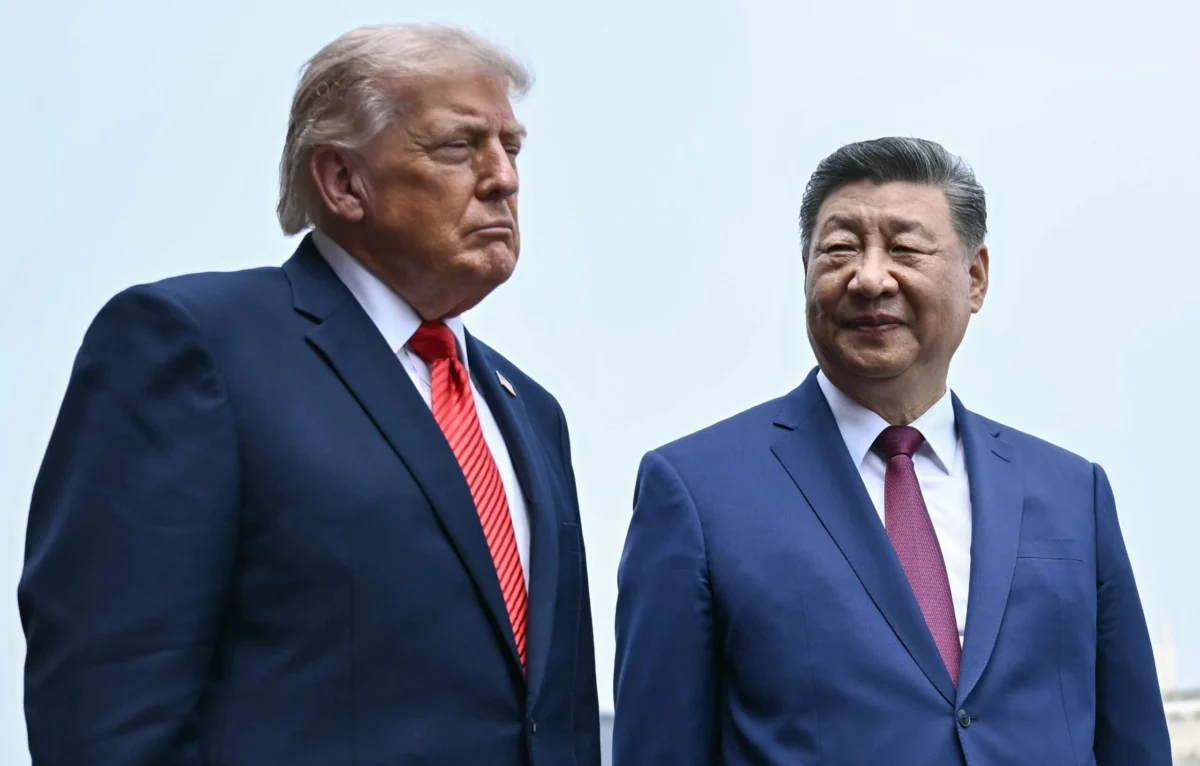
This high-stakes rhetoric comes at a sensitive time, with a summit between U.S. President Trump and Chinese President Xi Jinping on the horizon. Trump is expected to visit Beijing in May, and then later in the year, Xi is slated to visit the United States. The looming diplomatic engagements add another layer of complexity to the unfolding economic confrontation, as neither side may wish to entirely derail high-level dialogue, even amidst significant disagreements.
The Delicate Balancing Act: Preserving Dollar Access Amidst Sanctions Pressure
Analysts suggest that despite Beijing’s defiant public stance, China will likely strive to maintain its access to the U.S. dollar financing system. The U.S. has, in effect, raised the stakes for all nations seeking to utilize the dollar, potentially increasing their incentive to diversify their financial reserves and transaction systems. However, the intricate and deeply interwoven nature of the U.S.-China economic rivalry means that a full-scale "economic D-Day" against China would be a challenging and potentially destabilizing endeavor for the Trump administration.
The strategic development of China’s Cross-Border Interbank Payment System (CIPS) is often cited as a key element in Beijing’s long-term strategy to reduce its reliance on dollar-denominated finance. Peter Alexander, Shanghai-based managing director of advisory firm Z-Ben, explained that CIPS represents China’s effort to diversify its financial infrastructure without completely abandoning the dollar. The People’s Bank of China initiated the development of CIPS in 2012, a year after the U.S. Treasury sanctioned China’s Bank of Kunlun for its involvement in illicit activities related to Iran. Since the Russia-Ukraine war began in 2022, CIPS transactions have seen a notable increase, with continued growth observed this year, according to official data. The system currently comprises 210 direct participating institutions globally, a majority of which are affiliates of state-owned Chinese banks.
Furthermore, China has been actively pursuing bilateral currency swap agreements with other nations. This month, Argentina and Australia renewed such agreements with China, facilitating the exchange of tens of billions of dollars’ worth of yuan between their respective central banks. Alexander characterizes these developments not as an attempt by countries to abandon the U.S. dollar, but rather as a strategic move towards "geopolitical hedging instruments" in the global financial landscape.
The Enduring Dominance of the U.S. Dollar
Despite efforts by China and other nations to diversify, the U.S. dollar continues to hold a commanding position in the global economy. In July, the dollar accounted for over half of all international payments, according to data from Swift, the secure interbank messaging system that underpins global financial transactions. In contrast, China’s yuan ranked fifth, representing just 3.1% of global payments, a slight decrease from over 4% in early 2025.
The dominance of the dollar is even more pronounced in trade finance, where it accounted for nearly 80% of transactions in July. The Chinese yuan, while second, held a much smaller share at 8.4%. This stark disparity highlights the significant leverage the U.S. possesses through its control over dollar-denominated financial channels.

Tianchen Xu, a senior economist at The Economist Intelligence Unit, noted that while China desires to remain integrated within the dollar system due to its benefits for trade, this does not equate to unconditional compliance with expanding U.S. sanctions. Xu anticipates that China may resort to retaliatory measures, such as leveraging its control over rare earth minerals and other strategic resources, to counter sanctions imposed on its major businesses. However, the U.S. also has a vested interest in maintaining stable relations, particularly given its own reliance on critical minerals sourced from China.
A Timeline of Tensions and Diplomatic Engagements
The current U.S. sanctions push against Iran, and by extension China’s role, unfolds against a backdrop of increasing geopolitical friction and intermittent diplomatic overtures.
- March 2026: Analysts from the U.S.-China Economic and Security Review Commission report that China was importing approximately 90% of Iran’s oil exports, representing about 12% of China’s total crude imports.
- May 14, 2026: U.S. President Donald Trump and Chinese President Xi Jinping meet at the Temple of Heaven in Beijing, signaling a period of high-level engagement.
- February 28, 2026: The "Iran war" officially begins, intensifying regional conflict and leading to a subsequent rise in the U.S. dollar index.
- Early 2026: China reportedly brokers initial peace talks between Iran and the U.S. in Pakistan, though analysts express skepticism about Beijing’s willingness or ability to exert significant pressure on either side.
- August 2026 (Specific Date Unspecified): U.S. Treasury Secretary Scott Bessent announces "Operation Economic Outcast," threatening financial sanctions against entities aiding Iran’s sanctions evasion.
- August 2026 (Specific Date Unspecified): Argentina and Australia renew bilateral currency swap agreements with China.
- Late 2026 (Expected): U.S. President Trump is scheduled to visit the United States for a summit with Chinese President Xi Jinping.
Underlying Dynamics of the U.S.-China Relationship
Dan Wang, China director at Eurasia Group, suggests that the core of the U.S.-China relationship is primarily defined by issues such as Taiwan, rather than the depth of the China-Iran tie, which she believes is often overestimated. She points out that Beijing has significantly curtailed state-backed infrastructure investment since 2018, indicating a shift in its global economic engagement strategy. Wang emphasized that the potential exclusion of a major Chinese bank from the SWIFT system would exert considerable pressure on the Chinese yuan, a scenario deemed "not acceptable" by Beijing.
The U.S. dollar index has seen an increase of approximately 1.5% since the onset of the Iran conflict on February 28, 2026. Concurrently, the Chinese yuan has appreciated by nearly 2% against the U.S. dollar and over 3% against the euro during the same period.
Despite the recent tensions, analysts like Peter Alexander caution that Beijing has yet to fully engage in assertive countermeasures against the United States. He posits that the central question regarding the U.S. response to China’s actions is not what could be done, but rather what will be done, implying a degree of strategic calculation and potential restraint from the U.S. administration as it navigates the complex economic and diplomatic landscape. The upcoming high-level summits between the two global powers will undoubtedly be closely watched for any indications of de-escalation or further entrenchment of positions on these critical economic and geopolitical issues.
