

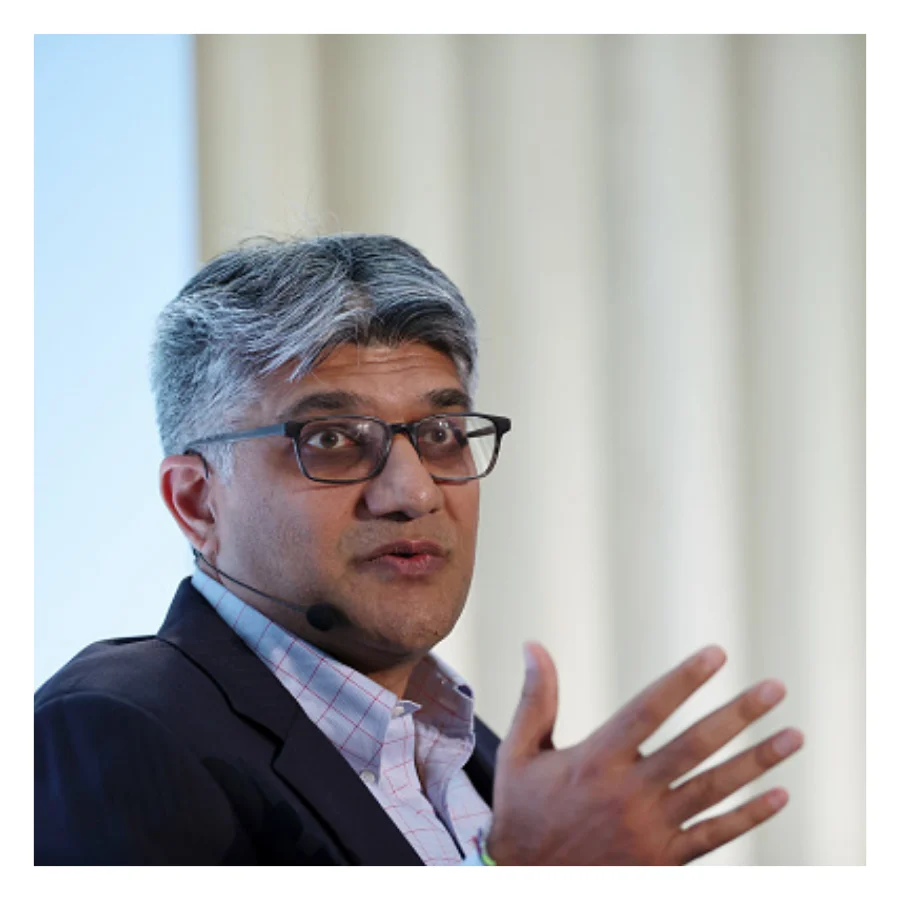
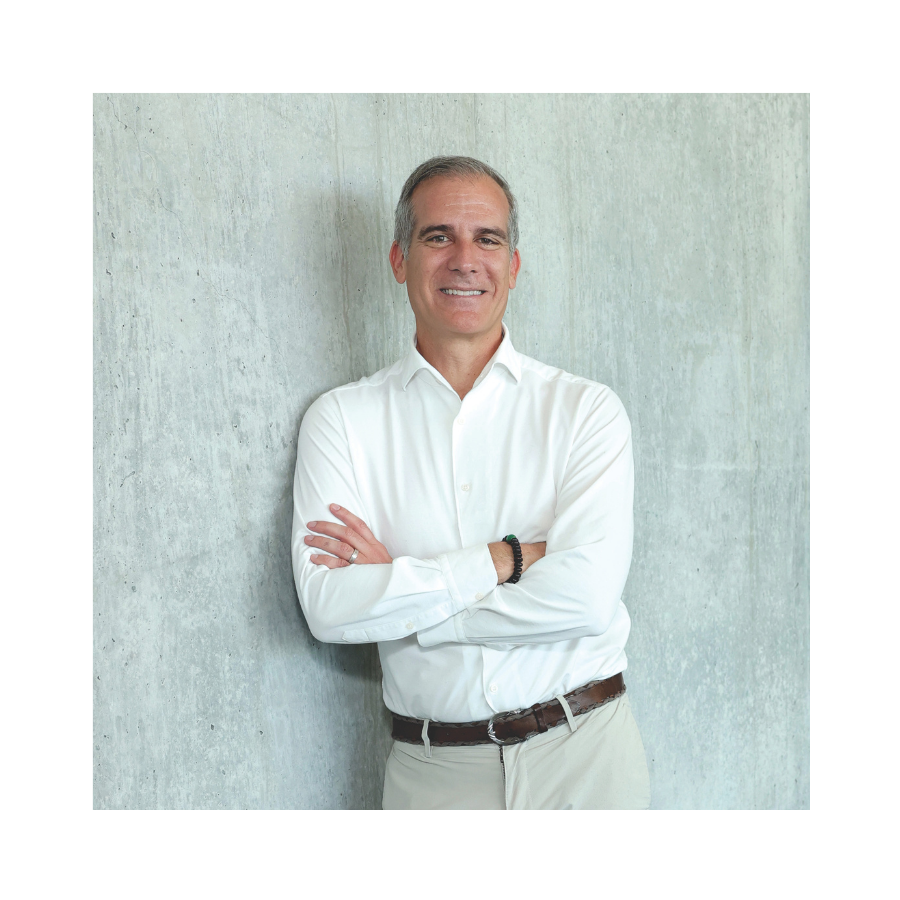
The steady hum of high-level diplomacy at the Montreal Climate Summit in April provided a stark contrast to the often-polarized rhetoric emanating from the United States capital. Amidst the gathering of international policymakers and environmental advocates, Eric Garcetti, the former mayor of Los Angeles and current chief ambassador for global climate diplomacy at C40 Cities, presented a vision of climate resilience that transcends federal volatility. Wearing a bracelet of prayer beads acquired in Bodh Gaya, India—the site of the Buddha’s enlightenment—Garcetti exuded a sense of pragmatic equanimity. His message to the global community was clear: while the occupant of the White House often dominates the headlines, the true engine of the American green transition resides within its cities, states, and private markets.
Garcetti, who chaired the C40 Cities network from 2019 to 2021 during his nine-year tenure as the leader of the United States’ second-largest city, is now on a mission to reframe the narrative of American climate action. He argues that focusing solely on federal administration shifts misses the broader, more permanent trajectory of the world’s largest economy. According to Garcetti, the momentum of the low-carbon economy has reached a point of no return, driven by municipal mandates, state-level investments, and the undeniable logic of market economics.
The Resilience of Sub-National Governance
The central thesis of Garcetti’s diplomacy is the "parallel order" of climate action. This order operates independently of national borders and federal partisan shifts. In his view, challenges such as pandemics and climate change do not respect political boundaries, necessitating a form of diplomacy that works across them. This sub-national approach is not merely a backup plan but has become the primary driver of implementation in the United States.
Garcetti points to the "America Is All In" coalition, a group of thousands of U.S. cities, states, tribal nations, and businesses committed to the Paris Agreement goals. During the Montreal Summit, he appeared alongside Gina McCarthy, the former White House National Climate Advisor, to emphasize that the power of any single federal administration to stymie climate progress is frequently overstated. While media cycles often prioritize the conflict generated by federal rollbacks or inflammatory rhetoric, the ground-level reality is one of continued decarbonization.
A prime example cited by Garcetti is the state of Texas. Despite its conservative leadership and historical ties to the oil and gas industry, Texas has become a national leader in renewable energy. In 2023, Texas produced more wind-generated electricity than any other state and saw a massive surge in solar installations. Garcetti notes that while Republican leaders in such states may not frame these developments as "environmentalism," they are actively decarbonizing major industrial hubs like the Permian Basin because it makes economic sense.
Data and Trends: The Irreversible Shift
The assertion that climate action is winning is backed by significant data points across the American landscape. Garcetti highlights that even when federal rhetoric attempts to revive the coal industry, the market continues to move in the opposite direction. Power companies are retiring coal plants in favor of cheaper, cleaner alternatives. In 2023, approximately 70% of new utility-scale solar and wind capacity in the U.S. was installed in states led by Republican governors, including Texas, Ohio, and Florida.
In California, the transition is even more pronounced. Los Angeles, which operates the largest municipal utility in the nation, is currently on a trajectory to reach 97% carbon-free power by 2028 and 100% by 2035. Furthermore, electric vehicles (EVs) have become a dominant force in the California automotive market, with the Tesla Model Y and Model 3 frequently topping sales charts, outpacing traditional internal combustion engine vehicles.
From a financial perspective, Garcetti observes that capital flows are increasingly favoring sustainable investments. Institutional investors and private equity firms are finding that renewable energy projects offer better long-term value and lower risk profiles. "When I talk to investors," Garcetti remarked, "they’re like, ‘Maybe we don’t talk about it as loudly, but in some ways, all that shouting coming out of Washington has helped us find even better deals.’" The consensus among market actors is that green technology is the most efficient way to generate power and move people.
A Chronology of American Climate Diplomacy
To understand the current state of sub-national power, one must look at the timeline of the last decade:
- 2015: The Paris Agreement is adopted. U.S. cities begin aligning local building codes and transit plans with these global targets.
- 2017: The Trump administration announces its intent to withdraw from the Paris Agreement. In response, the "We Are Still In" movement (now "America Is All In") is formed by mayors and governors to signal continued commitment to the world.
- 2019-2021: Eric Garcetti leads C40 Cities, strengthening the network of nearly 100 global megacities. During this time, cities become the primary laboratories for "Green New Deal" style policies at the local level.
- 2022: The passage of the Inflation Reduction Act (IRA) provides $369 billion in federal funding for climate and energy security, the largest such investment in history.
- 2024: The Montreal Climate Summit highlights the synergy between the IRA’s federal incentives and the local execution capabilities of cities.
While the IRA was a monumental federal achievement, Garcetti argues that the cumulative spending of local and state governments—on everything from sewer systems and housing to massive transportation networks—dwarfs federal outlays. In the American system, the authority over building codes, land use, and municipal utilities remains largely decentralized, insulating these sectors from federal interference.
The Evolution of Climate Communication
One of the more profound shifts discussed by Garcetti is the changing language of the movement. He advocates for moving away from abstract or academic terms like "climate" or "environmentalism," which he believes can be exclusionary or polarizing. Instead, he focuses on tangible outcomes: jobs, health, and safety.
"Climate literally means weather," Garcetti noted. "It doesn’t have a value to it." By framing the green transition as a response to the need for community safety in the face of extreme weather (floods, fires, and heatwaves), leaders can build broader coalitions. This approach prioritizes economic development and the retraining of workers for the "new economy," making the transition a matter of pragmatism rather than ideology.
This shift is also bridging the urban-rural divide. As data centers—essential for the burgeoning AI industry—are built in both rural and urban areas, residents are beginning to ask similar questions about energy costs and the source of their electricity. This shared concern over utility rates and local infrastructure is creating new political alignments that bypass traditional partisan labels.
Broader Implications and the Global Context
The Montreal Climate Summit also served as a platform to discuss North American competitiveness on the global stage. Garcetti expressed a desire for the United States and Canada to become green manufacturing hubs, echoing sentiments shared by figures like Mark Carney, the UN Special Envoy on Climate Action and Finance.
The concern among many leaders is that political delays in the West could cede the future of manufacturing to China. China currently leads the world in EV production and renewable energy hardware. Garcetti warned that by "winding away" subsidies or slowing the transition due to federal political cycles, North American nations risk losing a decade of industrial progress. The goal, he suggests, should be a "conscientious progressivism" combined with a "libertarian" efficiency—reducing regulatory bottlenecks to let capital flow into sustainable infrastructure while ensuring the transition has a social conscience.
Conclusion: The Local Path Forward
As the interview concluded, Garcetti’s message remained one of cautious optimism rooted in structural reality. While federal politics in Washington may remain a source of noise and uncertainty, the foundational elements of the American economy are shifting toward sustainability.
The power of cities like Los Angeles, Houston, and Atlanta to set their own courses ensures that the United States remains a participant in the global climate effort, regardless of the federal administration in power. By focusing on the "bread and butter" issues of municipal governance—reliable power, efficient transit, and public safety—sub-national leaders are building a low-carbon future that is increasingly difficult to dismantle. For Garcetti and his colleagues at C40 Cities, the mission is to ensure that the rest of the world recognizes this local resilience as the true face of American climate action.
