

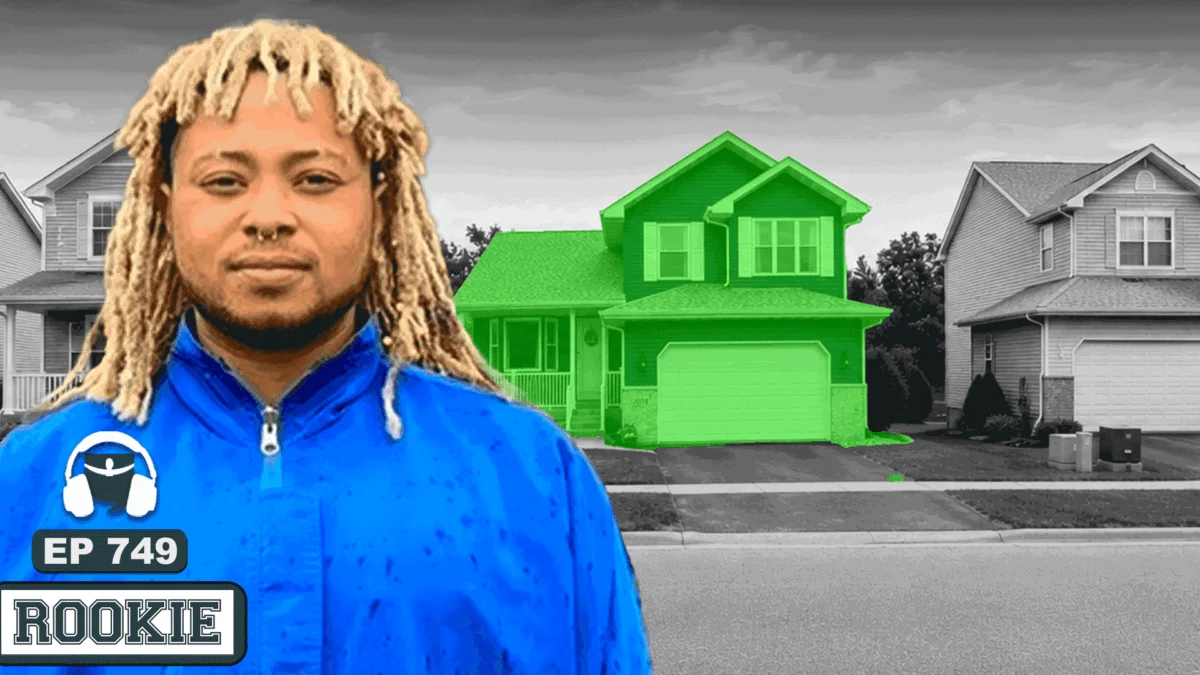
In an era where housing affordability has reached historic lows and the traditional path to homeownership appears increasingly out of reach for younger generations, the story of Elijah Ray offers a stark look at the extreme measures some individuals are adopting to break into the real estate market. Ray, a 26-year-old resident of Portland, Oregon, recently detailed a rigorous two-year journey characterized by 100-hour work weeks, extreme financial austerity, and a strategic "house hacking" initiative that ultimately allowed him to transition from a debt-laden laborer to a full-time content creator. His experience serves as a case study in the intersection of high-volume manual labor, creative real estate financing, and the burgeoning "creator economy."
The Foundation of the Grind: 100-Hour Work Weeks and Financial Discipline
The genesis of Ray’s real estate acquisition began with a calculated period of extreme sacrifice. Facing a mountain of personal debt—stemming from a $13,000 medical surgery, a post-divorce vehicle purchase, and the general high cost of living—Ray determined that conventional employment would be insufficient to meet his goals. To secure a mortgage in a competitive market like Portland, he recognized the necessity of establishing a robust two-year income history.
To achieve this, Ray maintained two full-time positions simultaneously: a night-shift security role and a daytime delivery position at an Amazon fulfillment center. This schedule resulted in a 100-hour work week, leaving virtually no time for social engagement or standard rest. Ray describes a period of living in "survival mode," where he frequently slept on the shelves of his delivery van during breaks and maintained a diet consisting primarily of rice to minimize expenses.
This period of "negative motivation"—using the fear of a mediocre or stagnant life as a primary driver—allowed Ray to clear his debts and amass the capital required for a down payment. While many financial advisors suggest a 20% down payment to avoid private mortgage insurance (PMI), Ray utilized a specialized 1% down payment program offered by Rocket Mortgage, known as the "ONE+" program. This financial product is designed for low-to-moderate-income borrowers, allowing them to enter the market with minimal upfront capital, albeit often at the cost of a higher interest rate—in Ray’s case, approximately 7.5%.
Acquisition and the Mechanics of House Hacking in Portland
In 2023, Ray purchased a single-family home in Portland for $333,000. In the context of the Portland real estate market, where the median home price often exceeds $500,000, this purchase price represented a "fixer-upper" entry point. The property was a modest single-family residence, but Ray’s strategy relied on "house hacking"—the practice of renting out portions of a primary residence to offset or entirely cover the mortgage and operating costs.
Upon closing, Ray immediately began DIY renovations to partition the home into two distinct living units. He identified a 400-square-foot back room with an existing exterior door and converted it into a self-contained studio by adding a bathroom and a kitchenette. This conversion was funded largely through credit, including a $6,000 investment in professional plumbing for the new bathroom.
To further maximize his revenue potential, Ray purchased a used food cart off Craigslist for $1,000 and converted it into a "tiny house" in the backyard. By living in this makeshift structure, he was able to vacate the main living areas of the house, allowing him to rent out both the newly created studio unit and the original two-bedroom main house.
The Operational Reality: Landlording and Eviction
The transition from laborer to landlord was not without significant operational hurdles. Ray’s first tenant for the studio unit was a contact from his YouTube community, a move that highlighted the power of social media in modern real estate management. This tenant paid $1,200 per month, covering nearly half of Ray’s $2,550 monthly mortgage.
However, the complexities of property management became apparent when Ray attempted to rent the main unit. In a moment of admitted desperation to cover his mounting renovation costs, Ray bypassed standard screening protocols. He accepted a couple who provided what later appeared to be fraudulent financial documentation and lacked stable employment. When the tenants failed to pay rent, Ray was forced to navigate the Oregon legal system to execute an eviction.
The eviction process in Multnomah County is known for being tenant-friendly and legally rigorous. Ray, lacking the funds for a private attorney, utilized artificial intelligence tools like ChatGPT to research local statutes and courthouse procedures. The experience was described as emotionally draining, particularly due to the "house hacking" nature of the arrangement; Ray was forced to interact daily with the individuals he was legally removing from his property. This period underscored a critical lesson for novice investors: the importance of rigorous tenant screening and the maintenance of professional boundaries, especially when living on-site.
Strategic Pivots and the Creator Economy
After successfully navigating the eviction and briefly housing his sister and her children to assist them during a transitional period, Ray reached a turning point. Despite the financial benefits of rental income, the psychological toll of on-site landlording and the desire for personal privacy led him to a significant strategic pivot.
Nine months ago, Ray made the decision to quit his traditional jobs and stop renting out the units. He sold the backyard tiny house and moved back into the main residence, turning the studio unit into a master suite. This move was made possible by the growth of his YouTube channel, where he documents his DIY renovations and lifestyle changes.
By leveraging the equity and stability provided by his first real estate deal, Ray was able to "buy back" his time. The property served as a financial bridge, allowing him to transition into the creator economy full-time. His channel now serves as his primary income stream, focusing on the very renovations that initially made the house a viable rental.
Technical Analysis: The Short-Term Rental (STR) Tax Loophole
As Ray looks toward the future, his strategy involves shifting from long-term "house hacking" to more sophisticated real estate investments. During his recent discussions with industry experts, the "Short-Term Rental (STR) Tax Loophole" was identified as a primary vehicle for his future growth.
Under Section 469 of the Internal Revenue Code, real estate is generally considered a "passive activity," meaning losses cannot be used to offset "active" income (like YouTube earnings or W-2 wages). However, the STR loophole provides a significant exception. If a property is rented for an average stay of seven days or less and the owner "materially participates" in the management, the income is classified as active.
This allows investors to use "cost segregation" studies to accelerate depreciation. By front-loading decades of depreciation into a single tax year, an investor can create a massive "paper loss" that offsets their high active income, potentially reducing their tax liability to zero. For a high-earning content creator like Ray, this strategy represents a sophisticated method of wealth preservation and reinvestment.
Broader Implications for Gen Z Real Estate Investors
Elijah Ray’s journey reflects a broader trend among Gen Z and Millennial investors who are rejecting traditional career paths in favor of "lifestyle engineering." His story highlights several key themes in the current economic landscape:
- The High Cost of Entry: The necessity of 100-hour work weeks to enter the Portland market illustrates the extreme gap between median wages and housing costs.
- The Viability of Low-Down-Payment Programs: While 1% down payment programs carry higher interest rates, they remain one of the few viable paths for young buyers without generational wealth.
- The Risks of DIY Management: Ray’s eviction experience serves as a cautionary tale regarding the "human element" of real estate. Professionalism and systems are required even in "casual" house hacking setups.
- Real Estate as a Catalyst for Career Change: Ray did not view real estate as the end goal, but rather as the engine that could fund his true passion for content creation.
Ultimately, Ray’s experience suggests that while the "dream life" is attainable, the path to it in the 2020s often requires a level of labor and risk-taking that borders on the extreme. His transition from sleeping on van shelves to owning a renovated home in one of the Pacific Northwest’s most desirable cities stands as a testament to the power of strategic planning and the willingness to endure short-term hardship for long-term autonomy. As he moves into the next phase of his career, Ray’s focus on tax-advantaged real estate growth signals a shift from "surviving the grind" to "mastering the system."
