

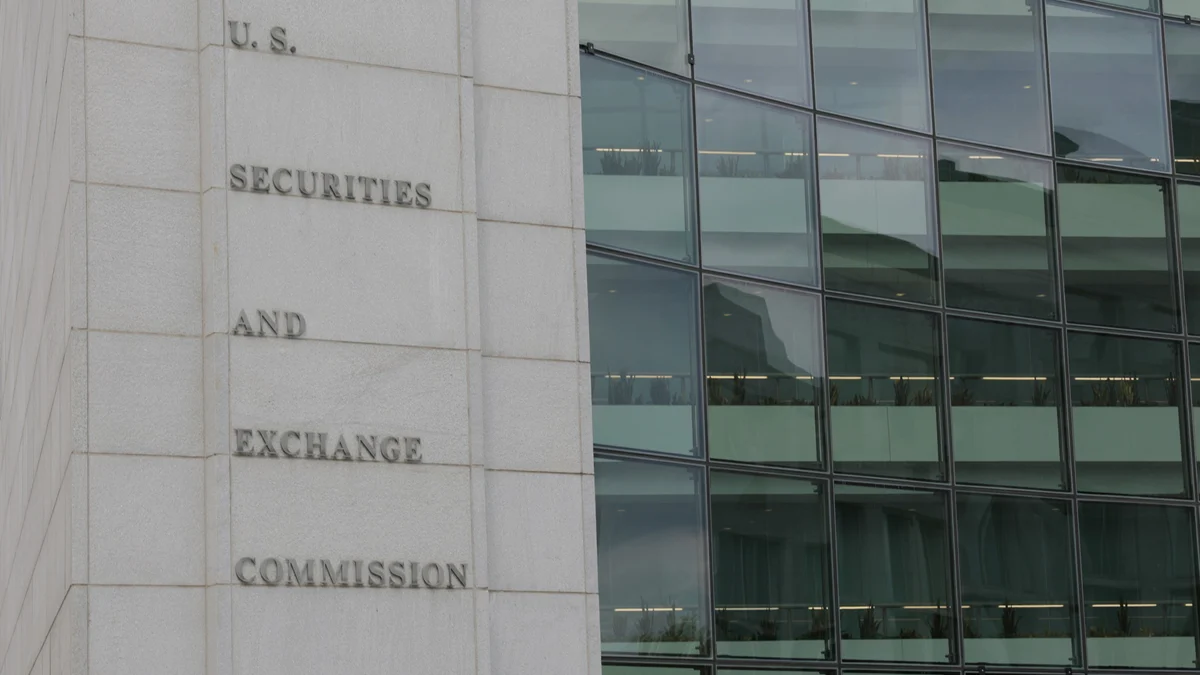
The Securities and Exchange Commission (SEC) is initiating a significant regulatory shift, proposing to rescind a decade-old rule that governs when investment advisors can solicit business from government clients and when they can make political contributions. The Commission’s rationale centers on the argument that the existing regulation infringes upon constitutionally protected speech rights. This proposed rescission opens a public comment period, allowing stakeholders to voice their opinions on a rule that has shaped the landscape of political engagement for financial advisors seeking government contracts.
The rule in question, an amendment to the Investment Advisers Act of 1940, was finalized in 2010. It prohibits investment advisors from providing compensated investment advisory services to government entities for a period of two years following any political contribution made to officials or candidates who could influence the awarding of those advisory contracts. This "pay-to-play" rule was intended to prevent a scenario where campaign donations could improperly influence the selection of advisors, potentially leading to contracts being awarded based on political connections rather than merit, or resulting in higher fees and inferior investment performance for public entities.
SEC Chairman Paul Atkins, in a statement accompanying the announcement of the public comment period, articulated the Commission’s stance. He asserted that the SEC is "not the nation’s elections regulator" and characterized the rule as "needlessly penalizing, burdensome and complex to implement." A central tenet of the SEC’s argument for rescission is that the rule has, in practice, led to a suppression of political speech among advisors. Atkins elaborated, stating that "although the current rule includes a de minimis allowance, in practice, many firms simply impose blanket prohibitions on employee political contributions rather than navigate the rule’s complexities." This suggests that the perceived risks and administrative burdens associated with compliance have led many firms to preemptively restrict all political donations, thereby curtailing their employees’ ability to engage in political discourse and support candidates.
Background and Chronology of the "Pay-to-Play" Rule
The SEC’s adoption of the "pay-to-play" rule on June 30, 2010, was a response to concerns about potential corruption and undue influence in the awarding of lucrative government investment advisory contracts. At the time, SEC officials cautioned that practices where advisors made campaign contributions to gain favor could lead to "political officials choos[ing] an investment advisor with higher fees or inferior investment performance because the advisor contributed funds to the official’s election campaign." The rule was designed to create a deterrent against such quid pro quo arrangements by imposing a cooling-off period.
The specific provisions of the rule allow for limited contributions under certain circumstances. Advisors and certain employees are permitted to donate up to $350 per election cycle to candidates for whom they are eligible to vote, and up to $150 to other candidates. However, any contribution exceeding these thresholds to an official or candidate who could influence the awarding of government business would trigger the two-year prohibition on providing compensated advisory services to that government entity. It is important to note that this rule applies to investment advisors, while broker-dealers are subject to similar pay-to-play restrictions through rulemakings by the Financial Industry Regulatory Authority (FINRA).
The rule has not been without its enforcement actions. One notable case, highlighted in an April 2024 decision, involved the private equity firm Wayzata Investment Partners. The SEC alleged that an associate of the firm made a $4,000 campaign contribution to a Minnesota candidate whose office had influence over the selection of investment advisors for a state investment board. This board had been a Wayzata client since 2007, and the firm continued to provide services to its funds. Commissioner Hester Peirce, who dissented in that action, viewed it as "yet another illustration of the overbreadth" of the rule, suggesting that the enforcement action may have been overly broad or misapplied in that instance. Peirce’s dissent underscores a recurring tension regarding the application and scope of the pay-to-play rule.
Arguments for Rescission: Free Speech and Practical Burdens
The SEC’s proposal to eliminate the political contribution rule entirely hinges on the assertion that it unduly restricts protected speech. Chairman Atkins’s argument that the rule effectively suppresses political speech is a key component of the SEC’s justification for rescission. He points out that the complexity of the rule leads many firms to adopt blanket prohibitions on employee political contributions, which he views as an overreach that stifles legitimate political engagement.
The proposed rescission aims to remove the rule in its entirety, with the Commission arguing that this move "would not open the door to fraud." This assertion is supported by statements from other commissioners, Mark Uyeda and Hester Peirce. The current composition of the SEC, with three Republican commissioners following Caroline Crenshaw’s departure, has leaned towards a more deregulatory approach in certain areas.
The SEC’s stated intention is to return to a framework where the market and existing anti-fraud provisions are sufficient to police potential misconduct, rather than preemptively limiting political activity. The argument suggests that if an advisor attempts to gain an unfair advantage through illicit means, they would still be subject to prosecution under broader anti-fraud and anti-corruption laws.

Industry Reactions: A Divided Landscape
The SEC’s proposal to rescind the pay-to-play rule has elicited a range of reactions from various stakeholders, highlighting a clear division within the financial advisory industry and among consumer advocacy groups.
The Investment Adviser Association (IAA), a prominent advocacy organization for Registered Investment Advisers (RIAs), has applauded the SEC’s move. Karen Barr, President and CEO of the IAA, stated that the association has "long raised concerns that the rule imposes severe consequences without regard to whether a political contribution was actually intended to influence the award of advisory business." The IAA’s position suggests that the rule’s broad application and strict penalties disproportionately affect advisors, regardless of their intent, and that it can create significant unintended consequences. They believe that the rule’s practical application has been overly punitive and may not effectively distinguish between genuine attempts at influence and legitimate political expression.
On the other hand, consumer protection advocates and some former regulators have expressed strong opposition. Corey Frayer, director of investor protection at the Consumer Federation of America and a former SEC Senior Policy Advisor, dismissed the argument that the rule infringes on free speech as "a bald-faced lie." Frayer contends that the rule was crucial in curbing corruption and preventing the diversion of public funds. He characterized the SEC’s proposal as "calling political bribery a foot fault," implying a weakening of oversight against corrupt practices.
Frayer elaborated on his concerns, recalling that the SEC originally adopted the rule in response to numerous enforcement actions against advisors who made political donations allegedly to sway officials into awarding them management of state and local pension funds. He expressed worry that rescinding the rule would create a "financial incentive" for advisors to make campaign contributions as a means to secure lucrative roles managing public assets. "When you create an economic incentive like that, you can expect that investment advisors will make political donations in order to buy themselves into investing a large pool of assets, and charging unfair fees for that service," Frayer warned. This perspective emphasizes the potential for the rule’s rescission to reintroduce the very risks of corruption and self-dealing that it was designed to mitigate.
Broader Implications and Potential Impact
The SEC’s proposed rescission of the pay-to-play rule carries significant implications for the financial advisory industry and for public entities that rely on these advisors.
Impact on Public Pension Funds and Government Investments: Public pension funds, state treasuries, and other government investment pools represent vast sums of money. The selection of investment advisors for these entities is a critical decision that can impact the financial well-being of millions of citizens and the stability of public services. The pay-to-play rule was intended to ensure that these decisions were made on a meritocratic basis, free from the taint of political patronage. If the rule is rescinded, there is a potential for increased instances of political influence in the awarding of these contracts, which could lead to suboptimal investment outcomes and increased costs for taxpayers.
Potential for Increased Lobbying and Political Engagement: Without the strictures of the pay-to-play rule, investment advisory firms and their employees may feel more emboldened to engage in political contributions and lobbying efforts to secure government contracts. This could lead to a more intense political landscape surrounding the procurement of financial advisory services, potentially shifting the focus from investment expertise to political connections.
Regulatory Philosophy and Future of "Pay-to-Play" Rules: This move by the SEC reflects a broader trend among some regulatory bodies to re-evaluate rules that impose restrictions on financial market participants, particularly concerning political activity. The argument that such rules infringe on free speech rights is gaining traction. However, the counterargument that these rules are essential for preventing corruption and ensuring fair markets remains a strong concern for consumer advocates and public interest groups. The outcome of this public comment period and the SEC’s final decision will set a significant precedent for how "pay-to-play" provisions are viewed and regulated in the future, not only within the SEC’s jurisdiction but potentially influencing other regulatory bodies.
Increased Scrutiny and Enforcement of Existing Anti-Fraud Laws: While the SEC is proposing to rescind this specific rule, it is expected that the agency, along with other law enforcement bodies, will continue to vigorously enforce existing anti-fraud, anti-bribery, and anti-corruption laws. The absence of a specific pay-to-play rule does not grant a license for illicit activities. Any attempts to gain an unfair advantage through illegal means will likely still be met with severe penalties. However, the burden of proof for demonstrating wrongdoing may shift, requiring more direct evidence of quid pro quo arrangements rather than relying on the presumption of influence established by the pay-to-play rule.
The public comment period will be crucial in determining the fate of this rule. The SEC will need to weigh the arguments concerning free speech against the compelling need to safeguard public funds from corruption and ensure that government contracts are awarded based on merit and competence. The decision will undoubtedly have lasting repercussions for the financial advisory industry and the integrity of public sector finance.
