


The global transition toward a low-carbon economy is frequently framed as a challenge of massive proportions, requiring trillions of dollars in institutional investment and sweeping federal mandates. However, across Canada, a decentralized movement is proving that the financial and logistical solutions to the climate crisis may be found closer to home. From the urban centers of Toronto and Regina to the rural landscapes of Ontario and the interior of British Columbia, community-led cooperatives and investment funds are bypassing traditional venture capital to build, own, and operate renewable energy infrastructure. This model, known as "community power," allows individual citizens to become shareholders in the energy transition, democratizing the grid while providing localized solutions to energy security.
The Evolution of Community Energy in Canada
The roots of the modern community energy movement in Canada can be traced back to the early 2000s, gaining significant momentum with the passage of Ontario’s Green Energy Act in 2009. This legislation introduced feed-in tariffs (FIT) that guaranteed long-term contracts for renewable energy producers, specifically creating "set-asides" for community and Indigenous-led projects. While the policy landscape has shifted over the subsequent decade, the infrastructure of cooperatives established during that era has matured, leading to a sophisticated network of localized energy providers.
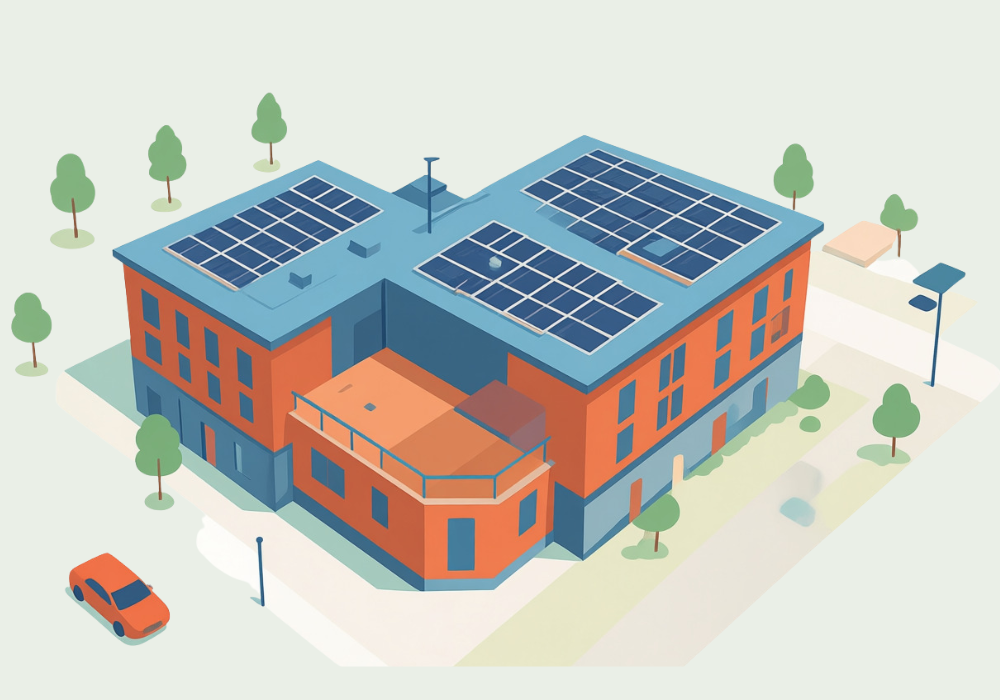
The shift is not merely environmental; it is a fundamental change in the economics of utility. By utilizing community bonds—a social finance tool that allows non-profit organizations or cooperatives to raise capital from their members—these projects keep wealth within the community. Unlike traditional stocks, community bonds offer a fixed rate of return, allowing local residents to see their savings physically manifest as solar arrays, wind turbines, or electric vehicle (EV) charging stations in their own neighborhoods.
Case Studies in Localized Power Generation
1. SolarShare and the Wintergreen Project
In Kingston, Ontario, the Wintergreen project stands as a testament to the scalability of cooperative solar. Operated by SolarShare, Canada’s leading renewable-energy cooperative, the Wintergreen solar array is capable of generating enough electricity to power 100 homes. SolarShare currently manages a portfolio of over 50 projects across Ontario, representing more than $60 million in community investment.
The success of Wintergreen lies in its accessibility. By allowing residents to invest as little as $1,000, SolarShare has successfully bridged the gap between large-scale institutional solar farms and individual rooftop installations. For many urban dwellers or renters who cannot install panels on their own property, the cooperative model provides the only viable pathway to direct ownership of renewable energy assets.

2. ZooShare: The Biogas Innovation
One of the more unique entries in Canada’s green energy portfolio is ZooShare, a biogas plant located at the Toronto Zoo. This project utilizes an anaerobic digester to turn organic animal waste and food waste from local grocery stores into high-quality fertilizer and renewable electricity. The project was funded by approximately 800 cooperative members who purchased community bonds.
However, the ZooShare project also highlights the financial complexities of community-led infrastructure. In 2023, following a member vote, ZooShare announced it would pause interest payments on its bonds, opting to repay principal when cash flow permits. This development serves as a critical data point for the sector, illustrating that while community projects offer high social impact, they are subject to the same operational and inflationary pressures as any other energy utility.
3. EcoCharge: Electrifying the Northeast
The transportation sector remains one of the largest sources of greenhouse gas emissions in Canada. EcoCharge has addressed this by launching the first EV-charging community bond campaign of its kind. This initiative has enabled members to own a network of approximately 100 charging stations across Quebec and New Brunswick.

By decentralizing the ownership of EV infrastructure, EcoCharge ensures that charging stations are placed based on community needs rather than purely on the profit-maximizing algorithms of private corporations. This model is particularly effective in provinces like Quebec, where the high adoption rate of electric vehicles has outpaced the development of public charging infrastructure.
Bridging Energy and Social Infrastructure
4. Propolis: Net-Zero Affordable Housing
In Kamloops, British Columbia, a cooperative named Propolis is demonstrating that the energy transition can be integrated with the housing crisis. Propolis successfully raised $1 million in community bonds from roughly 100 investors to fund a 53-unit net-zero apartment building.
Net-zero buildings produce as much energy as they consume on an annual basis, typically through high-efficiency building envelopes and on-site solar generation. By combining affordable housing with green technology, Propolis provides a blueprint for "just transition" projects that protect vulnerable populations from rising energy costs while reducing the carbon footprint of the built environment.

5. The Faithfully Green Fund
The Faithfully Green Fund addresses a specific niche: the massive real estate holdings of religious organizations. Many churches, mosques, and temples occupy older, energy-inefficient buildings that are expensive to maintain. This fund sells community bonds and uses the proceeds to provide low-interest loans to faith communities for green retrofits, such as heat pump installations and insulation upgrades. As the loans are repaid, the capital is reinvested into new projects, creating a "revolving fund" that multiplies the environmental impact of every dollar invested.
Regional Resilience and Historical Milestones
6. Wascana Solar Co-op
In the Prairies, where sunlight is abundant but political support for renewables has historically fluctuated, the Wascana Solar Co-op in Regina, Saskatchewan, has carved out a successful niche. The cooperative is responsible for the installation of 400 solar panels that are collectively owned by approximately 100 members.
A significant portion of the membership consists of apartment-dwellers and renters. This "virtual net-metering" approach allows individuals who do not own a roof to benefit from the solar economy, providing a hedge against rising electricity rates in a province that still relies heavily on fossil fuels for its grid.

7. WindShare: The Toronto Landmark
Perhaps the most visible community energy project in Canada is the wind turbine at Exhibition Place in Toronto. Managed by the WindShare cooperative, this turbine is co-owned by 825 Toronto residents in partnership with Toronto Hydro.
Launched in 2002, WindShare was the first example in North America of a wind turbine being situated in a major urban environment and the first Canadian project to feature direct resident ownership. Over two decades later, it remains a symbolic and functional pillar of the community energy movement, proving the long-term viability of cooperative wind power.
8. Ottawa Renewable Energy Co-op (OREC)
The Ottawa Renewable Energy Co-op (OREC) has expanded its reach far beyond the nation’s capital. Founded in 2010, the cooperative now holds partial ownership in two significant wind turbines on the shores of Lake Huron. These turbines generate approximately 3.3 million kWh annually—enough to power 400 homes. OREC’s diversified portfolio, which includes solar projects on schools and municipal buildings, demonstrates the capacity of cooperatives to manage complex, large-scale utility assets.

Data and Economic Analysis
The growth of these eight projects reflects a broader trend in Canadian energy statistics. According to data from Natural Resources Canada, wind and solar energy are the fastest-growing sources of electricity in the country. However, the "soft costs" of development—permitting, land acquisition, and grid connection—can account for up to 30% of project expenses. Community-led projects often mitigate these costs through local advocacy and "social license," as residents are less likely to oppose a project they have a financial stake in.
From a financial perspective, community bonds have emerged as a stable alternative to volatile equity markets. While the ZooShare example highlights the inherent risks of any capital project, the majority of Canadian energy cooperatives have maintained consistent returns of 3% to 5% for their members. For many investors, this "impact return" is supplemented by the knowledge that their capital is actively decarbonizing their local power grid.
Implications for the National Grid
The proliferation of projects like Wintergreen, Wascana, and WindShare has significant implications for grid resilience. Decentralized energy systems—often referred to as distributed energy resources (DERs)—reduce the strain on long-distance transmission lines and can provide backup power during extreme weather events. As Canada faces more frequent climate-related disruptions, these community-owned "micro-grids" could become essential components of national security.

Furthermore, the democratization of energy ownership challenges the traditional utility monopoly. When residents own the means of production, they become more engaged in energy conservation and policy advocacy. This shift in consumer behavior is a necessary prerequisite for reaching Canada’s goal of a net-zero grid by 2035.
Conclusion
The eight projects highlighted—ranging from waste-to-energy in Toronto to net-zero housing in Kamloops—represent a maturing sector that is no longer on the fringes of the energy industry. These cooperatives have proven that they can raise millions of dollars, navigate complex regulatory environments, and maintain sophisticated hardware over decades.
As the federal government continues to roll out tax credits and grants for clean energy, the community power sector is well-positioned to act as a primary delivery vehicle for these funds. By prioritizing local ownership, Canada can ensure that the transition to a green economy is not only fast and efficient but also equitable and rooted in the communities it serves. The success of these initiatives suggests that the answer to the daunting question of energy funding is indeed local, found in the collective investment of citizens committed to a sustainable future.
