


The landscape of North American energy infrastructure is undergoing a seismic shift as the Trump administration moves to revive a project reminiscent of the controversial Keystone XL pipeline. On his first day in office in 2021, President Joe Biden revoked the presidential permit for Keystone XL, a move that was celebrated by environmentalists as a definitive blow against the expansion of fossil fuel reliance. However, five years later, a prominent family of Wyoming oil tycoons is spearheading a successor project that aims to transport carbon-intensive crude from Canada’s Alberta tar sands into the heart of the United States. Known as the Bridger expansion pipeline, the project has received a critical endorsement from President Donald Trump, signaling a return to an "energy dominance" policy that prioritizes domestic production and midstream infrastructure.
Last week, President Trump signed a presidential permit for the Bridger expansion, a 647-mile project designed to deliver heavy crude from Alberta to a pipeline hub in central Wyoming. From this junction, the oil could be distributed through existing networks to refineries as far south as the Gulf of Mexico. During a signing ceremony at the White House, Trump explicitly contrasted his approach with that of his predecessor, stating that the current administration is focused on "pipelines going up" rather than blocking deals. This permit provides the necessary legal clearance for the pipeline to cross international borders, marking a significant milestone for a project that critics have dubbed "Keystone Light."
Technical Specifications and Strategic Comparison
While the Bridger expansion draws inevitable comparisons to Keystone XL, there are distinct differences in scale and cost. The proposed pipeline is expected to carry at least 550,000 barrels of crude oil per day in its initial phase. This represents roughly two-thirds of the capacity originally planned for Keystone XL. However, industry analysts and company representatives suggest that the infrastructure could be expanded to reach a peak capacity of more than 1 million barrels per day, potentially exceeding the original Keystone proposal.
One of the most significant differences lies in the project’s price tag. The Bridger expansion is estimated to cost approximately $2 billion, a fraction of the $8 billion projected for Keystone XL. This cost efficiency is largely due to the route, which utilizes existing infrastructure and rights-of-way established by the True family’s various enterprises. By following established corridors, the project avoids much of the land-acquisition drama that plagued its predecessor. Notably, the current route does not cross any federally recognized tribal lands, a factor that project proponents believe will minimize legal and social friction.
The Canadian segment of the pipeline will be constructed by South Bow, a company recently spun off from TC Energy—the same firm that stood behind the original Keystone XL project. The line will originate in Hardisty, Alberta, the central hub for the region’s vast oil sands deposits.
The True Family: A Wyoming Dynasty
At the center of this revival is the True family, a multi-generational clan of oilmen whose influence in Wyoming and the broader Rocky Mountain region is unparalleled. The family’s business empire began in the 1940s with Henry Alphonso “Dave” True Jr., a wildcatter who moved to Wyoming and built a network of nearly a dozen corporations. Today, the True Companies include entities specializing in drilling, trucking, oil trading, geothermal energy, and real estate.
The family’s footprint is not limited to industry; they are among the largest landowners in Wyoming, with significant investments in cattle ranching. This vast portfolio has historically provided them with significant political and social capital. Diemer True, one of Dave True’s sons, served for twenty years in the Wyoming legislature, and the family remains prominent donors to regional institutions, including the University of Wyoming and various conservative legal foundations.
Tad True, the grandson of the founder, has led the family’s pipeline operations for much of the 21st century. Under his leadership, the network has grown to more than 4,000 miles across Wyoming, Montana, and North Dakota. Tad True has been a vocal advocate for pipeline expansion for decades, famously speaking at the 2012 Republican National Convention to criticize the Obama administration’s energy policies. He argued then, as he does now, that the lack of pipeline capacity stifles regional competitiveness and prevents American producers from reaching global markets.
A History of Environmental Incidents
Despite their prominence, the True family’s operations have been marred by a series of high-profile environmental failures. Since 2010, subsidiaries of the True Companies have been responsible for at least 42 documented oil spills. According to federal data from the Pipeline and Hazardous Materials Safety Administration (PHMSA), more than a third of these incidents resulted in significant damage to the environment or affected local populations.
The most notorious incident occurred in 2015 when a Bridger pipeline ruptured beneath the Yellowstone River. The breach, caused by riverbed erosion, released at least 30,000 gallons of crude oil into the waterway. The spill contaminated the water supply for the town of Glendive, Montana, forcing residents to rely on bottled water for days after tap water began emitting a distinct petroleum odor. Just a year later, another subsidiary was responsible for a massive leak in North Dakota, where 600,000 gallons of oil—enough to nearly fill an Olympic-sized swimming pool—spilled into a local stream.
The company has paid over $13.5 million in fines related to these two major spills alone. Most recently, a spill was reported in March near Guernsey, Wyoming. These incidents have fueled intense opposition from environmental groups who argue that the company’s track record demonstrates an inability to operate safely. Kenneth Clarkson, communications director for the Pipeline Safety Trust, noted that the frequency of these events "sets off alarm bells," suggesting that the quantity of incidents is "definitely troubling."
The Complexity of Tar Sands Crude
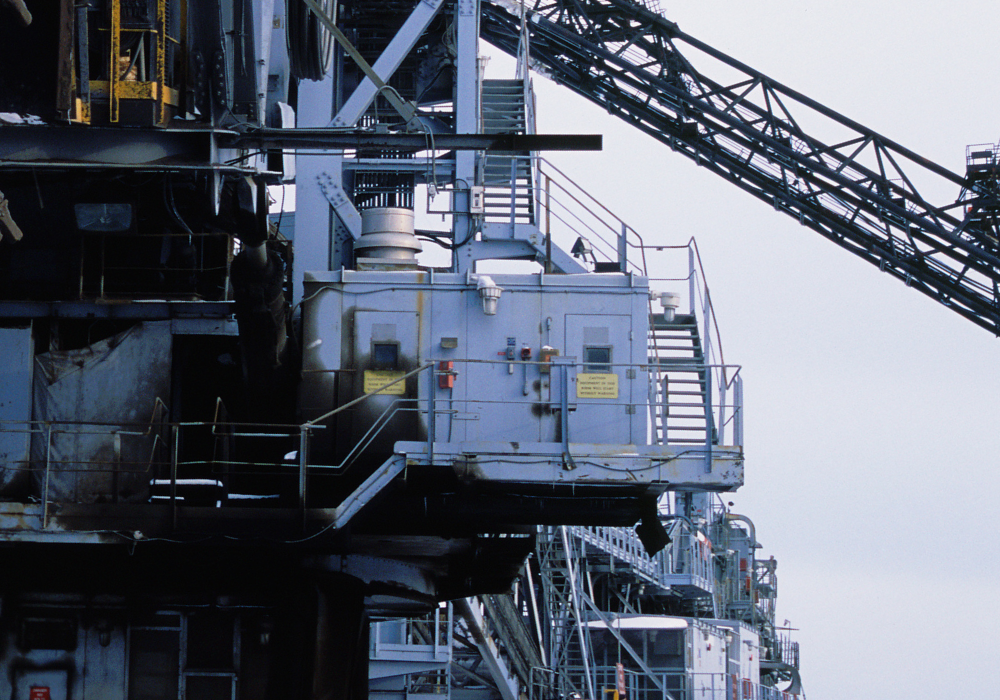
The environmental risks associated with the Bridger expansion are exacerbated by the type of oil it is designed to carry. Alberta’s tar sands produce bitumen, a thick, viscous substance that does not flow easily through pipelines. To transport it, operators must mix the bitumen with a thinner, or "diluent," creating a mixture known as "dilbit."
In the event of a spill in a waterway, the diluent can quickly evaporate into the atmosphere, leaving the heavy bitumen to sink to the bottom. This makes traditional surface-skimming cleanup methods ineffective. The 2010 Kalamazoo River spill in Michigan demonstrated the catastrophic nature of dilbit leaks, where the submerged oil required years of dredging and cost over $1 billion to remediate.
In response to these concerns, Bridger spokesperson Bill Salvin stated that the company "regrets any spill" and is committed to employing advanced technology to prevent future leaks. This includes the use of horizontal directional drilling to tunnel deep beneath riverbeds, which reduces the risk of exposure to erosion. Additionally, the company has developed and marketed an artificial-intelligence software called "Flowstate," which analyzes pipeline data in real-time to detect pressure changes that might indicate a rupture.
Regulatory Fast-Tracking and Political Context
The Trump administration has signaled its intent to move the project forward with unprecedented speed. The Bureau of Land Management (BLM) recently announced an expedited schedule for the project’s environmental review under the National Environmental Policy Act (NEPA). While such reviews typically take several years to complete, the BLM has indicated a target date of May 2026 for a final decision, which would allow construction to begin as early as July of that year.
This fast-tracking is consistent with the administration’s broader effort to shorten environmental review processes for major infrastructure projects. However, legal experts warn that an abbreviated review could leave the project vulnerable to litigation. Jenny Harbine, a managing attorney with Earthjustice, stated that her organization is monitoring the process closely to ensure that state and federal agencies do not bypass essential safety and environmental considerations.
The political optics of the project are complex. While the True family has historically been a major donor to Republican causes—contributing more than $4 million since 1977—they have not always been aligned with Donald Trump. In 2022, several family members appeared on an endorsement list for Liz Cheney, a prominent critic of the president. Nevertheless, the administration’s pro-oil stance aligns perfectly with the family’s business objectives, creating a pragmatic alliance.
Economic Feasibility and Market Headwinds
While the project has political momentum, its long-term economic viability faces several challenges. Global oil markets are currently volatile, influenced by the ongoing conflict in the Middle East and shifting trade relations. While production in Alberta is currently high, some forecasters predict that tar sands production will peak around 2030 at 3.5 million barrels per day, potentially leaving new pipelines underutilized.
Furthermore, the Bridger expansion only solves half of the logistical puzzle. The pipeline terminates in central Wyoming, hundreds of miles away from the major refining hubs on the Gulf Coast. To reach those markets, another company would need to construct a connecting line through Nebraska—a state that was a primary battleground for the original Keystone XL protests. Groups like the Bold Alliance have already vowed to litigate any attempt to extend a new pipeline through Nebraska.
Additionally, the demand for heavy Canadian crude may be impacted by shifting geopolitical dynamics. Following recent negotiations and leadership changes in Venezuela, imports of heavy Venezuelan crude to the U.S. have begun to rise. This creates direct competition for the product the Bridger pipeline intends to carry.
Conclusion and Outlook
The Bridger expansion pipeline represents a bold attempt to finalize the vision of the Keystone XL project under a different name and a more favorable political climate. For the True family, it is a culmination of decades of advocacy and a strategic move to secure their legacy in an evolving energy market. For the Trump administration, it is a flagship project for its "America First" energy policy.
However, the road to 2028 remains fraught with obstacles. From the technical challenges of transporting bitumen to the legal threats from environmental organizations and the economic uncertainty of global oil demand, the "Keystone Light" project is far from a certainty. As the federal government moves toward a final decision next spring, the project will serve as a primary flashpoint in the debate over the future of fossil fuel infrastructure in North America.
