

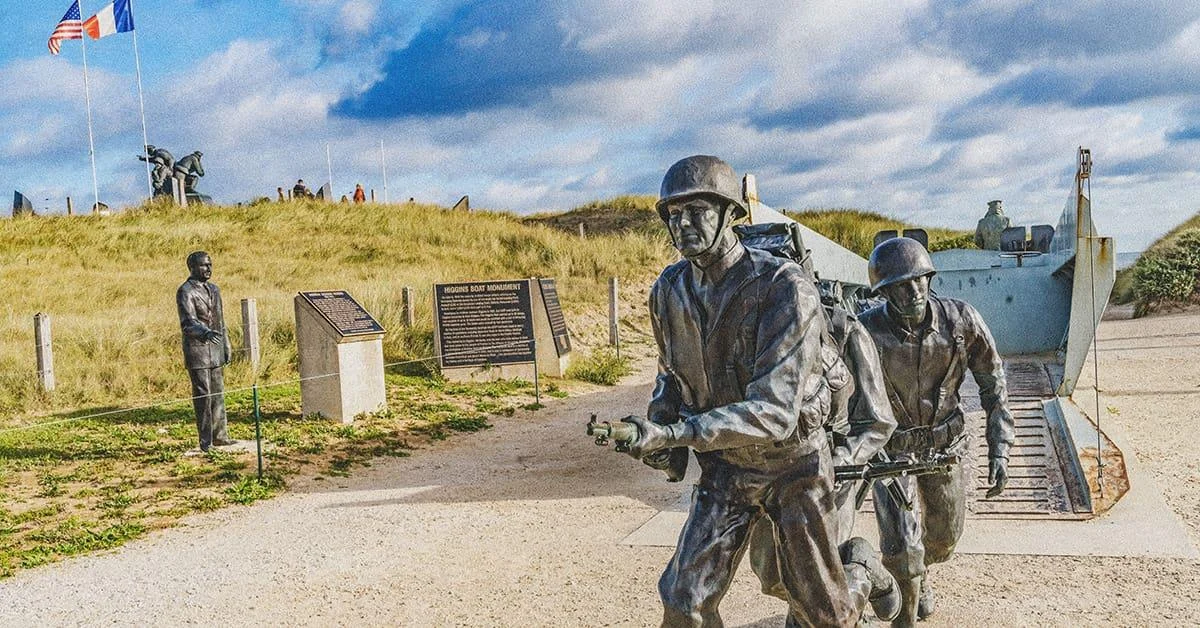
The film "Pressure" delves into the critical task of forecasting weather conditions preceding the Normandy invasion, offering Jim DeLoach of Protiviti profound insights directly applicable to the modern corporate landscape. While history enthusiasts will undoubtedly find the cinematic portrayal of this pivotal historical moment compelling, corporate leaders stand to gain equally valuable lessons from its underlying narrative. At its core, the film reconstructs the intense period leading up to the Allied invasion of Normandy, France, an operation executed over eight decades ago and instrumental in forging the two-front war that ultimately led to the downfall of the Nazi regime.
Beyond its overt focus on the D-Day landings, "Pressure" skillfully explores multifaceted themes that resonate deeply within the business world. Though few in contemporary corporate leadership will ever face a decision of the monumental scale confronted during those fateful days before Normandy, the core challenges depicted—particularly the impact of a fragmented understanding of truth on high-stakes decision-making—are intimately familiar to many through their professional experiences. Critics who posited that the film’s emphasis on weather prediction was disproportionate fundamentally missed the crucial point: the success of the invasion hinged on the precise alignment of a confluence of meteorological conditions.
The operational success of Operation Overlord, the codename for the Battle of Normandy, was inextricably linked to a complex web of environmental factors. A nearly full moon was essential to provide adequate illumination for airborne operations, crucial for paratroopers to navigate and for pilots to maintain visual contact during their crucial drops. Simultaneously, clear skies and exceptional visibility, with a cloud ceiling of at least 11,000 feet, were paramount to facilitate the mass deployment of aircraft, including troop carriers and fighter escorts. Furthermore, the timing of the landings was strategically dictated by the tidal cycle. A rising low tide was imperative to expose the extensive network of German underwater obstacles—mines, barbed wire, and anti-tank ditches—that littered the beaches, posing a catastrophic threat to the landing craft and the soldiers they carried. Waves were required to remain within manageable limits, ideally no more than four to six feet, to prevent the capsizing of assault boats and ensure troops could disembark effectively. Moderate surface winds were also a prerequisite for the safe operation of amphibious vehicles and landing craft. These were merely a subset of the myriad conditions that had to align for the invasion to stand any chance of success. Thus, despite years of meticulous planning and extensive logistical preparations, the ultimate "go" or "no-go" decision for the Normandy invasion rested precariously on the accuracy of the weather forecast.
The Imperative of Data-Driven Decision-Making: A Historical Echo
The concept of data-driven decision-making, a cornerstone of modern business strategy, is far from novel. Its roots can be traced back to the Total Quality Management (TQM) programs that gained traction in the West during the 1980s, largely in response to the formidable success of Japanese manufacturing. At that time, American industries, particularly in the automotive and electronics sectors, were experiencing a significant erosion of market share to Japanese competitors, whose products were widely perceived as both more affordable and of demonstrably superior quality. A fundamental tenet of TQM was "manage by fact," which advocated for the rigorous application of objective data and factual information to guide decisions aimed at the continuous improvement of manufacturing processes and customer fulfillment.
This approach necessitated systematic data collection, meticulous analysis, and insightful interpretation to pinpoint areas for enhancement, thereby ensuring that decisions were grounded in empirical evidence rather than mere intuition or unsubstantiated assumptions. Typical applications of this philosophy included robust quality control processes, comprehensive performance measurement, and strategic process optimization within organizations striving for operational excellence.
Today, Data-Driven Decision-Making (DDDM) has evolved to harness the power of advanced data analytics to inform business strategies and operational choices across a vast spectrum of contexts. DDDM encompasses a broader scope than the TQM’s "manage by fact" principle, employing sophisticated analytical tools and techniques to extract valuable insights from massive datasets, identify emerging trends, and forecast future outcomes with greater precision. While both methodologies unequivocally prioritize data as the bedrock of decision-making, DDDM often integrates real-time analytics and machine learning capabilities to enable rapid adaptation to dynamic market conditions. This makes it exceptionally applicable in diverse business environments, including marketing, finance, supply chain management, and customer-facing operations.
In the context of "Pressure," the critical weather forecasting relied on real-time tracking of atmospheric pressure changes at sea level, coupled with precise measurements of pressure, temperature, and wind speeds in the upper atmosphere. This integrated approach, combining surface pressure data with a vertical profile of upper-air readings, provided the essential inputs for the accurate forecasts that proved decisive for the Normandy invasion. A pivotal breakthrough in this forecasting was the identification of how high-altitude jet stream winds were accelerating the movement of volatile Atlantic storms toward the Normandy coast. In the 1940s, in the absence of satellites, these crucial readings were obtained through a combination of newly developed weather balloons, readings from naval vessels, and other available sources. The data collected was meticulously used to track the speed of incoming storms, a feat achieved without the computational power of today’s supercomputers or the sophisticated predictive capabilities of AI-driven models. This historical reliance on manual data collection and interpretation underscored the paramount importance of data quality and the analytical acumen of the forecasters.
Leadership in the Crucible: Integrity, Transparency, and Empathy
Delivering unwelcome news to a discerning audience, particularly when the stakes are exceptionally high, demands that C-suite executives lead with unwavering integrity, absolute transparency, and profound empathy. Thorough preparation and clear, open communication are indispensable for navigating such challenging situations effectively.
The film "Pressure" powerfully illustrates the critical nature of follow-up in any high-stakes endeavor. Continuous communication of updates and progress regarding the evolving situation, and maintaining open channels of dialogue, are essential for reinforcing trust and fostering accountability. Encouraging ongoing discussions about how the organization can learn from the situation and adapt accordingly demonstrates a steadfast commitment to shared goals and collective improvement.
The film’s title, "Pressure," is remarkably apt, as the weight of it was palpable on multiple levels. Foremost, the weather forecasters bore immense pressure to deliver accurate predictions. The proponent of the data-driven forecasting methodology, who relied on real-time analysis of changing atmospheric conditions, exemplified the aforementioned leadership attributes. This was evident not only in his delivery of the unwelcome news but also in his subsequent follow-up, providing crucial updates that ultimately dictated the timing of the invasion on June 6, 1944. The precision of this timing was so impactful that it contributed significantly to the element of surprise, with the German defenses largely unprepared for the Allied arrival at that specific moment.
There was also palpable pressure on the Army and Navy factions represented at the war council, individuals acutely aware of the severe implications of any potential delay. While the film portrays Supreme Allied Commander Dwight D. Eisenhower’s volatility as a narrative device to highlight the intense friction between competing meteorological perspectives, it is worth noting that historical accounts suggest a less overtly tempestuous disposition in Eisenhower. Nevertheless, the film’s depiction of his character effectively underscores the critical importance of an accurate weather forecast to the invasion’s success.
Having personally visited the Normandy beaches on two separate occasions—once during low tide and again during high tide—I possess a visceral appreciation for the immense stakes involved in the "go" or "no-go" decision. An invasion launched during high tide would have likely resulted in catastrophic failure. The Allies strategically timed their assault for a rising low tide, precisely to expose the formidable network of German underwater obstacles, including steel gates and mines, which would have been submerged and impassable during high tide, posing an existential threat to landing craft. Had infantry been forced to disembark closer to heavily fortified German machine gun and artillery positions, the reduced distance to the seawall would have offered minimal cover, leading to significantly higher casualties. The high tide I witnessed reached all the way to the seawall, illustrating the peril. Intriguingly, the German defenses were strategically positioned under the assumption that any Allied invasion would occur during high tide, a miscalculation that proved immensely beneficial to the Allies. While tidal patterns could be predicted with relative certainty, weather remained an unpredictable variable. Storms and rough seas presented a disastrous scenario, but so too did a postponement, creating a lose-lose situation where any decision carried immense risk.
Dual Imperatives for Strategic Success
The film "Pressure" ultimately presents two salient takeaways for modern leadership, highlighting contrasting yet complementary approaches to decision-making. In certain critical situations, these methodologies can be synergistically integrated to forge a balanced and highly effective decision-making strategy.
Data-driven decision-making emerges as the optimal approach for dynamic environments where adaptability, precision, and innovation are paramount. This methodology leverages real-time, quantitative data sourced from a variety of channels—including analytics platforms, market trend analyses, and customer feedback—to stay ahead of evolving trends and make informed choices grounded in objective evidence and statistical analysis. It offers unparalleled flexibility for adjustments in response to current conditions and emerging trends. Consequently, it proves particularly effective in supporting innovative solutions by identifying novel patterns, untapped opportunities, or critical gaps that might have remained obscure under traditional approaches. The deployment of these capabilities is significantly accelerated when utilizing Artificial Intelligence (AI), advanced analytics dashboards, and other automated tools.
Conversely, decisions based on historical patterns may prove suitable in stable environments or industries characterized by predictable cycles. However, they demonstrate diminished utility in rapidly evolving markets marked by emerging technologies and unpredictable consumer behaviors. These approaches are premised on the assumption that past behaviors or outcomes will reliably predict future results; therefore, the data upon which they are based may rapidly become obsolete or irrelevant.
Secondly, "Pressure" serves as a compelling illustration of leadership characterized by integrity, transparency, and empathy. This is the paradigm through which C-suite executives, their direct reports, and all levels of an organization can effectively convey difficult messages while simultaneously preserving trust, cultivating resilience, and fostering a collaborative spirit essential for overcoming formidable challenges. The historical precedent of the Normandy invasion, with its immense pressures and reliance on precise forecasting, offers a timeless reminder that even in the face of overwhelming uncertainty, strategic clarity, grounded in data and delivered with principled leadership, can pave the way for monumental success. The lessons learned from the D-Day forecast continue to echo in boardrooms today, underscoring the enduring power of informed, ethical decision-making.
