

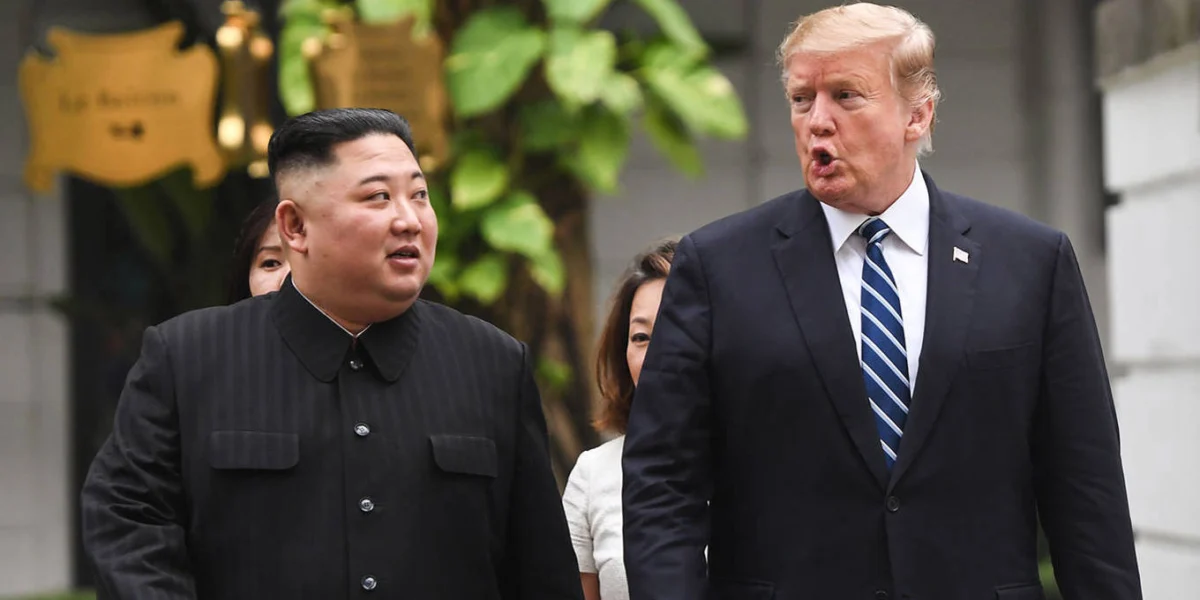
The precarious geopolitical landscape of the Korean Peninsula is once again under scrutiny, as President Donald Trump reiterates his interest in direct engagement with North Korean leader Kim Jong-un. This renewed diplomatic overture, however, has been met with immediate skepticism from Pyongyang, with Kim Yo-jong, a prominent advisor and sister to the North Korean dictator, seemingly dismissing the prospect. The implications of this diplomatic dance are profound, raising critical questions about the efficacy of President Trump’s strategy and the fundamental principles of deterrence that underpin regional stability. At the heart of this complex equation lies the stark reality that a credible defense is the bedrock of deterrence, a principle that appears to be at odds with the current approach to the North Korean threat. The presence of approximately 28,000 U.S. troops stationed in South Korea, a commitment enshrined in a mutual defense treaty, underscores the immense stakes involved.
The Trump Doctrine and the North Korean Conundrum
President Trump’s inclination towards personal diplomacy with authoritarian leaders is a well-documented facet of his foreign policy. His stated desire to meet with Kim Jong-un, despite the absence of significant progress on denuclearization, suggests a belief that direct engagement, characterized by high-level summits and personal rapport, can circumvent traditional diplomatic hurdles. This approach, however, risks overlooking the fundamental requirements of effective deterrence. Deterrence, in its most basic form, relies on the perceived ability and willingness of a state to inflict unacceptable costs on an adversary who contemplates aggression. This perception is built upon a robust military posture, clear signaling of intent, and a demonstrated commitment to upholding alliances and treaty obligations.
The North Korean regime, under the Kim dynasty, has consistently prioritized its nuclear and ballistic missile programs, viewing them as essential for regime survival and as leverage in international negotiations. Decades of sanctions and diplomatic pressure have yielded limited success in curbing these ambitions. President Trump’s strategy appears to hinge on the hope that a breakthrough can be achieved through personal negotiation, bypassing the lengthy and often frustrating processes of multilateral diplomacy and arms control verification.
A History of Engagement and Its Limited Returns
The engagement between the United States and North Korea under the Trump administration has been marked by dramatic swings. Following a period of heightened tensions and fiery rhetoric in 2017, characterized by threats of "fire and fury" and missile tests that traversed Japanese airspace, President Trump unexpectedly agreed to a historic summit with Kim Jong-un in Singapore in June 2018. This was followed by subsequent meetings in Hanoi in February 2019 and a brief encounter at the demilitarized zone (DMZ) in June 2019.
While these summits generated significant media attention and offered moments of apparent thaw, they ultimately failed to produce concrete steps towards denuclearization. The Hanoi summit, in particular, collapsed without an agreement, reportedly due to irreconcilable differences over the scope of denuclearization and the extent of sanctions relief. North Korea has since continued to advance its weapons programs, conducting numerous missile tests, including those of intercontinental ballistic missiles (ICBMs) capable of reaching the U.S. mainland, and a purported hydrogen bomb test in 2017.
The recent pronouncements from Kim Yo-jong, often acting as a mouthpiece for her brother’s regime, suggest a continuation of this pattern. Her dismissal of the prospect of talks, whether a genuine reflection of Pyongyang’s stance or a calculated tactic to extract concessions, serves as a stark reminder of the North Korean leadership’s strategic patience and their willingness to play a long game. The question remains: what specific objectives does President Trump hope to achieve through renewed engagement, and what leverage does he believe he possesses to compel North Korea towards meaningful denuclearization?
The Cornerstone of Deterrence: A Credible Defense
The effectiveness of deterrence hinges on the perceived certainty of retaliation and the magnitude of the consequences for an aggressor. This certainty is derived from several key factors:
- Military Strength and Readiness: A well-maintained and technologically advanced military, capable of projecting power and responding swiftly to aggression, is fundamental. This includes robust missile defense systems, strategic bomber forces, and a well-trained and equipped ground presence.
- Alliance Commitments: Strong and unwavering alliances provide a collective security umbrella, amplifying the deterrent effect. The U.S. commitment to South Korea, formalized through the Mutual Defense Treaty, is a critical pillar of regional stability. Any perception of wavering commitment or a willingness to dilute defense postures can embolden adversaries.
- Clear Signaling and Communication: Consistent and unambiguous communication of red lines and the consequences of crossing them is crucial. This involves diplomatic statements, military exercises, and intelligence sharing.
- Economic and Diplomatic Sanctions: While not a substitute for military deterrence, economic and diplomatic pressure can impose costs on an adversary, raising the stakes of aggression and potentially incentivizing a change in behavior.
President Trump’s apparent focus on personal diplomacy, while potentially offering a pathway for communication, risks undermining the structural elements of deterrence. The deployment of U.S. troops in South Korea, for instance, is not merely a physical presence; it is a tangible symbol of America’s commitment to the defense of its ally. Any suggestion that this commitment could be contingent on the outcome of personal negotiations, or that troop levels could be subject to unilateral U.S. decisions without extensive consultation with Seoul, could be interpreted by Pyongyang as a weakening of resolve, thereby diminishing the deterrent effect.
Supporting Data and Strategic Context
The Korean Peninsula has been a flashpoint for decades. Following the Korean War (1950-1953), which ended in an armistice rather than a peace treaty, the two Koreas remain technically at war. North Korea, officially the Democratic People’s Republic of Korea (DPRK), has developed a significant arsenal of conventional weapons, as well as nuclear weapons and various types of ballistic missiles.
- North Korea’s Nuclear Program: Estimates suggest that North Korea possesses between 20 and 30 nuclear warheads. The country has conducted six nuclear tests, with the most powerful in September 2017 reportedly yielding a yield of over 100 kilotons.
- Missile Capabilities: North Korea has tested a range of ballistic missiles, including short-range, medium-range, and intercontinental ballistic missiles (ICBMs). Its Hwasong-15 ICBM, tested in November 2017, is believed to have a range exceeding 13,000 kilometers, potentially capable of reaching any part of the United States.
- U.S. Military Presence: Approximately 28,500 U.S. troops are stationed in South Korea, a deployment that has been a cornerstone of regional security since the Korean War. The U.S. maintains a strong military presence in the Indo-Pacific region, including naval assets, air power, and missile defense systems.
- Economic Sanctions: The United Nations Security Council has imposed numerous sanctions on North Korea, aiming to curb its nuclear and missile programs. However, enforcement has been inconsistent, and North Korea has demonstrated resilience in evading sanctions.
The strategic context is further complicated by the presence of other major powers in the region, including China and Russia, who have varying degrees of influence over North Korea. Beijing, in particular, shares a long border with North Korea and has historically acted as its main benefactor, although relations have been strained at times.
Official Responses and Allied Concerns
The prospect of renewed U.S.-North Korea dialogue inevitably elicits close attention from Seoul, the capital of South Korea. The South Korean government, under President Moon Jae-in’s successor, has consistently advocated for diplomatic engagement and inter-Korean reconciliation, while simultaneously emphasizing the need for strong deterrence and close coordination with the United States.
Any perceived divergence in U.S. and South Korean approaches to North Korea can create strategic friction. The South Korean public, living under the constant threat of North Korean aggression, places a high premium on security and stability. The U.S. commitment to defend South Korea is not just a strategic imperative but also a deeply ingrained element of the alliance’s credibility.
In the absence of direct statements from the South Korean government regarding President Trump’s recent overtures, it is reasonable to infer that Seoul would be closely observing the signals emanating from Washington and Pyongyang. The South Korean Ministry of Foreign Affairs would likely be engaged in continuous consultations with its U.S. counterparts to ensure alignment of policy and strategy.
Broader Impact and Implications for Regional Security
The ongoing dynamic between the U.S. and North Korea has far-reaching implications for regional and global security:
- Proliferation Risks: North Korea’s continued development of nuclear weapons and missile technology raises concerns about proliferation to other states or non-state actors.
- Arms Race: The perceived threat from North Korea can incentivize other regional powers to bolster their own military capabilities, potentially leading to an arms race.
- Economic Stability: The persistent tensions on the Korean Peninsula can deter foreign investment and disrupt regional trade and economic development.
- Humanitarian Concerns: The authoritarian nature of the North Korean regime and its focus on military spending have led to severe humanitarian crises within the country, with millions suffering from food insecurity and lack of basic necessities.
President Trump’s pursuit of a personal diplomatic breakthrough with Kim Jong-un, while driven by a desire to achieve a landmark foreign policy accomplishment, must be carefully balanced against the imperative of maintaining a credible deterrent. The erosion of deterrence, even inadvertently, could embolden North Korea and lead to a more dangerous and unpredictable regional environment. The commitment to a robust defense, coupled with clear communication and unwavering alliance solidarity, remains the most reliable path to ensuring peace and stability on the Korean Peninsula. The world watches to see if this latest diplomatic gambit will lead to genuine progress or further complicate an already volatile situation.
