

As politicians encroach on areas that require technical knowledge, the risk of costly policy mistakes increases. The failures of Narendra Modi and Donald Trump show that when it comes to economic policymaking, political acumen is no substitute for a deep understanding of incentives, markets, and institutions.
NEW DELHI – During the seven years I served as chief economic adviser to the government of India and as chief economist at the World Bank, I came to appreciate what a strange discipline economics is. Parts of it amount to little more than organized common sense, which is why political leaders with no formal training can sometimes make policy decisions every bit as sound as those of professional experts. However, this is a dangerous oversimplification, and the increasing tendency for political leaders to bypass or disregard expert economic advice, driven by populist appeal or a perceived need for decisive action, has led to significant and often costly policy missteps. The tenures of Indian Prime Minister Narendra Modi and former US President Donald Trump offer compelling, albeit distinct, case studies of how the politicization of economic policymaking can yield detrimental outcomes.
The Allure of Unilateral Decision-Making in Economics
Economics, at its core, is the study of how individuals, businesses, and governments make choices under conditions of scarcity. This involves understanding complex interdependencies, the subtle workings of incentives, the dynamics of market failures, and the crucial role of robust institutions. While common sense can guide everyday decisions, navigating the intricate landscape of national economies requires a sophisticated understanding of these elements. When political leaders, driven by immediate popular sentiment or ideological conviction, sideline the rigorous analysis of economists, they risk enacting policies that, while perhaps politically expedient in the short term, can unravel the delicate fabric of economic stability and growth.
The temptation for leaders to exert direct control over economic policy is often rooted in a desire to project strength and decisiveness. This is particularly true in populist movements, where leaders often campaign on promises of swift, transformative change, positioning themselves as outsiders capable of cutting through bureaucratic red tape and delivering immediate results. This narrative, while appealing to voters frustrated with slow-moving policy processes, can create an environment where expert consensus is viewed with suspicion and technical expertise is devalued.
Narendra Modi’s Economic Experiments: Demonetization and GST Implementation
In India, Prime Minister Narendra Modi’s tenure has been marked by several bold economic initiatives that have drawn both praise and significant criticism. Among the most contentious were the demonetization of high-value currency notes in November 2016 and the rollout of the Goods and Services Tax (GST) in July 2017.
Demonetization: A Bold Stroke with Unforeseen Consequences
The stated objectives of demonetization were multifaceted: to curb black money, eliminate counterfeit currency, and combat terrorism financing. The sudden withdrawal of 500 and 1,000 rupee notes, which constituted approximately 86% of the currency in circulation at the time, was a shock to the system. The government’s rationale was that individuals holding illicit wealth would be unable to deposit their cash into the banking system, thus flushing it out.
- Background Context: India’s economy, like many developing nations, has a significant informal sector and a reliance on cash transactions. The undeclared wealth, often held in cash, is a persistent concern for policymakers aiming to broaden the tax base and formalize the economy.
- Timeline:
- November 8, 2016: Prime Minister Modi announces the demonetization of 500 and 1,000 rupee notes.
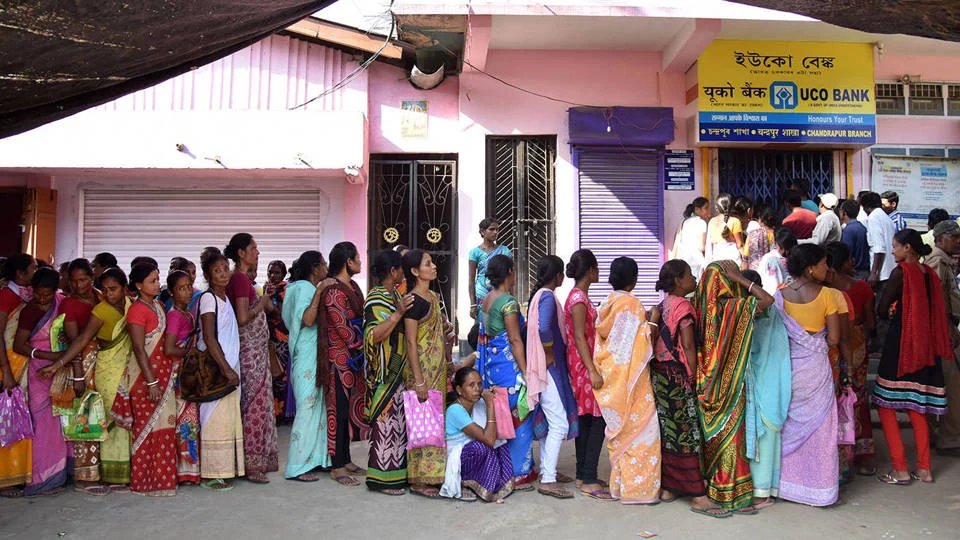
- Subsequent months: Widespread disruption, long queues at banks, and a significant slowdown in economic activity.
- Supporting Data: The Reserve Bank of India’s (RBI) annual report for 2017-18 revealed that 99.3% of the demonetized currency notes had returned to the banking system. This indicated that a substantial portion of the illicit cash had either been laundered or was not held by individuals unable to legitimize it, undermining one of the primary objectives of the policy. Economic growth in India, which had been robust, saw a noticeable deceleration in the quarters following demonetization. The International Monetary Fund (IMF) and various independent economic research bodies highlighted the negative impact on small businesses and the informal sector, which rely heavily on cash transactions. For instance, a study by the Centre for Monitoring Indian Economy (CMIE) estimated that demonetization led to job losses in the informal sector.
- Analysis of Implications: While the long-term impact is debated, the immediate aftermath of demonetization was characterized by significant economic disruption. The informal sector, which is a major employer, suffered immensely as small businesses struggled to conduct transactions. The agricultural sector also faced challenges during harvest seasons due to the scarcity of new currency. The policy’s effectiveness in achieving its stated goals of eradicating black money and counterfeit currency has been widely questioned by economists.
The GST Rollout: A Complex Transition
The Goods and Services Tax (GST) was envisioned as a transformative reform to simplify India’s labyrinthine indirect tax system, replacing a multitude of central and state taxes with a single, unified tax. While the concept of a unified GST is broadly supported by economic principles for its efficiency gains, the implementation in India was fraught with challenges.
- Background Context: Prior to GST, India had a complex web of indirect taxes including excise duty, service tax, VAT, and various state-level taxes, leading to cascading tax effects and inefficiencies. The idea of a GST had been discussed for decades before its eventual implementation.
- Timeline:
- July 1, 2017: The GST is officially launched.
- Subsequent months and years: Frequent changes in tax slabs, filing procedures, and IT infrastructure issues plague businesses.
- Supporting Data: The initial rollout of GST was marked by technical glitches in the GST Network (GSTN), the IT backbone of the system. Businesses, particularly small and medium enterprises (SMEs), struggled with the compliance requirements, including multiple returns and the complexities of input tax credit mechanisms. Reports from industry associations indicated a significant increase in compliance costs for many businesses. While the GST has the potential to boost economic efficiency and broaden the tax base, its initial implementation phase led to a temporary slowdown in manufacturing and trade due to confusion and compliance hurdles.
- Analysis of Implications: The GST reform, while economically sound in principle, suffered from a rushed and poorly managed implementation. The constant tinkering with tax rates and rules created uncertainty for businesses, hindering investment and planning. Economists like Kaushik Basu have pointed out that a reform of this magnitude requires extensive stakeholder consultation and a phased approach to allow businesses and the administrative machinery to adapt. The difficulties faced by SMEs in particular highlighted the gap between the theoretical benefits of the GST and the practical challenges of its execution.
Donald Trump’s "America First" Economic Policies: Tariffs and Trade Wars
Across the Atlantic, former US President Donald Trump pursued an economic agenda heavily characterized by protectionism and a confrontational approach to international trade, encapsulated by the "America First" slogan. His administration imposed significant tariffs on goods from key trading partners, most notably China, initiating a protracted trade war.
- Background Context: Trump’s campaign rhetoric often centered on the idea that globalization and free trade agreements had harmed American workers and industries, leading to job losses and trade deficits. He promised to renegotiate or withdraw from trade deals and protect domestic industries through tariffs.
- Timeline:
- 2018: The Trump administration imposes tariffs on billions of dollars worth of Chinese goods, and China retaliates with its own tariffs on US products.
- Subsequent years: Ongoing trade disputes with China, as well as with allies like the European Union and Canada, over tariffs on steel, aluminum, and other goods.
- Supporting Data: The imposition of tariffs led to retaliatory tariffs, increasing costs for American consumers and businesses that relied on imported components. The US Department of Agriculture reported significant losses for American farmers due to China’s retaliatory tariffs on agricultural products. While some domestic industries, like steel, may have seen temporary benefits from protection, the overall impact on the US economy was largely negative, according to studies by the Congressional Budget Office and the Federal Reserve. For instance, a 2019 analysis by the Federal Reserve Bank of New York, Cleveland, and the University of Chicago estimated that the tariffs cost US households an additional $83 billion annually. Trade volumes between the US and China declined significantly during this period.
- Analysis of Implications: Trump’s trade policies, while popular with a segment of his base who felt left behind by globalization, were widely criticized by economists for their negative impact on global trade and economic growth. The use of tariffs as a primary policy tool, rather than engaging in multilateral negotiations to address trade imbalances, led to uncertainty and disrupted global supply chains. The retaliatory measures significantly harmed American agricultural exporters, a key constituency for the Trump administration. The belief that tariffs could fundamentally reshape global trade dynamics and bring back manufacturing jobs in a significant way proved to be an oversimplification of complex economic realities.
The Devaluation of Expert Knowledge: A Growing Trend?
Both Modi and Trump, in their own ways, demonstrated a willingness to implement large-scale economic policies with less emphasis on the meticulous analysis and consensus-building that economists typically advocate. This trend raises concerns about the future of evidence-based policymaking.
- The Role of Economists: Professional economists are trained to analyze data, model complex scenarios, understand behavioral economics, and assess the potential unintended consequences of policy interventions. Their role is to provide objective insights that can inform decision-making, not to dictate policy.
- Political Imperatives vs. Economic Realities: Politicians, by necessity, operate within a different framework. They are accountable to voters, face electoral cycles, and must often make decisions that balance competing interests. However, when political expediency overrides sound economic principles, the long-term health of the economy can be jeopardized.
- Reactions from Related Parties: While direct criticism from within the governments of Modi and Trump was often muted due to political pressures, the broader economic fraternity, including international organizations, academic economists, and industry bodies, frequently voiced concerns. For instance, the International Monetary Fund (IMF) and the World Bank often issued cautious statements or provided detailed analyses highlighting the potential risks associated with policies like demonetization or unilateral tariff impositions. Business associations in both countries regularly reported on the challenges faced by their members due to policy uncertainties and disruptions.
Broader Impact and Implications: The Erosion of Trust and Long-Term Costs
The consequences of politicizing economic policymaking extend beyond immediate economic indicators. They can lead to an erosion of public trust in institutions and a disregard for expertise, making it harder to address future challenges effectively.
- Damage to Institutions: When economic policies are perceived as driven by political caprice rather than sound analysis, it can undermine the credibility of economic institutions like central banks, regulatory bodies, and government economic advisory councils.
- Long-Term Economic Stagnation: Repeated policy missteps can deter investment, reduce productivity, and ultimately lead to slower economic growth. This can have profound implications for job creation, poverty reduction, and overall societal well-being.
- The Need for a Balanced Approach: The ideal scenario involves a robust dialogue between political leaders and economic experts. Politicians must provide the vision and the mandate, while economists should offer rigorous analysis, identify potential pitfalls, and suggest evidence-based solutions. This requires a culture of mutual respect and a commitment to data-driven decision-making.
In conclusion, the economic legacies of leaders like Narendra Modi and Donald Trump serve as potent reminders that while political will is essential for driving change, it must be grounded in a deep and nuanced understanding of economic principles. The allure of simplistic solutions and decisive action can be seductive, but the complex realities of national economies demand a more measured, analytical, and expert-informed approach to policymaking. The cost of neglecting this fundamental requirement can be a significant burden on citizens and the long-term prosperity of nations.
