

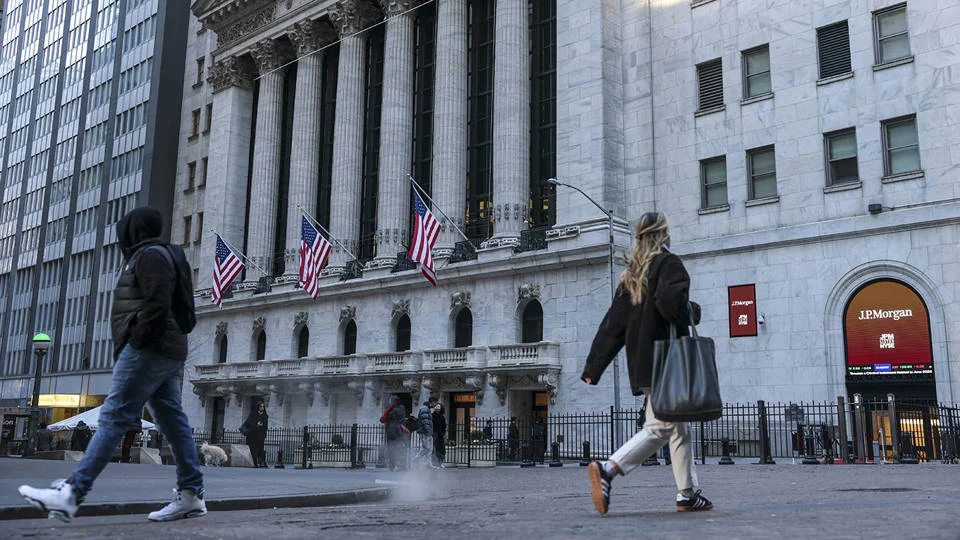
Outside of the United States, all other financial systems face major constraints on their ability to absorb large financial inflows. That is why geopolitical multipolarity is advancing faster than financial multipolarity, despite the many reasons that investors have to pursue greater diversification.
BRASÍLIA – Investors have no shortage of compelling reasons to diversify their portfolios away from the United States. A confluence of domestic challenges and evolving global dynamics has created a landscape where the traditional dominance of U.S. financial markets is increasingly being questioned. Despite these strong incentives for diversification, a significant exodus from U.S. markets has yet to materialize, creating a persistent paradox in the global financial system.
A Deepening Case for Diversification
The rationale for investors to seek alternatives to U.S. assets is multifaceted and has been growing over time. A primary concern is the trajectory of U.S. public debt. As of the end of 2025, the U.S. national debt had surpassed $35 trillion, a figure projected to continue its upward climb. This sustained increase in debt raises questions about long-term fiscal sustainability and the potential for future inflation or interest rate hikes.
Compounding these fiscal concerns is the persistent political polarization within the United States. Deep ideological divides have led to legislative gridlock, increased policy uncertainty, and a heightened perception of instability. This environment can deter long-term investment and create volatility in financial markets, making investors increasingly cautious.
U.S. trade policy has also become a significant source of unpredictability. The imposition of tariffs, trade disputes, and shifting negotiation stances have created an uncertain environment for businesses operating globally. Companies reliant on international supply chains or export markets find it challenging to plan and invest when trade policies are subject to rapid change.
Furthermore, concerns have been raised regarding the robustness of the rule of law in certain contexts within the U.S. While the U.S. legal system is generally considered strong, instances of perceived political interference or inconsistent application of legal principles can erode investor confidence, particularly for those accustomed to highly predictable legal frameworks.
Perhaps one of the most significant drivers for diversification has been the increasing use of financial sanctions by the United States. The weaponization of the dollar and access to U.S. financial markets has prompted many nations to actively seek alternatives. This has led to a concerted effort by several countries to reduce their reliance on the dollar and explore new payment systems and reserve currencies.
The Persistent Dominance of the Dollar
Despite these powerful headwinds, the U.S. dollar and U.S. financial markets retain a remarkable degree of dominance. Data from the International Monetary Fund (IMF) revealed that the dollar still accounted for a substantial 56.8% of allocated foreign-exchange reserves at the close of 2025. This figure, while showing a slight decrease from previous years, still indicates a deeply entrenched position for the U.S. currency.
The Bank for International Settlements (BIS) surveyed the global foreign-exchange market in April 2025, a triennial survey that provides a comprehensive snapshot of currency trading. The findings indicated that the U.S. dollar was involved in an overwhelming 89.2% of all foreign-exchange trades. This highlights the dollar’s central role in international commerce, finance, and investment, making it difficult for other currencies to challenge its position in the short to medium term.
The Constraints on Financial Inflows
The core of the paradox lies in the limited capacity of financial systems outside the United States to absorb significant inflows of capital. While many countries would welcome foreign investment, their domestic financial infrastructure, regulatory frameworks, and market depth often present substantial barriers.
Limited Market Depth and Liquidity
Many emerging and even developed economies outside the U.S. lack the sheer depth and liquidity of American financial markets. The U.S. stock markets, bond markets, and derivatives markets are the largest and most sophisticated in the world. This means that even large institutional investors can enter and exit positions in U.S. markets with relative ease, minimizing the impact of their trades on prices. In contrast, substantial inflows into smaller markets can quickly lead to price distortions, asset bubbles, and difficulties in exiting positions without causing significant market disruption.
Regulatory Hurdles and Inconsistent Frameworks
While some countries have made strides in improving their regulatory environments, significant variations persist. Inconsistent regulations, bureaucratic complexities, and a lack of transparency in some jurisdictions can deter foreign investors. Establishing robust, predictable, and investor-friendly regulatory frameworks is a long-term endeavor that requires sustained political will and institutional development.
Currency Convertibility and Capital Controls
While many major economies now have freely convertible currencies, some still impose capital controls or have restrictions on the movement of funds. These limitations directly impede the ability of investors to move their money in and out of a country, making it an unattractive destination for significant capital deployment. Even in countries without explicit controls, informal barriers or the risk of future restrictions can be a deterrent.
Underdeveloped Financial Infrastructure
Beyond the markets themselves, the underlying financial infrastructure – including payment systems, clearing houses, and custodial services – plays a crucial role. The U.S. benefits from decades of investment and innovation in these areas. Other countries may not have the same level of technological sophistication or operational efficiency, making it more challenging and costly to conduct large-scale financial transactions.
Political and Economic Stability Concerns
While the U.S. faces its own political challenges, many other nations grapple with more fundamental issues of political and economic stability. Frequent changes in government, social unrest, or unpredictable economic policies can create an environment of heightened risk that outweighs the potential benefits of diversification for many investors.
The Accelerating Pace of Geopolitical Multipolarity
In contrast to the slow pace of financial multipolarity, geopolitical multipolarity is advancing at a more rapid clip. This is evident in the shifting alliances, the rise of new regional powers, and the increasing assertion of national interests on the global stage.
Shifting Alliances and Regional Blocs
The emergence of new geopolitical and economic blocs, such as BRICS+ and various regional trade agreements, signifies a move away from a unipolar world order. These alliances are fostering greater cooperation among member states, leading to increased intra-bloc trade and investment, and a growing desire to reduce reliance on established Western-led institutions.
Rise of Middle Powers
Middle powers, such as India, Brazil, and Turkey, are increasingly playing more assertive roles in international affairs. They are forging independent foreign policies, seeking to diversify their partnerships, and contributing to the development of alternative global governance structures. This growing assertiveness is reshaping the geopolitical landscape and creating new centers of influence.
Challenges to Existing Institutions
The perceived inability of established international institutions, such as the United Nations and the World Trade Organization, to effectively address contemporary global challenges has led to a questioning of their legitimacy and a search for alternative forums. This has paved the way for the creation of new multilateral initiatives that are more inclusive and responsive to the interests of a wider range of nations.
The Digital Yuan and Alternative Payment Systems
A significant driver of financial diversification is the development of alternative payment systems and reserve currencies. China’s ongoing efforts to internationalize the Renminbi, including the development of a digital yuan and its integration into cross-border payment mechanisms, represents a notable challenge to dollar dominance. While still in its nascent stages, the digital yuan has the potential to facilitate trade and investment outside the traditional dollar-centric system. Other countries are also exploring bilateral currency swap agreements and the use of non-dollar currencies in trade settlements.
Implications for the Global Financial System
The divergence between the rapid advance of geopolitical multipolarity and the slower pace of financial multipolarity has several significant implications:
- Increased Volatility and Fragmentation: As more countries assert their economic and political independence, the global financial system may experience increased volatility and fragmentation. The dominance of a single currency and a few dominant financial centers may give way to a more complex and potentially less stable environment.
- Challenges to Financial Stability: The inability of many financial systems to absorb large capital flows could lead to increased financial instability in emerging markets. Sudden inflows could create asset bubbles, while sudden outflows could trigger currency crises.
- Opportunities for Innovation: The drive for diversification is spurring innovation in financial technologies, payment systems, and capital markets. This could lead to the development of more resilient and inclusive financial systems in the long run.
- Geopolitical Leverage: The continued reliance on the U.S. dollar, despite geopolitical shifts, grants the U.S. significant leverage through financial sanctions. However, as more countries develop alternatives, this leverage may diminish over time.
- The Role of Emerging Markets: The success of financial multipolarity will ultimately depend on the ability of emerging markets to develop robust financial infrastructures, strengthen regulatory frameworks, and foster greater economic stability. This will require sustained investment and a commitment to good governance.
A Look Ahead
The current situation presents a complex interplay of economic incentives and structural limitations. While investors have ample reasons to look beyond the United States for diversification, the practical constraints of global financial systems mean that a rapid shift is unlikely. The continued dominance of the dollar and U.S. financial markets is a testament to their deep liquidity, established infrastructure, and network effects.
However, the accelerating pace of geopolitical multipolarity suggests that the pressure for financial diversification will only intensify. As nations forge new partnerships and seek greater economic autonomy, they will continue to invest in and promote alternative financial channels. The transition to a truly multipolar financial world will be gradual, marked by challenges and opportunities, and will likely be shaped by the ability of countries outside the U.S. to overcome their financial infrastructure and regulatory limitations. The coming years will be crucial in determining the pace and nature of this evolving global financial landscape.
