

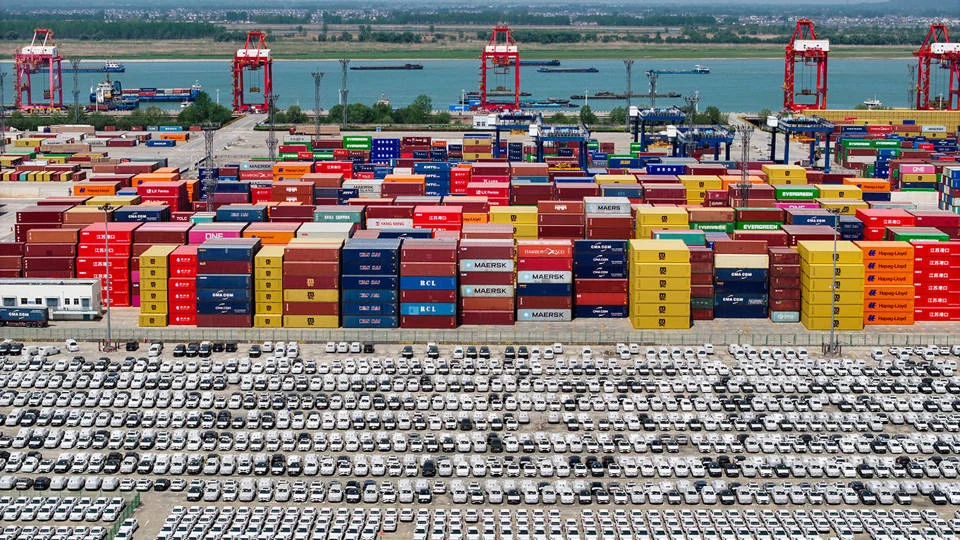
The current China shock combines continued supply upgrading with an absorption problem: the decline in property and related investment has reduced domestic demand, but national saving remains very high. The result is a larger savings-investment surplus that spills into net exports.
BRUSSELS – The economic landscape is once again being reshaped by a phenomenon dubbed the "China shock," a term that evokes the profound global economic realignments witnessed following China’s accession to the World Trade Organization (WTO) in 2001. However, the current iteration of this shock is fundamentally different, driven not by the mobilization of a vast pool of low-cost labor, but by China’s rapid domestic technological advancement coupled with a significant shortfall in its internal demand. This confluence of factors is leading to an escalating savings-investment surplus that is increasingly finding its outlet in a surge of net exports.
The Evolution of the China Shock
The initial "China shock" that began in the early 2000s was characterized by a dramatic shift in global manufacturing. Driven by a demographic dividend of abundant, inexpensive labor and substantial foreign direct investment, China became the world’s factory, reconfiguring supply chains and putting significant pressure on manufacturing sectors in developed economies. This period saw a dramatic increase in China’s export capacity, a phenomenon that fundamentally altered global trade dynamics.
The current "China shock," however, originates from within China’s own economy. While China has indeed continued to upgrade its industrial capabilities, moving up the value chain and investing heavily in research and development, the anticipated parallel expansion of domestic consumption has not materialized to the same degree. Instead, a protracted downturn in the property sector and its associated investments has created a significant drag on internal demand. This sector, which historically accounted for a substantial portion of China’s economic activity and household wealth, has been grappling with deleveraging efforts and a slowdown in construction.
Domestic Dynamics: High Savings, Weak Demand
At the heart of the current shock lies a persistent imbalance between national saving and investment within China. For years, China has maintained one of the highest national saving rates globally, fueled by a combination of cultural factors, a robust manufacturing base, and a social safety net that encourages precautionary saving. While investment has historically absorbed a significant portion of these savings, particularly in infrastructure and manufacturing, the recent slump in the property market has altered this equation.
As property development and related investments contract, a substantial portion of China’s national savings is no longer being channeled into domestic capital formation. This leads to a growing savings-investment surplus – essentially, more money being saved than is being invested domestically. When this surplus cannot be absorbed internally, it inevitably seeks opportunities abroad.
The Spillover Effect: Net Exports Surge
The most visible manifestation of this widening savings-investment gap is the burgeoning surplus in China’s net exports. With domestic demand struggling and production capacity boosted by technological advancements, Chinese manufacturers are increasingly looking to international markets to offload their goods. This has led to a significant increase in the volume and value of Chinese exports across a wide range of sectors, from electric vehicles and solar panels to consumer electronics and steel.
This surge in exports presents a dual challenge to the global economy. Firstly, it intensifies competition for manufacturers in other countries, potentially leading to job losses and industrial restructuring. Secondly, it contributes to trade imbalances, exacerbating existing tensions between China and its trading partners.
Supporting Data and Trends
The data paints a clear picture of this evolving economic dynamic. For instance, China’s trade surplus has reached record highs in recent periods. In 2023, China’s total trade surplus (exports minus imports) widened significantly, driven by a robust export performance that outpaced import growth. This trend has continued into 2024, with monthly trade figures consistently showing a substantial positive balance.
Specifically, the growth in exports for goods such as electric vehicles (EVs) has been particularly striking. In 2023, China’s EV exports more than doubled, making it the world’s largest exporter of these vehicles. Similarly, shipments of solar panels and lithium-ion batteries have seen exponential growth, reflecting China’s dominance in renewable energy supply chains.
This surge in exports is not merely a matter of price competitiveness; it is increasingly driven by technological innovation and economies of scale achieved through massive domestic investment. China’s commitment to developing advanced manufacturing capabilities, supported by government incentives and strategic industrial policies, has created highly efficient and competitive production facilities.
Background Context: A Shifting Global Order
The current economic environment is also shaped by broader geopolitical and economic shifts. The global economy is still navigating the aftermath of the COVID-19 pandemic, grappling with inflationary pressures, and facing an uncertain geopolitical landscape. These factors have contributed to a more cautious approach to investment and a greater emphasis on domestic resilience in many countries.
Furthermore, the global push towards decarbonization and the transition to green energy have created new avenues for Chinese exports. As countries worldwide seek to reduce their carbon footprints, demand for renewable energy technologies, in which China has heavily invested and become a global leader, has soared.
Timeline of Key Developments
- Early 2000s: China’s accession to the WTO triggers the first "China shock," characterized by a massive shift in global manufacturing due to low-cost labor.
- 2010s: China begins to focus on technological upgrading and industrial modernization, investing heavily in R&D and advanced manufacturing.
- Late 2010s – Early 2020s: The Chinese property market begins to face significant challenges, with deleveraging efforts and slowing construction impacting domestic demand.
- 2022-2023: China’s export growth accelerates, driven by technological advancements and a widening savings-investment surplus, leading to record trade surpluses.
- 2024 (ongoing): The trend of surging Chinese exports continues, particularly in sectors like EVs and renewable energy, prompting international concern and policy responses.
Official Responses and Reactions
The escalating trade surpluses and the impact of Chinese exports have drawn considerable attention from governments and international bodies worldwide.
United States: The U.S. government has expressed concerns about China’s trade practices, citing issues such as industrial subsidies, intellectual property theft, and what it perceives as unfair competition. Tariffs imposed during the Trump administration remain in place, and the Biden administration has continued to scrutinize Chinese trade activities, focusing on sectors like electric vehicles and semiconductors. Discussions often revolve around ensuring a "level playing field" for American businesses.
European Union: The EU has also voiced concerns about the influx of Chinese goods, particularly in sectors where it perceives a threat to its own industrial base. The European Commission has launched investigations into Chinese subsidies for electric vehicles and is exploring various trade defense instruments. The focus is on maintaining the competitiveness of European industries and ensuring fair market access.
China’s Perspective: Chinese officials have largely defended their export growth, attributing it to the competitiveness and innovation of their industries. They often point to the global demand for their products and argue that trade imbalances are a complex issue influenced by global economic conditions and the policies of other nations. China has also emphasized its role in providing affordable goods to the global market and its contributions to the green energy transition.
Broader Impact and Implications
The implications of this new China shock are far-reaching and multifaceted:
- Global Inflationary Pressures: While an influx of cheaper goods can have a disinflationary effect, the concentration of supply in certain sectors and the potential for retaliatory trade measures could also contribute to price volatility and inflationary pressures in the long run.
- Industrial Restructuring: Countries that are heavily reliant on manufacturing sectors directly competing with Chinese exports will likely face significant pressure to restructure their industries, invest in innovation, and retrain their workforces.
- Geopolitical Tensions: The economic friction stemming from trade imbalances and perceived unfair competition is likely to exacerbate existing geopolitical tensions between China and its major trading partners. This could lead to further trade disputes, protectionist measures, and a broader decoupling of economies.
- Technological Competition: The current China shock highlights the intensifying global competition in advanced technologies. Countries are increasingly focused on securing their supply chains for critical technologies and supporting domestic innovation to counter China’s growing prowess.
- Green Transition Dynamics: While China’s dominance in renewable energy technologies is crucial for the global green transition, it also raises questions about diversification of supply chains and potential over-reliance on a single source.
The current China shock represents a significant inflection point in the global economic order. Unlike its predecessor, this shock is not solely about labor arbitrage but about China’s ascendant technological capabilities colliding with domestic demand challenges. Navigating this new landscape will require careful consideration of trade policies, industrial strategies, and international cooperation to foster a more balanced and sustainable global economic future. The ability of countries to adapt to these shifts, foster their own innovation, and manage the complex interplay of economic and geopolitical factors will determine the long-term consequences of this evolving phenomenon.
