

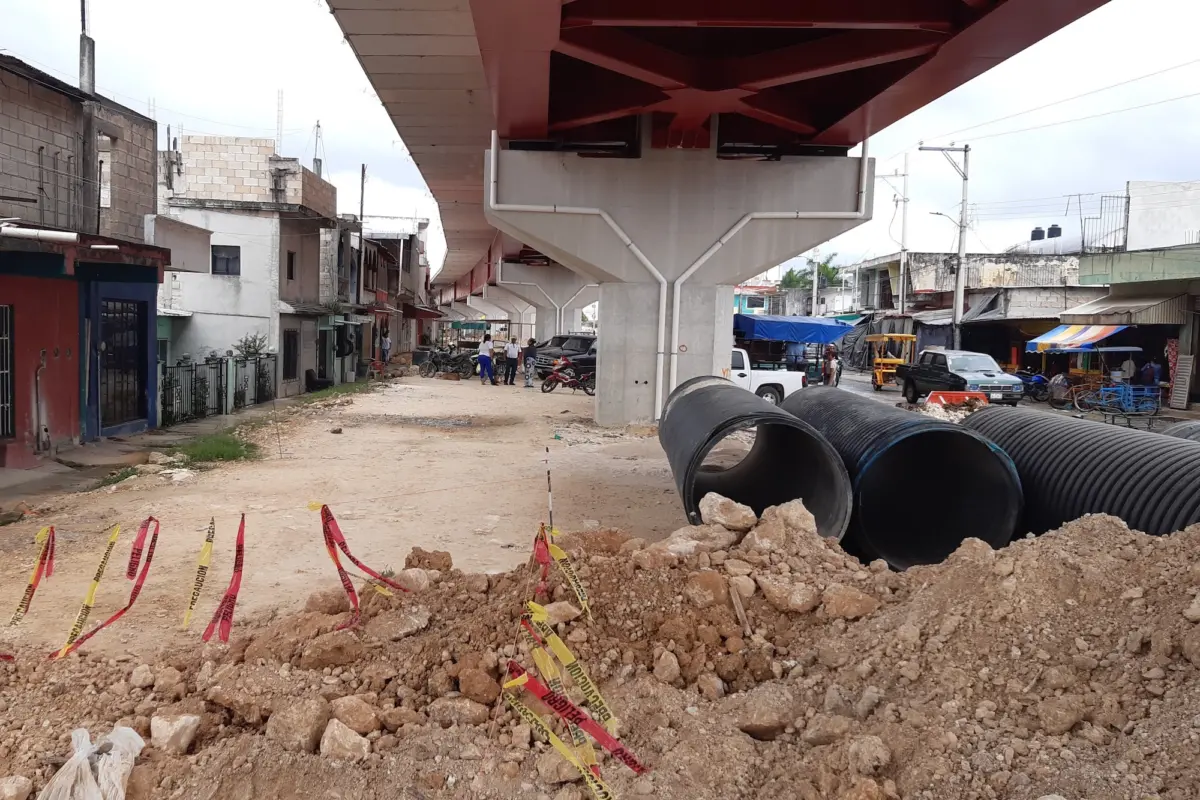
When the first green and white carriages of the Maya Train (Tren Maya) began their journey across the Yucatán Peninsula in late 2024, the Mexican government heralded it as a "monumental work" destined to reshape the nation’s southeast. Spanning nearly 1,000 miles of dense jungle, ancient archaeological sites, and coastal hubs, the project was sold as a transformative engine for economic equality. It promised to bridge the gap between the affluent resort corridors of the Caribbean and the impoverished Indigenous heartlands of the interior. However, three years after its grand inauguration, the project has become a cautionary tale of infrastructure overreach. According to government data, local residents, and independent experts, the Maya Train has not only failed to trigger the promised economic boom but has also left behind a trail of environmental destruction and social instability.
The railway was envisioned as a vital artery for the region, connecting major tourism centers like Cancún and Playa del Carmen to lesser-visited inland treasures like the ruins of Palenque and the Calakmul biosphere. The core premise was simple: by making the interior accessible via high-speed rail, the government would encourage travelers to spend their dollars in rural Maya communities that have long been mired in poverty. Yet, as of late 2027, the reality on the ground suggests a different outcome. The train runs largely empty, the states it serves have slipped into economic recession, and the communities it was meant to help are grappling with a surge in organized crime and a rising cost of living they cannot afford.

A Chronology of Ambition and Escalating Costs
The trajectory of the Maya Train began in July 2018, shortly after Andrés Manuel López Obrador won the Mexican presidency. Within a month of his victory, he announced the project as a cornerstone of his administration’s developmental agenda. Initially, the project was presented as a public-private partnership with an estimated price tag of approximately US$8.5 billion. However, as construction progressed under the oversight of the Mexican military (SEDENA), the budget spiraled.
By 2021, the government pivoted to a fully state-funded model, citing national security interests. This shift allowed the administration to bypass certain environmental regulations and fast-track construction. By the time the final sections were inaugurated in December 2024, the total cost had more than tripled, reaching nearly US$30 billion according to studies by the Mexican Institute for Competitiveness (IMCO).
The speed of construction was unprecedented. The government claimed the project moved 600 percent faster than similar railway works in other countries. This haste, however, came at a significant price. Engineering experts now point to a lack of comprehensive planning as the root cause of the system’s current operational failures. Major stations originally slated for city centers—where they would be accessible to both locals and tourists—were moved to the outskirts due to land disputes and technical difficulties. In cities like Mérida and Campeche, the stations are now miles away from the urban core, requiring additional expensive transport to reach, which has significantly dampened ridership.

The Economic Paradox: From Boom to Recession
The initial phase of the Maya Train’s construction did provide a temporary jolt to the local economy. In 2023, as thousands of workers descended on the peninsula, the state of Quintana Roo saw a 13 percent growth in economic activity. This "construction boom," however, proved to be a fleeting mirage.
Data from the National Institute of Statistics and Geography (INEGI) reveals a sharp downturn following the project’s completion. By the first half of 2025, Quintana Roo’s economy had contracted by over 9 percent, officially entering a recession. Economists note that the wealth generated during the building phase did not stay in the region. Because many of the specialized laborers were brought in from other parts of Mexico, their wages were largely sent back to their home states.
Furthermore, the influx of high-wage outside workers drove up the cost of basic goods and housing in rural areas. "Prices doubled or tripled in many communities," explains Javier Becerril, an economics professor at the Autonomous University of Yucatán. "Instead of an economic benefit to the local populations, there were net losses. The local purchasing power was effectively eroded by the project’s presence."

Current ridership figures underscore the financial strain on the system. While the government originally projected 74,000 daily users, data from 2025 shows an average of only 3,320 daily passengers. With ticket prices for popular routes like Mérida to Cancún set at MX$489—higher than the daily minimum wage—the train remains an elite luxury rather than a public utility. For the average resident of a Maya village, the train is a distant spectacle they can see but never afford to board.
Environmental Devastation and the Perforation of the Cenotes
Beyond the financial balance sheets lies an environmental cost that many experts deem irreparable. The Yucatán Peninsula sits atop a fragile limestone karst, home to one of the world’s most extensive underground river systems. This network of crystalline cenotes (natural sinkholes) and caves is not only a primary source of fresh water for the region but also a sacred cultural site for the Maya people.
To maintain the high-speed rail’s trajectory through the jungle, the government authorized the felling of approximately 7 million trees. However, the damage beneath the surface is even more severe. Environmentalists, including industrial engineer Guillermo Christy, have documented the perforation of roughly 130 caves. To stabilize the tracks over the porous ground, construction crews drove thousands of massive steel and concrete pylons directly into the cave systems.

"A forest can eventually recover, but a cave formation that took millions of years to create is lost forever once it is fractured or filled with concrete," says Christy. These perforations have also put ancient archaeological remains at risk. Many of these submerged caves contain Pleistocene-era animal fossils and early human remains that provide critical insights into the history of the Americas. By rushing the construction, critics argue the government sacrificed a global heritage site for a project of questionable utility.
Social Implications: Insecurity and the Erosion of Community
One of the most tragic ironies of the Maya Train is the impact on the very communities it was named after. Indigenous leaders have reported that the promised infrastructure improvements—such as new schools, hospitals, and reliable electricity—have largely failed to materialize. Instead, the increased accessibility provided by the construction roads and the rail corridor has brought a surge in organized crime.
In the state of Yucatán, traditionally one of Mexico’s safest regions, crime rates spiked by 50 percent in 2026 compared to the previous year. Pedro Uc, a prominent Mayan community leader, describes a grim transformation in previously peaceful hamlets. "What arrived in the train cars to the communities is insecurity, gunfire, bodies in bags, and fear," Uc states. He argues that the project was a "top-down" imposition that ignored the actual needs of the people.

The social friction was exacerbated by a lack of meaningful consultation. While the government held a popular vote on the project in 2019, the United Nations High Commissioner for Human Rights (OHCHR) criticized the process for failing to meet international standards for "free, prior, and informed consent." The UN noted that the consultations focused primarily on the project’s benefits while downplaying its negative environmental and social impacts, effectively depriving Indigenous groups of a voice in their own development.
Analysis: The "White Elephant" and Lessons for Future Infrastructure
As the Maya Train enters its fourth year of operation, it is increasingly being labeled a "white elephant"—a massive public project whose maintenance costs far exceed its utility. With low ridership and high overhead, the Mexican government is forced to provide heavy subsidies to keep the engines running, drawing funds away from other critical social services.
The failure of the Maya Train to meet its lofty goals offers several key lessons for large-scale infrastructure projects:

- The Peril of Political Expediency: The drive to complete the project within a single presidential term led to the bypassing of rigorous environmental and engineering assessments, resulting in suboptimal station placement and ecological damage.
- The Necessity of Bottom-Up Planning: By failing to consult local communities on their specific needs (such as water and power infrastructure), the project created a system that serves neither the locals nor the tourists effectively.
- Economic Spillover Requires Strategy: Simply building a railway does not guarantee wealth distribution. Without integrated policies to support local entrepreneurship and affordable transit, the benefits of such projects tend to remain concentrated in the hands of large developers and outside interests.
While the Maya Train continues to traverse the jungle, its legacy remains contested. For the government, it is a symbol of national pride and connectivity. For the residents of the Yucatán and the environmentalists who fought it, it is a reminder of the high cost of progress when it is pursued without regard for the delicate balance of nature and the voices of the people it claims to serve. The "monumental work" stands finished, but the promised transformation of the Mexican southeast remains a distant, unfulfilled hope.
