

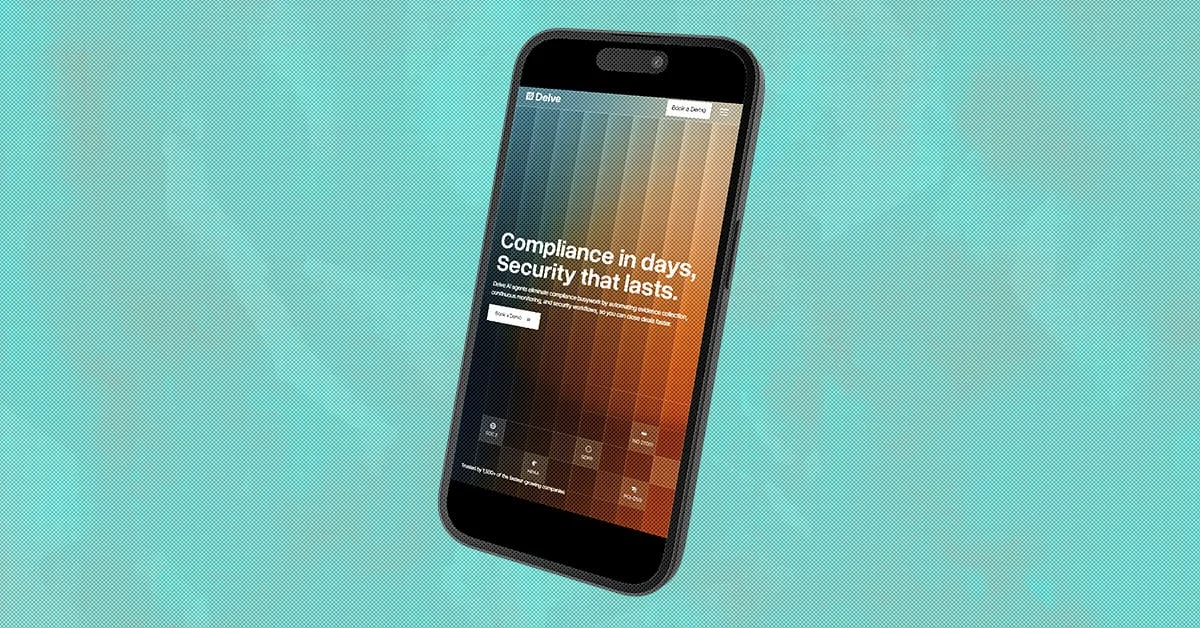
The bedrock of trust in business-to-business software transactions, the SOC 2 report, is facing unprecedented scrutiny following serious allegations against compliance startup Delve. While a positive SOC 2 report has long been interpreted as a definitive stamp of security controls, recent claims suggest a disturbing disconnect between the assurance provided by these documents and the reality within vendors’ environments. Clarence Chio, CEO of Coverbase, argues that this revelation exposes a critical gap that has been masked for years, potentially undermining the very foundation of vendor risk management.
For an extended period, the Service Organization Control (SOC) 2 report has served as the de facto standard for demonstrating a vendor’s commitment to data security and privacy. Enterprise procurement teams have consistently demanded these reports as a prerequisite for engaging with new software providers. Sales teams have prioritized obtaining them to accelerate deal cycles, and upon presentation of a clean SOC 2 report, a sense of relief and reduced due diligence has often followed. The implicit understanding has been that an independent auditor’s sign-off signifies that a company’s security posture meets rigorous standards, thereby negating the need for further deep dives into their internal controls. However, this long-held assumption is now under severe challenge.
The controversy ignited with allegations levied against Delve, a Y Combinator-backed compliance technology firm that had garnered significant investment, raising $32 million at a valuation of $300 million. A collective known as "DeepDelver," comprised of anonymous former customers who reportedly compared notes, published a comprehensive investigation. This detailed report, based on a leaked internal spreadsheet, put forth accusations that Delve systematically fabricated compliance reports for hundreds of its clients, including SOC 2 attestations.
The gravity of these allegations is profound. According to the DeepDelver investigation, a critical review of 494 SOC 2 reports purportedly issued by Delve revealed a staggering pattern of near-identical documentation. The investigation claimed that 493 of these reports contained virtually the same paragraphs, grammatical errors, and nonsensical descriptions, with only the client’s company name and logo being altered. This suggests a process that was less about auditing and more about template generation.
Further accusations detailed in the DeepDelver report paint a picture of an auditor allegedly circumventing fundamental audit procedures. The report claims that Delve included pre-written conclusions and test procedures in draft reports before clients had submitted any corroborating evidence. Moreover, it alleges that "trust pages," which are meant to reflect verified controls, were made live the moment clients first logged into the platform, irrespective of any actual verification. The investigation also pointed to the alleged fabrication of board meeting minutes and the pre-filling of risk assessments with default entries, bypassing the critical process of tailored risk evaluation.
Delve has vehemently denied these accusations, and it is crucial to emphasize that, as of this reporting, these claims remain unproven and are subject to ongoing investigation and legal proceedings. Nevertheless, the questions raised by these allegations transcend the specific case of Delve and strike at the heart of the SOC 2 framework itself, demanding serious consideration regardless of the ultimate resolution of the Delve matter.
The Erosion of a Standard: How Did We Reach This Juncture?
The allegations against Delve, while alarming, do not necessarily represent the invention of an underlying problem but rather, as Chio suggests, its industrialization. The original SOC 2 model, established by the American Institute of Certified Public Accountants (AICPA), was designed as a rigorous process. It mandated that independent, licensed auditors conduct thorough reviews of a company’s security controls. This involved examining extensive evidence, interviewing personnel, and ultimately issuing an informed opinion on the effectiveness of those controls.
This meticulous process was inherently expensive and time-consuming. A proper SOC 2 engagement required auditors to dedicate significant time to understanding the client’s operations, delving into the granular details of their security architecture and operational procedures. This thoroughness was the very essence of the report’s value. When a vendor presented a SOC 2 report, it signified that a substantial vetting process had taken place, lending genuine credibility to their security claims.
However, the landscape of compliance has evolved dramatically over the past decade. The compliance automation market has witnessed explosive growth, with numerous new entrants promising to drastically compress the time and cost associated with achieving compliance certifications. For many software companies, particularly startups and growing enterprises, the appeal of these streamlined solutions was undeniable. The ability to achieve SOC 2 compliance in a matter of days rather than months, and at a fraction of the traditional cost, offered a compelling path to unlocking crucial enterprise deals that were often gated by these very requirements.
The inherent risk in this rapid evolution was that when speed and cost become the primary selling points of a compliance product, the depth and integrity of the underlying audit process could be compromised. This is precisely the vulnerability that the Delve allegations appear to exploit.
The Tangible Stakes: Beyond Reputational Damage
The consequences of fraudulent compliance reports are far from abstract and can have severe repercussions, particularly for organizations handling sensitive data. For most software companies, the immediate fallout from such revelations would likely involve significant legal battles and severe damage to their reputation. However, for companies operating within regulated industries, such as those that handle protected health information (PHI) under the Health Insurance Portability and Accountability Act (HIPAA), the exposure is exponentially more serious. Violations of HIPAA can result in substantial mandatory penalties, potentially reaching millions of dollars, and can even carry criminal liability for responsible parties.
The downstream implications of the Delve situation extend far beyond the company itself and its direct clients. Reports have emerged that at least one publicly traded company purportedly marketed its "SOC 2 Type II audited" status in Securities and Exchange Commission (SEC) filings, relying on reports issued by Delve. This suggests that regulatory bodies and investors may have been misled by these attestations. Furthermore, numerous enterprise customers, including some of the largest technology giants, appear to have accepted compliance documentation from Delve as a legitimate part of their vendor review processes.
This creates a significant problem for these enterprise security teams. Every organization that accepted a Delve-issued report as evidence of a vendor’s security posture may now have a critical gap in their audit trail. The very documents they relied upon to assess risk and ensure compliance could be rendered worthless, potentially exposing them to significant security vulnerabilities and regulatory scrutiny. The cascading effect of such compromised trust can ripple through entire supply chains.
Rethinking the Question: Moving Beyond the "Do You Have a SOC 2?" Mentality
Regardless of how the Delve situation is ultimately resolved, the ensuing discussions highlight a fundamental truth that the vendor risk management industry has recognized but has been slow to fully address: the reliability of a document is intrinsically tied to the integrity of the process that produced it.
The SOC 2 framework is built upon a chain of trust. The vendor trusts the auditor to perform a competent and impartial assessment. The enterprise customer trusts the auditor’s report as an accurate representation of the vendor’s controls. The entire system relies on the fundamental assumption that the audit actually took place and was conducted with due diligence. The allegations against Delve did not invent a flaw in the SOC 2 framework itself; rather, they exposed how fragile that chain of trust can become when subjected to undue pressure for speed and cost reduction.
The question, "Does this vendor have a SOC 2?" has always been the wrong question. It is a superficial inquiry that focuses on the existence of a document rather than its substance. The truly critical question, which has been largely overlooked in the rush to streamline vendor onboarding, is: "Does this vendor actually do what their SOC 2 claims?" These are not interchangeable questions, and an affirmative answer to the former provides almost no assurance regarding the latter.
It is essential to reiterate that a SOC 2 Type II report was never intended to be an absolute security guarantee. Its purpose is to provide attestation that specific, defined controls operated effectively over a defined period. When such an attestation is generated without the collection and examination of actual evidence, it ceases to provide any meaningful evidence of anything. It becomes a hollow shell, a document devoid of substance.
The Industry’s Reckoning: Rebuilding Trust in a Digital Age
The immediate response from the vendor risk community, requiring companies that received Delve-issued documentation to seek independent verification of their vendors’ security controls, is a necessary and correct protocol for addressing the immediate crisis. However, this reactive measure does not resolve the larger, systemic questions that the situation has brought to the forefront.
The deeper issue is that the compliance industry, in its pursuit of efficiency, has largely built its trust infrastructure on a foundation of documents and static, point-in-time attestations. The Delve allegations represent an extreme manifestation of what can go wrong when this foundation is compromised. However, the underlying vulnerability – the gap between what a compliance document claims and the reality of a vendor’s operational environment – predates Delve and will undoubtedly persist long after this particular controversy subsides.
Rebuilding trust in vendor risk management necessitates an honest and unflinching confrontation with this pervasive gap. It demands a shift in perspective, moving beyond a mere checklist mentality. This involves asking harder questions about the true meaning of compliance attestations, critically examining how observation windows are defined and whether the evidence supporting a certification genuinely reflects current operational reality. Is the attestation based on a snapshot taken under controlled conditions months ago, or does it represent a continuous, embedded security posture?
This reckoning requires a fundamental re-evaluation of how organizations assess and manage vendor risk. It may involve incorporating more continuous monitoring, real-time data feeds, and dynamic risk assessments that go beyond periodic documentation reviews. The goal must be to move from a reliance on static reports to a more robust understanding of a vendor’s ongoing security performance. Only by addressing this fundamental gap between documentation and operational reality can the industry hope to restore genuine trust and ensure the security of digital supply chains in an increasingly interconnected world. The future of secure B2B transactions hinges on this critical evolution.
