


The sudden eruption of military conflict involving the United States, Israel, and Iran in February 2026 has triggered the most significant energy crisis in the aviation sector since the 1970s. As a direct consequence of the blockade of oil and gas shipments through the Strait of Hormuz—a maritime chokepoint responsible for approximately one-fifth of the world’s petroleum consumption—the price of fossil fuels has entered a period of extreme volatility. While Brent crude has seen dramatic increases, the impact on specialized jet fuel has been disproportionately severe. Accounting for less than 10% of the global petroleum market, jet fuel prices more than doubled almost immediately following the initial strikes, surging past $200 per barrel.
In response to this fiscal shock, the global airline industry has retreated into a defensive posture. Carriers have canceled thousands of flights, stripped back in-flight amenities, and implemented aggressive fuel surcharges. Meanwhile, the European Union has moved to "optimize" jet fuel distribution to prevent a total collapse of regional connectivity. Under normal economic theory, such a massive spike in fossil fuel prices should have served as the ultimate catalyst for Sustainable Aviation Fuel (SAF), a class of biofuels designed to replace conventional kerosene. However, rather than a breakthrough, the SAF industry is currently facing a crisis of confidence. Despite years of policy stimulus and corporate promises, the "inflection point" for green aviation remains elusive, as major industry players fall silent and technical hurdles persist.
The Geopolitical Catalyst and the Market Response
The Strait of Hormuz serves as the jugular vein of the global energy trade. When the conflict began in early 2026, the immediate threat to tanker traffic sent shockwaves through the refining sector. Jet fuel, which is essentially a highly refined form of kerosene-type diesel, requires specific chemical properties to remain stable at high altitudes and extreme temperatures. Because it is a "middle distillate," its supply is often tighter than that of crude oil or gasoline.
As prices surged past the $200-per-barrel mark, the economic rationale for SAF seemed to sharpen. Chris Cooper, CEO of XCF Global, noted that the war exposed the inherent fragility of a global economy tethered to fossil crude. From a market perspective, if traditional fuel becomes prohibitively expensive and politically toxic, the "green premium" of SAF—the extra cost associated with renewable fuels—should theoretically shrink. Yet, the opposite has occurred. Instead of pivoting toward renewables, the aviation industry has largely entered a period of retrenchment.
The silence from major stakeholders has been conspicuous. Air Canada and the Greater Toronto Airports Authority, both previously vocal proponents of decarbonization, have declined to provide updated adoption timelines. Delta Air Lines, which had positioned itself as a leader in the transition, reportedly removed references to specific SAF targets from its sustainability reports just weeks after the conflict began. This circumspection suggests that the industry is prioritizing short-term survival over long-term climate goals, raising questions about whether SAF is a viable solution or merely a "fair-weather" corporate social responsibility initiative.

A Chronology of Stalled Progress (2016–2026)
To understand why SAF has failed to fill the void during the current crisis, it is necessary to examine the timeline of its development and the policy failures that preceded the 2026 conflict:
- 2016: The International Civil Aviation Organization (ICAO) adopts the Carbon Offsetting and Reduction Scheme for International Aviation (CORSIA), marking the first global market-based measure for any industrial sector.
- 2021: The International Air Transport Association (IATA) commits to achieving net-zero carbon emissions by 2050, with SAF expected to contribute 65% of that reduction.
- 2022: The U.S. government launches the "SAF Grand Challenge Roadmap," a collaborative effort by the Departments of Energy, Transportation, and Agriculture to scale SAF production to 3 billion gallons per year by 2030.
- 2023: The European Union passes the "ReFuelEU Aviation" regulation, mandating that fuel at EU airports contain at least 2% SAF by 2025, rising to 70% by 2050.
- 2024: IATA reports "disappointingly slow growth" in SAF production. Despite the hype, SAF accounts for only 0.7% of total global jet fuel production.
- 2025: The International Energy Agency (IEA) warns that global SAF shares will only reach 15% by 2035 under an "accelerated" scenario, which looks increasingly unlikely given market conditions.
- February 2026: Outbreak of war in the Middle East. Jet fuel prices double, but SAF production remains stagnant due to supply chain bottlenecks and high feedstock costs.
Technical Barriers and the Density Dilemma
One of the primary reasons for the slow adoption of SAF is the rigorous chemical requirement of aviation. Unlike road transport, where electric vehicles and basic biodiesels have made significant inroads (roughly 5% of road fuel is now low-carbon), aviation requires a "drop-in" fuel that can work in existing jet engines without modification.
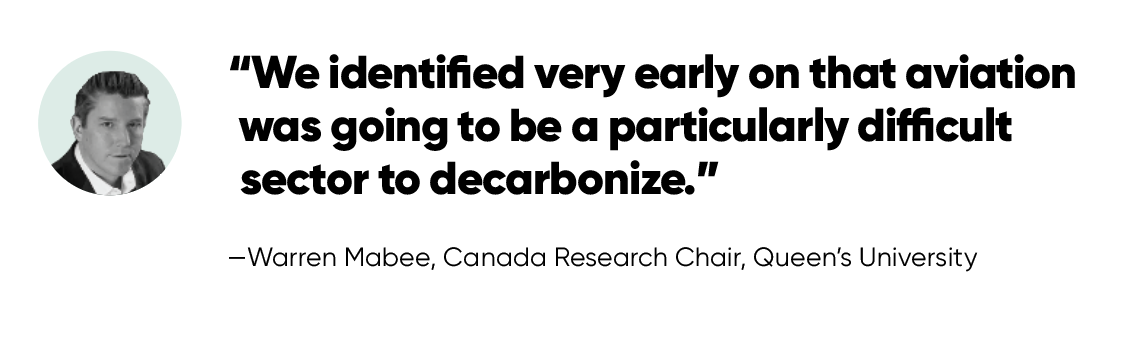
Warren Mabee, a renewable-energy expert at Queen’s University, emphasizes that jet fuel must remain stable under extreme pressure and temperature fluctuations. If a fuel is not chemically identical to kerosene, it risks engine failure at 35,000 feet—a margin of error that is unacceptable in commercial aviation. Current SAF formulations, particularly those derived from virgin oilseeds like canola, often lack the chemical density required for power-hungry jet engines.
Furthermore, while emerging technologies can convert cellulosic materials—such as corn husks, agricultural residues, and municipal waste—into fuel, these processes have not yet achieved commercial viability. Converting solid waste into a high-performance liquid fuel is an energy-intensive and expensive process that requires massive infrastructure investment, which has been slow to materialize.
The Feedstock Conflict: Food vs. Fuel
The sustainability of SAF is also under intense scrutiny. The most common feedstock for SAF currently is waste cooking oil (Used Cooking Oil or UCO). While UCO can reduce life-cycle greenhouse gas emissions by up to 80%, the global supply is severely limited.
When producers turn to crop-based feedstocks, they run into the "food vs. fuel" debate. If land is cleared to grow crops for jet fuel, the resulting carbon release from the soil and vegetation can negate any climate benefits. The EU has already moved to discourage crop-based biofuels for this reason. Andy Navarrete of the International Council on Clean Transportation (ICCT) warns that if SAF is viewed as a "good" in itself without considering the sustainability of its source, the industry may inadvertently increase total global emissions.
Comparative Policy Landscapes: US, EU, and UK
The current crisis has highlighted the different regulatory approaches taken by major economies, with varying degrees of success:
- The United Kingdom: Regulators have implemented a "price floor" for SAF producers. This provides a guaranteed minimum price, reducing the risk for investors and encouraging the development of newer, scalable technologies. This model, which was successful in driving wind power investment, is currently seen as the gold standard for SAF policy.
- The European Union: The EU relies heavily on mandates. By requiring a specific percentage of SAF in all flights, they create guaranteed demand. However, without sufficient supply, this has led to concerns about fuel shortages and "tankering," where airlines fill up with cheaper, non-SAF fuel in non-EU countries.
- The United States: Under the Biden-era Inflation Reduction Act, tax credits were introduced to stimulate SAF production. However, these credits often favor road-based biodiesel, which is easier and cheaper to produce. Furthermore, political shifts and the gutting of climate policies under subsequent administrations have created an environment of regulatory uncertainty that deters long-term investment.
The Economic Gap: The "Green Premium" Problem
Even with fossil fuel prices at $200 per barrel, SAF remains economically uncompetitive. Prior to the 2026 war, a liter of SAF cost approximately eight times more than a liter of conventional jet fuel. While the doubling of fossil fuel prices has narrowed this gap, it has not closed it.
Neste, the Finnish energy giant and world leader in SAF production, currently produces about 1.5 million tons per annum. While they plan to expand to 2.2 million tons by 2027, this remains a drop in the bucket compared to the nearly 300 million tons of jet fuel consumed globally each year. For farmers and feedstock suppliers, the value proposition is also missing; they can often earn more selling their products for food than for fuel.
Implications and Future Outlook
The 2026 energy crisis has served as a stress test for the aviation industry’s climate commitments, and the results are sobering. The transition to SAF is not merely a matter of political will but a complex challenge involving chemistry, land use, and global economics.
As long as fossil fuel subsidies—which totaled $600 billion globally in 2023—persist, the market for SAF will struggle to reach maturity. Furthermore, there are no immediate technological alternatives. Battery-powered passenger jets are at least two decades away from commercial certification due to the weight and energy-density limitations of current battery technology.
The "conspicuous silence" of the airline industry in the face of the current fuel crisis suggests that the path to net-zero aviation is much longer and more perilous than previously admitted. If the world’s governments and airlines cannot find a way to make SAF viable during a period of record-high oil prices and geopolitical instability, the prospects for decarbonizing the skies by 2050 remain dim. The current conflict has not been the "inflection point" many hoped for; instead, it has been a harsh reminder that the aviation industry remains firmly tethered to the very fossil fuels it claims to be leaving behind.
