

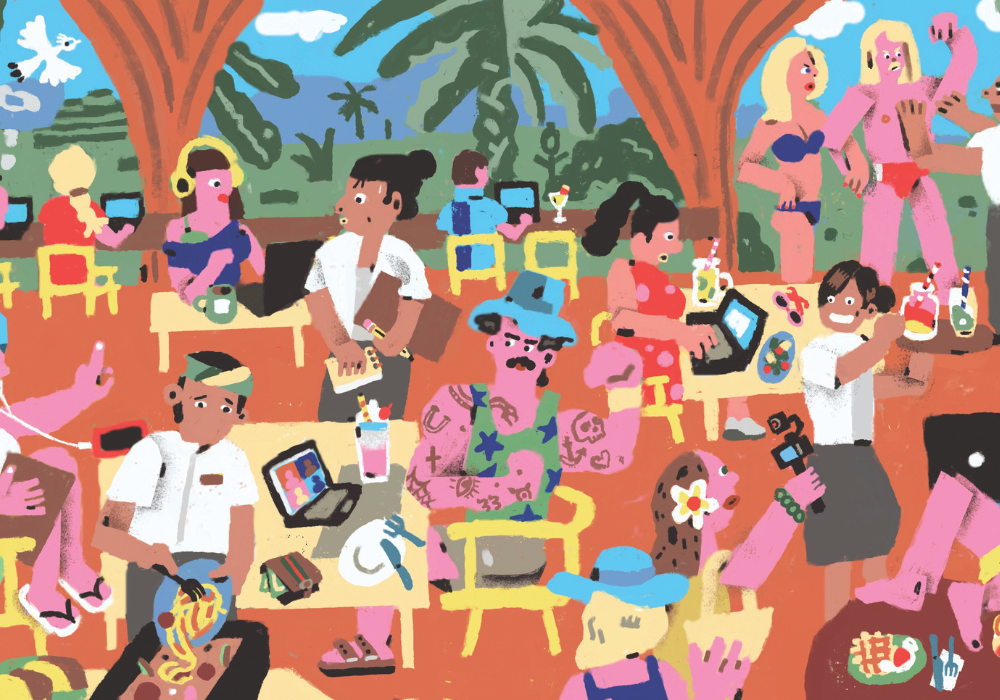
The dream of "working from anywhere" has transformed from a niche lifestyle for tech-savvy backpackers into a mainstream global phenomenon, accelerated by the seismic shifts in labor dynamics following the COVID-19 pandemic. Today, an estimated 40 million individuals identify as digital nomads—remote workers and entrepreneurs who leverage technology to work from countries far from their employers’ headquarters. While social media platforms like Instagram and LinkedIn are saturated with images of laptops perched on mahogany tables overlooking turquoise Balinese waters or the colonial architecture of Mexico City, a darker reality is beginning to emerge. This shift toward perpetual mobility is creating a complex web of environmental degradation, social displacement, and infrastructure strain that many host communities are struggling to manage.
The evolution of the digital nomad movement can be traced through a clear chronology. Prior to 2020, the lifestyle was largely reserved for freelance writers, software developers, and early adopters of the "gig economy." However, the 2020 global lockdowns proved that a significant portion of the professional workforce could operate effectively without a centralized office. By 2021, as international borders began to reopen, a surge of "untethered" workers from high-income nations began migrating to lower-cost destinations in the Global South and Southern Europe. This influx was met with enthusiasm by governments eager to recoup lost tourism revenue, leading to the creation of specific digital nomad visas in over 50 countries, including Portugal, Thailand, Indonesia, and Costa Rica.
The Economic Paradox: Wealth Injection vs. Local Displacement
The primary driver for countries courting digital nomads is the promise of high-spending residents who do not compete for local jobs. In many instances, the economic impact is measurable and significant. In Medellin, Colombia, data suggests that digital nomads spend nearly $1,000 more per month than the average local resident. In Mexico City, the contribution of these remote workers to the tourism sector was calculated at approximately 15% in 2021, injecting more than $532 million into the local economy. For Bali, an island where 80% of economic activity is tied to tourism, the partnership with platforms like Airbnb to attract long-term remote workers was seen as a vital lifeline after the pandemic’s devastation.
However, this influx of foreign capital often acts as a double-edged sword. In tourist hubs like Canggu, Bali, the rapid development of luxury villas to cater to Western tastes has led to the systematic destruction of rice fields and natural habitats. The result is a two-tier economy where businesses are priced for nomads earning thousands of dollars a month, while local residents, who may earn only a few hundred dollars, are priced out of their own communities. This gentrification is not limited to Southeast Asia; cities like Lisbon and Mexico City have seen massive protests as local residents find themselves unable to afford rising rents driven by the high demand for short-term and medium-term rentals favored by nomads.
Infrastructure Strain and the "Invisible" Waste Crisis
Beyond the social tensions of gentrification lies a burgeoning environmental crisis. Many of the most popular nomad enclaves are located in regions with developing infrastructure that was never designed to support a high density of high-consumption residents. In Bali, the aesthetic of the tropical paradise is increasingly marred by the reality of inadequate waste management. Visitors frequently report beaches choked with plastic litter and the sight of flaming garbage piles—a common method of waste disposal in areas lacking formal sanitation services.
The strain on resources extends to vital utilities. The conversion of pastoral landscapes into high-end lodging often involves the heavy use of groundwater, leading to shortages for local agricultural and domestic use. Furthermore, the "temporary" nature of the nomad lifestyle contributes to a lack of investment in the long-term health of the local environment. Because nomads rarely stay in one location for more than a few months, they are often insulated from the long-term consequences of their consumption, such as the depletion of local aquifers or the overflow of municipal landfills.
The Carbon Footprint of Perpetual Mobility
One of the most significant environmental challenges posed by digital nomadism is the reliance on long-haul aviation. While remote work is often touted as "green" because it eliminates the daily office commute—saving an average of 4.6 metric tons of carbon dioxide per year per car—these gains are quickly erased by the nomadic lifestyle. Many remote workers engage in "visa runs," where they fly to a neighboring country for a single day to reset their legal stay, only to return immediately.
Aviation currently accounts for approximately 2.4% of global carbon emissions, a figure that is projected to rise as international travel becomes more accessible. For a digital nomad, a single round-trip flight from New York to Bali can generate upwards of 3 metric tons of CO2 per passenger. When multiplied by the millions of people now living this lifestyle, the carbon footprint of the "work from anywhere" movement becomes a substantial contributor to global warming.
Furthermore, the types of industries favored by digital nomads—such as cryptocurrency trading, drop shipping, and AI-driven entrepreneurship—carry their own hidden environmental costs. These digital-first businesses rely heavily on data centers that consume vast amounts of electricity and water for cooling. A nomad may be physically living a "minimalist" life with only a backpack, but their digital footprint may be larger than that of a traditional office worker.
Academic Perspectives and the Ethics of Emancipation
Daniel Schlagwein, a professor at Chulalongkorn University and the University of Sydney, has extensively researched the intersection of digital nomadism and business ethics. In his work, Schlagwein notes that while many nomads experience a sense of "emancipation" from traditional corporate structures, this freedom often comes at the expense of the host community. His research identifies a phenomenon of "self-reflective guilt" among some nomads who recognize that their presence is taxing the environment, yet feel powerless to change the systemic factors at play.
Schlagwein’s studies suggest that the government’s view of nomads is often more favorable than their view of "zero baht tourists"—those who arrive on cheap tour groups and spend very little in the local economy. Nomads are coveted because they leave money in the community while "fading into the background" in coworking spaces. However, this lack of engagement with the local community can also be a disadvantage. Digital nomads often live in a vacuum, disconnected from local politics and social issues, which prevents them from contributing to collective solutions for problems like waste management or housing affordability.
A Path Toward Sustainable Nomadism
As the movement matures, there is a growing call for a more ethical framework for remote work. Emerging research from academic centers in Macau and Europe suggests that while digital nomads express a desire to be sustainable, they are often constrained by "market logics" and regulatory gaps. To mitigate the negative impacts, some nomads are advocating for "slow travel"—staying in one location for six months to a year rather than moving every few weeks. This approach reduces aviation emissions and allows workers to become more integrated into their host communities, potentially contributing to local environmental initiatives.
Some nomads are already using their technical skills to give back. In Ubud, Bali, groups of remote workers have assisted local villages in developing decentralized waste management facilities and digital waste-separation strategies. These efforts represent a shift from being mere consumers of a destination to becoming active participants in its preservation.
Conclusion: Balancing Personal Liberty with Global Responsibility
The rise of the digital nomad is a testament to the human desire for freedom and the transformative power of technology. However, the first decade of the remote-work revolution has revealed that no one exists in a vacuum. The choices made by millions of "untethered" workers have real-world consequences for the people and ecosystems of the Global South.
As countries continue to refine their digital nomad visas and workers become more aware of their footprints, the challenge will be to create a model of mobility that is restorative rather than extractive. This requires a shift in mindset from the "present-moment" focus of the traveler to the "long-term" focus of the resident. For the digital nomad movement to remain a "force for good," it must move beyond the laptop-on-the-beach trope and engage with the mundane, yet critical, realities of the communities that host them. Only then can the dream of global mobility coexist with the necessity of local sustainability.
