

The evolving landscape of investment stewardship is characterized by a growing convergence on core priorities like climate change and board effectiveness, yet simultaneously exhibits significant regional divergences and operational complexities. This is according to the inaugural 2026 Investment Stewardship Survey Report published by Glass Lewis & Co., a leading provider of governance solutions. The report, drawing insights from asset managers and asset owners across Europe, North America, and Asia-Pacific, offers a comprehensive overview of how institutional investors are structuring, resourcing, and executing their stewardship activities in an increasingly intricate global environment. Rickard Nilsson, Director of Stewardship at Glass Lewis & Co., elaborated on the survey’s findings, highlighting critical trends that are shaping investor engagement and operational strategies.
Core Engagement Priorities: A Tale of Two Continents
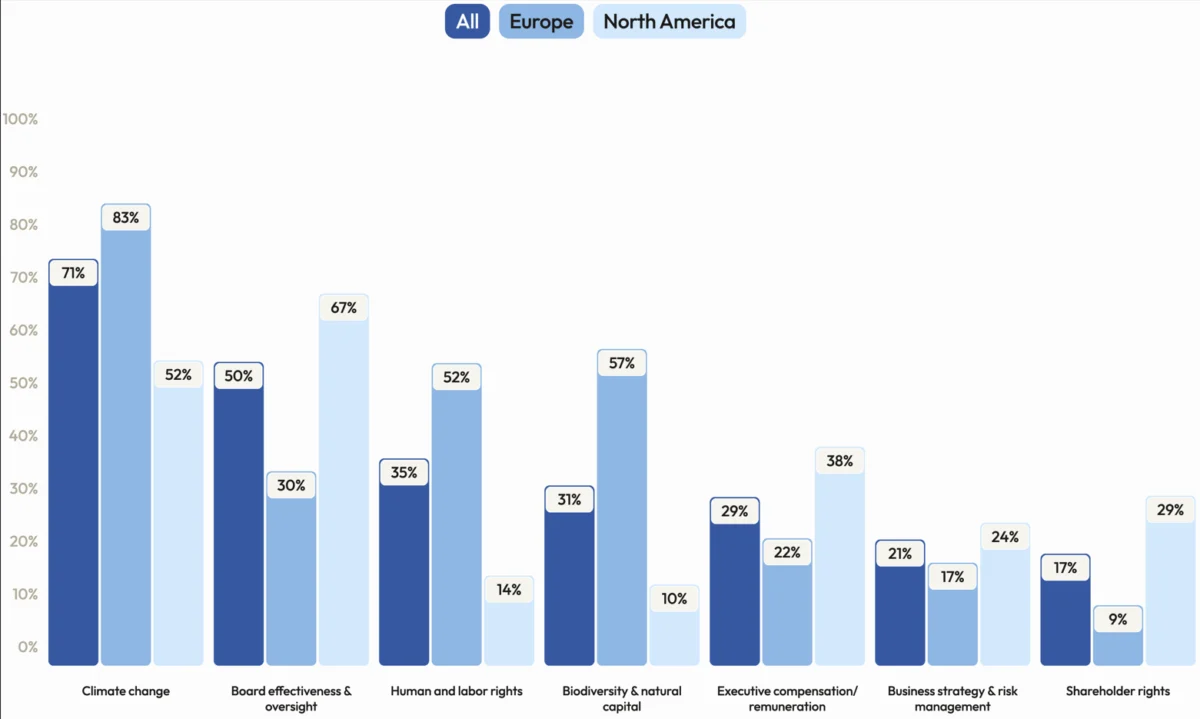
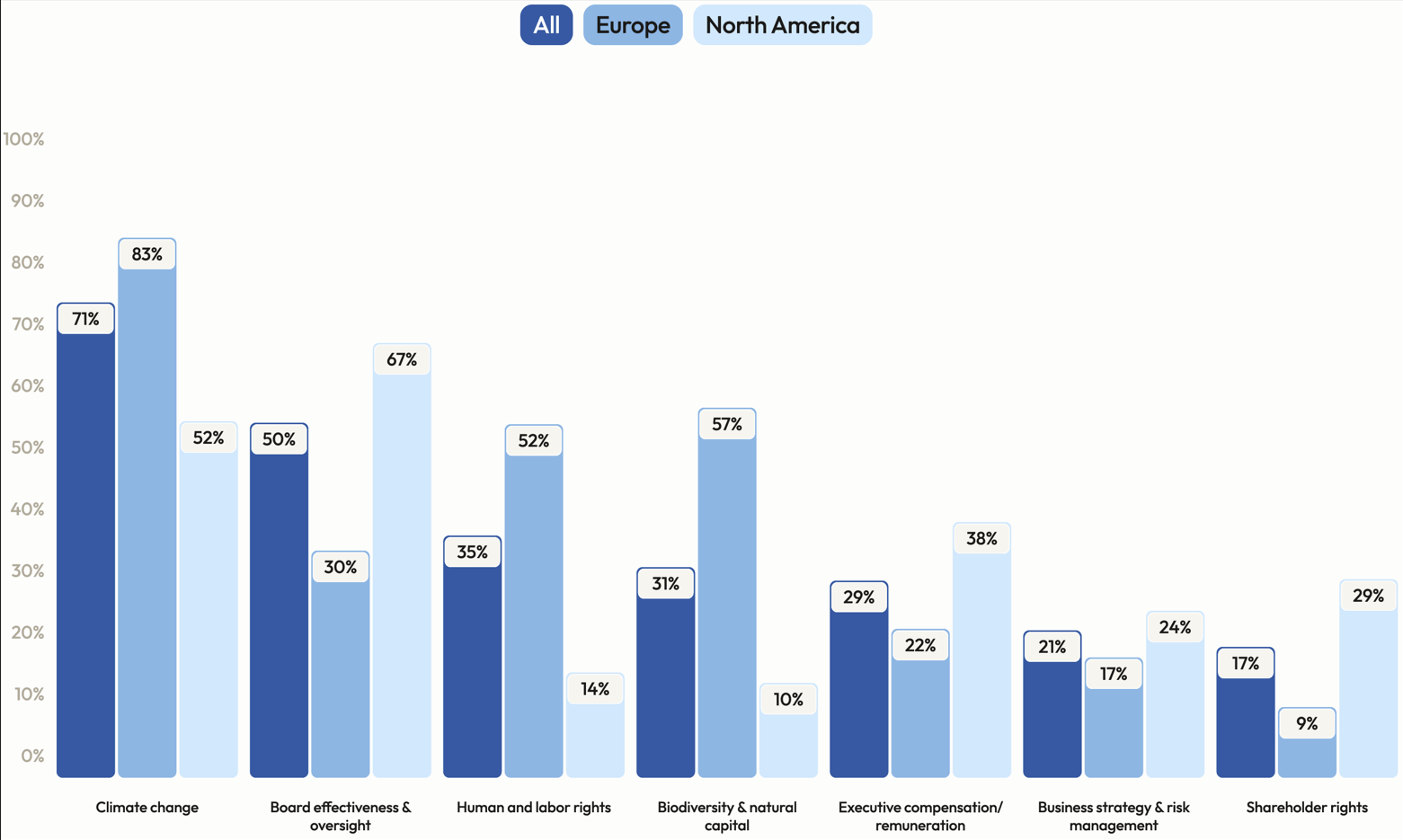
At the forefront of investor engagement priorities, climate change consistently emerges as the dominant theme, cited by 71% of respondents. This reflects the escalating urgency and systemic importance of environmental factors in long-term investment performance and risk management. Following closely is board effectiveness and oversight, a perennial concern for investors seeking to ensure robust governance structures and accountability within the companies they hold (50% of respondents).
However, a notable regional dichotomy surfaces when examining the nuances of these priorities. European investors demonstrate a relatively stronger inclination towards broader sustainability topics, encompassing not only climate change but also human and labor rights, and biodiversity. This suggests a more holistic and integrated approach to Environmental, Social, and Governance (ESG) considerations within the European investment community. In contrast, North American investors tend to place a greater emphasis on traditional corporate governance metrics. These include the effectiveness of board oversight, executive compensation structures, and the safeguarding of shareholder rights, indicating a continued focus on foundational aspects of corporate accountability.

Beyond these dominant themes, the survey reveals a broad and often situational approach to engagement. Social topics are gaining increasing traction, particularly among larger institutions with the scale and resources to address them systematically. This includes areas such as toxics and chemicals, Indigenous relations, and general governance and disclosure practices. One survey participant aptly summarized this dynamic, stating, "We engage based on what is material to specific industries or portfolio holdings, or what is material to our portfolios overall." This sentiment underscores that while broad thematic priorities exist, the practical application of stewardship is often tailored to the specific needs and risks of individual investments and portfolios.
The Rise of Hybrid Stewardship: Balancing Scale and Selectivity
The operational approach to stewardship is increasingly characterized by a hybrid model, adopted by nearly two-thirds of surveyed investors. This approach judiciously combines baseline market expectations, which apply to a broad swathe of holdings, with more targeted and intensive company-specific engagements. The remaining respondents are evenly split between generalized approaches, applying a consistent framework across all investments, and highly specialized approaches, focusing resources on a select few critical areas or companies.
This hybrid model, while offering a pragmatic balance for managing diversified portfolios that can span hundreds or thousands of assets, inherently introduces operational complexity. Investors employing this strategy face the considerable challenge of analyzing a vast array of holdings, establishing nuanced stewardship priorities, and meticulously tracking and reporting on engagement progress. These administrative tasks, designed to empower operational efficiency, were collectively identified as particularly resource-intensive by survey participants. The inherent tension lies in balancing the need for consistent application of stewardship principles across the portfolio with the selective application of deep-dive engagement where it is most impactful.
One respondent articulated the multifaceted nature of this hybrid approach: "The hybrid approach (from the point of view of the companies) we address bilaterally, but also in terms of when we enter multi-stakeholder engagements, and is highly contingent on asset class. For private markets, we almost exclusively engage our asset managers to do stewardship in line with our interests." This highlights the strategic delegation and varied engagement tactics employed depending on the investment vehicle and asset class. The pursuit of operational efficiency within this hybrid framework necessitates sophisticated analytical tools and streamlined processes to effectively manage both broad-based and bespoke stewardship initiatives.
Criteria for Engagement Prioritization: A Multifaceted Approach
The prioritization of engagement efforts is guided by a diverse set of criteria, with almost all options presented to respondents being utilized by at least 30% of participants. The most frequently cited criterion for engagement prioritization is "alignment with stewardship or responsible investment policies," particularly among asset owners who adhere to a singular, overarching policy framework. This indicates a strong commitment to embedding established responsible investment principles into active stewardship.
Conversely, "credit quality/bond terms" emerged as a less common criterion, selected by fewer than 10% of respondents. This finding suggests that while creditworthiness remains a fundamental consideration in fixed-income investing, it does not typically drive the strategic agenda for active engagement on broader ESG or governance issues. The emphasis appears to be on proactive engagement to influence long-term value creation and risk mitigation rather than solely on immediate financial risk assessments.
The survey also revealed that ownership levels are considered in engagement prioritization by under half of respondents. However, larger investors, irrespective of their assets under management, stewardship team size, or investment team size, are significantly more likely to factor in ownership stakes. This correlation underscores the influence of organizational capacity and analytical resources in shaping sophisticated stewardship strategies, where higher ownership often translates to greater leverage and a more direct impact on corporate behavior.
Additional criteria articulated by participants include product requirements, exclusions, specific engagement mandates, the materiality of identified topics, and the perceived ratio of effort to potential success. This eclectic mix of considerations points to a pragmatic and adaptive approach to engagement, where strategic decisions are informed by a blend of policy directives, risk assessments, opportunity identification, and resource allocation considerations. The findings suggest that investors are actively seeking a balanced approach to setting engagement priorities, though the survey also indicates that further work may be needed to fully integrate stewardship considerations into fixed-income strategies.

Pathways to Enhanced Investment Stewardship Quality
Looking ahead, respondents identified several key areas for improvement in the quality of their investment stewardship activities. The most prominent priorities revolve around enhancing the feedback loop between stewardship insights and investment decision-making processes, strengthening the rigor of engagement prioritization and target research, and developing and utilizing credible escalation strategies.
Asset managers, in particular, placed a strong emphasis on the tighter integration of stewardship insights into investment decisions. This highlights the critical need for seamless alignment across different functional areas within investment firms, ensuring that governance and sustainability considerations are not siloed but are integral to portfolio construction and management. Asset owners, on the other hand, prioritized improving engagement prioritization and target research. This focus is particularly significant given that this area was also ranked as the most time-consuming administrative task by the broader survey group. This complexity for asset owners may stem from managing both in-house investment teams and external asset managers, requiring a sophisticated approach to setting and executing stewardship agendas across diverse mandates.
A notable area of focus for a significant portion of respondents (36%) is the improvement of data management and integrations. This is closely linked to the growing importance of outcomes reporting, a trend amplified by evolving stewardship guidance, such as the updated UK Stewardship Code. Demonstrating the tangible impact of stewardship efforts over time is becoming a central component of investor reporting strategies. This aligns directly with the functionalities offered by platforms like Glass Lewis’s Engagement Management Platform, which is designed to facilitate the tracking and reporting of undertaken efforts and progress.
Ultimately, the survey findings suggest a prevailing view that the quality of investment stewardship is inextricably linked to both analytical rigor and the effective integration of stewardship principles into core investment processes. The pursuit of these improvements indicates a maturing and increasingly sophisticated approach to active ownership, where the goal is not merely to engage, but to drive measurable positive change and enhance long-term investment outcomes. The ongoing evolution of stewardship practices, informed by such data-driven insights, will undoubtedly continue to shape corporate behavior and the global investment ecosystem.
