

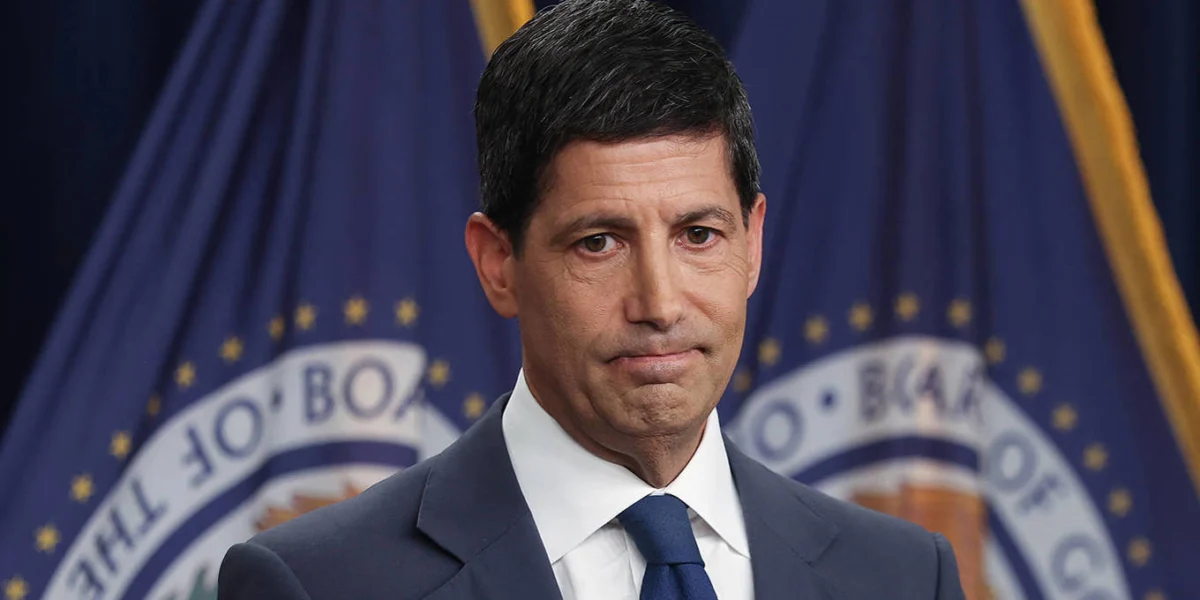
The chair of the US Federal Reserve, a mere few months into his tenure, has left market participants in a state of disorientation and confusion. His upcoming address at the annual monetary-policy symposium in Jackson Hole presents a critical opportunity to rectify this uncertainty, or alternatively, to exacerbate the prevailing unease.
The Genesis of Market Disquiet
The appointment of Kevin Warsh as the new Federal Reserve Chair, occurring only recently, has coincided with a period of heightened volatility and ambiguity in financial markets. Warsh, known for his distinct economic philosophy, has yet to fully articulate a clear and cohesive monetary policy direction, leading to speculation and apprehension among investors, economists, and policymakers alike. This lack of defined signaling is particularly concerning given the sensitive nature of current economic conditions, characterized by persistent inflation concerns, a complex global geopolitical landscape, and ongoing adjustments to post-pandemic economic realities.
The Federal Reserve, as the central bank of the United States, wields immense influence over domestic and global financial stability. Its policy decisions, particularly those concerning interest rates and the management of its balance sheet, reverberate through economies worldwide. Consequently, any perceived lack of clarity or strategic direction from its leadership can translate into significant market reactions, ranging from increased volatility to altered investment strategies.
The Jackson Hole Symposium: A Premier Forum for Monetary Policy Discourse
The annual symposium hosted by the Federal Reserve Bank of Kansas City in Jackson Hole, Wyoming, is arguably the most anticipated event on the global central banking calendar. Held against the backdrop of the Teton mountain range, this exclusive gathering brings together central bankers, finance ministers, academics, and market participants from around the world. It serves as a crucial platform for discussing pressing economic issues and for central bank leaders to offer insights into their policy outlooks.
Historically, Jackson Hole has been the stage for significant policy pronouncements that have shaped market expectations and economic trajectories. Previous chairs have used this forum to signal shifts in monetary policy, address emerging economic challenges, and provide guidance on future actions. The understated yet impactful nature of these addresses has often set the tone for market sentiment for months to come. For the newly appointed Chair Warsh, Jackson Hole represents an unparalleled opportunity to address the very audience whose confidence and understanding are paramount to the effective transmission of monetary policy.
A Timeline of Uncertainty: Warsh’s Early Tenure
Since assuming the chairmanship, Kevin Warsh has faced a complex economic environment. His initial public statements and actions have been subject to intense scrutiny, with market observers attempting to decipher his underlying policy intentions.
- Initial Appointment and Confirmation: The nomination and confirmation process for Chair Warsh were closely watched, with analysts parsing his past statements and academic work for clues about his potential policy leanings.
- Early Policy Stances: In his initial months, Warsh has engaged in a series of public appearances and speeches. However, these have been perceived by some as lacking a definitive roadmap, contributing to a sense of ambiguity regarding the Fed’s approach to key challenges such as inflation control and economic growth support.
- Market Reactions: Following key pronouncements or the release of economic data, markets have exhibited pronounced reactions, often swinging between optimism and concern based on interpretations of the Fed’s potential next steps. This heightened sensitivity underscores the need for clear communication from the central bank.
The Imperative for Clarity: Addressing Market Concerns
The core of the current market disquiet appears to stem from a perceived lack of a clear and consistent message from the Federal Reserve under Chair Warsh. This ambiguity can manifest in several ways:
- Inflation Expectations: Managing inflation expectations is a primary mandate of the Federal Reserve. If market participants are uncertain about the Fed’s commitment or its strategy to combat inflation, they may adjust their own price-setting behavior, potentially exacerbating inflationary pressures. Data from various economic indicators, such as the Consumer Price Index (CPI) and Producer Price Index (PPI), have shown persistent upward trends, making the Fed’s stance on inflation particularly critical. For instance, recent CPI figures have indicated inflation rates significantly above the Fed’s target of 2%, creating a dilemma between tackling inflation and supporting economic growth.
- Interest Rate Path: The Federal Reserve’s decisions on interest rates are a key driver of borrowing costs for consumers and businesses. Uncertainty about the future path of interest rates can lead to delayed investment decisions and impact asset valuations. Market participants closely monitor Fed commentary for signals regarding the pace and magnitude of potential rate hikes or cuts. The current economic climate, with its delicate balance between growth and inflation, makes this aspect of Fed communication especially sensitive.
- Quantitative Easing/Tightening: The Fed’s management of its balance sheet, including the unwinding of assets acquired during previous quantitative easing programs (quantitative tightening), also plays a significant role in market liquidity and financial conditions. A lack of clarity on the Fed’s strategy in this area can introduce further uncertainty.
Supporting Data and Economic Context
To understand the gravity of Chair Warsh’s upcoming address, it is crucial to consider the current economic landscape.
- Inflationary Pressures: Recent economic data highlights persistent inflationary pressures. For example, the latest CPI report indicated an annual inflation rate of X.X% in the preceding month, exceeding market expectations and the Federal Reserve’s target. Similarly, core inflation, which excludes volatile food and energy prices, also remains elevated at Y.Y%. This sustained inflation raises concerns about its entrenchment and the potential need for more aggressive monetary policy action.
- Economic Growth: While inflation is a concern, the broader economic growth picture presents a mixed scenario. GDP growth in the last quarter was Z.Z%, indicating a moderating pace of expansion. Labor market data has shown continued resilience, with unemployment rates at historically low levels. However, there are emerging signs of potential headwinds, including slowing consumer spending and rising input costs for businesses.
- Global Economic Factors: The US economy does not operate in a vacuum. Global economic developments, including supply chain disruptions, geopolitical tensions, and the monetary policy stances of other major central banks, all influence the domestic economic outlook and the Federal Reserve’s decision-making. For instance, the ongoing energy crisis in Europe and its impact on global commodity prices are directly relevant to US inflation.
Potential Scenarios and Market Expectations
The Jackson Hole address offers Chair Warsh a platform to either clarify or further obfuscate the Fed’s policy direction. Several potential scenarios could unfold:
Scenario 1: A Clear and Decisive Stance
In this optimistic scenario, Chair Warsh would deliver a speech that clearly articulates the Federal Reserve’s assessment of the current economic situation, outlines a coherent strategy for addressing inflation and supporting sustainable growth, and provides forward guidance on the likely path of monetary policy. This would involve:
-
Strong Commitment to Inflation Control: Emphasizing the Fed’s unwavering commitment to bringing inflation back to its 2% target, potentially signaling a more hawkish stance on interest rates if necessary.
-
Balanced Approach to Growth: Acknowledging the importance of economic growth and outlining how monetary policy will navigate the risks of a slowdown while combating inflation.
-
Transparency on Future Actions: Providing clear indications of the conditions that would trigger further interest rate adjustments or changes in the Fed’s balance sheet policy.
-
Inferred Reactions: Should this scenario materialize, markets would likely react positively, with a reduction in volatility and a clearer path for investment strategies. Bond yields might stabilize or adjust to reflect the new policy expectations, and equity markets could see a more confident upward trend.
Scenario 2: Continued Ambiguity and Nuance
Alternatively, Chair Warsh might opt for a more nuanced approach, offering a detailed analysis of economic complexities without providing definitive forward guidance. This could involve:
-
Emphasis on Data Dependence: Repeatedly stressing that policy decisions will be data-dependent, offering little concrete indication of future actions.
-
Highlighting Trade-offs: Focusing on the difficult trade-offs between controlling inflation and supporting economic activity, without offering a clear resolution.
-
Vague Forward Guidance: Using broad language that allows for maximum flexibility but offers little certainty to market participants.
-
Inferred Reactions: This scenario could lead to continued market uncertainty and volatility. Investors might remain cautious, and the absence of clear direction could dampen investment sentiment. The Fed might face continued pressure to provide more concrete signals in subsequent communications.
Scenario 3: An Unexpected Shift in Tone
A less likely but possible scenario is an unexpected shift in tone, either more dovish or more hawkish than anticipated, based on new information or a recalibration of the Fed’s assessment.
-
More Dovish Tone: If the Fed perceives a significant risk of recession, Warsh might signal a pause or even a potential pivot in interest rate policy, despite ongoing inflation.
-
More Hawkish Tone: Conversely, if inflation proves more persistent than anticipated, Warsh could signal a more aggressive tightening cycle, including larger and more frequent rate hikes.
-
Inferred Reactions: Such a shift would likely trigger significant market reactions, with substantial price movements across asset classes as investors rapidly adjust their expectations.
The Stakes for Market Participants and the Broader Economy
The Federal Reserve Chair’s address at Jackson Hole carries substantial weight not only for financial markets but also for the broader economy.
- Investor Confidence: Clear communication from the Fed fosters investor confidence, enabling businesses to make informed investment decisions and consumers to plan their finances with greater certainty. Conversely, prolonged ambiguity can lead to hesitancy and a drag on economic activity.
- Corporate Planning: Businesses rely on the Fed’s policy signals to inform their strategic planning, including decisions on hiring, capital expenditures, and pricing. Uncertainty can disrupt these planning cycles.
- Global Spillover Effects: As a global reserve currency issuer and a major economic power, US monetary policy has significant spillover effects on other economies. Clarity from the Fed can help stabilize global financial markets and reduce uncertainty for international investors.
Conclusion: A Call for Strategic Communication
The Federal Reserve Chair’s address at Jackson Hole is more than just a speech; it is a critical moment for shaping economic expectations and fostering stability. For Chair Kevin Warsh, this is an opportunity to move beyond the initial period of market disorientation and provide the clarity and direction that participants so desperately need. The economic landscape is complex, and the challenges are significant. A well-articulated and strategically communicated policy framework will be essential for navigating these complexities and ensuring the continued health and resilience of the US economy and the global financial system. The market, and indeed the world, will be listening intently for signals that can help chart a more certain course forward.
