

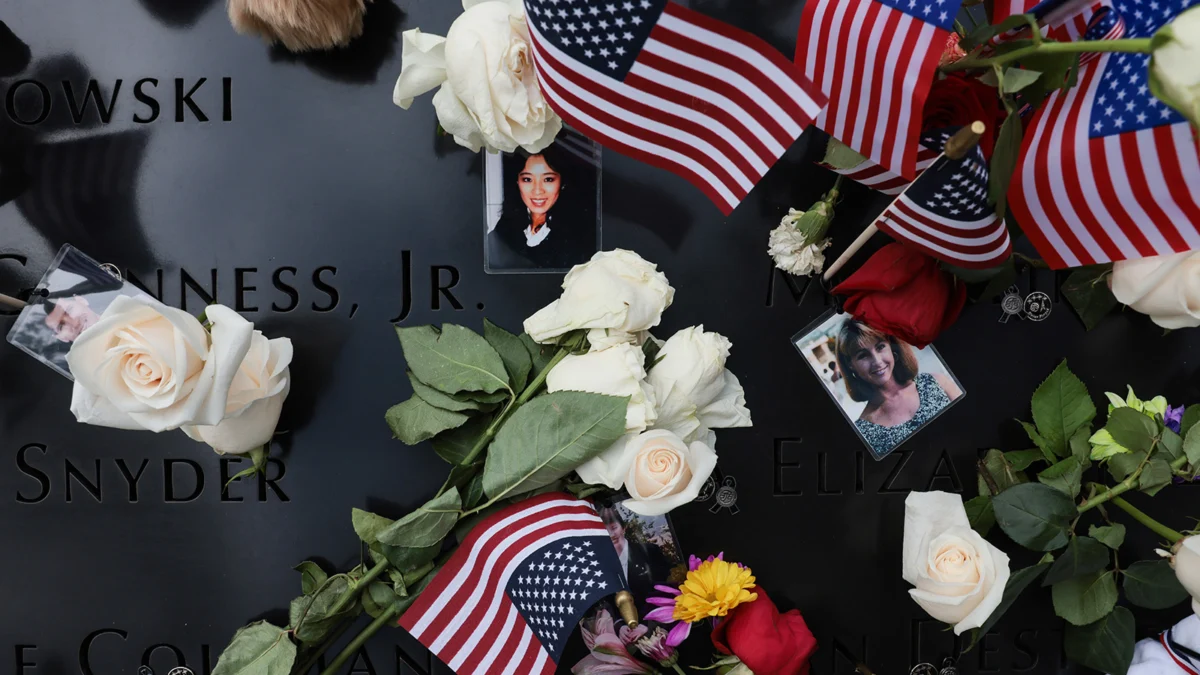
Twenty-five years ago, the United States was irrevocably altered by a series of coordinated terrorist attacks that claimed nearly 3,000 lives and shattered the sense of security for a nation. The morning of September 11, 2001, began like any other for many Americans, including Scott Kahan, president of the New York-based firm Financial Asset Management Corporation. Kahan was in San Diego for the Financial Planning Association’s (FPA) annual conference, a professional gathering that was abruptly overshadowed by the unfolding tragedy. He awoke to the horrifying images broadcast on television, witnessing firsthand the unimaginable devastation of the attacks that struck the World Trade Center in New York City, the Pentagon in Arlington, Virginia, and a field in Shanksville, Pennsylvania.
Kahan, who grew up in Yonkers and later established his practice with offices in both New York City and Chappaqua, found himself stranded in San Diego for several days due to the widespread grounding of air travel. This enforced separation from his young children underscored the profound disruption to normalcy that the attacks imposed on countless families. "Here we are in San Diego, watching from the base, the planes shooting out on a beautiful sunny day because nobody knew what was going to happen," Kahan recounted to Wealth Management, reflecting on the surreal and terrifying experience.
The immediate aftermath of 9/11 presented a complex and overwhelming landscape for the families of victims. Beyond the immeasurable grief, they faced a labyrinth of financial and legal challenges. Recognizing this, Kahan and many of his peers in the financial planning industry quickly understood the urgent need for their expertise. This realization spurred a profound shift, not only in how financial professionals approached their work but also in the very ethos of the profession, igniting a sustained commitment to pro bono service that continues to resonate today.
The Immediate Aftermath: A Nation in Crisis and the Birth of a Humanitarian Response
In the weeks following the attacks, the U.S. government responded by establishing the September 11th Victim Compensation Fund. This groundbreaking initiative aimed to provide financial assistance to victims and their families, supplementing private donations and funds raised by New York City. However, navigating the intricate application processes and eligibility requirements proved daunting for many grieving families.
Kahan observed a troubling trend where some attorneys and advisors began charging exorbitant fees for their assistance, a practice he found ethically reprehensible. In response, he played a pivotal role in organizing pro bono efforts through the FPA in New York and Washington, D.C. He collaborated with Trial Lawyers Care, an organization established by attorneys to offer pro bono legal services to victims’ families. This collective effort aimed to ensure that those most affected by the tragedy received the support they needed without facing further financial exploitation.
The complexities for victims’ families were multifaceted. Many had to navigate the compensation requirements while grappling with the loss of loved ones, often without the benefit of established estate plans. The suddenness of the attacks meant that numerous individuals died intestate, leaving behind intricate legal and financial puzzles for their surviving families. Kahan, being a New Yorker, felt the personal weight of the tragedy acutely. His daily commute from Chappaqua to Manhattan served as a constant, somber reminder of the attacks, with "Missing" posters adorning walls throughout the city, a stark visual testament to the lives lost.
A Personal Connection and the Genesis of Pro Bono Commitment
Kahan’s personal involvement in assisting 9/11 families left an indelible mark. He recalled working with a woman who, despite having limited financial background, was suddenly thrust into the daunting task of managing her finances after her son’s death in the attacks. "It’s unimaginable to some degree," Kahan reflected. "I mean, it’s unbelievable that it’s 25 years ago, but yeah, it’s unimaginable now, just thinking about it and watching it." This profound human experience cemented his dedication to pro bono work, a commitment that has guided his career for decades.
The impact of 9/11 extended beyond individual efforts. Mark Johannessen, a Washington D.C.-based advisor, shared his perspective in a 2021 testimonial on the Foundation for Financial Planning (FFP) website. Johannessen recounted how, during a nationally televised fundraising broadcast for 9/11 victims, he began to conceptualize pro bono planning initiatives within the FPA.
"Given the large number of CFP professionals offering pro bono guidance today, it is hard to believe that prior to 9/11, pro bono financial planning was merely an aspiration," Johannessen wrote. He explained that while pro bono services were recognized in traditional professions, financial planning had lagged due to a lack of public awareness and a general deficit of trust in the financial services industry. The 9/11 attacks, however, created a critical juncture, highlighting the indispensable role financial professionals could play in times of national crisis.
The FPA and FFP: Mobilizing Professional Expertise for Public Good
Following the FPA’s development of a plan to assist 9/11 families, the newly established Foundation for Financial Planning (FFP) stepped in to amplify these efforts. The FFP funded full-page advertisements in prominent newspapers, including The New York Times and The Washington Post, announcing the FPA’s pro bono plans to support victims and their families. This strategic public outreach ensured that those in need were aware of the available assistance.
Johannessen further elaborated on the unintended but profoundly positive consequences of this mobilization. "On reflection, our profession’s desire to help produced an unintentional outcome," he stated. "The pro bono program surrounding 9/11 generated further legitimacy of the Financial Planning Profession in the eyes of the public, policy makers, and other public advocacy groups, and helped foster the tremendous growth and recognition that exists today." The crisis served as a catalyst, demonstrating the profession’s capacity for empathy, ethical conduct, and invaluable public service, thereby enhancing its standing and influence.
Evolving Challenges and Enduring Health Impacts
While the immediate financial and legal fallout from 9/11 has largely been addressed, the long-term health consequences for those exposed to the toxic environment of Ground Zero and its aftermath continue to be a significant concern. The 9/11 Memorial & Museum announced this year the addition of an additional moment of silence to its annual commemoration ceremonies to honor those who have died from the health effects of the attacks. Estimates suggest that approximately 400,000 people were exposed to toxic air, physical injuries, and emotionally stressful conditions in the wake of the attacks. Tragically, according to ABC News, about 9,400 individuals have since died from these related health issues, underscoring a persistent and evolving dimension of the tragedy.
The Broadening Scope of Pro Bono and the Future of Financial Planning
Scott Kahan’s involvement in pro bono work following 9/11 profoundly shaped his career trajectory. He has served on the FFP’s board for approximately a decade, including a term as its chair, and remains actively involved with the FPA’s pro bono chapter, regularly participating in financial planning seminars focused on pro bono initiatives.
He notes that the emphasis on pro bono work within the financial planning profession has broadened considerably in the decades since 9/11. While the initial focus was on supporting victims of national tragedies, the FFP now provides assistance to individuals facing a diverse array of challenging circumstances, including extended military deployments and domestic violence. This expansion reflects a growing understanding of the pervasive need for financial guidance across various segments of society.
Moreover, Kahan observes a significant increase in engagement from larger firms and corporations in pro bono efforts. Recent studies indicate that younger professionals entering the financial services industry actively seek out companies that offer pro bono opportunities, viewing it as an integral component of corporate social responsibility and professional fulfillment.
"We’re a young profession," Kahan emphasized. "And pro bono has to be a part of it, without a doubt." This sentiment highlights the evolving identity of financial planning as a profession deeply intertwined with its civic responsibilities. The lessons learned from the profound humanitarian response to 9/11 have not only shaped the financial planning industry but have also solidified its commitment to serving the broader community, ensuring that professional expertise is leveraged to address the needs of the vulnerable and contribute to a more just and equitable society. The enduring legacy of 9/11, therefore, is not just one of remembrance and loss, but also of resilience, compassion, and the transformative power of professional dedication in the face of profound adversity.
