

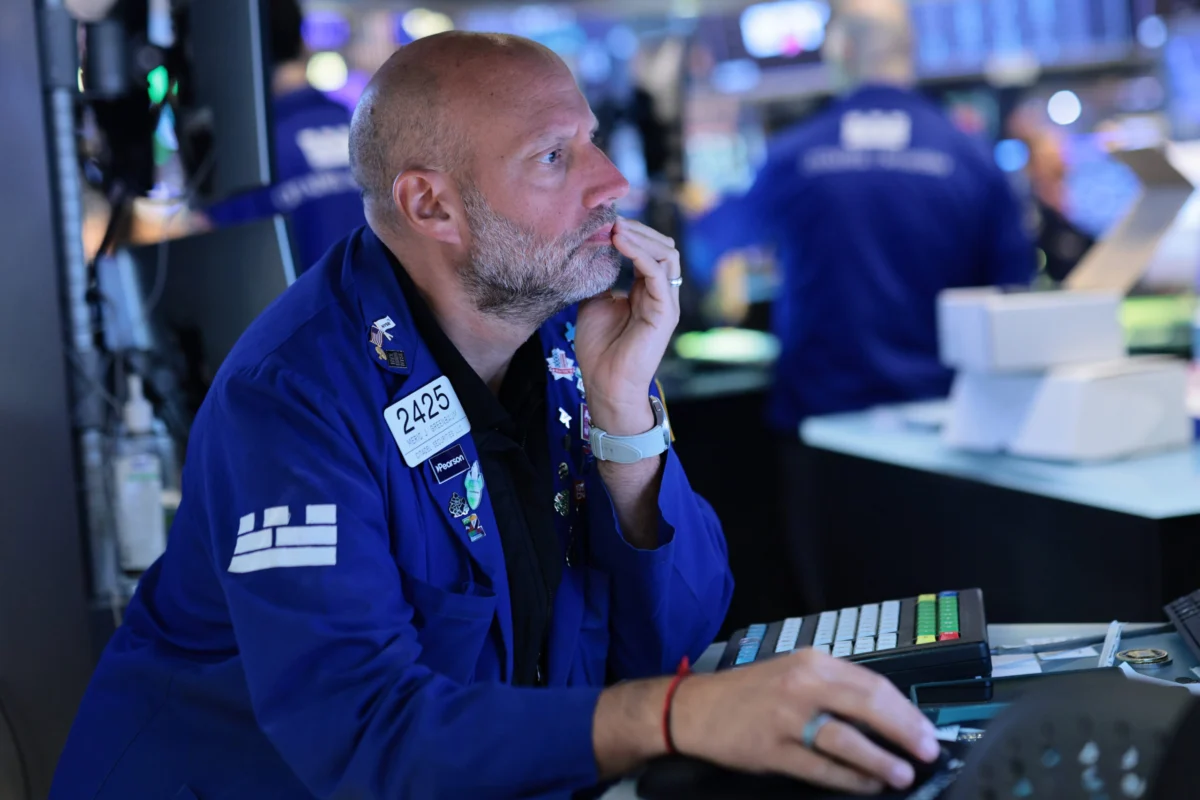
The landscape of global business and financial news, once dominated by ticker tapes and morning newspapers, has undergone a profound transformation, evolving into a hyper-connected ecosystem where information speed is paramount. Today, market participants, from individual investors to sophisticated algorithmic trading firms, rely on a constant deluge of data, stock quotes, and analytical insights to inform their decisions. This paradigm shift, driven by technological advancements and the relentless pursuit of competitive advantage, has brought forth both unprecedented opportunities and significant challenges, particularly concerning the definition and delivery of "real-time" information and the regulatory frameworks governing its dissemination.
A Historical Perspective: From Tickers to Terminals
The journey of financial information dissemination began modestly in the mid-19th century with the invention of the stock ticker. These electromechanical devices provided a revolutionary, albeit slow, stream of stock prices, gradually replacing hand-written updates. For decades, investors and brokers relied on these tickers, supplemented by daily newspapers and occasional telegraph dispatches. The early 20th century saw the rise of specialized news wires, like Dow Jones and Reuters, which accelerated the distribution of breaking financial news to subscribing institutions. However, access remained largely exclusive, limited by physical infrastructure and cost.
The latter half of the 20th century marked a significant inflection point. The advent of mainframe computers and dedicated data networks paved the way for sophisticated financial terminals. Bloomberg Professional Services, launched in 1981, epitomized this era, consolidating real-time market data, news, analytics, and trading tools into a single, comprehensive platform. This innovation democratized access to institutional-grade information, albeit at a premium price, fundamentally altering how financial professionals operated. Concurrently, the proliferation of cable television brought financial news directly into homes and offices through channels like CNBC, offering live market commentary, interviews, and real-time stock updates, albeit with inherent broadcast delays.
The dawn of the internet age in the late 1990s and early 2000s completely reshaped the paradigm. Websites, email, and eventually social media platforms enabled instantaneous global dissemination of news and data. This era saw the rise of online brokerage platforms, empowering retail investors with unprecedented access to market information and trading capabilities, often at significantly lower costs than traditional brokers. The speed of information transmission accelerated from minutes to seconds, then to milliseconds, giving rise to high-frequency trading (HFT) and algorithmic strategies that leverage even fractional advantages in data latency.
The Imperative of Speed: Real-Time vs. Delayed Data
In today’s fast-paced markets, the distinction between "real-time" and "delayed" data is not merely semantic; it carries significant implications for market participants and overall market efficiency. While the aspiration is for a "real-time snapshot" of market activity, the reality, as often noted in disclaimers, is that "Data is delayed at least 15 minutes" for many publicly accessible platforms. This seemingly minor delay is a critical factor influencing investment strategies and regulatory oversight.
Real-time data refers to information delivered instantaneously or with negligible latency, typically within microseconds of an event occurring on an exchange. This level of immediacy is crucial for institutional investors, hedge funds, and HFT firms whose strategies depend on executing trades based on the freshest available quotes and order book information. These entities often pay substantial fees to exchanges and data vendors for direct data feeds, co-location services, and high-bandwidth network access, ensuring they are among the first to receive market-moving information. The market data industry is a significant ecosystem in itself, with a recent report by Burton-Taylor International Consulting estimating the global financial market data industry to have generated over $35 billion in revenue in 2022, projecting continued growth as demand for speed and sophistication intensifies.
In contrast, delayed data, typically lagging by 15 to 20 minutes, is what most retail investors and the general public access through free websites, news portals, and many brokerage platforms. This delay is primarily a commercial decision by exchanges and data providers. Exchanges charge significantly higher fees for real-time data licenses, generating substantial revenue from professional market participants. By delaying data for public consumption, they create a tiered access system that incentivizes subscription to premium, real-time services. This model also allows time for data aggregation, processing, and redistribution by third-party vendors, ensuring accuracy and consistency across various platforms.
The impact of this delay is multifaceted. For long-term investors focused on fundamental analysis, a 15-minute delay is largely inconsequential. However, for active traders or those attempting to capitalize on short-term price fluctuations, delayed data can be a significant handicap, potentially leading to suboptimal execution prices or missed opportunities. Regulators continually grapple with the implications of this information asymmetry, striving to balance market fairness with the commercial realities of data provision. Discussions often revolve around whether the tiered access creates an unfair advantage for well-funded institutions over retail investors, potentially undermining confidence in market integrity.
Key Players and Technological Advancements
The ecosystem of financial news and market data is populated by a diverse array of key players, each contributing to the flow of information. Financial news outlets, such as CNBC (operated by entities like the hypothetical Versant Media, LLC, as implied by the footer), provide crucial context, analysis, and breaking news. They transform raw data into digestible narratives, offering interviews with industry leaders, economic forecasts, and geopolitical analyses that influence market sentiment. Their role extends beyond mere reporting; they often serve as platforms for public discourse on economic policy and corporate governance.
Data providers like Reuters (explicitly mentioned as a data source in the footer), Bloomberg, Refinitiv (formerly Thomson Reuters’ Financial & Risk business), and FactSet are the backbone of the system. They aggregate vast quantities of raw data from exchanges, regulatory bodies, and proprietary sources, then process, normalize, and distribute it through sophisticated terminals and APIs. These firms invest heavily in technology to ensure the speed, accuracy, and breadth of their data offerings. For example, Reuters’ global network of journalists and data specialists ensures comprehensive coverage across asset classes and geographies, making it a critical provider of both news and underlying market data.
Technological advancements continue to redefine the possibilities within this space. Artificial intelligence (AI) and machine learning (ML) are increasingly employed for predictive analytics, sentiment analysis of news, and identifying complex patterns in market data that human analysts might miss. Natural Language Processing (NLP) allows for the rapid extraction of key information from earnings reports, news articles, and social media, feeding into automated trading strategies. Cloud computing provides the scalable infrastructure necessary to store, process, and distribute petabytes of data globally, while advanced networking technologies minimize latency, pushing the boundaries of "real-time" closer to absolute simultaneity. The race for technological superiority among these providers is intense, driving continuous innovation in data delivery and analytical tools.
Regulatory Landscape and Data Governance
The intricate web of financial news and market data dissemination operates within a complex and evolving regulatory landscape. Regulators worldwide, including the U.S. Securities and Exchange Commission (SEC), the UK’s Financial Conduct Authority (FCA), and the European Securities and Markets Authority (ESMA), are tasked with ensuring market transparency, fairness, and investor protection. A primary concern is the equitable access to market data. While exchanges argue that high data fees are necessary to fund their operations and technological upgrades, critics contend that these fees create an unfair barrier to entry for smaller firms and individual investors, potentially leading to market fragmentation and reduced competition.
For instance, the SEC has repeatedly examined the structure of market data fees and access, proposing rule changes aimed at increasing transparency and potentially lowering costs. These discussions highlight the tension between market participants’ commercial interests and the broader goal of a fair and orderly market. Furthermore, regulators are increasingly focused on data governance, including data privacy, security, and the integrity of information. With the rise of cyber threats, ensuring the security of sensitive financial data is paramount. Compliance with regulations like GDPR in Europe and various data protection laws globally adds layers of complexity for data providers and news organizations.
The proliferation of "fake news" and misinformation, especially on social media, also presents a significant challenge. While reputable financial news outlets adhere to strict journalistic standards, the ease with which unverified information can spread poses risks to market stability and investor confidence. Regulators and industry bodies are exploring ways to combat this, emphasizing media literacy and the importance of sourcing information from trusted, verifiable outlets. The responsibility falls not only on the content creators but also on the platforms themselves to implement robust verification processes.
The Impact on Investors and Market Efficiency
The digital revolution in financial news and market data has profoundly impacted both institutional and retail investors, as well as the overall efficiency of financial markets. Institutional investors, equipped with sophisticated algorithms, direct data feeds, and advanced analytical tools, leverage every microsecond of information advantage. Their strategies often involve high-frequency trading, arbitrage opportunities, and complex derivatives, all dependent on instantaneous data. This has led to markets that are incredibly efficient in pricing information almost immediately, but also to increased volatility and flash crashes, as automated systems react to news or data points at speeds incomprehensible to humans.
Retail investors, on the other hand, have been empowered by unprecedented access to information and low-cost trading platforms. They can now monitor global markets, access company financials, and read expert analysis from their smartphones. However, this empowerment comes with challenges. The sheer volume of information can be overwhelming, and distinguishing between reliable analysis and speculative noise requires considerable skill. The reliance on delayed data for many retail platforms also means they are inherently at a disadvantage compared to institutional players, necessitating a different approach to investing, often focusing on longer-term strategies rather than intraday trading. Financial literacy and critical thinking skills have become more crucial than ever for individual investors navigating this complex information environment.
Debates continue regarding whether the acceleration of information truly makes markets more efficient or simply faster and more prone to specific types of risks. While information is priced into assets more quickly than ever, concerns about "dark pools" (private exchanges where trades are executed away from public view), algorithmic biases, and the potential for market manipulation through information warfare persist. The goal of transparent and fair markets remains a moving target in an environment where information arbitrage is a core business model for many powerful players.
The Future of Financial Information: Trends and Challenges
Looking ahead, the evolution of financial news and market data is expected to continue its rapid trajectory. Further integration of AI and machine learning will lead to even more sophisticated predictive analytics, potentially allowing for the anticipation of market movements based on vast datasets. Hyper-personalization of news feeds, tailored to individual investor portfolios and interests, will become more prevalent, though this also raises concerns about echo chambers and limited exposure to diverse viewpoints. Blockchain technology holds promise for improving data provenance, security, and potentially democratizing access to certain types of market data by creating transparent, immutable records.
The ongoing battle against misinformation and the imperative for trusted, verified sources will remain a critical challenge. News organizations, including those under the umbrella of entities like Versant Media, LLC, will need to continually reinforce their journalistic integrity and invest in robust fact-checking mechanisms to maintain credibility in an increasingly fragmented information landscape. The business models of financial media companies will also continue to evolve, with a likely emphasis on premium content, in-depth analysis, and exclusive data offerings to differentiate themselves from the deluge of free, often superficial, information. The focus will shift from merely delivering data to providing actionable insights, context, and foresight that cannot be replicated by algorithms alone.
In conclusion, the digital revolution has irrevocably transformed how financial news and market data are created, distributed, and consumed. While the pursuit of instantaneous information drives continuous innovation, it also necessitates a critical examination of market fairness, regulatory oversight, and the ethical responsibilities of information providers. As we move towards a future where data flows with ever-increasing speed and complexity, the fundamental principles of accuracy, transparency, and contextual understanding will remain paramount for all participants in the global financial ecosystem. The ability to discern valuable insights from mere noise will define success in this hyper-informed, yet often disorienting, era.
