

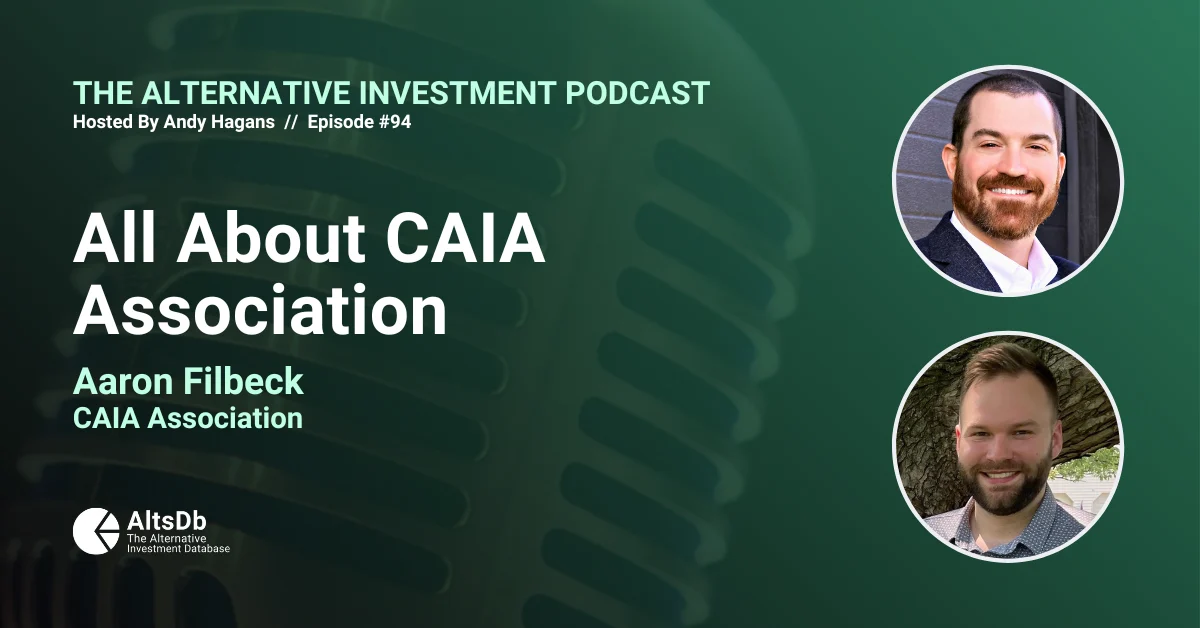
The integration of alternative investments into client portfolios offers significant potential for enhanced returns and diversification. However, the complexity inherent in these asset classes, ranging from private equity and hedge funds to real estate and digital assets, presents a substantial educational hurdle for many financial advisors. Addressing this knowledge deficit is crucial for both improving advisor competency and ultimately benefiting the end client. Aaron Filbeck, Managing Director and Head of UniFi at the CAIA Association, recently discussed this critical issue on "The Alternative Investment Podcast," highlighting the CAIA Association’s mission to bridge this educational gap and foster better outcomes for investors and society.
The Alternative Investment Podcast, hosted by Andy Hagans, has consistently identified the advisor education gap as a paramount concern within the financial services industry. In a recent episode, Hagans welcomed Filbeck to delve into how CAIA Association is actively working to equip financial professionals with the necessary knowledge and understanding of alternative investments.
CAIA Association: A Global Leader in Alternative Investment Education
The CAIA Association, a global professional body, is dedicated to fostering greater alignment, transparency, and knowledge across the investment landscape, with a specific emphasis on alternative investments. With approximately 13,000 members spread across 100 countries, the organization serves a diverse spectrum of industry professionals, including limited partners (LPs), general partners (GPs), financial advisors, regulators, and distribution specialists.
"We’re really focused on education," Filbeck explained. "As we try to raise the bar for the industry and execute upon our mission of creating better alignment, transparency, and knowledge, we do this through a number of different avenues. One is through our formal education programs, and we also engage in significant thought leadership and advocacy."
Filbeck emphasized that while the CAIA Association’s membership is geographically diverse, the core tenets of their mission are universally applicable. "Regardless of where you are in the industry, for us, it’s all about the end client," he stated. "And that client can look different depending on where you sit. If you’re in an advisor capacity, it’s an individual. If you’re an institutional investor, it might be a pension fund or an endowment. But the end institution becomes your client." This client-centric approach underscores the universal relevance of understanding alternative investments, whether for individual investors or large institutional portfolios.
Navigating the Global Landscape of Alternative Investments
The global nature of alternative investments, with variations in regulatory frameworks and tax codes across different jurisdictions, presents a unique challenge. Filbeck acknowledged the localized complexities, particularly concerning investment wrappers and tax implications, while also highlighting the significant overlap in fundamental strategies.
"From our perspective, we try to cover a lot of the similarities across the board," Filbeck noted. "Many investors, especially on the institutional side, are global investors. If you’re a pension or a sovereign wealth fund, you might be investing in a GP that’s not in your home country. So, having a good understanding of those strategies is important."
The CAIA Association leverages its global network of 33 chapters in major financial centers to provide localized education and ongoing professional development. This structure allows for a dynamic exchange of knowledge, where global insights inform local initiatives and vice versa. This symbiotic relationship is crucial for adapting educational content to evolving market conditions and regulatory landscapes.
The CAIA Charter Program: Deepening Expertise
The flagship CAIA Charter program is a rigorous, two-level examination process designed to equip professionals with a comprehensive understanding of institutional-quality alternative investments. Candidates typically dedicate 400 to 500 hours of self-study to master the curriculum, which covers a broad range of strategies including private equity, real assets, hedge funds, and structured products.
Level I of the program introduces candidates to these alternative strategies, focusing on their risk-return profiles and underlying mechanics. Level II then shifts to an allocator’s perspective, emphasizing portfolio construction, risk management, due diligence, and ESG considerations.
"The CAIA Charter program has been around since the inception of CAIA," Filbeck explained. "It’s a two-level, high-stakes examination process… The focus of the program is on what we deem ‘institutional quality’ alternative investments that are in the marketplace today. So, as we look at what big asset owners and institutional investors are allocating towards within their portfolios."
The program’s broad appeal is reflected in its diverse membership base, which includes not only institutional investors but also financial advisors, GPs, and other industry professionals. The core objective is to cultivate an "allocator’s mindset," enabling individuals to understand how various alternative investments can be integrated into a comprehensive portfolio to meet specific goals and objectives.
UniFi by CAIA: Democratizing Alternative Investment Education for Wealth Management
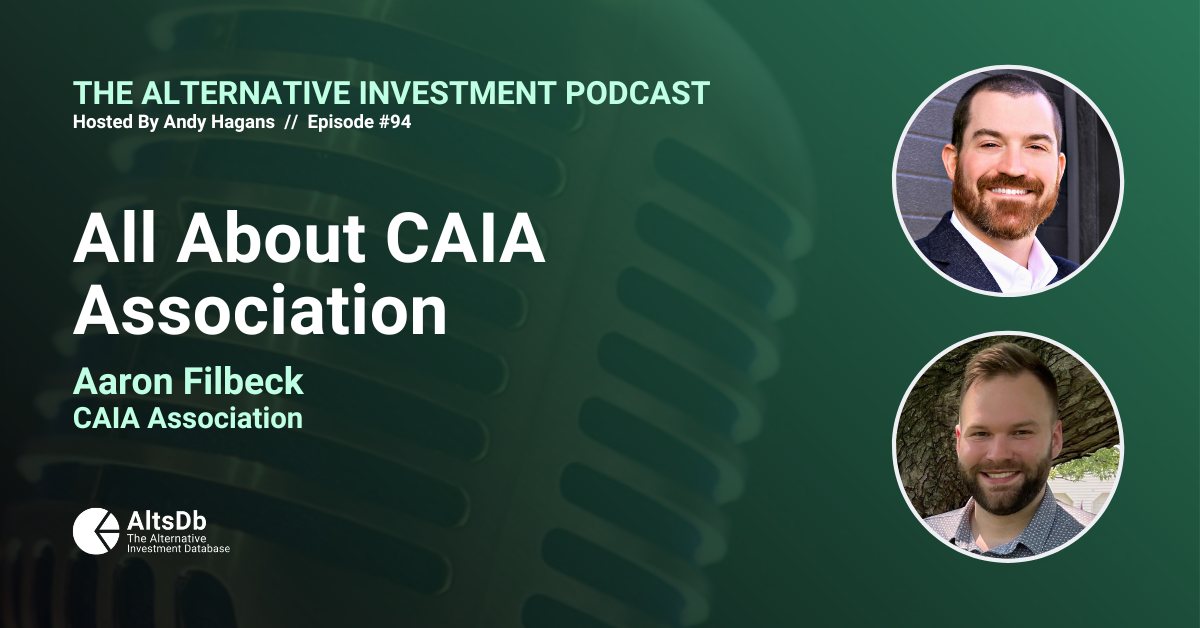
Recognizing the distinct needs of the private wealth management industry, CAIA Association launched UniFi by CAIA. This learning platform is specifically designed to educate asset managers, intermediaries, and individual advisors on alternative investments. Unlike the in-depth CAIA Charter, UniFi offers a more accessible, online, and self-directed learning experience.
"UniFi by CAIA is a learning platform that was announced by CAIA Association last year, in 2022, and is really designed to educate the private wealth management industry on alternatives," Filbeck stated. The platform currently offers a flagship certificate program, "Fundamentals of Alternative Investments," a 20-hour course providing a foundational overview. Future offerings will include micro-credentials focusing on specific topics such as private debt and digital assets.
"UniFi is much more for the individual client wealth management industry," Filbeck elaborated. "If you don’t need the level of depth, you don’t need the level of rigor, but you need to at least be conversant in this stuff, the UniFi platform is probably going to be most appropriate for you." This approach aims to empower financial professionals with the knowledge to effectively communicate the role and benefits of alternative investments to their clients.
The Financial Data Professional (FDP) Charter: Bridging Finance and Data Science
In addition to its alternative investment-focused programs, CAIA Association also offers the Financial Data Professional (FDP) charter. This designation addresses the growing intersection of data science and financial services, a trend that has significantly impacted investment strategies across all asset classes, including alternatives.
"The FDP program is really the intersection of data science and financial services," Filbeck explained. "As you’ve probably seen, maybe from some of your podcast guests or just in the industry more broadly, the rise of data science, data analytics, computer programming, computer science, and that intersection with finance… has become a very, very popular tool."
The FDP program aims to bridge the communication gap between financial professionals and data scientists, enabling them to collaborate more effectively and leverage data-driven insights responsibly. It helps financial professionals understand data science concepts and translate them into actionable investment decisions, preventing the pitfalls of overfitting data or developing algorithms without practical financial relevance.
Addressing the Education Gap: Progress and Future Outlook
The financial industry has made strides in addressing the alternative investment education gap over the past decade. Filbeck noted that the initial wave of liquid alternatives in the early 2010s was largely product-led, with insufficient emphasis on education. However, the subsequent rise of private capital and a more concerted effort towards advisor education have marked significant progress.
"Compared to what we saw 10 years ago with this move in private capital, which has really accelerated over the past couple of years, I would say that we’ve done a much better job than we did, but there’s still a lot of ground to cover in terms of providing education," Filbeck observed.
He stressed that the ultimate goal is not merely product understanding, but rather a deep comprehension of how alternative investments can improve client outcomes. "The point isn’t really that I understand the product; the point isn’t that I know the ins and outs of a DST. The point is that I understand how all of this stuff is a part of improving outcomes for clients," he articulated. This client-centric approach, starting with objectives and then identifying suitable strategies, is seen as the most effective way to integrate alternatives into portfolios.
Filbeck expressed optimism about current educational trends, noting the enhanced delivery mechanisms through technology and a growing willingness among professionals to acknowledge and address their knowledge gaps. "I do see more and more conversations being… moving towards, you know, the client perspective and maybe away from kind of leading with the product," he said. "And a trend that is just kind of really interesting and heartening to see is that everyone is looking for education."
The increasing demand from clients for alternative investment exposure is also a powerful catalyst for advisor education. As clients become more informed and curious about these asset classes, advisors are compelled to enhance their knowledge to meet these evolving demands and maintain their fiduciary responsibilities.
For those seeking to deepen their understanding of alternative investments, the CAIA Association’s website, caia.org, serves as a central hub for information on their charter programs, UniFi platform, and FDP designation. The organization is also actively engaged on social media platforms, providing valuable insights and resources. The commitment to education by organizations like CAIA is essential for empowering financial advisors, enhancing portfolio construction, and ultimately contributing to the long-term financial well-being of investors worldwide.
