

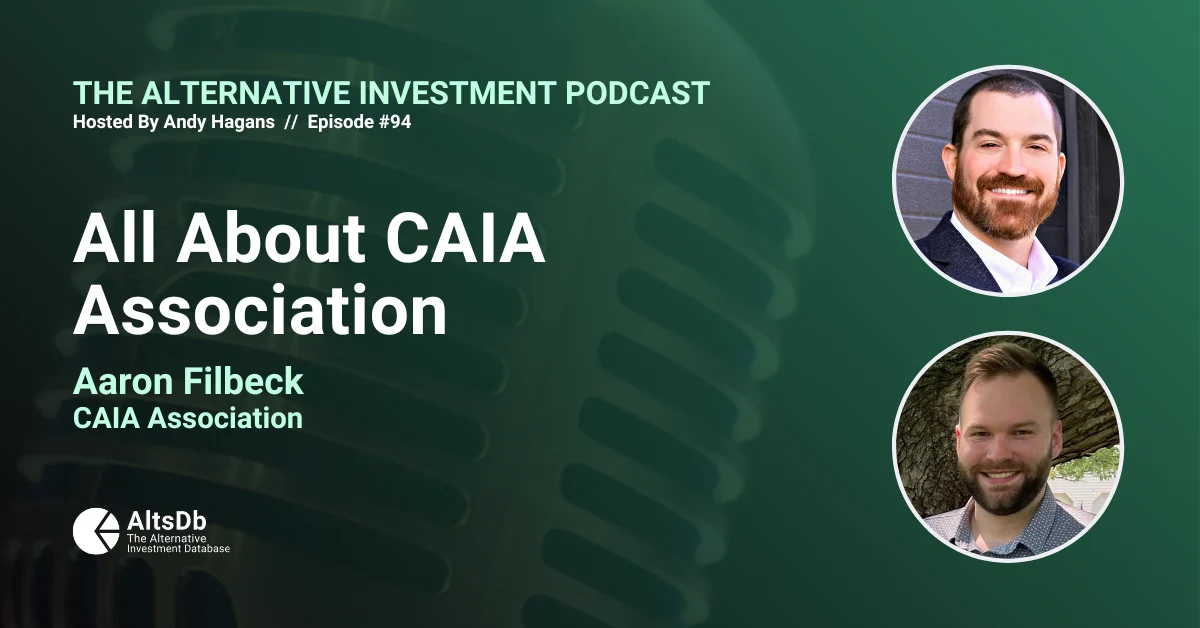
The financial advisory landscape is undergoing a significant transformation, with alternative investments emerging as a crucial component for enhancing client portfolios and driving business growth. However, the inherent complexity of these assets presents a substantial educational hurdle for many financial professionals. To address this growing challenge, the CAIA Association is actively working to close the knowledge gap, aiming to ultimately improve investment outcomes for clients and society at large. Aaron Filbeck, Managing Director and Head of UniFi at CAIA, recently discussed these critical issues and the association’s initiatives on "The Alternative Investment Podcast."
The Growing Significance of Alternative Investments
Alternative investments, encompassing a broad range of assets beyond traditional stocks and bonds such as private equity, venture capital, hedge funds, real estate, and infrastructure, have become increasingly attractive to both institutional and retail investors. Their potential to offer diversification, enhance risk-adjusted returns, and provide access to unique growth opportunities is well-documented. For instance, a 2023 report by Preqin indicated that institutional investors globally allocated a record $2.7 trillion to private equity, demonstrating a sustained commitment to these asset classes. This trend has been further amplified by a desire to capture alpha in an environment where traditional asset classes may offer lower expected returns.
The push to integrate alternatives into mainstream portfolios, particularly for wealth management clients, has accelerated significantly in recent years. This democratization of alternative investments, however, is not without its challenges. A core issue remains the lack of comprehensive understanding among financial advisors, many of whom were primarily trained in traditional asset allocation. This "education gap" can lead to hesitancy in recommending these products, potentially leaving clients underserved and missing out on portfolio enhancement opportunities.
CAIA Association: A Global Leader in Alternative Investment Education
The CAIA Association, a global professional body, is at the forefront of addressing this educational deficit. With a mission to foster greater alignment, transparency, and knowledge within the investment community, CAIA focuses specifically on the intricate world of alternative investments. Aaron Filbeck, a key figure within the organization, highlighted CAIA’s multifaceted approach to education and advocacy.
"We are dedicated to creating greater alignment, transparency, and knowledge for all investors," Filbeck stated. "Our particular focus is on the world of alternative investments, and we achieve this through formal education programs, thought leadership, and advocacy."
CAIA boasts a diverse global membership of approximately 13,000 professionals across more than 100 countries. This membership base spans limited partners (LPs), general partners (GPs), financial advisors, regulators, and distribution professionals, underscoring the broad applicability and importance of alternative investment knowledge. The association’s commitment to serving a diverse audience stems from a shared understanding that regardless of an individual’s role, the ultimate goal is to benefit the end client. Whether that client is an individual investor or a large institutional entity like a pension fund, the principles of sound investment management and fiduciary responsibility remain paramount.
Bridging the Global and Local Divide in Alternative Investment Education
While the fundamental principles of investing transcend borders, the specific nuances of alternative investments, particularly concerning regulatory frameworks, tax codes, and product wrappers, often exhibit significant localization. Filbeck acknowledged this complexity, explaining CAIA’s strategy to address both global themes and regional specifics.
"From our perspective, we try to cover a lot of the similarities across the board," Filbeck noted. "Many investors, especially on the institutional side, are global investors. So, if you’re a pension or a sovereign wealth fund, you might be investing in a GP that’s not in your home country. Having a good understanding of those strategies is important."
However, CAIA also recognizes the critical need for localized education. This is facilitated through its network of 33 chapters located in major financial centers worldwide. These local chapters play a vital role in organizing events and providing ongoing continuing education that delves into region-specific regulations and market practices. This dual approach ensures that CAIA’s educational offerings are both globally relevant and locally actionable.
The CAIA Charter: A Deep Dive into Institutional-Quality Alternatives
The flagship offering of the CAIA Association is the CAIA Charter program, a rigorous two-level examination process designed to equip professionals with a deep understanding of institutional-quality alternative investments. The program typically requires candidates to dedicate 400 to 500 hours of self-study.
Level I of the CAIA program introduces candidates to a broad spectrum of alternative strategies, including private equity, real assets, hedge fund strategies, and structured credit. It focuses on understanding the underlying mechanics, risk-return profiles, and fundamental characteristics of these asset classes.
Level II shifts the focus to the allocator’s perspective, building upon the foundational knowledge acquired in Level I. This stage emphasizes portfolio construction, risk management, investment and operational due diligence, and the integration of Environmental, Social, and Governance (ESG) considerations. The program aims to teach participants how to think like an allocator, enabling them to construct and manage diversified portfolios that meet multiple investment objectives.
"The CAIA Charter program has been around since the inception of CAIA," Filbeck explained. "It’s a two-level, high-stakes examination process… the focus of the program is on what we deem ‘institutional quality’ alternative investments that are in the marketplace today."
The CAIA Charter is pursued by a diverse group of professionals, including advisors, allocators, LPs, GPs, regulators, and academics. This broad appeal underscores the program’s effectiveness in fostering a common understanding of how institutional investors approach alternative investments, a perspective that is increasingly valuable for all market participants.
UniFi by CAIA: Empowering the Private Wealth Management Industry
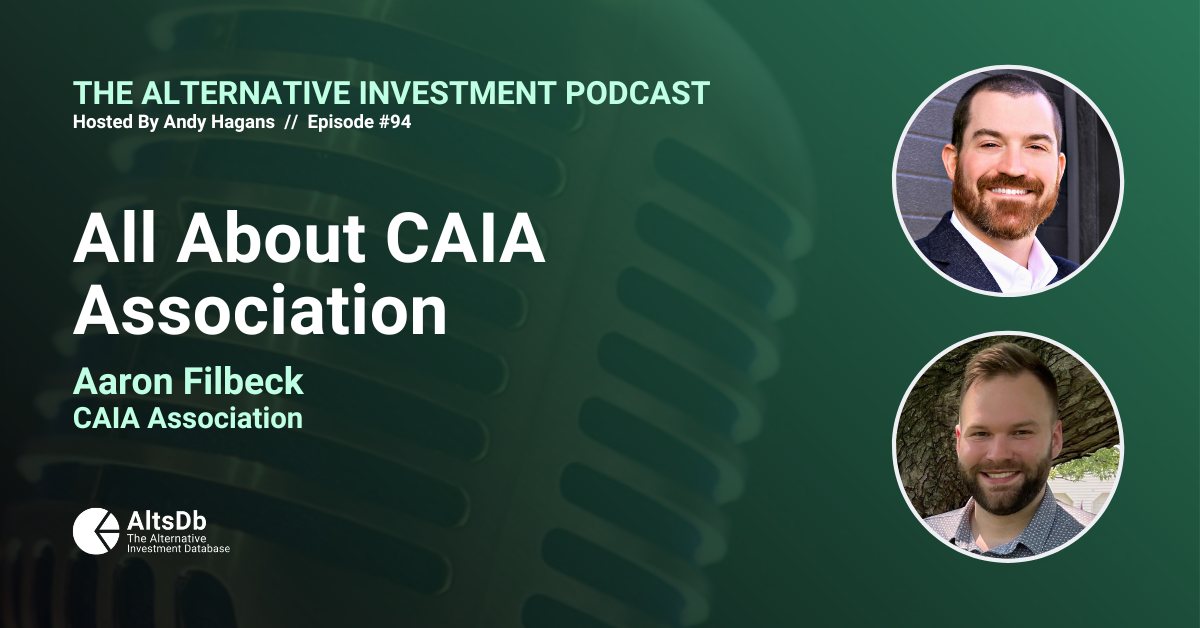
Recognizing that the rigorous CAIA Charter may not be suitable for all professionals, CAIA launched UniFi by CAIA, a learning platform specifically designed to educate the private wealth management industry on alternative investments. Launched in 2022, UniFi aims to upscale asset managers, intermediaries, and individual advisors on the intricacies of alternatives.
"UniFi by CAIA is a learning platform that was announced by CAIA Association last year… and is really designed to educate the private wealth management industry on alternatives," said Filbeck.
UniFi offers a more accessible, online, and self-directed learning experience compared to the CAIA Charter. Its flagship program, "Fundamentals of Alternative Investments," is a 20-hour course providing a comprehensive 101 overview of alternative strategies. The platform is also expanding its offerings to include micro-credentials, shorter, more focused programs on specific topics such as private debt and digital assets. These micro-credentials are designed for professionals who need a deeper understanding of particular strategies without the commitment of a full certification program.
The UniFi platform’s delivery mechanism, often video-based, makes complex topics more digestible and accessible. This approach is particularly beneficial for financial professionals who may not have a traditional finance background but are seeking to gain proficiency in alternative investments.
The FDP Charter: Navigating the Intersection of Data Science and Finance
In addition to its alternative investment-focused programs, CAIA also offers the Financial Data Professional (FDP) Charter. This unique designation program addresses the growing importance of data science and quantitative analysis within the financial services industry.
"The FDP program is really the intersection of data science and financial services," Filbeck explained. "As you’ve probably seen… the rise of data science, data analytics, computer programming… and that intersection with finance, new training strategies, new ways to look at RIF, that has become a very, very popular tool."
The FDP Charter aims to bridge the gap between data scientists and financial professionals, enabling them to communicate more effectively and leverage data-driven insights. The program equips financial professionals with a better understanding of data science principles, allowing them to collaborate more productively with quantitative experts and avoid common pitfalls such as overfitting data or developing algorithms without practical financial meaning. This is particularly relevant in today’s investment landscape, where machine learning and artificial intelligence are increasingly being applied across all asset classes, from hedge funds to private equity real estate.
Addressing the Education Gap: Progress and Future Outlook
The journey to close the education gap in alternative investments has been a long one, marked by initial missteps. Filbeck reflected on the evolution of the industry, particularly the "democratization wave" that began with liquid alternatives approximately a decade ago.
"I would say that we’ve done a much better job than we did [ten years ago]," Filbeck noted, "but I think there’s still a lot of ground to cover in terms of providing education."
He emphasized that the focus is increasingly shifting from simply understanding products to comprehending how alternative investments can genuinely improve client outcomes. The CAIA Association advocates for a client-centric approach, where financial decisions are driven by client goals and objectives, with strategies and products then being selected to meet those needs. This is a reversal from the earlier trend of leading with products and then attempting to fit them into client portfolios.
Optimistic Trends and the Future of Advisor Education
Despite the ongoing challenges, Filbeck expressed optimism regarding the current educational trends within the financial advisory sector. He highlighted the advancements in educational technology, which have made learning more accessible and engaging through online platforms and diverse content formats.
Furthermore, Filbeck observed a growing willingness among financial professionals to acknowledge and address their knowledge gaps. "I think people are much more willing to say, ‘I really need to learn about this. I need to find something,’" he stated. This proactive approach is crucial, especially as clients themselves become more informed and actively inquire about alternative investment opportunities.
The increasing demand from clients for exposure to alternative investments, fueled by media attention and the availability of products across various distribution channels, is a powerful motivator for advisors to enhance their knowledge. This client-driven demand serves as a significant "stick" for those who may have been hesitant to engage with alternatives, compelling them to seek out educational resources.
As the alternative investment industry continues to mature and expand its reach, the role of comprehensive and accessible education becomes ever more critical. Organizations like the CAIA Association, through their diverse programs and global reach, are instrumental in empowering financial professionals to navigate this complex landscape effectively, ultimately benefiting investors and contributing to a more robust and informed financial ecosystem.
For those seeking to learn more about the CAIA Association and its comprehensive educational offerings, the primary resource is their website: caia.org. The organization is also highly active on social media platforms, including Twitter, LinkedIn, and Instagram, where professionals can find valuable insights and connect with the CAIA community.
