

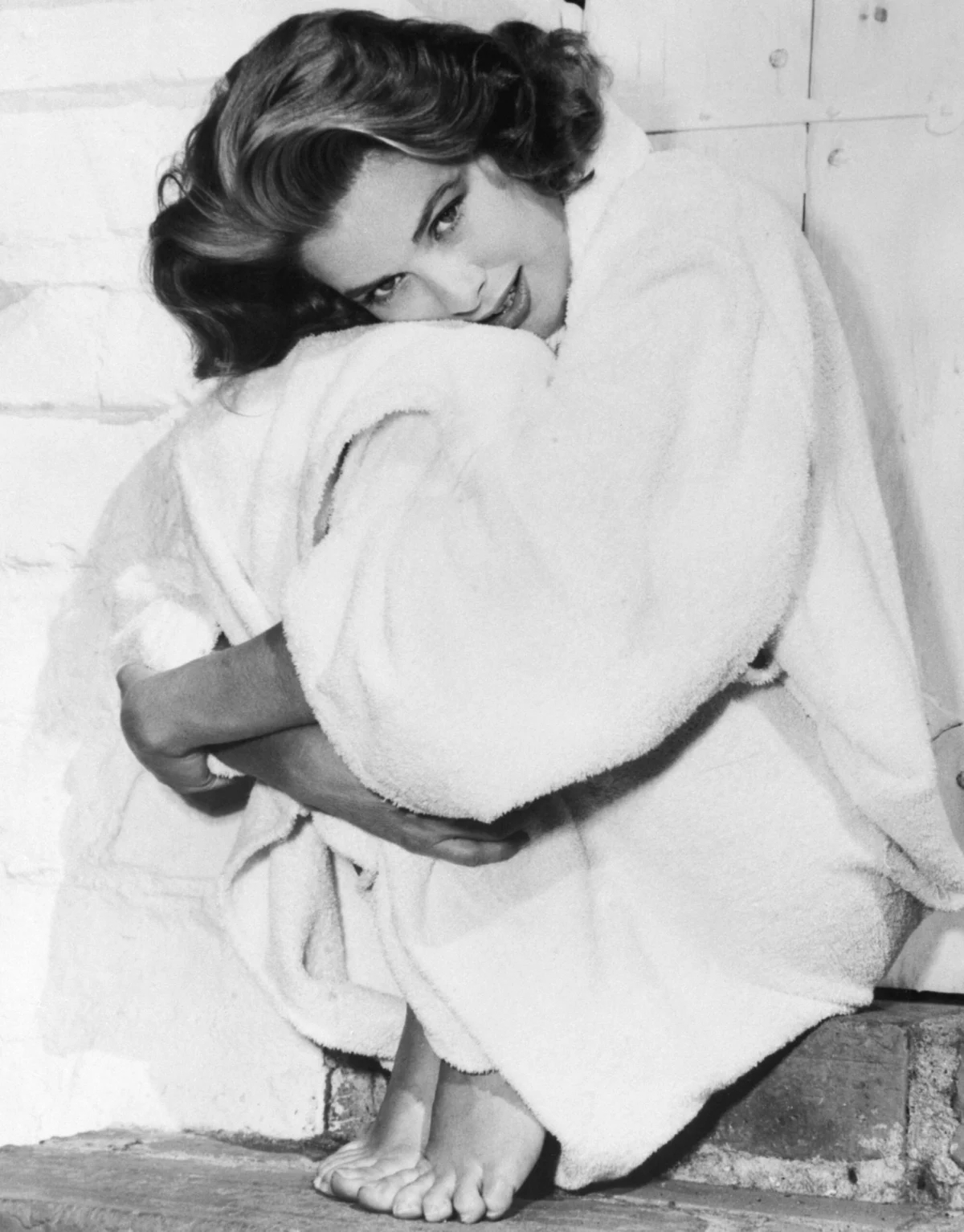
The trajectory of Grace Kelly’s life remains one of the most documented and culturally significant narratives of the 20th century, representing a unique intersection of American cinematic excellence and European aristocratic tradition. Born on November 12, 1929, in Philadelphia, Pennsylvania, Kelly’s ascent from a disciplined East Coast upbringing to the pinnacle of Hollywood stardom—and eventually to the throne of the Principality of Monaco—serves as a case study in the evolution of celebrity and the strategic modernization of a royal house. Her career, though spanning only six years and eleven films, left an indelible mark on the film industry, culminating in an Academy Award at the age of 25. However, her decision to abandon her professional career at the height of her fame to marry Prince Rainier III of Monaco in 1956 remains her most enduring legacy, fundamentally altering the global profile of the Mediterranean microstate.
The Formative Years and the Philadelphia Foundation
Grace Patricia Kelly was born into a family of significant achievement and athletic prowess. Her father, John B. Kelly Sr., was a three-time Olympic gold medalist in rowing and a self-made millionaire who built a successful brickwork and construction company. Her mother, Margaret Katherine Majer, was the first woman to head the Physical Education Department at the University of Pennsylvania. This environment of rigorous competition and high expectations shaped Kelly’s professional work ethic. Despite her family’s initial reservations regarding a career in the performing arts, Kelly enrolled in the American Academy of Dramatic Arts in New York City after graduating from high school.
Her early years in New York were characterized by a transition from modeling to theater and live television. During the late 1940s and early 1950s, she appeared in over 60 live television drama broadcasts, a medium then in its "Golden Age." This period provided the technical foundation that would later attract the attention of major Hollywood studios and legendary directors like Alfred Hitchcock.
The Hollywood Ascent: From High Noon to the Academy Awards
Grace Kelly’s film career began in earnest with a small role in the 1951 film Fourteen Hours, but it was her performance as the Quaker wife of Gary Cooper’s character in the 1952 classic High Noon that established her as a national figure. Shortly thereafter, she signed a seven-year contract with Metro-Goldwyn-Mayer (MGM) at a starting salary of $750 per week, a modest sum for a star of her burgeoning caliber, but a move that secured her place in the studio system.
The defining era of her acting career was her collaboration with Alfred Hitchcock. Hitchcock viewed Kelly as the quintessential "cool blonde"—an actress who possessed an understated elegance and a simmering emotional depth. Their partnership resulted in three of the most acclaimed films of the 1950s: Dial M for Murder (1954), Rear Window (1954), and To Catch a Thief (1955). In Rear Window, Kelly played Lisa Fremont, a sophisticated socialite, a role that mirrored her own public persona and showcased her ability to command the screen alongside James Stewart.
In 1955, Kelly reached the zenith of professional recognition when she won the Academy Award for Best Actress for her portrayal of Georgie Elgin in The Country Girl. In a departure from her usual glamorous roles, Kelly played the dowdy, weary wife of an alcoholic actor (Bing Crosby). Her victory was considered a significant upset, as she won against Judy Garland, who was the favorite for her performance in A Star Is Born. This accolade solidified Kelly’s status as a serious dramatic talent, rather than merely a fashion icon or a studio starlet.
The 1955 Cannes Film Festival: A Geopolitical Turning Point
The meeting that would change the course of Kelly’s life occurred in May 1955. While attending the Cannes Film Festival as part of the United States delegation, Kelly was invited to participate in a photo session at the Prince’s Palace of Monaco with Prince Rainier III. The meeting was orchestrated by Pierre Galante, an editor at Paris Match magazine.
At the time, Monaco was facing a period of economic uncertainty and a strained relationship with France. Prince Rainier III was under significant pressure to produce an heir to ensure Monaco’s continued sovereignty under the terms of a 1918 treaty with France. The meeting with Kelly, initially a publicity exercise, evolved into a private correspondence. Following a visit by the Prince to the Kelly family home in Philadelphia during the Christmas season of 1955, the couple announced their engagement on January 5, 1956.
The Transition from Screen to Sovereignty
The announcement of the engagement sent shockwaves through the film industry. MGM, while reluctant to lose its top female star, recognized the publicity value of the event and agreed to release Kelly from her contract on the condition that they be allowed to film the wedding for theatrical release. Her final film, the musical comedy High Society (1956), served as a cinematic farewell, featuring her alongside Bing Crosby and Frank Sinatra.

The transition required Kelly to navigate a profound shift in identity. She famously remarked in the biography High Society: The Life of Grace Kelly by Donald Spoto that her "real difficulty was to become a normal person after being an actress for so long." She noted that, within her professional context, a "normal person" was someone who made films, highlighting the insular nature of the Hollywood environment she was leaving behind.
The logistics of her move to Monaco were immense. On April 4, 1956, Kelly boarded the SS Constitution in New York, accompanied by 80 pieces of luggage and her pet poodle. Upon her arrival in Monaco, she was greeted by thousands of residents and international media. The wedding, which took place on April 18 (civil) and April 19 (religious), 1956, was watched by an estimated 30 million people on television—an unprecedented figure for the era—and was dubbed the "Wedding of the Century."
Architectural and Aesthetic Influence in Monaco
Upon becoming Princess Grace, she turned her attention to the domestic and cultural life of the Principality. The transition from her functional, albeit stylish, West Hollywood apartment to the 235-room Prince’s Palace of Monte Carlo necessitated a significant adjustment in her living environment. She sought to infuse the grand, often imposing royal residence with a sense of "serenity and calm," a philosophy she later detailed in her 1980 publication, My Book of Flowers.
Princess Grace was instrumental in the restoration of several historic areas of Monaco and the renovation of the palace’s private quarters. Her aesthetic was characterized by a blend of traditional European elegance and American comfort. She was a noted lover of flora, founding the Garden Club of Monaco in 1968 and the Monaco Princess Grace Rose Garden in Fontvieille. Her interest in interior design and the botanical arts was not merely a hobby but a deliberate effort to create a balanced "milieu" for her family, which grew to include three children: Princess Caroline, Prince Albert, and Princess Stéphanie.
Philanthropy and the "Grace Kelly Effect"
As a royal consort, Princess Grace redefined the role through extensive philanthropic work. She served as the President of the Monaco Red Cross from 1958 until her death, transforming it into one of the most active branches of the international organization. In 1963, she founded AMADE Mondiale (Association Mondiale des Amis de l’Enfance), a non-profit dedicated to the protection of children’s rights and well-being globally.
The economic and cultural impact of her presence in Monaco—often referred to by historians as the "Grace Kelly Effect"—cannot be overstated. Her celebrity brought a renewed sense of glamour and international prestige to the Principality, attracting wealthy tourists and investors. This influx of capital helped Rainier III transition Monaco’s economy from one primarily dependent on gambling to a diverse hub for finance, tourism, and luxury real estate.
Timeline of Key Events
- November 12, 1929: Grace Patricia Kelly is born in Philadelphia.
- 1947–1949: Studies at the American Academy of Dramatic Arts.
- 1951: Makes her film debut in Fourteen Hours.
- 1952: Stars in High Noon with Gary Cooper.
- 1954: Releases Dial M for Murder and Rear Window; wins the New York Film Critics Circle Award.
- March 30, 1955: Wins the Academy Award for Best Actress for The Country Girl.
- May 1955: Meets Prince Rainier III at the Cannes Film Festival.
- January 5, 1956: Official announcement of the royal engagement.
- April 19, 1956: Marries Prince Rainier III, becoming Princess Grace of Monaco.
- January 23, 1957: Birth of Princess Caroline.
- March 14, 1958: Birth of Prince Albert (the current reigning sovereign).
- February 1, 1965: Birth of Princess Stéphanie.
- 1964: Establishes the Princess Grace Foundation to support local artisans and the arts.
- September 14, 1982: Princess Grace passes away following a tragic car accident.
Broader Impact and Enduring Legacy
The legacy of Grace Kelly extends beyond the borders of Monaco and the archives of Hollywood. In the world of fashion, she remains a perennial muse. The Hermès "Kelly" bag, which she used to shield her pregnancy from paparazzi in 1956, remains one of the most sought-after luxury items in the world. Her style, characterized by tailored silhouettes, pearls, and white gloves, continues to influence designers and public figures today.
From a diplomatic perspective, Kelly served as a bridge between the United States and Europe during the Cold War era. She maintained her American citizenship while fully embracing her duties as a European princess, representing a successful fusion of New World dynamism and Old World tradition.
Analysis of her life suggests that while she "retired" from acting, her life in Monaco was, in many ways, her most challenging and public performance. She successfully navigated the complexities of royal protocol, linguistic barriers, and the scrutiny of the global press, all while maintaining a private life centered on her family and her artistic interests. Today, the Princess Grace Foundation-USA continues her work by providing scholarships and grants to emerging talent in theater, dance, and film, ensuring that her commitment to the arts survives into the 21st century.
In summary, the transition of Grace Kelly from the "Golden Girl" of Hollywood to the "Serene Highness" of Monaco was more than a romantic narrative; it was a significant cultural event that revitalized a monarchy and set a new standard for the intersection of celebrity, philanthropy, and global diplomacy.
