

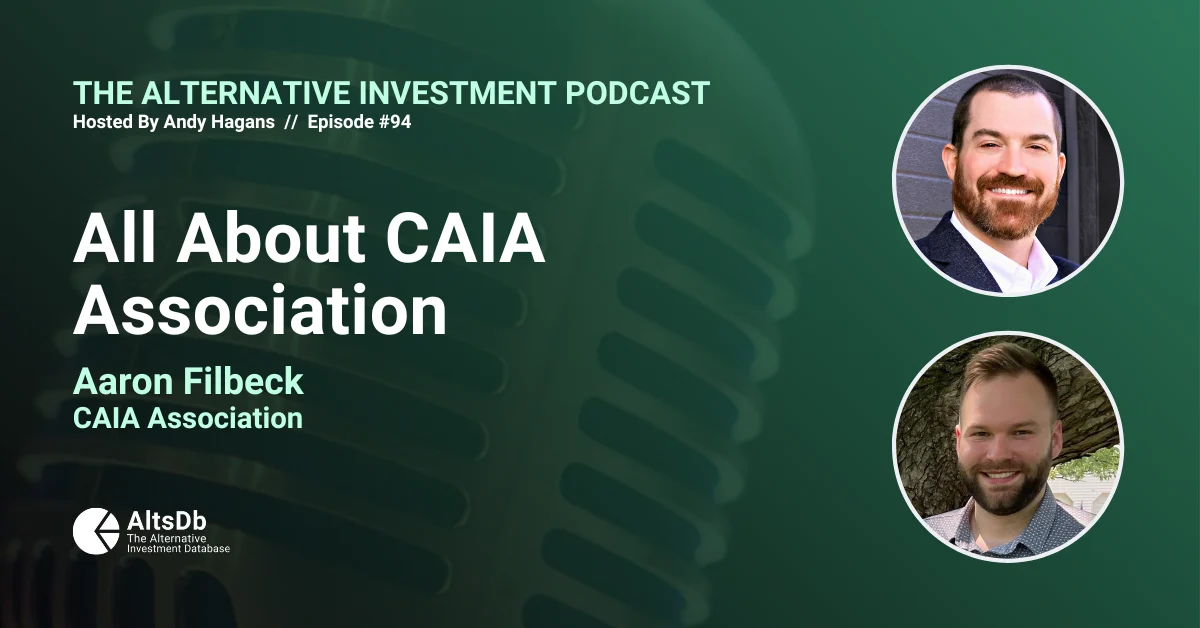
The alternative investment landscape, while offering significant potential for portfolio enhancement and improved business outcomes for financial advisors, remains a complex and often misunderstood domain. A persistent education gap within the advisor community presents a considerable challenge, hindering broader adoption and understanding of these sophisticated strategies. To tackle this critical issue, the CAIA Association, a global professional body dedicated to advancing knowledge in alternative investments, is actively working to equip advisors with the necessary expertise. Aaron Filbeck, Managing Director and Head of UniFi at CAIA, recently discussed the association’s mission and initiatives aimed at improving client outcomes and fostering a more informed financial ecosystem.
The imperative for enhanced advisor education in alternatives stems from a confluence of factors. As traditional asset classes face increasing volatility and lower return expectations, investors, including a growing segment of retail clients, are turning to alternatives for diversification, risk management, and enhanced yield potential. However, the intricate nature of private equity, venture capital, hedge funds, real assets, and private debt requires a deeper understanding than many advisors currently possess. This knowledge deficit can lead to missed opportunities for clients or, worse, misinformed investment decisions.
CAIA Association: Bridging the Knowledge Divide
The CAIA Association, a member-driven organization with approximately 13,000 members across more than 100 countries, has positioned itself as a pivotal force in closing this educational chasm. Aaron Filbeck explained that the association’s core mission revolves around fostering greater alignment, transparency, and knowledge for all investors, with a particular emphasis on the alternative investment sector.
"We’re really focused on education," Filbeck stated. "As we’re trying to raise the bar for the industry and execute upon our mission, which is creating that better alignment and transparency and knowledge, we’re doing that through a number of different ways. One is through formal education programs that we offer."
Beyond formal training, CAIA also engages in extensive thought leadership and advocacy. This multi-faceted approach ensures that a wide spectrum of industry participants, from institutional investors (LPs and GPs) to advisors, regulators, and distribution professionals, can access valuable resources and insights. The diversity of its membership base underscores CAIA’s broad reach and its commitment to serving various stakeholders within the financial ecosystem.
A Global Perspective with Local Relevance
While the principles of alternative investments often transcend geographical boundaries, the practical application, particularly concerning regulatory frameworks and tax implications, can be highly localized. CAIA addresses this by maintaining a global presence through 33 chapters situated in major financial centers worldwide. These local chapters play a crucial role in disseminating region-specific educational content and fostering dialogue among members.
Filbeck elaborated on this structure: "We’ve got 33 chapters around the world in kind of the major financial centers. You know, we’re talking to our chapter executive teams quite a bit, and the give and take between kind of the global perspective that, you know, where I’m sitting kind of within CAIA, but also the local, you know, a lot of stuff bubbles up, some stuff bubbles down." This symbiotic relationship ensures that CAIA’s educational offerings remain relevant and actionable across diverse markets.
The CAIA Charter Program: Cultivating Allocator Mindsets
The flagship offering of the CAIA Association is the CAIA Charter program, a rigorous two-level examination process designed to equip professionals with a deep understanding of institutional-quality alternative investments. This program demands a significant commitment, with candidates typically dedicating 400 to 500 hours of self-study to master the curriculum.
Level I of the CAIA program introduces candidates to core alternative strategies, including private equity, real assets, hedge fund strategies, and structured credit. It delves into the fundamental risk-return profiles and operational aspects of these investments. Level II then builds upon this foundation, shifting the focus to a top-down, allocator’s perspective. This includes portfolio construction, risk management, investment and operational due diligence, and the integration of Environmental, Social, and Governance (ESG) considerations.
"We’re really teaching you to think like an allocator," Filbeck emphasized. "And that doesn’t mean that you need to be an allocator. You may be a GP that’s really focused on one particular strategy or asset class, you could be an advisor… But by the end of this program, you’ll walk away with a better understanding and appreciation for how an allocator thinks across the entire portfolio and across kind of the entire risk spectrum." This broad perspective is invaluable, whether one is directly managing institutional capital or advising individual clients.
The CAIA Charter is not exclusively for institutional professionals. Its comprehensive curriculum appeals to a diverse audience, including financial advisors, asset managers, and even academics, all seeking to enhance their expertise in the alternative investment space. The program’s emphasis on a holistic, allocator-centric view makes it relevant for anyone involved in portfolio construction and investment decision-making.
UniFi by CAIA: Democratizing Alternative Investment Education for Wealth Management
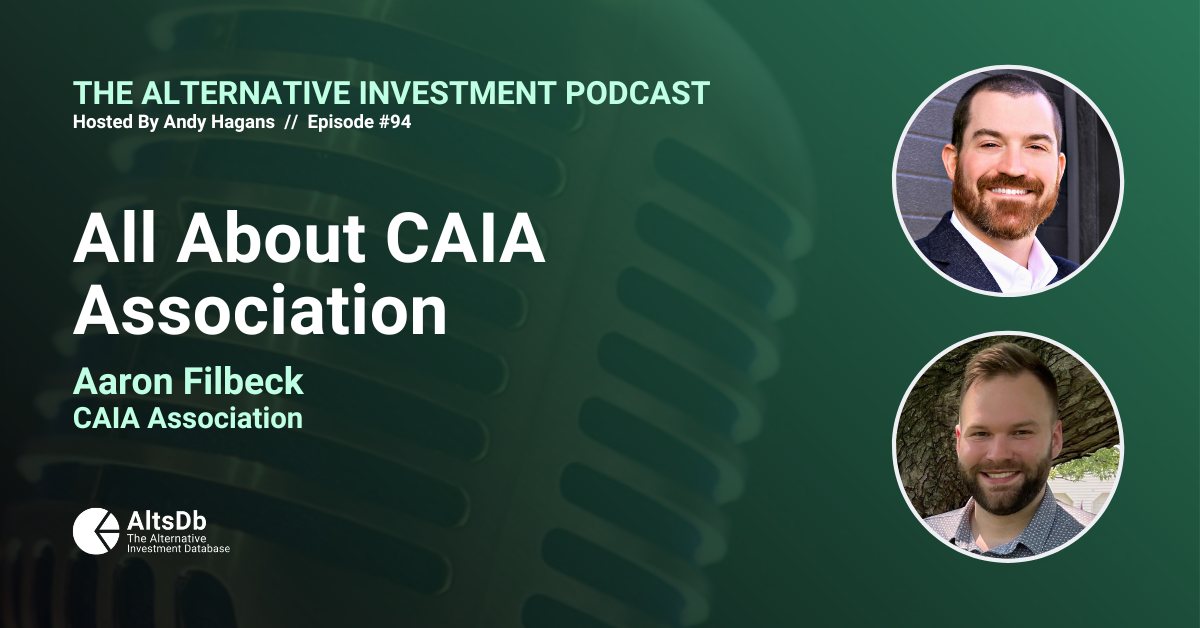
Recognizing the specific needs of the private wealth management industry, CAIA launched UniFi by CAIA, a dedicated learning platform designed to educate advisors and client-facing professionals on alternative investments. UniFi offers a more accessible and online-first learning experience compared to the CAIA Charter program.
"UniFi by CAIA is a learning platform that was announced by CAIA Association last year, so 2022, and is really designed to educate the private wealth management industry on alternatives," Filbeck explained. The platform caters to asset managers seeking to upskill their distribution teams, intermediaries at large wirehouses, and individual Registered Investment Advisors (RIAs) and advisors.
UniFi’s flagship offering, the "Fundamentals of Alternative Investments" certificate program, is a 20-hour course providing a foundational overview of various alternative strategies. The platform is also expanding its offerings to include a series of micro-credentials, shorter, focused programs (approximately 5 hours) that delve deeper into specific topics such as private debt and digital assets. These micro-credentials are designed to equip professionals with conversational fluency and a practical understanding of how these strategies can fit within a client’s portfolio.
The delivery mechanism of UniFi, featuring online courses, videos, and self-directed learning, makes it particularly well-suited for busy professionals who may not have the time or inclination for the intensive study required for a full charter designation. This approach aims to lower the barrier to entry for understanding complex alternative investment products and strategies.
The Financial Data Professional (FDP) Charter: Navigating the Data Revolution
In addition to its focus on traditional alternatives, CAIA has also recognized the transformative impact of data science and artificial intelligence on the financial services industry. The Financial Data Professional (FDP) Charter program bridges the gap between data science and finance, equipping professionals with the skills to navigate this increasingly data-driven landscape.
"The program is really the intersection of data science and financial services," Filbeck noted. The FDP Charter is designed for individuals who need to understand how to leverage data analytics, machine learning, and computer programming within financial contexts. This includes financial professionals who need to communicate effectively with data scientists and vice versa, ensuring that data-driven insights are translated into meaningful financial strategies.
The program is a single-level examination that aims to foster a common language and understanding between these two often-disparate disciplines. This is particularly relevant as asset managers, from hedge funds to private equity real estate firms, increasingly employ sophisticated data analytics to identify opportunities, manage risk, and enhance investment decision-making. The need for financial professionals to grasp these concepts, and for data scientists to understand financial implications, is paramount for innovation and competitive advantage.
Addressing the Education Gap: Progress and Future Outlook
The journey to close the alternative investment education gap has been a gradual one. Filbeck reflected on the industry’s progress, drawing parallels to the evolution of liquid alternatives in the early 2010s. He suggested that while the initial wave of liquid alternatives may have prioritized product over education, the current push into private capital has seen a more concerted effort towards advisor preparedness.
"I would say that we’ve done a much better job than we did, but I think there’s still a lot of ground to cover in terms of providing education," Filbeck stated. He emphasized that the most critical aspect of this education is not merely understanding the intricacies of specific products, but rather comprehending how these strategies can ultimately improve client outcomes. This client-centric approach, starting with an individual’s financial goals and objectives, and then selecting appropriate strategies, represents a significant shift from earlier approaches that often led with product.
Looking ahead, Filbeck expressed optimism regarding educational trends. He highlighted the advancements in educational technology, which have made learning more accessible and engaging through online platforms, video content, and interactive modules. Furthermore, he noted a growing willingness among financial professionals to acknowledge and address their knowledge gaps. "I think people are much more willing to say, ‘I really need to learn about this. I need to find something,’" he observed. This proactive pursuit of education, driven by both a desire for professional development and increasing client demand for alternative investment solutions, signals a positive trajectory for the industry.
The increasing engagement of younger client demographics with a broader range of investment strategies, coupled with the growing availability of alternative investment products at the retail level, is also acting as a catalyst for advisor education. As clients become more informed and inquisitive, advisors who can effectively explain and integrate alternatives into portfolios will be better positioned to serve their clients’ evolving needs.
The CAIA Association, through its comprehensive charter programs, accessible learning platforms like UniFi, and its commitment to fostering a knowledgeable and transparent alternative investment community, is playing a vital role in equipping financial professionals with the expertise needed to navigate this complex and increasingly important asset class. As the industry continues to evolve, the demand for robust, client-focused education will only intensify, making the work of organizations like CAIA more critical than ever.
For those seeking to deepen their understanding of alternative investments, the CAIA Association offers a wealth of resources. Their website, caia.org, provides detailed information on the CAIA Charter, UniFi by CAIA, and the FDP Charter programs. The association is also active on various social media platforms, including Twitter, LinkedIn, and Instagram, where they share insights and engage with the industry.
