

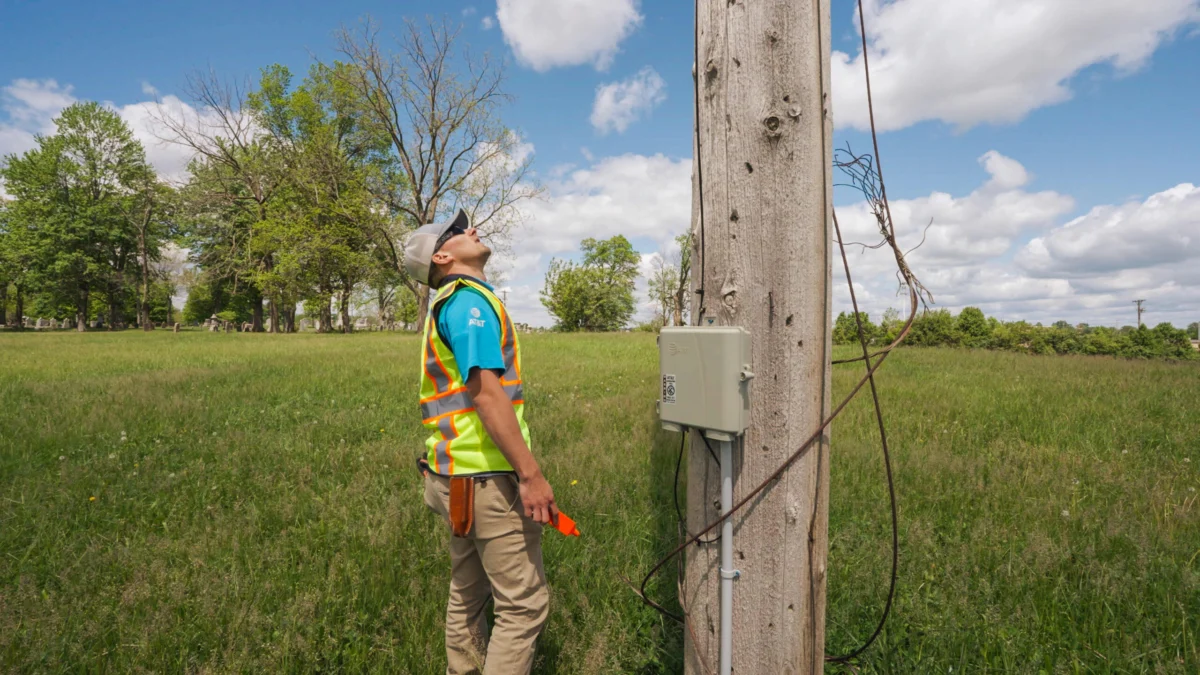
From the Dayton, Ohio, suburbs to boardrooms in Dallas, the employees fueling AT&T’s next wave of growth aren’t fresh-faced college graduates with expensive four-year degrees. They’re skilled, blue-collar workers ready to get their hands dirty – and AT&T, like many other major corporations, is facing a significant challenge in finding enough of them.
"We need people who know how to actually work with electricity. We need people who understand photonics. We need people who can go into folks’ homes and connect this infrastructure to make it work right," AT&T CEO John Stankey told CNBC during a recent interview from the company’s Dallas headquarters. "We find that we’ve got to go out and find them, train them, and incent them to come in. It’s not like we’re growing them on trees in the United States."
AT&T’s dilemma – hunting for blue-collar workers at a time when a record number of college students are projected to graduate this spring – underscores a palpable crisis facing new degree holders as the first wave of the AI revolution hits the U.S. economy. For much of the postwar era, the American bargain was clear: Go to college, get a degree, and claim your place in the middle class. As factories gave way to offices and the U.S. economy increasingly rewarded credentials over physical labor, a four-year diploma became one of the clearest symbols of upward mobility. But as AI spreads across corporate America and begins to absorb the entry-level work that once gave graduates their start, that promise is beginning to fracture.
While the rapid spread of AI has not yet led to broad layoffs and empty offices, many new graduates, especially those in AI-exposed industries, are learning their degrees may no longer guarantee the opportunities they once did. This shift is occurring against a backdrop of slowing hiring, a trend exacerbated by the increasing ability of companies to do more with less labor through AI implementation. The downturn has hit hardest workers with little real-world experience and those in industries expected to be most vulnerable to AI replacement, such as marketing, legal, accounting, human resources, and IT.
The Shifting Landscape of Opportunity
The implications of this trend could be profound, potentially reordering the U.S. workforce and global economy, and redrawing the map of opportunity in ways that even leading economists and technologists are only beginning to understand.
"Is the American Dream going away because of AI?… I think the fears are all very valid," said May Hu, a 26-year-old tech consultant turned social media influencer who was laid off from Deloitte last year. "I pursued college because… I think [for] most people who want to be working professionals… college is the route. That’s starting to change now."
Like any technological revolution, the AI boom is expected to create new types of work. However, in a twist for many college graduates, a significant portion of these new roles are emerging in blue-collar sectors that, for now, do not require a four-year degree. These positions are often centered around the construction, maintenance, and operation of the vast AI infrastructure, including data centers and chip fabrication facilities.
Nvidia CEO Jensen Huang highlighted this demand during a panel at the World Economic Forum in January, stating, "This is the largest infrastructure buildout in human history that is going to create a lot of jobs. We are going to have plumbers and electricians and construction and steel workers and network technicians and people who install and fit out the equipment." He further noted that many of these roles could command six-figure salaries as the U.S. grapples with a "great shortage" of skilled labor.
AT&T’s Strategic Pivot
In response to these evolving demands, AT&T announced in March plans to invest $250 billion over the next five years to expand its fiber network. This expansion is crucial for meeting the escalating demands of AI data centers and a surge in network usage driven by both AI and a rise in mobile streaming and uploading. Approximately 15% of this substantial investment is earmarked for hiring and training employees, with a primary focus on blue-collar front-line workers, particularly skilled technicians.
"As a society and within the United States, we’ve put a huge premium in value socially on a college degree, maybe for good reason, but in some cases… we maybe have missed the mark," said Stankey. "That hasn’t been optimal when you see the cost of education increasing at higher than the rate of inflation and yet we’re short HVAC [heating, ventilation and air conditioning] repair people, we’re short electricians, we’re short technicians that can go in and work on fiber."
The Historical Ascent of Higher Education
The emphasis on college degrees as a pathway to economic security has deep roots in American history. At the beginning of the 20th century, less than 10% of 17-year-olds in the U.S. had completed high school, and higher education was a luxury for a select few. Life for most Americans revolved around factory work or agriculture.
This landscape began to transform dramatically after World War II with the passage of the GI Bill, which offered veterans unprecedented access to college education. This, coupled with the expansion of public universities, fueled what labor historian Shannan Clark described as an "explosion" in higher education. There was a bipartisan consensus that investing in higher education was a sound strategy, believing that a more educated and skilled workforce would inherently lead to a more productive nation.
In the decades that followed, millions of Americans transitioned from physically demanding jobs to more comfortable, office-based roles. This shift was accompanied by increased wages, improved quality of life, and a surge in innovation and economic growth. By the close of the 20th century, a college education, combined with diligence, was widely considered the surest route to achieving the "American Dream."
The Questionable Return on Investment in the AI Era
While data continues to show that four-year degrees generally lead to higher lifetime earnings and lower unemployment rates, the perceived infallibility of this path has been eroding. Surging tuition costs and the burden of student loan debt have led many to question the return on investment of a traditional college degree. According to research from the Federal Reserve Bank of New York, the return on investment for a four-year degree, while still significant at around 12.5% as of 2024, has remained relatively stagnant for the past three decades, failing to keep pace with the rising costs.
Now, AI is poised to place even greater pressure on the value of a college diploma. "What does AI do best? AI is basically an infinite supply of 21-year-old interns that are smart but have no context," observed consultant Aaron Cheris, global head of Bain & Company’s retail practice. "The job they used to do is now the one that AI is doing, right? AI is doing the entry-level job."
Emerging Data on AI’s Impact on Early-Career Workers
This phenomenon appears to be making it harder for new graduates to secure employment. Data from the Federal Reserve Bank of New York indicates that the average unemployment rate for recent college graduates aged 22-27, which historically hovered around 4.5% since 1990, jumped to approximately 5.4% in 2025.
The impact seems particularly acute among entry-level employees in AI-exposed fields. A 2025 research paper from Stanford’s Digital Economy Lab, titled "Canaries in the Coal Mine?", found that early-career workers in roles highly susceptible to AI, such as software developers, marketing professionals, and sales managers, experienced 16% slower employment growth between mid-2024 and September 2025 compared to their counterparts in less exposed roles. This trend persisted even after controlling for various economic factors.
Erik Brynjolfsson, a leading expert on the economics of technology and AI and one of the paper’s authors, noted the growing nature of this effect, stating, "It is notable that since we came out with the first draft of the paper, the effect has grown from 13% to 16%, so whatever it is, it’s not rebounding, or wasn’t some kind of temporary blip." He cautioned that if this trend continues for young workers in AI-exposed roles, "we’re going to see it affect the broader labor market more."
Further research by Lee Tucker, a senior economist with the Center for Economic Studies at the U.S. Census Bureau, using the agency’s quarterly workforce indicators, corroborated these findings. Tucker’s research indicated a 9% drop in hiring for workers aged 22-24 in AI-exposed industries like finance, insurance, and professional services immediately following the launch of ChatGPT in late 2022, compared to other sectors. Between the third quarter of 2022 and the second quarter of 2025, employment in these sectors saw a 12% to 15% decline, resulting in an estimated 150,000 fewer early-career jobs. Tucker emphasized that this decline was primarily due to fewer hires rather than layoffs. "I empathize with early career workers, especially new graduates that are trying to get hired or just starting sort of their first rung on the career ladder," Tucker told CNBC. "It is true that it is tough out there, and the data really do back that up."
The Future of Entry-Level White-Collar Roles
The advent of generative and agentic AI, with its capacity to automate entry-level tasks, is prompting serious questions about the future of junior roles in fields like investment banking, consulting, and law. Senior leadership must now weigh the traditional practice of recruiting large classes of graduates against the evolving capabilities of AI.

Derek Waldron, JPMorgan Chase’s chief analytics officer, acknowledged that while he was unaware of specific recruitment strategies, "there may be some rightsizing" in future recruitment classes. He suggested that the nature of work for junior employees might shift, with a greater emphasis on managing AI systems rather than performing the underlying tasks. "The world is moving to a paradigm where every employee becomes a manager, but a manager of AI systems," Waldron stated. "So whereas a new joiner in the past was basically primarily the worker doing the work, the expectation is that they would be able to come in and begin to act as a manager of sort of AI tools."
This shift could present opportunities for entry-level employees who are adept at leveraging AI. WHP Global CEO Yehuda Shmidman expressed enthusiasm for such candidates: "If you’ve been using AI to help you with that final paper at school, we’re probably going to want to know how you’re going to use AI to help us with the next contract negotiation. So I’m all in favor of it."
However, this evolving landscape necessitates that students graduate with AI skills that extend beyond basic usage. Omair Tariq, founder and CEO of Cart.com, a logistics and fulfillment provider, stressed the importance of practical AI application. "When you’re in college, all you know is what’s in your curriculum. The curriculum is available in a book or online. It’s all tangible, it’s all ones and zeros. It’s all the sh– that AI can read in 30 seconds that you took four and a half years to read," Tariq remarked. "So tell me again what you can do that AI can’t do, because you don’t have any real-world experience."
Colleges and universities are already feeling the pressure to adapt their curricula and educational approaches to prepare students for an AI-integrated future. Matt Sigelman, president of the Burning Glass Institute, a think tank focused on the future of work, stated, "For graduates to compete effectively, they’re going to need to know how to do at age 22 what they used to do at age 27. They’re going to need to be able to start their careers in the middle and not the beginning."
The Suburban Dream Realized
In a small Ohio city between Dayton and Columbus, 24-year-old Kyson Cook embodies a different vision of the American Dream. As a premises technician with AT&T, he connects the company’s fiber infrastructure to customer homes. Cook owns a three-bedroom home, has minimal debt, and enjoys a work-life balance that allows him ample time for family and hobbies. He can afford new clothes, vacations, and regularly contribute to his daughter’s mutual fund without financial strain.
"I’m proud to tell people what I do. I climb telephone poles. It’s awesome," Cook told CNBC, describing his work as feeling like a superhero. He acknowledges the physical demands and working in various elements but emphasizes the significant rewards.
Cook, whose father and grandfather also worked at AT&T, joined the company in April 2022 after leaving college, realizing his preference for hands-on work. Within a year, he saved enough for a down payment on his house. When his daughter was on the way, he returned to college for a bachelor’s degree, funded by AT&T’s tuition reimbursement program, believing it could aid his career advancement, even if management roles don’t strictly require it.
Cook is one of thousands of technicians instrumental in AT&T’s network expansion to meet AI-driven demands. Despite a decade-long reduction in its global workforce, AT&T is strategically increasing headcount in key areas and actively recruiting skilled tradespeople who are not required to possess a college degree.
The Growing Shortage of Skilled Trades
AT&T plans to hire approximately 3,000 technicians this year and is intensifying recruitment in areas like Nashville, San Francisco, and North Carolina, where a dearth of skilled workers is evident. This adds to the 10,000 technicians hired over the past three years. The company estimates training costs per employee to range between $50,000 and $80,000.
"We’re investing a huge amount of money. We’re putting fiber out there. This needs to be built," said Stankey. "And so part of what we’re doing is, we need trade."
AT&T’s pursuit of blue-collar workers occurs amidst a national shortage of certain skilled tradespeople and a slight uptick in unemployment for college-educated adults. A January report from Associated Builders and Contractors projected a shortage of around 350,000 workers needed to meet construction service demands in the U.S. this year, a deficit expected to grow to over 450,000 next year. By 2030, the U.S. Department of Education estimates that approximately 2.1 million skilled trades jobs could go unfilled.
The shortfalls are particularly acute in regions with major projects like semiconductor fabrication facilities. Anirban Basu, chief economist for ABC, noted that about one-fifth of electricians are over 55, exacerbating the issue. "Even if construction spending fails to exceed expectations this year and next, contractors will continue to struggle to fill open positions, especially in certain occupations and regions," Basu stated. "Recent industry efforts to accelerate skilled worker development have helped, but the industry is effectively swimming upstream."
Meanwhile, college-educated adults over the age of 25 have experienced a slight rise in unemployment. Data from the U.S. Bureau of Labor Statistics shows that for nearly a decade, excluding the COVID-19 pandemic, the unemployment rate for adults 25 and over with a bachelor’s degree has been at or below 3%. However, in August, this figure climbed to 3.2%, the first time it surpassed 3% in approximately nine years outside of the pandemic. This rate has largely hovered around 3% or higher since then, though it fell to 2.8% in April.
White-collar roles, such as management, professional, and office jobs, have seen unemployment rise annually since 2023. In contrast, unemployment for blue-collar positions, including construction and maintenance jobs, largely declined or remained stable last year compared to 2024, according to BLS data.
The Enduring Value of a Degree
Despite these shifts, the benefits of a college degree remain substantial. College graduates, overall, continue to enjoy lower lifetime unemployment rates and higher earnings than those without degrees, who are more susceptible to layoffs during economic downturns. Between January 2000 and April 2026, the average unemployment rate for individuals with only a high school diploma was 5.7%, significantly higher than the 3.2% average for those with a bachelor’s degree, according to BLS data.
While it is important to avoid drawing definitive conclusions from minor fluctuations in data, the divergence in unemployment trends between blue- and white-collar workers is a phenomenon economists are closely monitoring. Bharat Chandar, a postdoctoral researcher at the Stanford Digital Economy Lab and co-author of the "Canaries in the Coal Mine?" report, advised caution, stating, "I think we need to wait and see."
High Stakes for the Future Workforce
To attract more technicians and skilled laborers, AT&T is offering competitive compensation packages, including sign-on and retention bonuses ranging from $5,000 to $10,000 for field technicians. Entry-level wages can range from $18.18 to $31.45 per hour, varying by location and experience. These roles typically include comprehensive benefits, such as medical insurance, 401(k) plans, tuition reimbursement, paid parental leave, adoption assistance, and discounts on AT&T services.
Combating the shortage of skilled tradespeople requires not only government initiatives but also a societal reevaluation of whether a four-year college degree is the optimal path for every worker. "We probably ought not to just assume that sending everybody to a four-year degree is the right answer," Stankey argued. "We should be more thoughtful about what that four-year degree needs to look like, or what that advanced learning needs to look like, and also ask, does all work require that?"
Decades ago, the prestige and social standing associated with college education and white-collar professions understandably led many to choose office work over more physically demanding jobs. Blue-collar work often entails greater physical exertion and inherent risks. Technicians like Cook, who scale telephone poles, perform physically demanding tasks, and work in challenging weather conditions, face higher rates of fatal workplace injuries compared to the general workforce, according to BLS data. They must also be capable of lifting significant weight, be available on holidays, and work in confined spaces.
Despite the physical toll, Cook expressed his preference for his current role over an office job, stating he would likely be in debt, without a home, and earning less if he had pursued a white-collar career. Crucially, he feels secure in his employment, stating, "I don’t think robots can be climbing poles anytime soon. Computers can’t do what we do." This sentiment underscores a growing realization: while AI is rapidly transforming many industries, the demand for skilled, hands-on labor remains robust, offering a viable and often overlooked pathway to economic stability and the American Dream.
