

As the 2026 U.S. proxy season draws to a close, a significant transformation is evident in the landscape of shareholder proposals. Both the volume of proposals brought to a vote and the level of investor support they garnered have undergone a dramatic change, marking a new era in corporate governance engagement. This evolution is largely attributed to shifts in the U.S. Securities and Exchange Commission’s (SEC) approach to shareholder proposals, altering the dynamics for both issuers and proponents.
Background: A Shifting Regulatory Environment
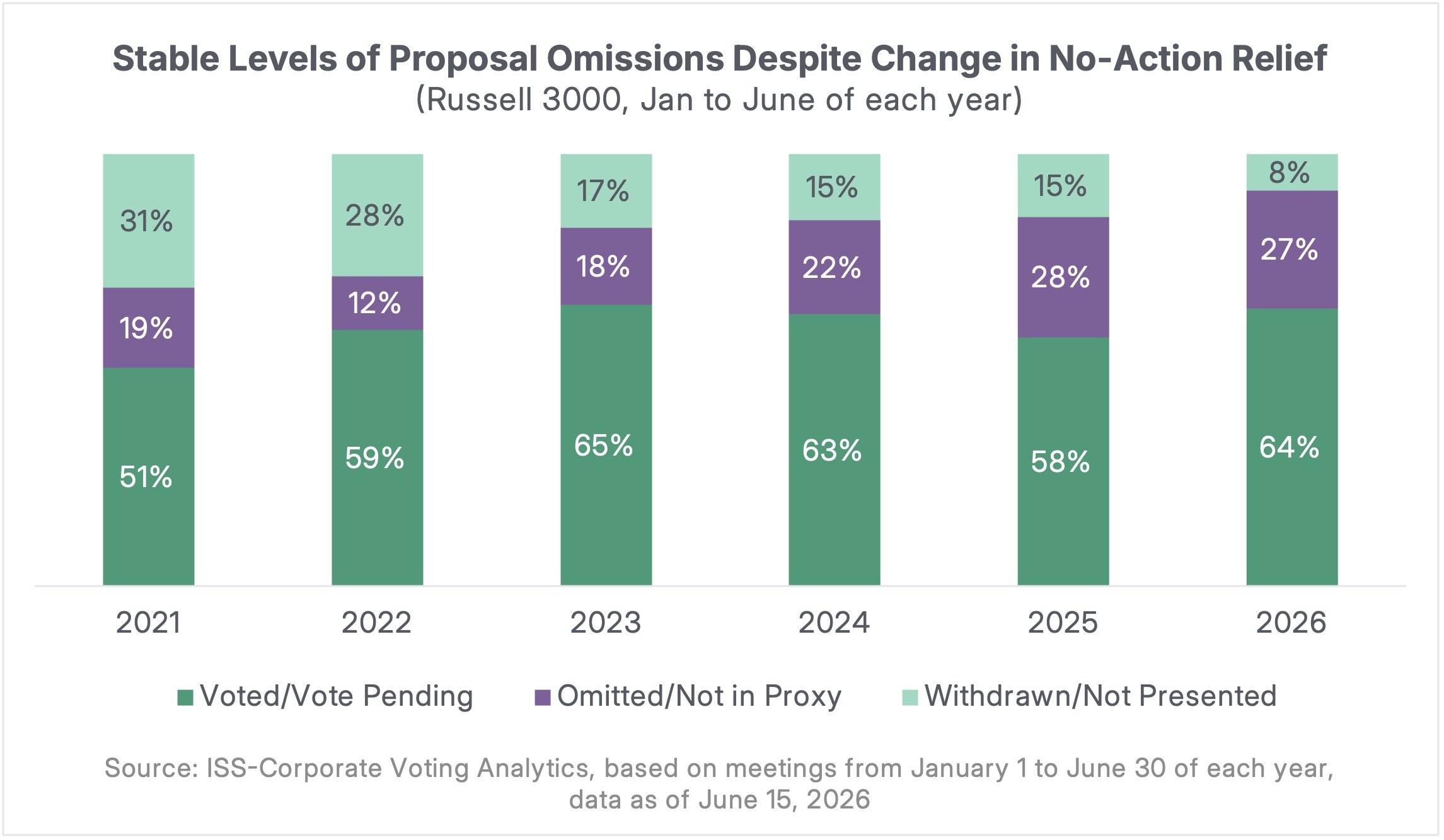
The foundational changes that have shaped the 2026 proxy season began to take root in early 2025. The SEC issued Staff Legal Bulletin No. 14M (SLB 14M), a pivotal document that revised the framework governing shareholder proposals. This bulletin provided issuers with greater flexibility to obtain "no-action relief," a procedural mechanism that allows companies to exclude a shareholder proposal from their proxy materials if they can demonstrate to the SEC staff that the proposal violates the proxy rules. The impact of SLB 14M was palpable during the 2025 proxy season, leading to a notable increase in the number of proposals being omitted from ballots.
Further complicating the landscape, ahead of the 2026 proxy season, the SEC’s Division of Corporate Finance signaled a departure from its traditional role as an arbitrator in shareholder proposal disputes. The Division announced its decision to decline reviewing or expressing views on most requests for shareholder proposal exclusions. This retreat from its long-standing role as a mediator introduced a new layer of uncertainty and altered the calculus for companies and shareholder advocates alike. The implications of these regulatory shifts are now becoming clear as the full scope of the 2026 proxy season unfolds.

Shareholder Proposal Volume Plummets to a Five-Year Low
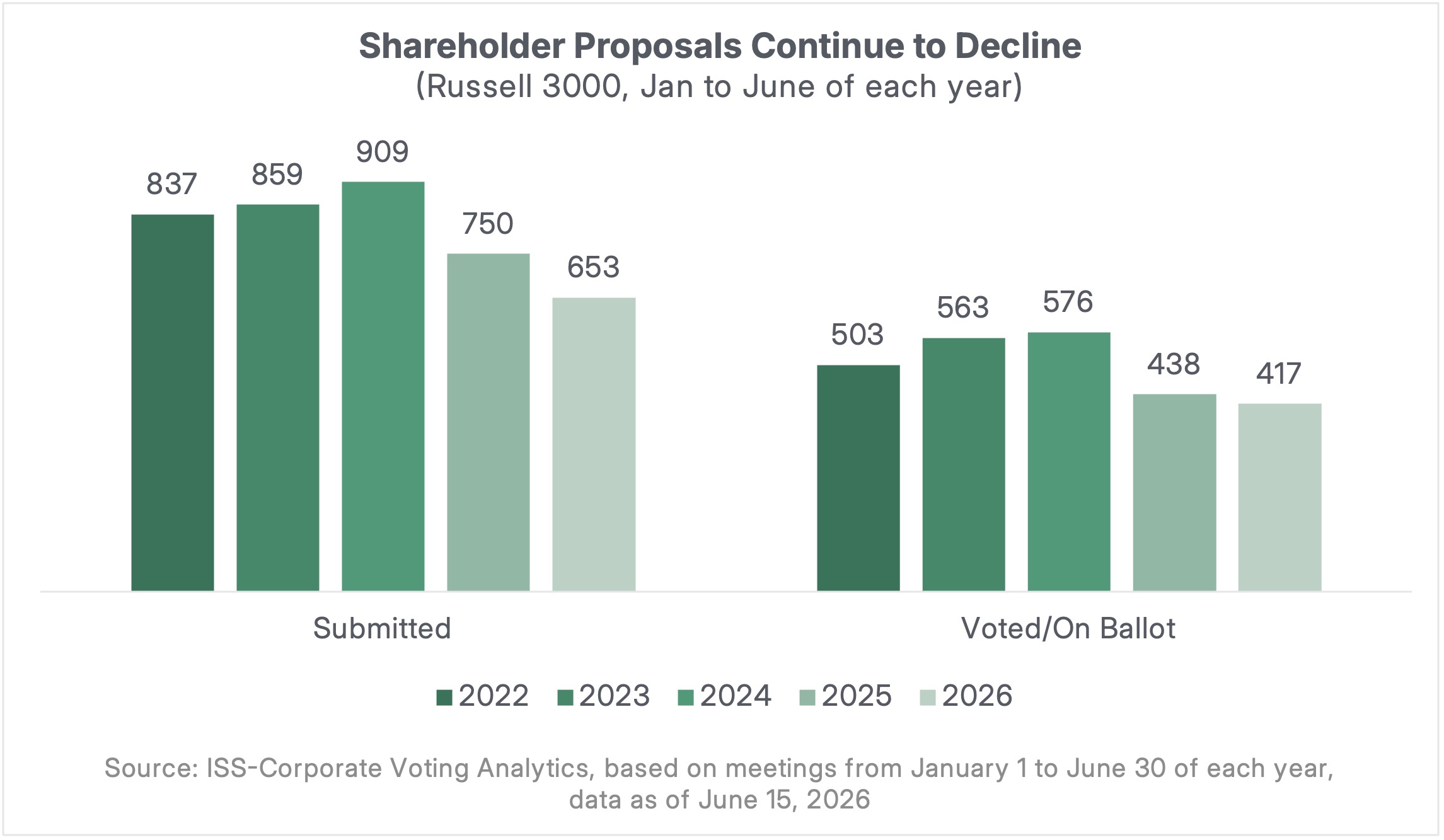
Against this backdrop of regulatory recalibration, the overall volume of shareholder proposals submitted and advanced to a vote has declined to a five-year low. This contraction in the number of proposals reflects a confluence of factors, including the revised SEC no-action process, evolving investor priorities, and strategic adjustments by proposal proponents.
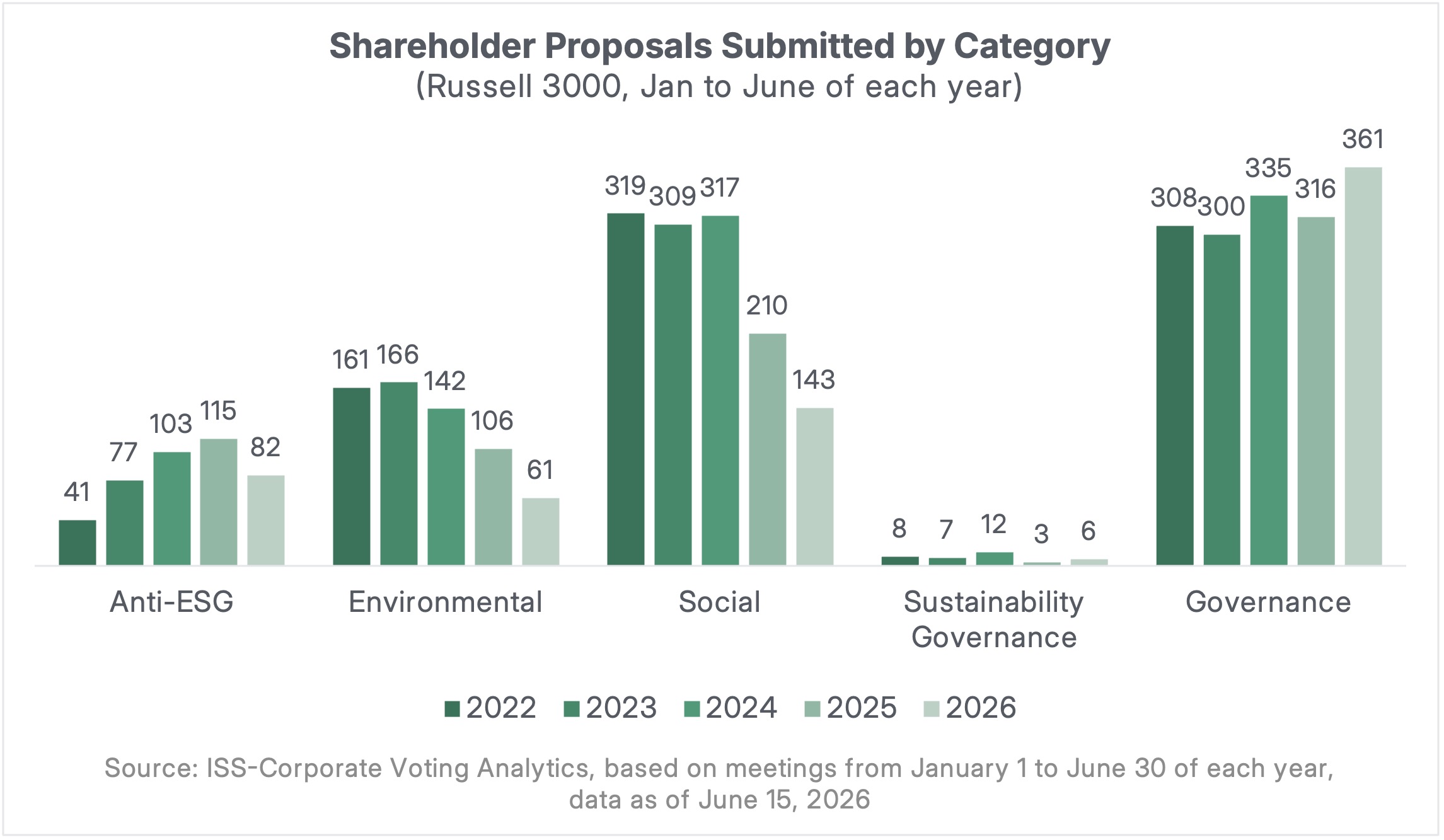
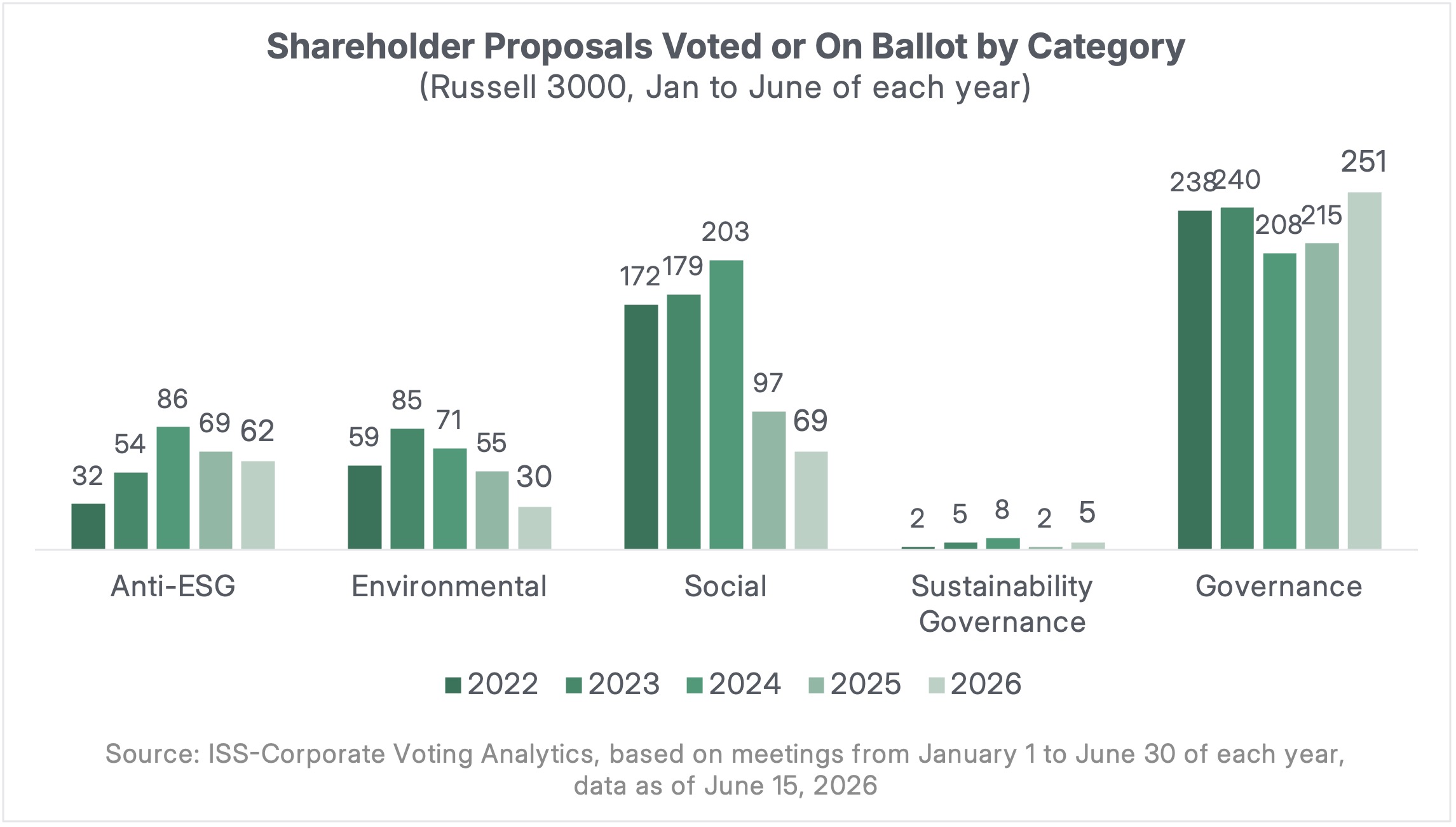
While the total number of proposals on the ballot has diminished, a closer examination reveals a nuanced shift in focus. Governance-related proposals have, in fact, seen an increase in their relative volume. This resilience highlights the enduring prioritization of core shareholder rights and robust board accountability mechanisms among investors. The sustained interest in these areas suggests a continued demand for strong corporate governance practices, even as the overall landscape of shareholder activism evolves.
In stark contrast, environmental and social proposals have continued their downward trajectory. Both the number of submissions and the proposals ultimately reaching a vote have declined further. This trend indicates a more selective approach by investors toward these topics, suggesting that the broad appeal of environmental and social issues may be narrowing or that proponents are facing greater challenges in articulating proposals that resonate widely.
Adding to this dynamic, "anti-ESG" proposals, which had experienced a rapid increase in volume in previous years, also saw a decline. While they still constitute a meaningful portion of the overall proposal volume, their diminishing rate of growth suggests a potential cooling of this specific activist trend or a redirection of efforts by proponents of such measures.
Analysis of the Shift in Proposal Activity
The observed shift in proposal activity is likely a multifaceted phenomenon. The evolving political and regulatory landscape has undoubtedly played a significant role, creating a more complex environment for activism. Furthermore, the mixed success of many environmental and social proposals in recent years may have prompted a reassessment of strategies by proponents. The impact of recent SEC actions, particularly the revised no-action process, has also been a significant catalyst.
Changes to the SEC’s shareholder proposal framework and no-action process appear to have altered the strategic considerations for proponents. Some may have been discouraged from submitting proposals due to increased uncertainty or perceived hurdles, while others have been incentivized to adopt a more focused and targeted strategy. This has led to a dual effect: some proponents have reduced their overall proposal activity, while others have become more discerning in selecting issues and companies, or have redirected their efforts toward governance-related topics that historically garner broader shareholder support and face fewer ideological objections.
Taken together, these developments do not necessarily signal a diminished investor interest in environmental and social issues. Instead, they suggest a strategic recalibration by proponents who are seeking to maximize their impact and improve the likelihood of gaining meaningful shareholder backing in a more challenging and dynamic environment.
SEC No-Action Changes Reshape Proposal Exclusions: A Tale of Evolving Caution
The SEC’s revised no-action process, which now involves the staff issuing "no-objection" responses rather than the traditional no-action relief, has significantly reshaped the landscape of shareholder proposal exclusions. This shift has introduced greater uncertainty regarding the risks and consequences associated with omitting proposals from proxy ballots.
Early in the 2026 proxy season, many issuers, faced with a less definitive regulatory framework and limited precedent, adopted a more cautious approach. They opted to include shareholder proposals that, in prior years, might have been challenged and potentially excluded through the no-action process. This initial hesitancy reflected a desire to avoid potential legal challenges and regulatory scrutiny in an uncertain environment.
However, as the season progressed, issuers appeared to become increasingly comfortable relying on exclusion procedures, even in the face of a number of shareholder lawsuits aimed at contesting proposal omissions. This suggests that companies, over time, became more adept at navigating the new regulatory terrain and perhaps more confident in their ability to justify exclusions. Consequently, proposal omission activity accelerated in the latter part of the season. Current trends indicate that the overall proposal omission rate is on track to closely mirror 2025 levels, despite the procedural changes and the heightened litigation risk. This suggests a cyclical adaptation, where issuers, after an initial period of caution, have found ways to re-engage with exclusion practices.
Governance Proposals Earn the Strongest Investor Support: A Renewed Focus on Accountability
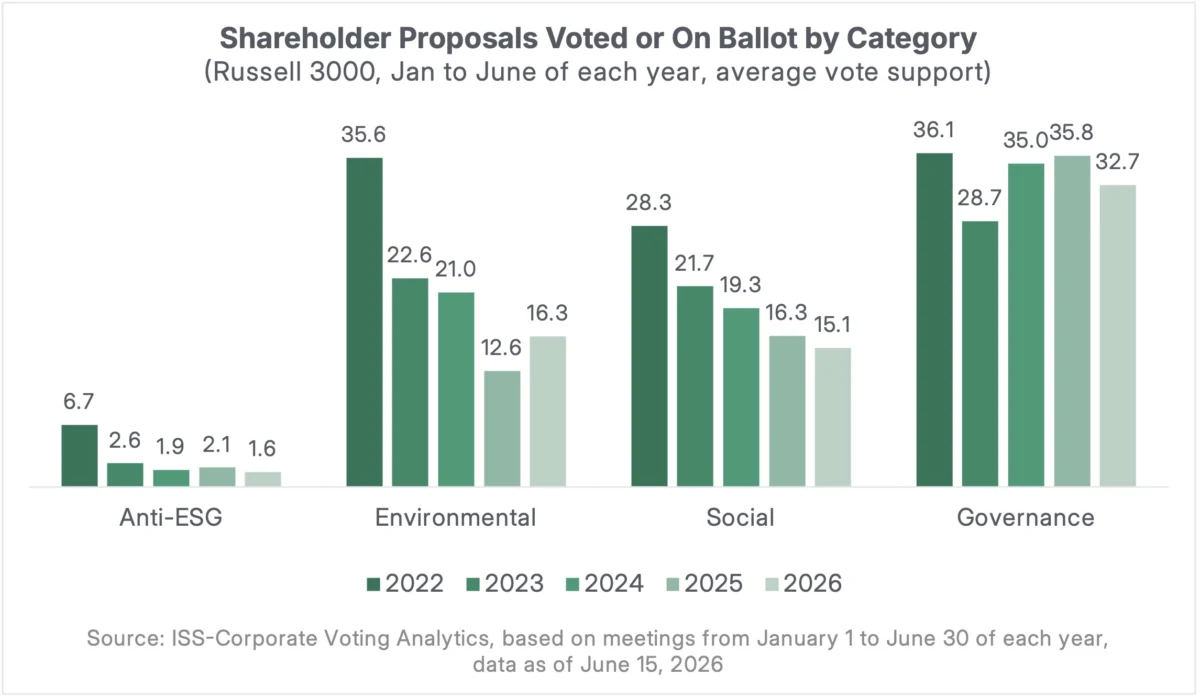
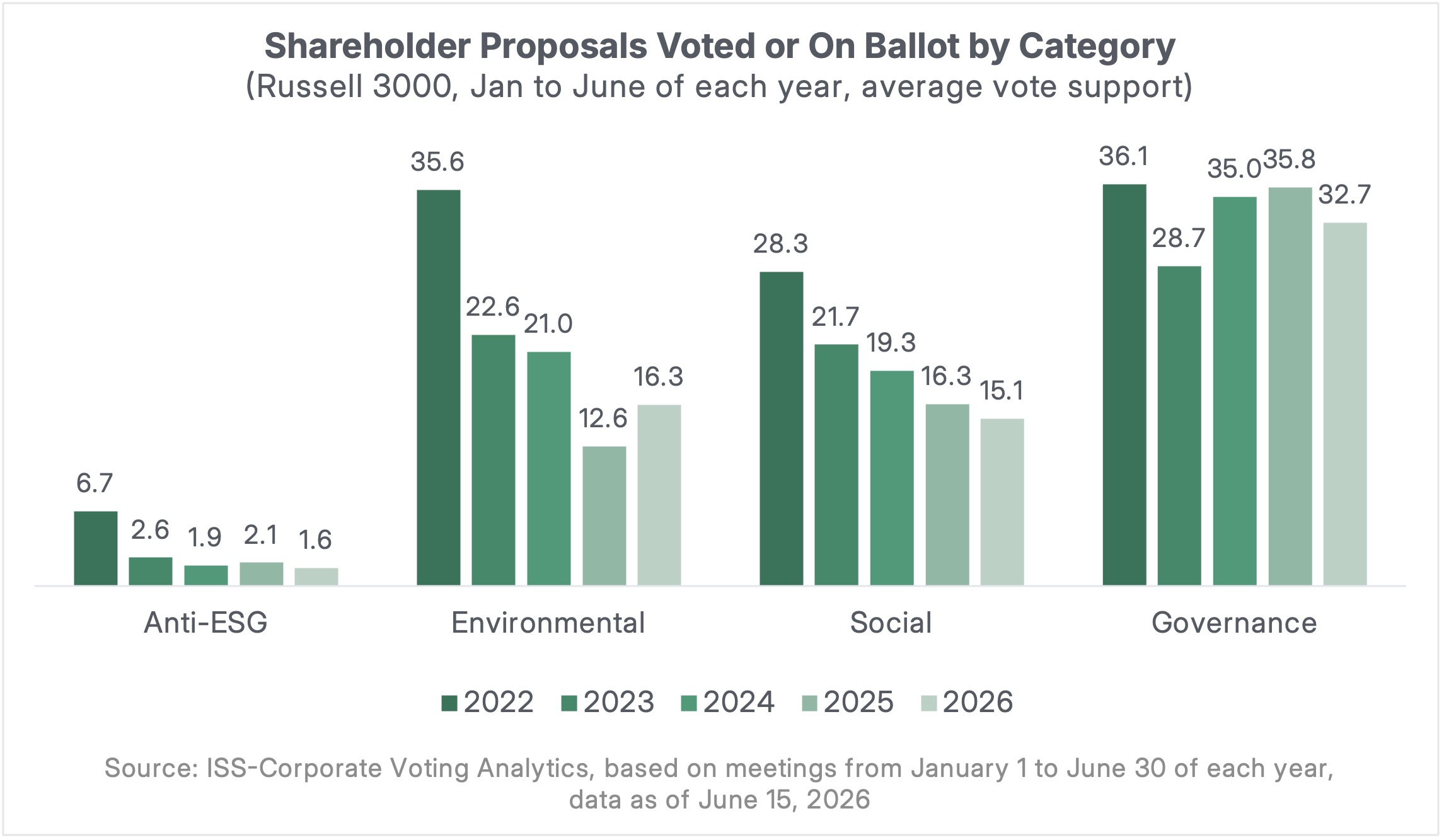
Among the proposals that successfully made it to the final vote in the 2026 proxy season, governance proposals commanded the highest levels of investor support. Averaging 31.4% support, these proposals significantly outperformed all other categories, even experiencing a modest year-over-year decline. This consistent strength underscores the ongoing investor focus on board accountability and shareholder rights as paramount concerns.
In contrast, environmental and social proposals continued to exhibit more varied and company-specific voting outcomes. Support for social proposals, in particular, has continued to erode, extending a multi-year downward trend. This decline reflects an increased selectivity among investors, who are likely scrutinizing these proposals more closely for their direct impact and strategic alignment with company objectives.
Anti-ESG proposals, despite their increased visibility in recent years, attracted minimal backing, garnering a mere 1.7% support in 2026. This data clearly indicates that these proposals remain largely unsupported by the broader shareholder base, suggesting that the ideological divisions they represent do not translate into widespread investor conviction.
Environmental proposals, however, presented a notable exception within the broader environmental and social category. Despite experiencing the steepest year-over-year decline in volume, these proposals generated higher average support levels. This suggests that a smaller number of more targeted and strategically crafted environmental proposals may be resonating more effectively with investors. Proponents who have refined their approach to focus on specific, actionable environmental concerns appear to be finding greater success.
The vote support data unequivocally highlights a growing divergence between the strong and consistent support for governance proposals and other shareholder proposal categories. This recalibration of investor priorities is a key takeaway from the 2026 proxy season. While overall proposal volume declined, investor support remained most robust for governance-related initiatives, reinforcing the continued shareholder emphasis on board accountability and the protection of shareholder rights.
Independent Board Chair Proposals Rebound: A Resurgence of Focus on Board Leadership
This proxy season witnessed a significant resurgence in the volume of proposals advocating for an independent board chair. These proposals, which were the most prevalent among governance-related initiatives in 2026, experienced a notable rebound following two years of declining activity. The number of such proposals brought to a vote increased to 70, a substantial jump from the 29 recorded in 2025, and nearing the 2023 peak of 83 proposals. This resurgence signals a renewed shareholder focus on board leadership and the effectiveness of oversight structures.
Despite considerable fluctuations in the volume of these proposals over the years, investor support has remained remarkably consistent. The average support has hovered around 30% annually, with the 2026 figure of 31.8% matching the level recorded in 2022. This stability suggests that shareholder views on the merits of an independent board chair have remained largely consistent, even as filing activity has varied significantly. This indicates that the underlying shareholder concern about the concentration of power in a single individual at the helm of the board remains a persistent issue.
While proposals for an independent board chair rarely secure majority support, the combination of rising proposal volume and sustained, significant support levels indicates that board leadership structure continues to be a core governance priority for investors. In fact, the prevalence of independent board chairs in the broader market has been increasing steadily, with nearly 40% of S&P 500 companies now having an independent board chair. This trend in actual corporate practice aligns with the persistent shareholder advocacy for this governance model.
Shareholder Rights Proposals Continue to Win Investor Backing: Enduring Demand for Access
Proposals seeking to adopt or amend special meeting rights ranked as the second most prevalent shareholder proposal category in 2026. Despite a meaningful decline in overall volume compared to the prior year, these proposals continue to garner strong investor backing. This reduction in activity is likely a reflection of the increasing adoption of special meeting provisions across the broader market, which has consequently shrunk the pool of companies that do not yet offer such rights to their shareholders.
While the average vote support for these proposals saw an increase relative to 2025, it remains largely consistent with historical norms. This underscores the continued and broad-based investor support for reasonable shareholder access mechanisms. In particular, proposals that aim to establish or lower thresholds for calling special meetings to market-standard levels continue to receive strong backing. This reflects a clear investor preference for balanced governance frameworks that enhance corporate accountability without introducing undue governance risks for the company. The consistent support for these rights indicates that shareholders view them as essential tools for ensuring that management and the board remain responsive to shareholder interests.
ISS-Corporate’s Perspective: Navigating the Evolving Governance Landscape
The 2026 proxy season has undeniably brought about significant changes in shareholder proposal activity. The overall decline in proposal volume, coupled with the resilience and dominance of governance-focused proposals in receiving investor support, highlights a sustained shareholder emphasis on board accountability and shareholder rights. Meanwhile, proponents of environmental and social initiatives appear to be strategically recalibrating their tactics, adopting a more targeted and focused approach in response to the evolving regulatory and investor sentiment.
As the 2026 proxy season concludes, these emerging trends offer crucial signals about the evolving priorities of investors and the issues that are most likely to shape shareholder engagement and voting decisions in the years ahead. ISS-Corporate’s Compensation & Governance Advisory team is dedicated to helping companies navigate this dynamic environment. By analyzing shareholder proposal trends, benchmarking governance practices against market expectations, assessing potential areas of shareholder concern, and developing engagement and disclosure strategies that align with investor priorities, ISS-Corporate provides data-driven insights and practical governance guidance. This support enables boards and management teams to better prepare for future proxy seasons and strengthen shareholder relationships in an increasingly complex and evolving corporate governance landscape. The ability to understand and adapt to these shifts will be critical for companies seeking to maintain strong investor confidence and foster productive dialogue with their shareholders.
