

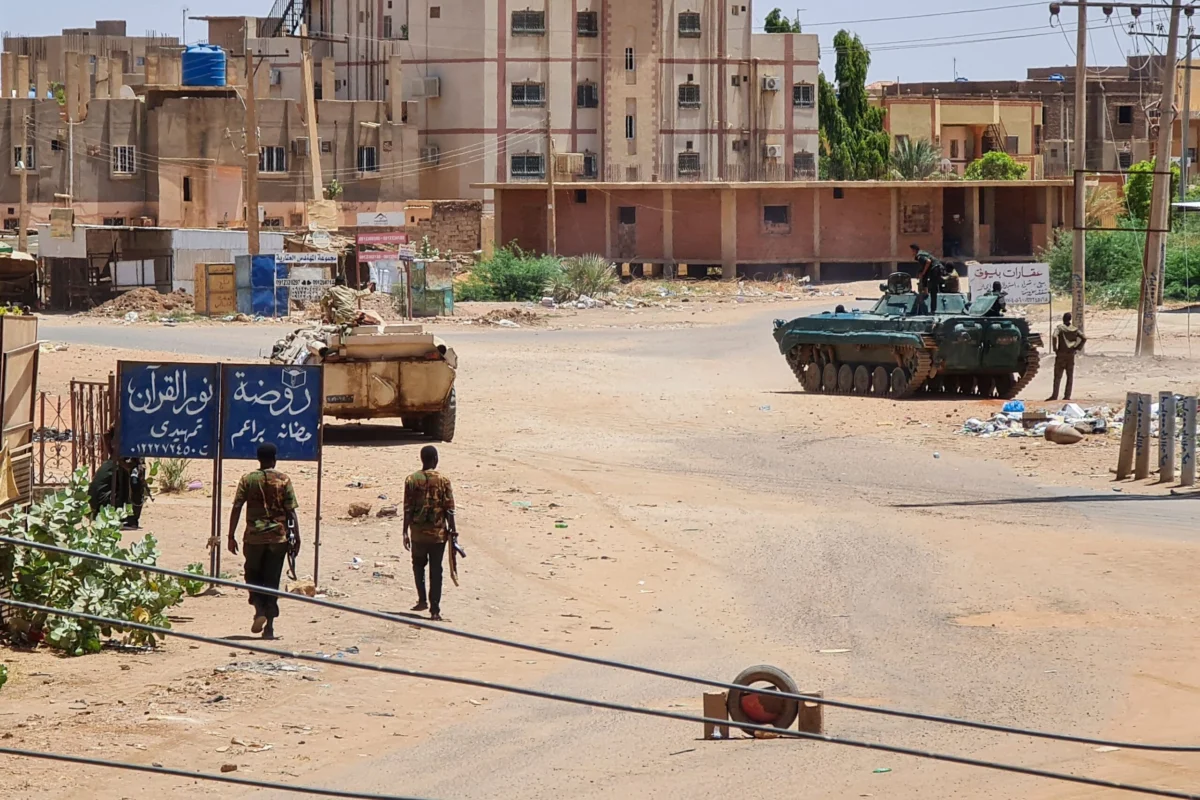
One month after the initial eruption of violence between Sudan’s two primary military factions, the capital city of Khartoum remains a theater of intense urban warfare, while internationally brokered peace talks in Saudi Arabia have failed to produce a sustainable resolution. The power struggle between the Sudanese Armed Forces (SAF), led by General Abdel Fattah al-Burhan, and the paramilitary Rapid Support Forces (RSF), commanded by Mohamed Hamdan Dagalo, known as Hemedti, has effectively decapitated the nation’s nascent transition toward democracy and replaced it with a humanitarian catastrophe of staggering proportions.
As of early May 2023, the conflict shows no signs of de-escalation. Airstrikes and heavy artillery fire continue to ravage Khartoum and its sister cities, Omdurman and Bahri. The violence has also metastasized beyond the capital, igniting long-standing ethnic and territorial tensions in the Darfur region to the west. The International Rescue Committee (IRC) recently reported that the confirmed death toll has exceeded 600 individuals, with more than 5,000 injured. However, medical professionals on the ground and international observers warn that the true number of casualties is likely significantly higher, as many bodies remain uncollected in the streets and hospitals in conflict zones have been forced to shutter.
The Humanitarian Crisis and Mass Displacement
The scale of human suffering in Sudan has reached a critical inflection point. According to United Nations data, nearly one million people have been displaced in just thirty days. This includes hundreds of thousands of internally displaced persons (IDPs) who have fled the heavy bombardment in Khartoum for relatively safer provinces, as well as over 200,000 refugees who have crossed international borders into neighboring Egypt, Chad, Ethiopia, and South Sudan.
For those unable or unwilling to flee, daily life has become a desperate struggle for survival. Despite high-profile commitments from both the SAF and RSF to facilitate humanitarian corridors and restore essential services, the reality on the ground is one of systemic deprivation. Residents in Khartoum report widespread outages of electricity and water. The disruption of supply chains has caused the prices of food, potable water, and fuel to skyrocket, placing basic necessities out of reach for the average citizen.
"The needs are immense, immediate, and will be for a long time," stated Kurt Tjossem, the IRC’s Vice President for East Africa. He warned that the longer civilians remain trapped in these conditions, the more vulnerable they become to outbreaks of disease, acute malnutrition, and the psychological trauma of protracted warfare. The collapse of the banking system and the widespread looting of markets and warehouses have further hammered an economy that was already reeling from years of mismanagement and international sanctions.
A Chronology of Escalation: From Cooperation to Conflict
The current war is the violent culmination of a fractured partnership between two generals who once collaborated to seize power. To understand the present crisis, one must look back to the 2019 popular uprising that ousted long-time dictator Omar al-Bashir. Following Bashir’s removal, a fragile power-sharing agreement was established between the military and civilian pro-democracy groups.
However, in October 2021, General Burhan and Hemedti joined forces to lead a military coup, dissolving the civilian government led by Prime Minister Abdalla Hamdok. This move drew immediate international condemnation; the World Bank and various global powers froze billions of dollars in aid, demanding a return to civilian rule. For nearly two years, the SAF and RSF maintained an uneasy alliance, ostensibly working toward a new transition.
The breaking point arrived in early April 2023. The primary bone of contention was the proposed integration of the RSF—a paramilitary force evolved from the Janjaweed militias of the Darfur conflict—into the regular national army. Burhan pushed for a rapid two-year integration timeline, while Hemedti demanded a ten-year window that would allow him to maintain his independent power base. These divergent political and military visions proved irreconcilable. On April 15, the first shots were fired in Khartoum, marking the start of a full-scale civil war.
The Jeddah Talks and the Failure of Diplomacy
In an effort to stem the bloodshed, the United States and Saudi Arabia have hosted representatives from both factions in the coastal city of Jeddah. While these talks were initially viewed with cautious optimism, they have thus far yielded little more than "declarations of commitment" that are routinely ignored within hours of being signed.
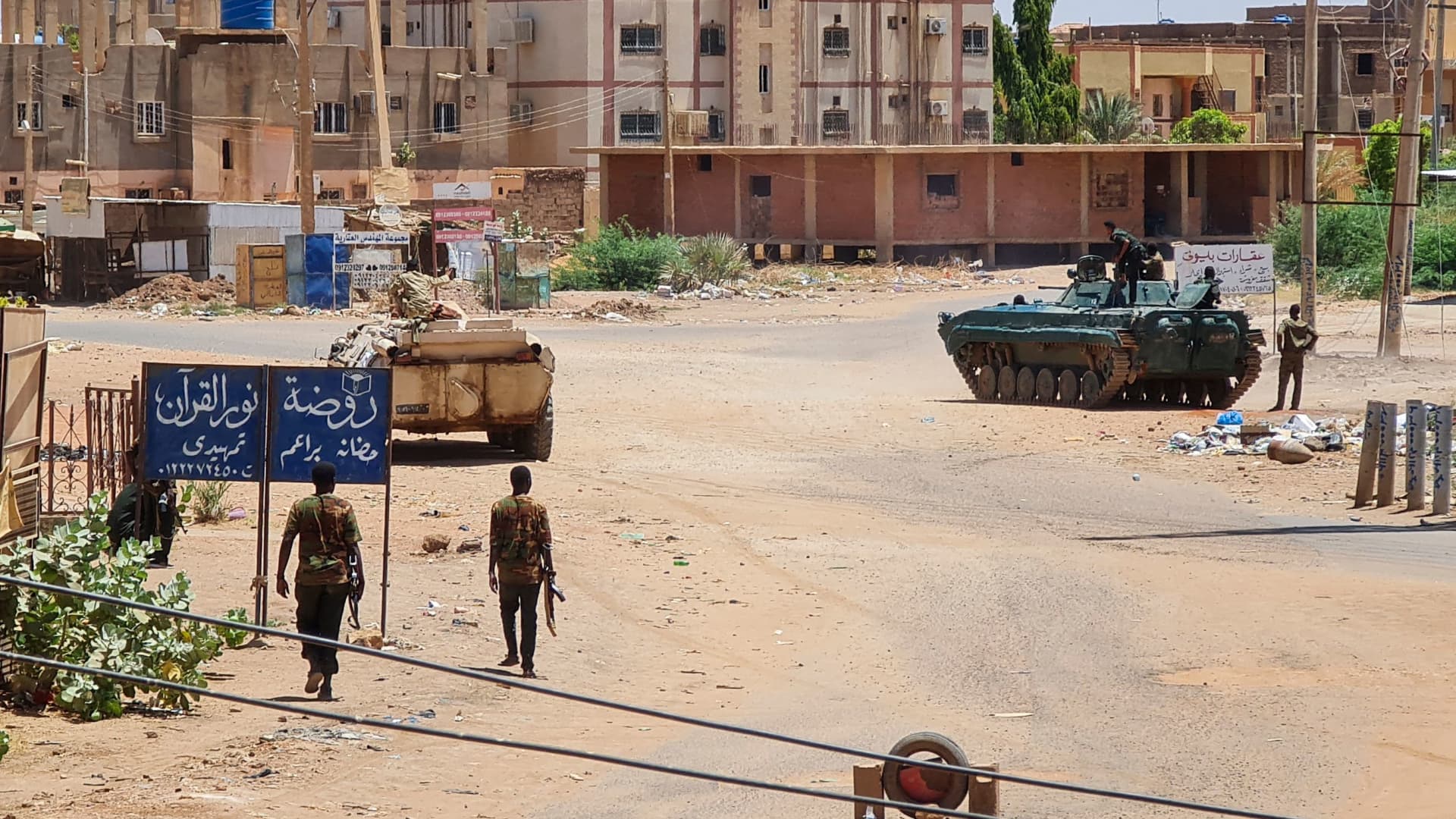
Critics argue that the Jeddah process is fundamentally flawed. Many Sudanese activists and civil society leaders believe the talks lack a "substantial civilian voice." There is a growing sentiment that by negotiating exclusively with the two generals, the international community is inadvertently granting them political legitimacy. Sudanese-Australian writer and activist Yassmin Abdel-Magied noted that the current diplomatic framework rewards "belligerence" and ignores the millions of Sudanese who have spent years protesting for a civilian-led democracy.
Furthermore, the absence of credible threats, such as targeted international sanctions against the generals’ vast business empires, has left the warring parties with little incentive to stop fighting. Both the SAF and RSF control significant portions of Sudan’s natural resources, including gold mines and agricultural land, and both enjoy varying degrees of support from regional powers including Egypt, the United Arab Emirates, Saudi Arabia, and Libya.
Regional Implications and the Risk of State Failure
The conflict in Sudan does not exist in a vacuum; it threatens to destabilize the entire Horn of Africa and the Sahel region. Sudan shares borders with seven countries, many of which are already grappling with their own internal instabilities. A total collapse of the Sudanese state could lead to a massive refugee crisis, the proliferation of small arms, and the creation of a vacuum that extremist groups could exploit.
In a speech to the UN Human Rights Council, U.K. Minister for International Development and Africa Andrew Mitchell emphasized the need for a "united message of horror" from the international community. He stressed that the cycle of impunity in Sudan must be broken if the country is to ever return to a political track.
The involvement of foreign actors complicates the path to peace. Associate Professor Sharath Srinivasan of the University of Cambridge has pointed out that the close financial and political ties between the warring factions and their external patrons make a swift resolution difficult. For a ceasefire to hold, international pressure must be applied not just to the generals in Khartoum, but also to the regional capitals that continue to provide them with the resources to wage war.
The Role of Grassroots Resistance
Amidst the failure of formal diplomacy, Sudanese civil society has stepped in to fill the void. Resistance committees—informal, neighborhood-based networks that were instrumental in the 2019 revolution—have transformed into frontline humanitarian organizations. These groups are coordinating evacuations, managing makeshift clinics, and distributing food and water in areas where international NGOs cannot reach.
Abdel-Magied and other advocates argue that these grassroots organizations should be the primary partners for the international community. "The framework is already there," she said, suggesting that delegates from these committees should have a seat at the negotiating table to represent collective civilian interests.
The fear among the Sudanese populace is that the current conflict will lead to "another 30 years of dysfunction." Without a fundamental restructuring of the country’s military and political architecture—one that includes accountability for past atrocities and the removal of the military from the economy—the cycle of violence is likely to repeat.
Conclusion: A Narrow Window for Action
As the conflict enters its second month, the window to prevent total state failure is narrowing. The international community faces the dual challenge of providing immediate humanitarian relief while also crafting a diplomatic strategy that prioritizes civilian governance over military expediency.
The situation in Sudan is a stark reminder of the unintended consequences of supporting "strongman" leaders in the hopes of achieving short-term stability. As the residents of Khartoum hunker down under the sound of shelling, the demand for a "diligent, thought-through action" grows louder. The prevention of the worst-case scenario—a permanent state of war in Africa’s third-largest country—requires more than just tentative ceasefires; it requires a radical commitment to the democratic aspirations of the Sudanese people.
