

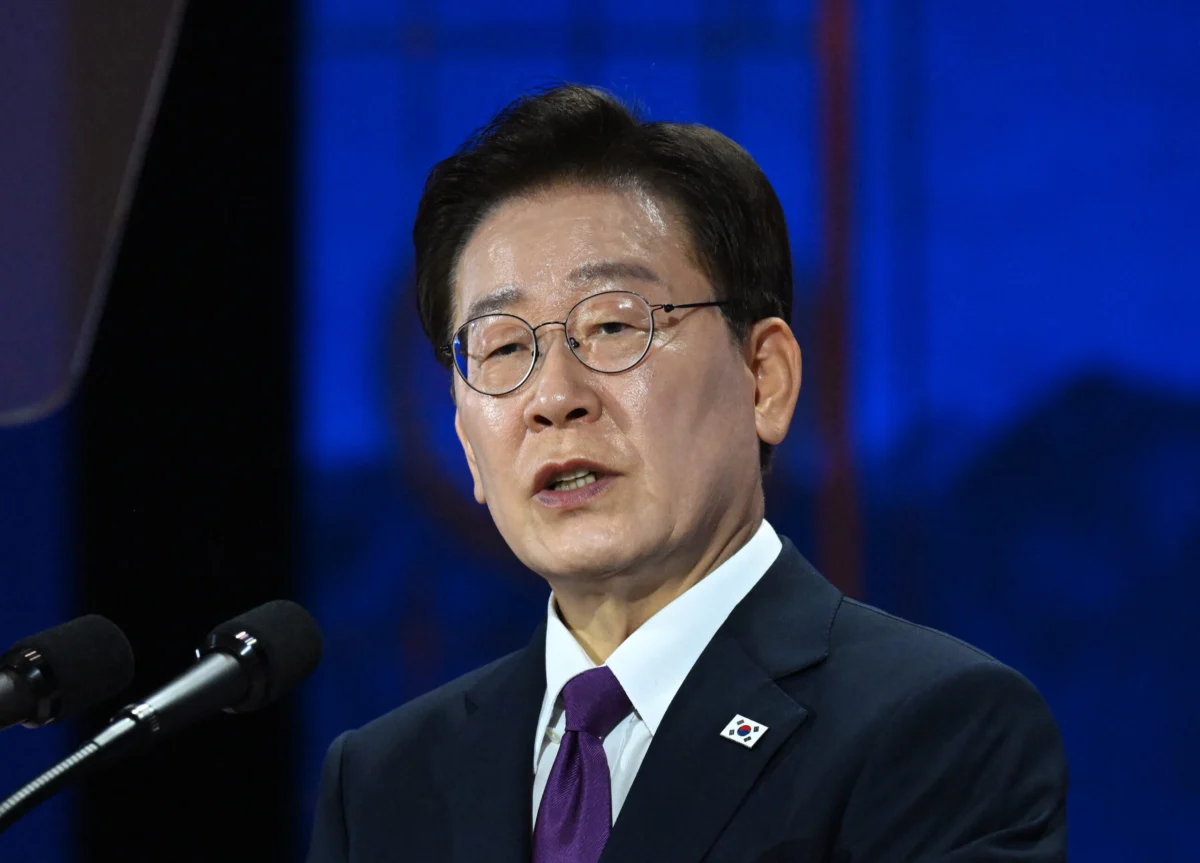
Busan, South Korea – South Korean President Lee Jae Myung delivered a stark warning on July 19, 2026, invoking the specter of Japan’s debilitating property crash of the early 1990s as he addressed the 48th session of the UNESCO World Heritage Committee at the BEXCO convention and exhibition center. His remarks, made amidst preparations to revise taxes aimed at stabilizing the nation’s housing sector, have ignited a critical debate about the health and future trajectory of South Korea’s real estate market. The President’s cautionary tone underscored deep-seated concerns within his administration regarding the excessive concentration of household wealth in real assets, a situation he believes bears unsettling resemblances to the economic conditions that preceded Japan’s prolonged period of stagnation, famously dubbed its "lost decades."
During a public discussion on real estate policy held on Thursday, President Lee stated that "quite a few people" harbored fears that South Korea could face a similar fate to Japan’s "lost" 20 or 30 years. He specifically highlighted how Tokyo’s housing market "burst like a balloon" in the early 1990s, an event that heralded a significant slowdown in growth following a dramatic collapse in both real asset and stock markets. This historical parallel served as a potent illustration of the potential risks facing South Korea’s currently overheated property market.
The Bedrock of Korean Household Wealth: Real Estate Dominance
The President’s concerns are rooted in undeniable statistical realities. Real estate accounts for the overwhelming majority of South Korean household wealth, a characteristic that sets the nation apart globally. As of the end of March 2025, real assets constituted a staggering 75.8% of Korean household assets, dwarfing financial assets which made up only 24.2%. This heavy skew towards property ownership reflects deeply ingrained cultural preferences, a historical belief in real estate as a reliable store of value, and often, a primary pathway to wealth accumulation.
This concentration, however, presents a significant vulnerability. A substantial downturn in property values could have widespread ramifications, eroding household balance sheets, stifling consumption, and potentially destabilizing the financial system. The government’s proposed tax revisions are therefore seen as a strategic move to temper speculative demand, promote more equitable distribution of wealth, and gradually reorient investment flows towards more productive sectors of the economy, including financial markets.
A Look Back: South Korea’s Property Market Journey
South Korea’s real estate market has experienced several boom-and-bust cycles throughout its modern history. Following rapid industrialization, property ownership became a powerful symbol of economic progress and stability. Periods of robust economic growth often fueled intense demand, particularly in major metropolitan areas like Seoul, leading to sharp price increases. Successive governments have grappled with the challenge of housing affordability, employing a mix of supply-side measures (increasing housing stock) and demand-side controls (taxes, lending restrictions).
In recent decades, particularly following the global financial crisis of 2008 and through the subsequent era of low interest rates, property prices in many parts of South Korea, especially in the capital region, surged dramatically. This surge was driven by a confluence of factors: urbanization, limited developable land in densely populated areas, a preference for apartments, and speculative investment. The rising prices have created significant social divisions, making homeownership increasingly out of reach for younger generations and exacerbating wealth inequality. This social tension adds another layer of urgency to President Lee’s reform agenda.
Echoes of Japan’s Bubble Economy: A Deeper Dive
The comparison to Japan’s "lost decades" is a particularly potent and unsettling one for many South Koreans, given the historical and economic ties between the two nations. Japan’s economic bubble of the late 1980s was characterized by exorbitant asset prices, fueled by easy money policies and an optimistic outlook. Land and stock prices soared to unprecedented levels, detaching from underlying economic fundamentals. When the Bank of Japan began raising interest rates in December 1989 to curb inflation and speculation, the bubble burst dramatically. The ensuing asset price deflation triggered a banking crisis, widespread corporate bankruptcies, and a prolonged period of economic stagnation, deflation, and low growth that lasted for decades.
President Lee’s invocation of this history serves as a stark warning against complacency. While the contexts are not identical, several parallels can be drawn. Both countries have experienced periods of rapid economic growth, leading to significant wealth accumulation. Both share demographic challenges, including an aging population and declining birth rates, which can impact long-term demand and economic dynamism. Furthermore, both have seen high levels of household debt and a significant concentration of wealth in real assets.
Economists Offer Nuanced Reassurance: Concerns "Overblown"?

Despite President Lee’s cautionary stance, several prominent economists have suggested that while vigilance is warranted, the immediate danger of a full-blown asset bubble burst akin to Japan’s 1990s crisis might be overstated.
Kang Min Joo, Senior Economist for South Korea and Japan at ING, told CNBC that "the probability of a real asset bubble burst in Korea is limited." Her assessment hinges on the relatively tight mortgage lending conditions that have been in place for several years. South Korean authorities have maintained strict controls on loan-to-valuation (LTV) and debt-to-income (DTI) ratios. Historically, the LTV ratio, which dictates the maximum percentage of a property’s value that can be borrowed, was as high as 80%. However, it has since been significantly reduced, falling to below 40% and even lower in the highly sensitive Seoul metropolitan area. These stringent measures act as a crucial buffer, preventing excessive leverage and mitigating the risk of widespread defaults should property values decline.
While acknowledging the country’s high household debt-to-GDP ratio, which stood at 90.14% in 2024 (down from a record high of 98.67% in 2021, but still the second highest in Asia behind Australia), Kang suggested that President Lee’s comments primarily reflect concerns about the recent rise in housing prices rather than an imminent market collapse. The sustained efforts by regulators to manage debt levels, even if the overall ratio remains elevated, provide a degree of stability not present in Japan’s pre-crash environment.
Gareth Leather, Senior Economist for Asia at Capital Economics, echoed this sentiment, stating that "fears of a bubble appear exaggerated." Leather pointed out the localized nature of price increases, noting that only property prices in Seoul are currently rising rapidly. Even within the capital, prices are merely 10% above their level in January 2022. In contrast, cities like Busan have seen prices fall to almost 80% of their January 2022 levels, indicating a more diversified and less uniformly overheated national market. Furthermore, Leather highlighted that the requirement for home buyers to put down a substantial down payment significantly limits risks to financial stability. This practice reduces the likelihood of homeowners falling into negative equity and, consequently, minimizes the potential for banks to face severe difficulties from loan defaults.
Ma Tieying, Senior Economist at DBS Group Research, offered a more nuanced comparison, acknowledging both similarities and crucial differences between South Korea and pre-crash Japan. She noted that South Korea shares characteristics such as a high credit-to-GDP ratio and a substantial stock market capitalization, which, like Japan before its crash, leave it exposed to the impacts of higher interest rates, tighter credit conditions, and global economic shocks. However, Ma emphasized key distinctions: South Korea is not currently experiencing the large capital inflows or persistent currency appreciation that characterized Japan in the years leading up to its bubble burst. This difference provides the Bank of Korea with greater flexibility to calibrate its monetary policy responses without being unduly constrained by external pressures. Moreover, Ma argued that the central bank has responded more pre-emptively to inflation and financial imbalances than Japan did prior to its bubble’s implosion, demonstrating a more proactive and cautious approach to economic management.
President Lee’s Bold Economic Vision and Track Record
President Lee Jae Myung is known for his decisive approach and ambitious economic targets. Ahead of the 2025 presidential election, when the benchmark Kospi index hovered near 2,500 points, Lee, then a candidate, reportedly set an audacious target of 5,000 for the Kospi during his term. His pledge was to resolve the so-called "Korea discount," a phenomenon where South Korean stocks are often undervalued compared to their global peers due to factors like corporate governance issues, geopolitical risks, and complex ownership structures.
Remarkably, the Kospi briefly crossed the 5,000-point threshold in January 2026, just over six months after he took office. This rapid ascent was largely fueled by the global AI-powered chip boom, which significantly boosted the fortunes of South Korean tech giants like Samsung Electronics and SK Hynix, heavyweights in the Kospi index. This success, however, also highlights a key aspect of Lee’s government’s broader economic strategy: to steer household wealth away from the overheated housing sector and towards financial markets. This strategy, while partially successful in boosting the stock market, has led to increased volatility, as the South Korean benchmark now hovers around 6,700, heavily dependent on the performance of its dominant chip manufacturers.
Policy Implications and Future Challenges
The President’s current focus on revising taxes to stabilize the housing sector signals a multi-faceted approach. These revisions could encompass various forms of property taxation, including acquisition taxes, holding taxes (like property taxes and comprehensive real estate taxes), and capital gains taxes. The aim is to make speculative property investment less attractive, encourage the sale of properties held for purely speculative purposes, and potentially increase the supply of housing in the market by disincentivizing vacant properties. Such measures are designed not just to cool the market but also to address issues of fairness and wealth redistribution.
However, implementing such reforms is a delicate balancing act. Overly aggressive measures could risk triggering the very market downturn the government seeks to avoid, leading to unintended consequences for property owners and the broader economy. Policymakers must navigate the complexities of stimulating economic growth while simultaneously reining in asset bubbles, managing household debt, and addressing demographic shifts. The aging population and declining birth rates pose long-term challenges to economic vitality and housing demand, adding another layer of complexity to future planning.
The current economic landscape is also shaped by global factors, including persistent inflationary pressures, the trajectory of international interest rates, and geopolitical tensions that can impact supply chains and investor confidence. South Korea, as an export-driven economy heavily reliant on global trade, is particularly susceptible to these external forces.
In conclusion, President Lee Jae Myung’s stark warning serves as a potent reminder of the inherent risks in a heavily property-dependent economy. While economists offer reassuring perspectives, emphasizing the robust regulatory frameworks and the nuanced nature of the current market, the government’s proactive stance on tax reforms underscores a genuine commitment to addressing potential vulnerabilities. The path ahead involves a careful calibration of monetary and fiscal policies, aiming to foster sustainable growth, enhance financial stability, and ensure a more equitable distribution of wealth, thereby avoiding the prolonged economic shadows that Japan once faced.
