

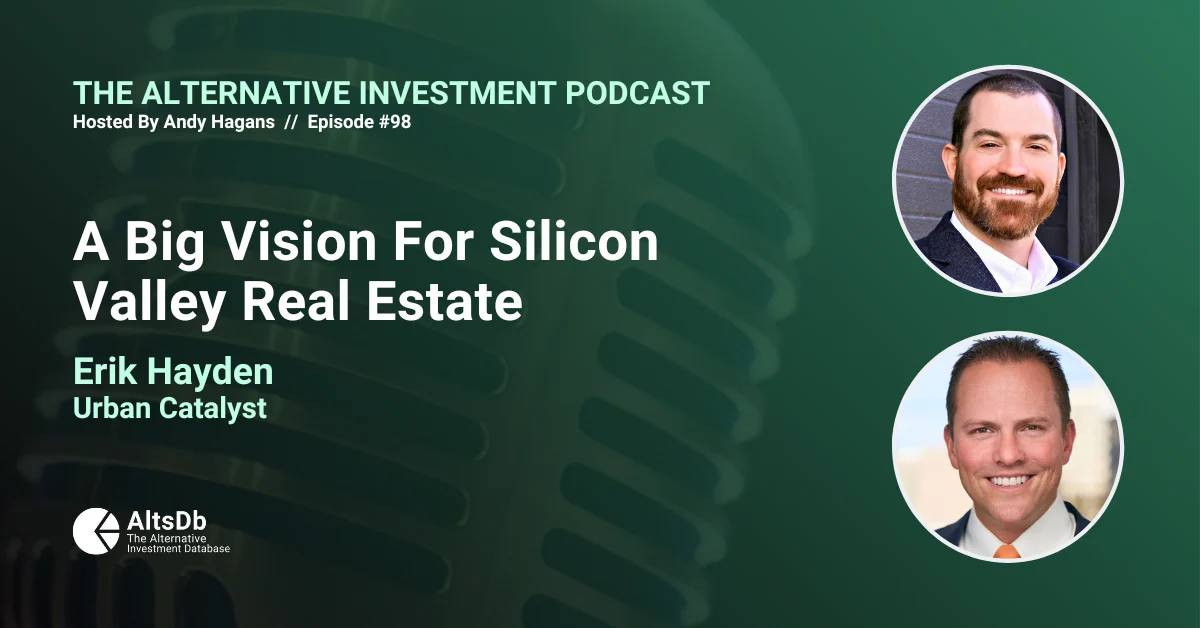
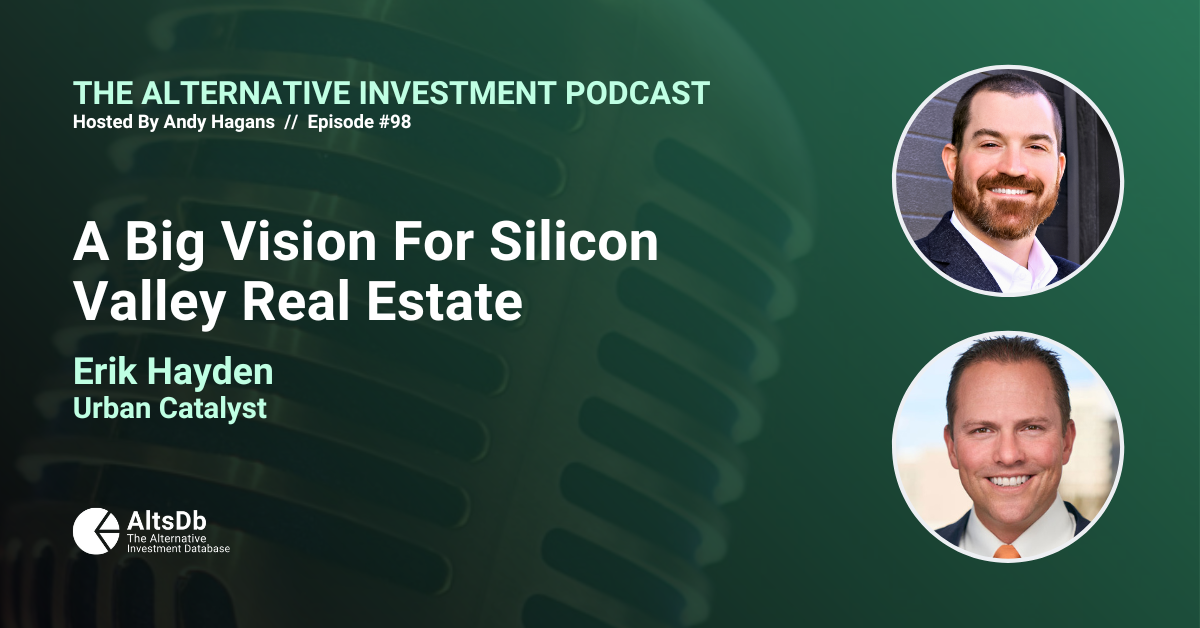
Erik Hayden, founder of Urban Catalyst and recognized as one of Silicon Valley’s 100 most powerful individuals, is challenging the prevailing "doom and gloom" narrative surrounding California real estate. He asserts that Silicon Valley is strategically positioned for sustained growth for decades to come, offering significant opportunities for long-term real estate investors. Hayden’s insights were shared on "The Alternative Investment Podcast," where he detailed how the region’s unique economic drivers and development strategies can foster generational wealth.
The Shifting Landscape of Silicon Valley Development
Hayden, a seasoned developer with extensive experience in ground-up construction across the San Francisco Bay Area, founded Urban Catalyst in 2018. He identified a pivotal shift occurring in downtown San Jose, a city he views as the next logical expansion point for the tech industry’s migration southward from its traditional hubs in Palo Alto, Menlo Park, and Mountain View. These established tech centers, while densely packed with innovation, have limited physical capacity for further large-scale expansion.
"If Palo Alto, Menlo Park, and Mountain View are kind of the center of the tech universe, they’re not really very big cities," Hayden explained. "So we’ve seen a lot of expansion. Of course, these companies, Google, Apple, Meta, they’re expanding all over the country, all over the world, but in the Valley, we’ve seen the slow migration southward from that center of Silicon Valley, towards San Jose."
This migration trend was further amplified by the saturation of development opportunities in cities like Sunnyvale. As Sunnyvale approached build-out, the focus naturally shifted to San Jose. This foresight proved prescient, as many major tech firms have since acquired land, established offices, or announced significant expansion plans in San Jose.
Strategic Positioning and the Opportunity Zone Advantage
Urban Catalyst’s success, according to Hayden, stems from its proactive approach to building relationships with property owners and acquiring prime locations before the surge of development materialized. While other developers also recognized San Jose’s potential, Urban Catalyst’s early entry and strategic land acquisition allowed them to secure a foundational position.
"We did achieve what we were trying to do, and that is we build relationships with property owners. A lot of them we already had. We were able to acquire properties and really get in on the ground floor before this wave of development hit," Hayden stated.
A significant element of Urban Catalyst’s strategy involves leveraging the Opportunity Zone program. However, Hayden emphasized that the program was a beneficial tool rather than the primary driver of their investment thesis. The decision to focus on San Jose was rooted in its fundamental real estate potential and its capacity for growth, which coincidentally aligned with the designated Opportunity Zones.
"We wanted to be in San Jose, and San Jose was also an Opportunity Zone, and we became an Opportunity Zone fund, and it’s been working out pretty great for us," he said. This approach underscores a commitment to sound real estate fundamentals augmented by tax advantages.
Navigating the Startup Phase: Vision and Capital
Founding a company, particularly in a high-cost market like Silicon Valley, involves significant risk. Hayden acknowledged the substantial capital required for initial operations, revealing that Urban Catalyst raised approximately $4.5 million in sponsor-level capital from friends and family to cover startup costs, including legal fees for private placement memorandums, office leases, and operational expenses.
"When we first started Urban Catalyst at our sponsor level, we raised around $4.5 million dollars. That was just to start us up, get the lights on and get everything going," Hayden recalled. He noted that this initial capital has since been repaid to investors with profits.
Hayden also addressed the entrepreneurial mindset, challenging the notion that entrepreneurship is inherently riskier than employment. He argued that while business failure is a possibility, being at the helm of one’s own venture provides control and the ability to navigate challenges. "As long as you start your own business, at least you get to make the choices. At least you’re the one that gets to steer the ship," he asserted.
A defining characteristic of Urban Catalyst’s genesis is its ambitious vision from the outset. Unlike serial entrepreneurs who may build incrementally, Hayden aimed for significant impact from day one, drawing parallels to the large-scale beginnings of firms like Blackstone, whose first fund was $800 million.
"Throughout my career, I’ve built these really big buildings, you know. Maybe my average building size has been about $100 million," Hayden said, comparing the effort of building a large-scale project to flipping a house, with the primary difference being the scale of capital and returns. He believes that raising a $200 million fund requires the same fundamental effort as raising a $20 million fund, with "just more zeros attached to it."
Innovative Fundraising and Brand Building
Urban Catalyst distinguished itself in the fundraising landscape by eschewing traditional broker-dealer channels, which can be restrictive for marketing. Instead, they embraced digital marketing strategies, utilizing platforms like Google, LinkedIn, and Facebook to drive potential investors to their website. This direct-to-investor approach, facilitated by new SEC regulations (506(c)), proved remarkably successful, with the company raising $50 million in its first year.
"We raised money directly from investors. And raising money directly from investors, in our first year, we raised $50 million, and we did it through a way that a lot of folks had never tried, which, of course, is digital marketing," Hayden explained.
This strategy not only generated capital but also fostered significant brand equity. The consistent storytelling and marketing efforts built a brand that transcends individual fund offerings. This "earned media," as it’s known in public relations, through over 250 media mentions in five years, has been invaluable.
"That type of branding is something you can’t buy," Hayden emphasized, highlighting how legitimate news articles about project progress resonate more effectively with potential investors than traditional advertising.
Challenging Perceptions of California Real Estate
Despite negative headlines and political narratives, Hayden painted a compelling picture of California’s economic prowess, particularly Silicon Valley. He noted that in 2021, California’s economy, if it were a sovereign nation, would rank as the fourth-largest in the world, surpassing Germany. Silicon Valley experienced a historic year in 2021, with a surge in IPOs and venture capital funding that outpaced global benchmarks.
"The city of Menlo Park, which has 45,000 people, had more venture capital funding than the entire state of Texas," Hayden pointed out, underscoring the region’s concentrated economic power.
He also addressed the misconception of widespread population exodus. While acknowledging that some residents have relocated, he highlighted that California’s population has historically grown, with a slight dip in 2020-2021 being a minor anomaly. This growth is significantly bolstered by international immigration, with individuals worldwide seeking opportunities in California due to its climate, economy, and lifestyle.
"People don’t take into account the amount of people from other countries that move to California, and that’s kind of the… You see all the people that live in California moving out because they can’t afford to live here, and you see the people from other countries that want to live in the United States, they want to live in California because it’s an amazing place, from the weather all the way to the economy," Hayden stated.
San Jose: A Development Hotspot with Unique Challenges
San Jose, the focal point of Urban Catalyst’s development efforts, has been recognized as the most expensive big city to live in the United States, with median home prices soaring between $1.6 and $1.7 million. This housing crisis, stemming from a severe mismatch between job creation and housing supply—six jobs created for every housing unit built over three decades—presents unique challenges for development.
"Our population grows exactly as fast as we build new housing, and we don’t build new housing fast, because of the regulatory environment here in California," Hayden explained. The high cost of labor, driven by the scarcity of affordable housing for construction workers, further inflates development costs.
Despite these state-level regulatory hurdles, Hayden praised the City of San Jose’s planning and economic development department for its forward-thinking approach to urban development, particularly in the downtown core. This local support has been instrumental in Urban Catalyst’s success in securing approvals for its ambitious projects.
"That is correct. Well, at least in downtown San Jose. In downtown San Jose, it’s where all the infrastructure is, it’s where all the transit is. It’s, if you’re going to do high-density development, where are you gonna do it? Here is the place for them. And they know that. And they’re good at it," Hayden commented.
Urban Catalyst’s Opportunity Zone Fund II Projects
Urban Catalyst’s Opportunity Zone Fund II encompasses four distinct projects in downtown San Jose:
- Echo: A high-rise development featuring approximately 400 multi-family units.
- Icon: A substantial 500,000 square foot office building.
- Keystone Hotel: A 172-key Marriott Townplace Suites, which is already under construction.
- Gifford Place: A senior living facility offering assisted living and memory care services.
This diversified portfolio aims to mitigate risk by spreading investments across different asset classes and market demands. The inclusion of an office building, despite current market sentiment, is strategically positioned near Google’s expansive "Downtown West" campus, a $19 billion, 10-year development project slated to become Google’s largest global campus. This proximity is expected to create significant positive synergy.
The Future of Office Space and Tech Layoffs
Hayden addressed the prevailing skepticism surrounding office real estate. He acknowledged that while the market has shifted, Silicon Valley’s office sector has historically remained resilient, even during the pandemic, experiencing robust transaction volumes and record prices. While rents have seen minor adjustments and vacancy rates have increased slightly, large tech companies continue to sign significant leases.
He also offered a nuanced perspective on recent tech layoffs. Contrary to sensationalized headlines, Hayden indicated that these layoffs represent a small fraction of the massive hiring surge during the pandemic. Furthermore, many of these workforce reductions are not concentrated in Silicon Valley, with major tech companies consolidating operations and talent within the region.
"The big companies that announced layoffs, they’re not laying off a whole lot of people here. It seems that they’re consolidating here into Silicon Valley," Hayden observed. He pointed to data showing that despite headlines, the unemployment rate in Silicon Valley remains remarkably low, even decreasing.
Expanding the Investment Horizon with Delaware Statutory Trusts
Urban Catalyst is further broadening its investment platform with the introduction of its Delaware Statutory Trust (DST) product. This new offering features an industrial property in Dallas, Texas, representing a strategic expansion beyond its core focus on ground-up development in San Jose.
"Delaware Statutory Trust, I mean, it fits right in our wheelhouse. Tax-advantaged real estate. That is what we do here at Urban Catalyst," Hayden stated. The DST is designed as an income-producing, stabilized asset with a lower risk profile compared to ground-up development. The selected industrial property in Dallas boasts a 10-year lease with 3% annual rent increases, providing built-in rent growth and a clear exit strategy for investors.
The choice of Dallas-Fort Worth as a market was driven by its robust population growth and its position as the second-largest industrial market in the country. The specific property’s location between Dallas and Fort Worth, near a major freight cargo airport, and within a submarket experiencing 14% year-over-year industrial rent growth, aligns with Urban Catalyst’s strategy of investing in markets with strong underlying fundamentals and rent growth potential.
Hayden concluded by reinforcing Urban Catalyst’s commitment to its vision: "We wanna do what’s right for here in San Jose and what’s right for our investors. And a big, bold vision was the plan, and we’re just in the process of executing it and making a lot of forward progress in doing so."
Investors seeking more information about Urban Catalyst can visit their website at urbancatalyst.com.
