

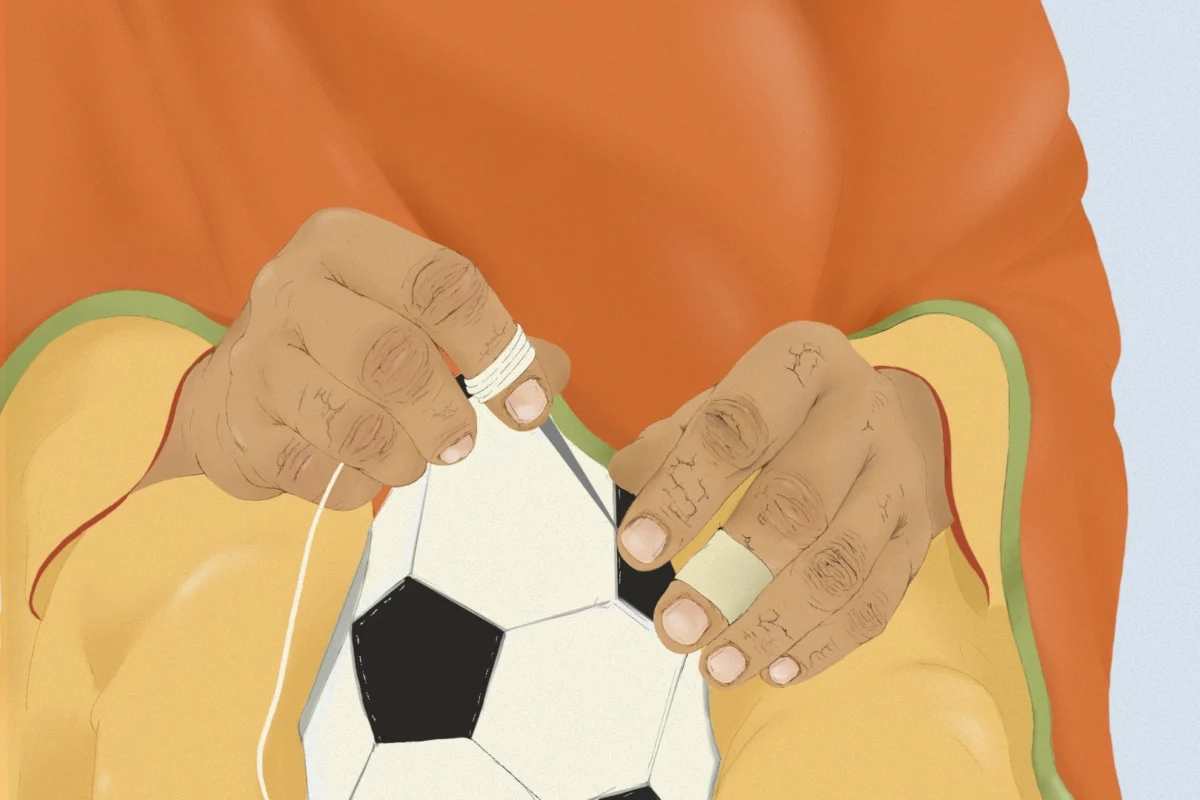
The bustling industrial city of Sialkot, nestled in Pakistan’s Punjab province, stands as a testament to both the globalized economy and the profound impact of collective action. Renowned as the world’s leading producer of hand-stitched footballs, supplying a significant portion of the international market, Sialkot’s journey to this pinnacle has been marked by a dramatic transformation. Once shadowed by allegations of child labor, the industry has meticulously restructured its operations, evolving into a model of ethical manufacturing sustained by robust monitoring systems and community empowerment. This evolution is not merely an economic narrative but a human one, etched in the lives of thousands of skilled artisans like Ansar Majeed, whose dedication has built both global brands and personal futures.
The Architecture of Football Production: Sialkot’s Operational Model
At the heart of Sialkot’s football industry lies a sophisticated and decentralized production model. Major football manufacturing factories serve as central hubs, responsible for the initial stages of production: cutting the synthetic leather panels, assembling the pre-stitched kits, and ultimately collecting the finished balls for quality control, packaging, and export. However, the intricate, labor-intensive process of hand stitching, which gives Sialkot footballs their distinct quality and feel, is predominantly outsourced. This critical phase is performed across a vast network of over 1,400 registered stitching centers dispersed throughout the Sialkot district.
These centers are the lifeblood of the industry, meticulously monitored by the Independent Monitoring Association for Child Labor (IMAC). Established in the wake of the late 1990s child labor crisis, IMAC’s system ensures that each registered center, defined as any workplace employing at least five stitchers, undergoes rigorous inspection every four to eight weeks. This continuous oversight is fundamental to maintaining the integrity of the supply chain, ensuring that the industry remains free from the scourge of child labor that once plagued its reputation. Many of these centers are significant operations, often featuring segregated sections to accommodate both male and female stitchers, reflecting cultural norms while providing equitable employment opportunities.
A Personal Odyssey: Ansar Majeed’s Journey Through the Stitches
Within one of the largest of these stitching centers, Ansar Majeed moves with practiced ease among the women, her eyes keen, her hands ready to guide. She meticulously checks their progress, offering gentle corrections to prevent mistakes from becoming ingrained habits. Ansar’s own story is deeply interwoven with the fabric of Sialkot’s football industry, a personal narrative that mirrors the broader trajectory of the region.
She vividly recalls the stark contrasts of her early years in the profession. "There used to be very frequent loadshedding (power outages), but we needed to stitch more to fulfil the orders, and also so we could earn more and pay off our debts," she recounts, her voice tinged with the memory of past struggles. In those challenging times, the dim, flickering light of an oil lantern was her sole companion as she painstakingly searched for the tiny perforations in each panel, working late into the night long after her household had fallen silent. The work was arduous, demanding immense concentration and resilience, yet the accumulated wages represented a tangible pathway to a better life.
Those hard-earned wages, supplemented by a crucial loan from the Dutch company that now employs her center for stitching footballs, empowered Ansar and her husband to construct their cherished three-room home 12 years ago. Their marital journey had begun humbly, in a room adjacent to the neighborhood mosque where her husband served as an imam. Before establishing their current residence, they even hosted the stitching center itself from a room built above their modest initial accommodation, a testament to their dedication and entrepreneurial spirit.
Ansar’s face bears the indelible marks of those challenging years – deep lines creasing the corners of her eyes and forehead, etched by decades of intense focus. Yet, these lines quickly soften into a warm smile, revealing a spirit of enduring optimism and gratitude for the progress achieved. She remembers a very different Sambrial, her hometown, where many families, including her own, resided in precarious mud houses, perpetually vulnerable to the devastating impact of floods and heavy rains. Slowly, painstakingly, brick by brick, families like Ansar’s worked to elevate their circumstances, constructing homes that offered not just shelter but also a newfound sense of safety and stability. The memory of profound uncertainty, of not knowing "where the next meal would come from," is a stark reminder of the desperate conditions that once prevailed.
Overcoming Stigma: The Social Cost of Survival
For countless families in Sialkot, football stitching emerged as a lifeline, a crucial means of escaping the clutches of abject poverty. Yet, this path to economic survival was not always paved with pride. Nasir Dogar, the chief executive of IMAC, sheds light on a lesser-known aspect of the industry’s history: the pervasive social stigma. "These communities, these people have had to face a lot of stigma. They were looked down on by their neighbours and others for being so poor that they had to stitch balls," Dogar explains. The economic necessity of stitching footballs, particularly in its earlier, less regulated days, often led to social ostracization. "Sometimes people would hide that this is how they were earning their living because it could hinder their children’s employment or even marital prospects," he adds, illustrating the profound societal pressures faced by these communities. This historical context of social disapproval underscores the multifaceted challenges that the industry and its workers had to overcome.
The Catalyst for Change: The 1996 Child Labor Scandal
The scrutiny and stigma intensified dramatically in 1996, triggered by a pivotal moment that sent shockwaves across the globe. A photograph published in a prominent magazine depicted a 12-year-old boy meticulously stitching a football destined for Nike, one of the world’s leading sports brands. This powerful image ignited international outrage, shining an undeniable spotlight on the deeply entrenched issue of child labor within Sialkot’s burgeoning football industry. The ensuing media frenzy and consumer boycotts threatened to cripple an industry vital to the livelihoods of hundreds of thousands in Pakistan. It was a crisis that demanded immediate and comprehensive action, transforming a regional problem into a global imperative.
The Atlanta Agreement: A Landmark Commitment to Ethical Production (Chronology)

The international outcry served as a powerful catalyst, propelling key stakeholders into action. In 1997, a landmark agreement was forged, known as the Atlanta Agreement, signifying an unprecedented collaborative commitment to eradicate child labor from football production. The signatories represented a formidable coalition of international organizations, governmental bodies, and local industry leaders: FIFA (the global governing body for football), the International Labour Organization (ILO), UNICEF, Save the Children, the Government of Pakistan, and crucially, the Sialkot Chamber of Commerce. This diverse alliance underscored the complexity of the issue and the necessity of a multi-pronged approach.
The agreement was not merely a declaration; it laid the groundwork for a systematic overhaul. Nasir Dogar and his dedicated team at IMAC have spent nearly three decades embedded within these communities, tirelessly working to remove children from the football manufacturing supply chain. "We spent hours understanding what was driving them to engage young children in stitching footballs. We knew we had to start with encouraging the community to contribute and participate in putting an end to child labour," Dogar elaborates. This insight into the root causes – primarily poverty and lack of access to education – shaped their strategy, focusing on community engagement rather than punitive measures alone.
Implementation and Transformation: The IMAC Model and Community Empowerment
The implementation of the Atlanta Agreement, spearheaded by organizations like IMAC, marked a period of profound transformation. The strategy was ingeniously designed around community participation and ownership. As villages across Sialkot embraced the program, local residents actively contributed to building the new, registered stitching centers. This was not a top-down imposition but a grassroots movement: a member of a village committee generously donated bricks at half price, while others financed essential fixtures and fittings. Crucially, residents themselves supplied the labor, investing their physical effort into creating spaces that would house ethical production and provide safe working conditions.
One of the most innovative and inspiring aspects of the program was the "white flag" initiative. "When a village reached full school enrollment, a white flag was raised above it," Dogar proudly recounts. This simple yet powerful symbol served as a visible declaration of success and community triumph. To further solidify this achievement, recognition meetings were held, where small shields were awarded in acknowledgment of this significant milestone. This celebratory approach was systematically implemented across all 1,609 villages in the district, fostering a sense of collective achievement and reinforcing the value of education over child labor.
The effectiveness of these initiatives was not left to anecdotal evidence. A subsequent independent audit conducted by UNICEF provided compelling quantitative validation. The audit found that between 96% and 97% of children in the monitored areas were attending school, a staggering reversal from the pre-1996 era. This remarkable statistic stands as a testament to the success of the Atlanta Agreement and the tireless efforts of IMAC, the government, and the communities themselves in prioritizing education and ethical labor practices.
Supporting Data and Economic Impact: Sialkot’s Global Footprint
Sialkot’s transformation has solidified its position as an indispensable player in the global sports goods industry. Estimates suggest that the city is responsible for producing between 40% and 70% of the world’s hand-stitched footballs, a staggering figure that underscores its economic significance. The city’s industrial clusters, which also produce surgical instruments, leather goods, and martial arts equipment, contribute substantially to Pakistan’s export earnings. The sports goods sector alone accounts for hundreds of millions of dollars in annual exports, providing direct and indirect employment to hundreds of thousands of individuals.
The football industry specifically provides a stable income for over 60,000 to 70,000 stitchers, with many more benefiting from ancillary services. While precise historical wage data is complex to ascertain, the consistent demand for Sialkot’s footballs has allowed for gradual improvements in living standards and wages over time, moving from the precarious existence Ansar described to a more stable, though still challenging, livelihood. This economic stability, coupled with the ethical shift, has had a profound ripple effect, stimulating local businesses, improving infrastructure, and fostering greater social mobility. Sialkot’s unique status as an export-oriented city even led to the construction of Pakistan’s first privately funded international airport, a testament to the dynamism and self-reliance of its business community.
Broader Implications and Modern Challenges
Sialkot’s journey offers crucial lessons in global supply chain management, corporate social responsibility, and sustainable development. The success of the Atlanta Agreement demonstrates that industry, government, and civil society can collaborate effectively to address complex social issues like child labor. However, sustaining these ethical practices requires constant vigilance. International brands continue to play a critical role through their procurement policies, auditing processes, and commitment to fair labor standards. Consumer awareness also remains vital in demanding ethically produced goods.
The industry also faces evolving challenges. The rise of machine-stitched and thermally bonded footballs presents a technological shift that could impact the demand for traditional hand-stitched balls. While hand-stitched balls are often preferred for their durability and feel, Sialkot’s manufacturers must continuously innovate and adapt to remain competitive. This includes investing in skill development for artisans, exploring new materials, and potentially diversifying their product offerings while maintaining their core competency in quality hand craftsmanship.
Beyond the factories and stitching centers, the broader socio-economic development spurred by the football industry in Sialkot has been significant. Improved access to education, better healthcare facilities, and enhanced infrastructure are tangible benefits that extend beyond the immediate workforce, contributing to a higher quality of life for the entire region. Sialkot stands as a beacon, demonstrating that economic prosperity can, and must, go hand-in-hand with social justice and human dignity.
Conclusion
The story of Sialkot’s football industry is a powerful narrative of resilience, transformation, and enduring human spirit. From the shadows of child labor and social stigma, it has emerged as a global exemplar of ethical manufacturing. The meticulous monitoring systems, the unwavering commitment of organizations like IMAC, and the tireless efforts of countless individuals like Ansar Majeed have forged an industry where economic opportunity is built upon a foundation of dignity and respect. As the world continues to enjoy the beautiful game, the journey of each hand-stitched football from Sialkot carries with it a tale of profound change, symbolizing hope and the transformative power of collective action.
