

Neil McCarthy, Nicholas Sasso, and Emily Chapman, DragonGC, on Tuesday, September 1, 2026

This is our third annual report on voting results for 14a-8 shareholder proposals, covering the 2025-2026 season through June 30, 2026. Three key trends identified in prior seasons persisted through the latest voting cycle, while one significant reversal offers a complex picture of evolving shareholder sentiment. DragonGC’s analysis, based on a memorandum authored by McCarthy, Sasso, Chapman, and Jennifer Dorney, reveals a continued decline in proposal volume and an even lower approval rate, with Governance proposals being the sole category to experience any success.
An Expensive Soapbox? The Falling Volume and Approval of Shareholder Proposals
The 2025-2026 shareholder meeting season, spanning July 1, 2025, to June 30, 2026, saw a notable decrease in the number of 14a-8 proposals brought to a vote. A total of 334 proposals were voted on, marking a 14.6% drop from the 391 proposals considered in the 2024-2025 season. This continues a downward trend observed over the past two years, with the current season’s volume down a significant 46.7% from the 627 proposals that went to a vote in the 2023-2024 season. This sustained decline suggests a potential recalibration by both filers and companies regarding the efficacy and cost-effectiveness of the 14a-8 process.

Shareholders Approve Almost Nothing: A Narrow Path to Success
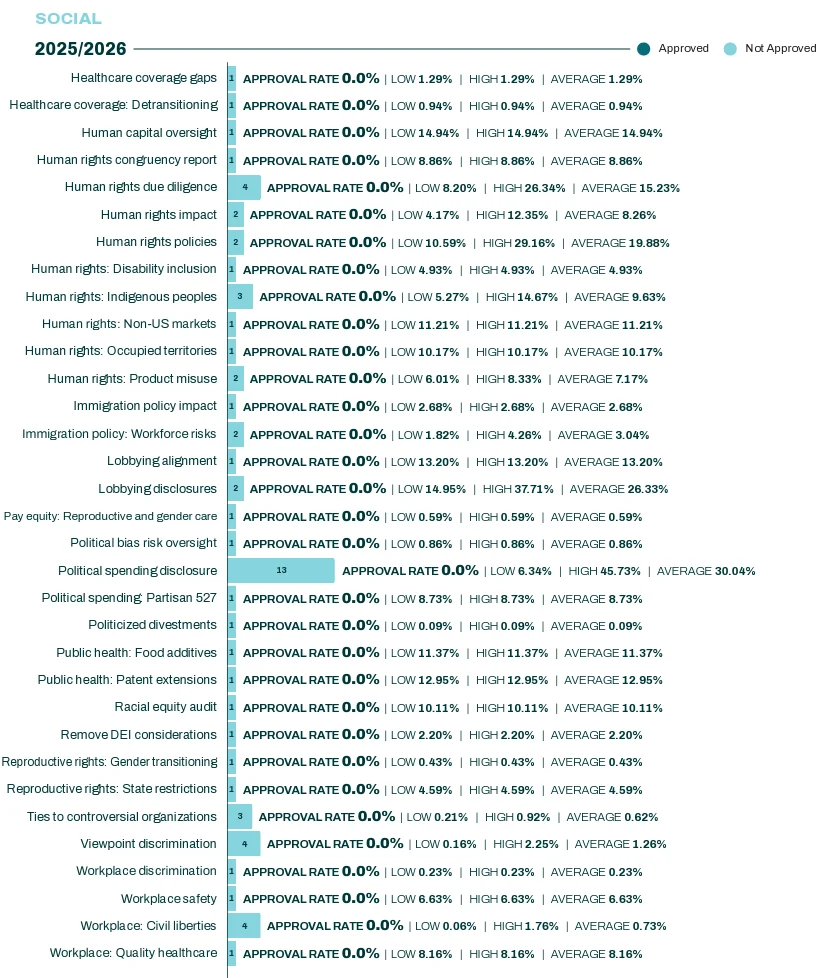
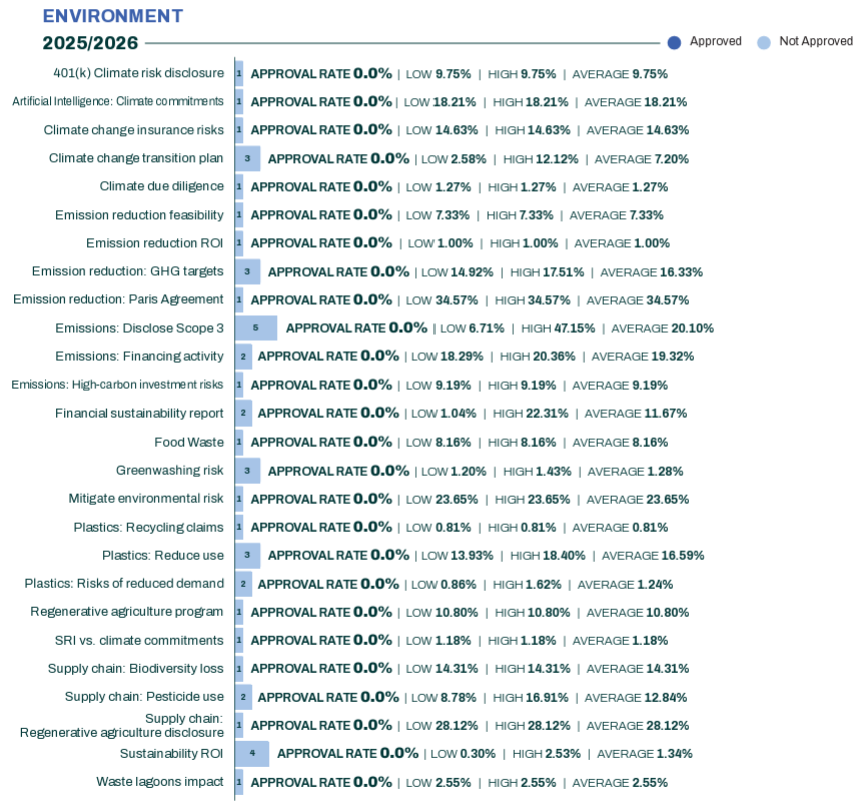
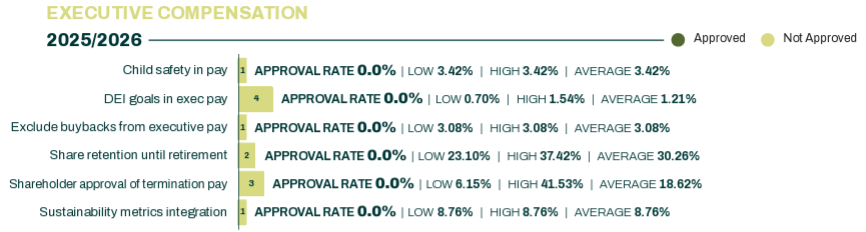
The most striking trend remains the exceptionally low approval rate for shareholder proposals. This season, only 13 out of 334 proposals received majority support, translating to a mere 3.9% approval rate. This figure represents a further decline from the 6.9% approval rate in the 2024-2025 season and the 8.3% in the 2023-2024 season. Alarmingly, all 13 approved proposals this year were within the Governance category. Social, Environmental, Executive Compensation, and Business Practices proposals, collectively, went a stark 0-for-170, indicating a near-complete lack of shareholder appetite for these issues when presented through the 14a-8 mechanism.
Social and Environmental Support Remains Stagnant
Shareholder support for proposals focused on social and environmental issues has remained remarkably consistent, hovering just below the 10% threshold. Social proposals averaged 9.6% support this season, a slight decrease from 10.8% in the previous season and 10.2% in the 2023-2024 cycle. Environmental proposals fared similarly, averaging 11.2% support, down from 11.7% and 13.4% in the preceding two seasons. Critically, neither category managed to secure a single approval in the 2025-2026 season. Last year, a handful of Social proposals related to political spending achieved passage, a success that was not replicated this season. This stagnation highlights the ongoing challenge for activists seeking to advance these critical ESG (Environmental, Social, and Governance) agendas through traditional shareholder votes.

The Governance Rebound: A Shift in Focus, Not Necessarily Sentiment
A notable reversal occurred in Governance proposals, which saw a significant rebound in volume. This category rose to 164 proposals from 118 in the prior season, a substantial 39.0% increase. Average shareholder support for Governance proposals also saw an uptick, climbing to 31.2% from 26.1% in 2024-2025. However, this increase in support masks a concerning trend in the approval rate. Governance proposals saw their approval rate plummet to 7.9% this season, a sharp contrast to the 18.6% approval rate last year and 28.0% in the 2023-2024 season.
This peculiar divergence—rising average support coupled with a falling approval rate—can be attributed to a shift in the proposal mix within the Governance category. Proposals advocating for an independent board chair saw a near tripling, from 21 to 56 proposals, now constituting over a third of all Governance proposals voted on. These proposals, while gaining traction in volume, consistently averaged around 25.9% support and failed to achieve a single approval. Similarly, proposals concerning the threshold for special shareholder meetings also saw increased activity, with 28 proposals averaging approximately 38% support, yet only one managed to pass.

This data suggests that while certain Governance topics are drawing respectable minority support, they are not translating into majority approvals. The rise in average support is not necessarily indicative of growing shareholder appetite for these specific governance reforms, but rather reflects the significant impact of high-volume Governance topics that reliably capture a substantial portion of the vote but fall short of a majority. This phenomenon effectively dilutes the potential success of other, perhaps more impactful, Governance resolutions.
Where Shareholders Still Say Yes: A Narrow Set of Structural Questions
The analysis clearly indicates that shareholder support, when it materializes, is concentrated on a limited and familiar set of structural issues related to corporate control mechanisms. All four proposals seeking board declassification were approved, signaling a clear shareholder preference for more responsive board structures. Likewise, both proposals related to blank-check preferred stock passed, underscoring investor unease with these financial instruments. Simple majority vote proposals also saw a reasonable success rate, with three out of eight proposals passing. Additionally, two proposals concerning written consent procedures and one proposal on director removal without cause also garnered sufficient support. Outside of this specific cluster of structural reforms, 14a-8 proposals appear to be largely ineffective, often referred to as "dead letters" by market observers.
It is also important to note the role of the "say-on-pay" vote. Shareholders can use this advisory vote to express dissatisfaction with executive compensation packages. DragonGC’s previous reports in 2024, 2025, and 2026 on responses to adverse say-on-pay votes indicated that companies receiving such negative feedback typically implemented robust engagement programs. The following season, nearly all of these companies saw their say-on-pay support levels rebound to above 80%, demonstrating a responsive corporate governance framework in this specific area.
What Comes Next: Regulatory Shifts and Shareholder Sentiment
The 2025-2026 season was marked by two significant procedural developments that could reshape the landscape of shareholder activism. Firstly, the Securities and Exchange Commission (SEC) ceased its practice of issuing no-action guidance regarding the inclusion of proposals in company proxy statements. This shift places greater onus on companies to make these determinations internally, potentially leading to more varied outcomes. Secondly, shareholder activists have resorted to litigation against companies that have excluded their proposals.
Looking ahead, the federal Unified Agenda indicates forthcoming changes to SEC rules. Based on public statements from SEC Chairman Atkins, these regulatory adjustments are anticipated to be substantial. Consequently, the voting numbers and trends observed in the upcoming 2026-2027 season may be influenced as much by regulatory rulemaking as by evolving shareholder sentiment. Companies and proposal filers alike will need to monitor these developments closely to navigate the future of shareholder engagement effectively.
