

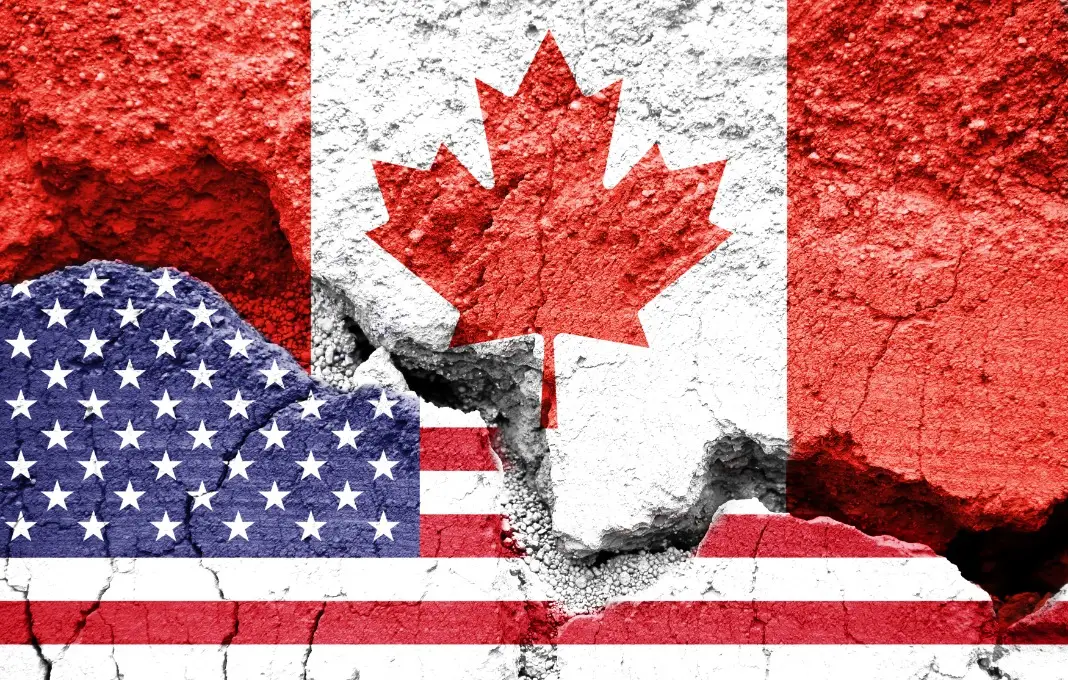
The recent implementation of 50% tariffs by the United States on a range of Canadian goods, effective August 22nd, has ignited significant discussion and concern across industries. While the immediate financial impact of these duties, affecting approximately $20 billion annually in Canadian exports, is substantial, their scope represents a relatively small fraction, around 5%, of the total goods Canada ships to its southern neighbor. The targeted products include a diverse array of items such as cement, furniture, plywood, textiles and apparel, seeds, refrigeration equipment, cosmetics, jewelry, sporting goods like hockey sticks and fishing rods, and swimming pools. However, the long-term implications and the potential for escalation present a more significant economic challenge.
The critical juncture arrives on September 8th, when Canada is slated to implement its retaliatory tariffs on approximately C$27.6 billion worth of American goods. This countermeasure, spearheaded by Prime Minister Mark Carney, is expected to target key sectors including steel, dairy, appliances, agricultural equipment, pulp and paper, and electronics. The specter of further escalation looms, with Washington reportedly threatening 50% tariffs on automobiles and automotive parts from Canada as early as January. This potential move could disproportionately impact integrated manufacturing operations, such as those of Ford Motor Company, which has extensive production facilities spanning Detroit and Windsor, Canada.
In this environment of escalating trade tensions and evolving policy, businesses are seeking clarity and strategic guidance. Adam Echter, a partner at Simon-Kucher, a global pricing and strategy consultancy, offers a critical perspective on how Chief Executive Officers and their teams can navigate this complex landscape and identify opportunities amidst the disruption. Echter emphasizes that the headline figures associated with tariffs often mask a more nuanced reality for many businesses.
Deconstructing the Tariff Impact: Identifying Winners and Losers
A fundamental step for any company grappling with these trade measures is to accurately assess its position within the evolving trade dynamic. Echter’s analysis suggests a common misconception: that all businesses are equally vulnerable. He posits that while large multinational corporations may bear the brunt of these tariffs, many mid-sized and regional American businesses could emerge as beneficiaries.
"You’ll find that a lot of people are not as exposed to this stuff as the headlines are going to read," Echter states. "They splash these big numbers on the headlines, but then they take all this stuff out. Exceptions, exceptions, exceptions, exceptions." This highlights the crucial need for detailed, company-specific analysis rather than relying on broad economic pronouncements.
The press, Echter observes, has often framed CEOs as uniformly victimized. However, his perspective reveals a more dynamic situation where "for every loser, there’s a winner." He elaborates, "And in a lot of these cases, there are mid-market U.S. winners. The losers are the big multinationals. But the small Texas-based manufacturer, the regional player in Michigan, those could be the winners."
Businesses are encouraged to conduct a thorough internal assessment to determine their exposure. This involves evaluating whether key competitors are facing significant disruption and analyzing the potential impact on larger players within their respective industries. For those identified as potential winners, the strategic imperative is clear: "go ahead and win."
Capitalizing on Advantage: Strategic Pricing in a Tariff-Driven Market
For companies poised to benefit from the imposition of tariffs, Echter advocates for a proactive and assertive pricing strategy. The intent behind these tariffs, he explains, is not merely revenue generation for the government but a deliberate mechanism to incentivize shifts in manufacturing operations. The goal is to encourage industries to relocate production, often referred to as "reshoring" or "nearshoring," to the imposing country. This transition, while time-consuming, presents a significant opportunity for domestic producers.
U.S. manufacturers operating within the affected product categories can anticipate an influx of inquiries from buyers who previously sourced goods from Canada. These buyers will be facing significantly higher costs for their usual Canadian suppliers, making domestic alternatives more attractive. "Recognize your position of power," Echter advises. "Be aware that they’re calling because they can’t get your products anywhere else. And the people on the phone are going to be very nice when they say, ‘I have so much volume. What a great deal for you. I need it for 75 cents.’ You need to be prepared to say, ‘Thank you. I have this widget and you need this widget. It’s $1.50.’"
This strategic approach requires a firm understanding of the value proposition and the ability to command higher prices when market conditions dictate. It’s a moment to leverage newfound market advantages, but with a degree of caution regarding the long-term sustainability of such conditions.
Navigating Volatility: Hedging Against Uncertainty
While the immediate opportunity for price increases is evident, Echter cautions against making irreversible commitments based on the current trade climate. The political landscape surrounding tariffs is inherently volatile, and their duration is uncertain. "Don’t go and get a bank loan and triple your capacity," he warns. "There’s a high likelihood that this will resolve itself within, call it six years, if you want to put a political cycle in it, but maybe six days, who knows?"
The recommended strategy involves maximizing current production capacity and increasing utilization. This approach allows businesses to capitalize on the immediate demand surge without incurring the risks associated with substantial, long-term capital investments. Once production facilities are operating at peak capacity, Echter suggests that raising prices becomes a logical and profitable step. "A highly utilized plant with high prices is going to be printing profit, and that’s okay."
However, it is crucial to acknowledge that these gains may be temporary. When the tariffs are eventually lifted, customers who switched to domestic suppliers will likely revert to the lowest-cost providers. "Procurement can be ruthless," Echter notes. "They do not care about your relationship and they will move it right back to the lowest cost provider. And if the Canadians were the lowest cost provider before the tariffs went up, they will likely be the lowest cost provider after they go down."
Therefore, any capital expenditure decisions made during this period should be rigorously evaluated against the projected lifespan of the tariffs. The return on investment (ROI) must be attainable before the trade barriers are removed.
The Surcharge Strategy: Maintaining Pricing Flexibility
In managing the financial impact of fluctuating tariffs, Echter recommends a pricing tactic that preserves flexibility: the use of surcharges. Instead of permanently altering list prices, which can lead to protracted negotiations and customer confusion, temporary cost increases should be managed through surcharges tied to specific cost drivers.
"If you’re trying to constantly update your list prices with all the different tariffs and changes that are happening and moving, it’s going to be incredibly difficult and confuse everybody," he explains. A surcharge that clearly delineates the tariff as the cost driver can be adjusted or removed as the trade policy evolves. This approach avoids the need to re-negotiate baseline prices with every customer once tariffs are rescinded, streamlining the process of returning to pre-tariff pricing structures.
Strategies for Affected Businesses: Mitigating Tariff Blows
For companies identified as "losers" in this trade scenario, Echter advises a pragmatic and strategic approach to minimize negative impacts. He suggests revisiting the "tariff playbook" developed during previous trade disputes, implying that many businesses may have already faced similar challenges and implemented contingency plans. "So you’re not starting from scratch, hopefully. Don’t forget that you already freaked out a year ago."
A survey conducted by AlixPartners in May 2025 revealed that a significant majority of U.S. CEOs (68%) had either raised prices or were considering doing so in response to trade tensions, while 67% reported that their vendors had increased prices. This suggests a precedent for price adjustments and the need to re-evaluate previously identified alternative suppliers.
The financial analysis of tariff impacts requires careful consideration of the specific product’s cost structure. If a tariffed component represents a minor portion of overall costs, absorbing the increase might be preferable to exceeding a price point that could deter buyers. However, if the tariffed item is a core input and constitutes a significant portion of the cost of goods sold, the situation becomes existential.
"You can no longer assume these little pass-through tariffs that you can get away with," Echter cautions. "You have to ask yourself, ‘If I have to take it on the chin and double my price, what does that do to my plant from a volume perspective? And then am I in business? Am I laying off people?’"
Many companies lack the models to accurately predict the impact of sudden, substantial cost increases, as such events are rare in natural market conditions. Building these models is crucial to determine the appropriate course of action: whether to survive, reformulate product offerings, or re-source critical components.
Beyond Tariffs: Addressing Systemic Economic Shifts
While the immediate focus is on the Canada-U.S. trade dispute, Echter emphasizes that businesses should not overlook the broader, more enduring economic trends. He points to the escalating national debt, persistent borrowing costs, and the prospect of higher, sustained inflation as fundamental factors shaping the global economy. These systemic issues, combined with tariff-induced price increases, signal a durable shift in market behavior.
"All executives are moving into a world of higher prices which should result in lower volumetric growth; but we’re transitioning from the 2010s where the world was hold price and grow volume," he explains. This marks a departure from a decade characterized by stable prices and expanding sales volumes, ushering in an era where higher costs are likely to constrain growth.
The automotive sector serves as a pertinent example of this shift. Industry-wide, car sales volumes have declined by approximately 1.5 million units in recent years, with little expectation of a full recovery. Consequently, manufacturers are increasingly discontinuing entry-level models and focusing on higher-end vehicles to cater to customers with a greater willingness to pay. This strategic pivot, while potentially profitable for individual companies, leaves a void at the lower end of the market, creating opportunities for new entrants.
The Imperative of Flexibility: Adapting to a Fragmented Market
Echter cites the example of Genesee Brewing in Rochester, New York, to illustrate the challenges of maintaining a business model optimized for scale in a fragmenting market. The brewery, once a dominant player, now finds itself "too big for the local market," producing a volume of a single product that is no longer in demand. This illustrates the predicament of having a large-scale operation designed for a mass-market product when consumer preferences are shifting towards more specialized, niche offerings.
The solution, Echter argues, lies not in responding to specific trade disputes but in cultivating organizational flexibility. The future demands a departure from the model of a single plant producing a single product. Instead, businesses must prepare for a new paradigm characterized by agility and adaptability. "Instead of having one plant making one product and selling a thousand units, you need to start preparing now for a new world of flexibility. You have to get that plant making 10 products at 10 different price points if you want to still sell a thousand, because everything is fragmenting."
This strategic imperative extends beyond short-term tariff responses. It involves developing a sustained capability to deconstruct product portfolios, continuously assess value creation, track shifting market dynamics, and dynamically adjust pricing strategies. Building this "muscle" of continuous value and pricing assessment is paramount for long-term success in an increasingly complex and fragmented global marketplace. The ability to adapt and innovate in pricing and product strategy will be the defining characteristic of resilient businesses in the years to come, transcending the immediate concerns of trade policy.
