

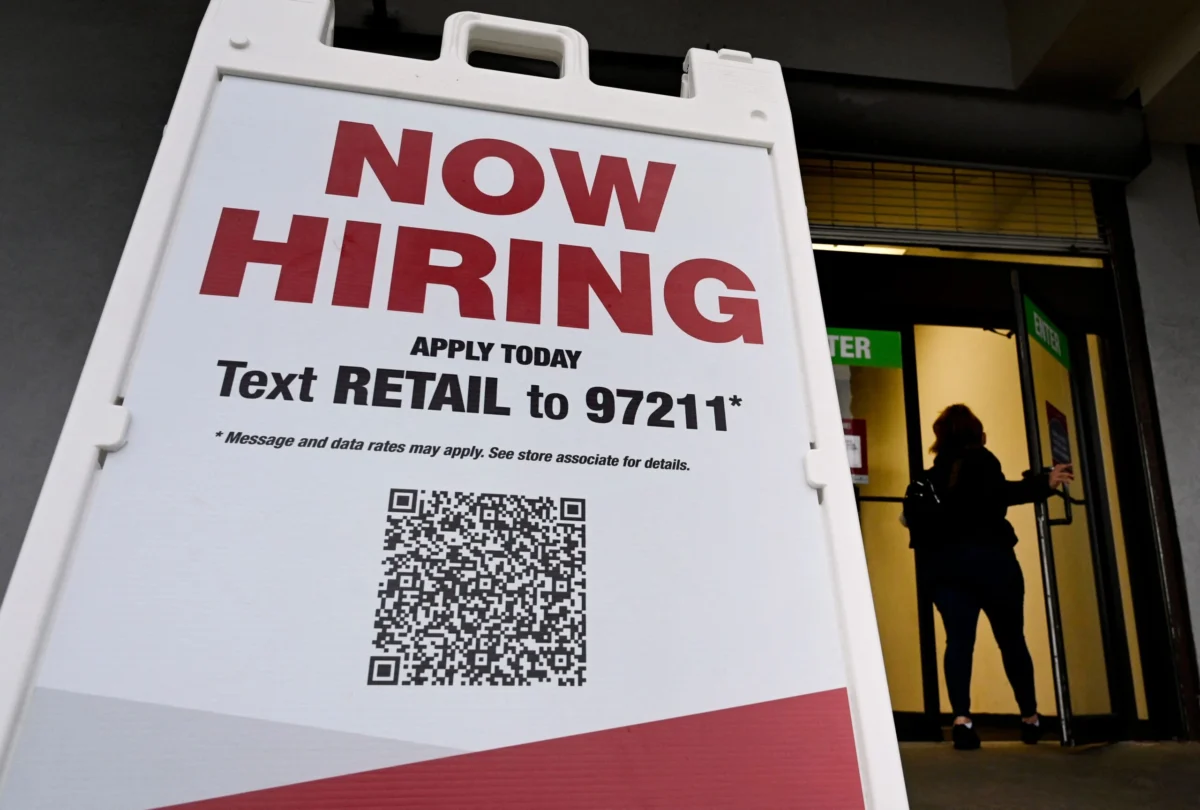
Retailers across the United States are demonstrating a robust and surprising surge in hiring this year, a trend that appears to defy prevailing economic headwinds and lingering concerns about inflation, global conflicts, and trade policies. This expansion in the retail sector’s workforce is not only contributing significantly to overall job growth but also signals a degree of confidence among businesses that consumers will continue to spend, despite a backdrop of persistent anxieties.
Preliminary federal data released on Friday revealed that the retail trades added nearly 22,000 jobs in April alone. This figure represents a substantial portion, almost one-fifth, of the total job growth recorded for the month. The cumulative effect of this hiring spree has pushed the total number of employees in the retail industry to approximately 15.5 million, marking the highest level since July of the preceding year. This sustained increase in employment within the sector suggests that, for now, consumers are maintaining their purchasing power and willingness to spend, even in the face of significant global and domestic challenges.
The resilience of consumer spending has been a key factor underpinning this retail hiring boom. Consumers have largely continued to open their wallets, demonstrating a commitment to shopping despite the ongoing war in Iran, which has contributed to elevated gasoline prices. Furthermore, persistent inflation, which erodes purchasing power, and the implications of the Trump administration’s tariff policies have not yet led to a significant contraction in consumer demand. This steadfastness in spending has instilled confidence in retailers, prompting them to expand their workforces to ensure adequate staffing for store operations, including stocking shelves and managing checkout lines.
Cory Stahle, senior economist at the job search platform Indeed, commented on this phenomenon, stating, "This still shows how resilient spending has been, even amid a lot of the uncertainty. It’s an encouraging sign for the industry and for the economy more broadly." His remarks highlight the unexpected strength of consumer behavior and its positive ripple effect on the retail employment landscape.
Rising Confidence and Sectoral Shifts
The Bureau of Labor Statistics (BLS) indicated that in April, warehouse clubs and supercenters were particularly instrumental in driving sector hiring. These large-format retailers, which often offer a wide array of goods at competitive prices, appear to be capitalizing on consumer demand. Conversely, traditional department stores and sellers of electronics and appliances experienced a contraction in their payrolls. This divergence suggests a shifting consumer preference, possibly favoring value-oriented or essential goods over discretionary or big-ticket items during times of economic uncertainty.
Beyond the retail sector, the broader labor market also saw significant gains in April. The transportation and logistics industry, crucial for delivering goods to consumers and businesses, added 38,000 courier and messenger jobs. This substantial increase accounted for roughly one-third of all positions added in the month. Eugenio Aleman, chief economist at Raymond James, attributed this surge partly to a rebound from job losses earlier in the year that were influenced by adverse weather conditions. The combined growth in retail and transportation played a pivotal role in pushing total job growth for April considerably beyond economists’ expectations.
The optimism within the retail sector is further evidenced by preliminary government data showing the highest volume of monthly job openings in March since 2023. The number of vacancies in retail surged by an impressive 48% compared to the same month a year prior. This stands in contrast to the broader economy, where the total number of job listings experienced a decline over the same period.
Stahle elaborated on the significance of this trend, explaining that retail’s hiring surge reflects a growing optimism that consumers will continue their spending patterns despite potential economic shocks. This outlook represents a notable reversal from the previous year, 2025, when businesses harbored concerns that the Trump administration’s tariffs would create cost pressures, potentially leading to a contraction in consumer demand. "There were a lot of employers holding their breath last year," Stahle recalled. "Now, these employers can feel maybe a little more confident as they step forward." This shift in sentiment suggests that businesses are reassessing their risk tolerance and responding to current market conditions with greater proactive investment in their workforce.
Undercurrents of Concern: Red Flags Emerge
Despite the seemingly robust hiring in the retail sector and the encouraging consumer spending data, warning signs are increasingly flashing across the broader economic landscape, casting a shadow of potential future challenges. The underlying fragility of consumer confidence is becoming more apparent, with several key indicators pointing towards a potential slowdown.
One notable indication came from Whirlpool Corporation, which on Wednesday cited a "recession-level industry decline" in the U.S. The appliance manufacturer attributed this downturn, in part, to the ongoing Iran War, which has demonstrably battered consumer confidence. This statement from a major durable goods manufacturer suggests that even essential household purchases may be impacted by escalating global tensions and their economic repercussions.
Adding to these concerns, McDonald’s CEO Chris Kempczinski informed analysts on Thursday that consumer spending "may be getting a little bit worse." This observation from the head of a global fast-food giant, a bellwether for consumer discretionary spending on everyday items, indicates a potential softening in the willingness or ability of individuals to spend, even on relatively affordable goods and services.
Further underscoring the growing apprehension, the University of Michigan released its latest consumer sentiment index on Friday, reporting another record low reading. According to survey director Joanne Hsu, the decline in sentiment was significantly influenced by the surging price of gasoline, a direct consequence of the war in Iran. The impact of higher fuel costs on household budgets is a critical factor, as it directly affects disposable income available for other purchases.
The sustained high prices of gasoline, which have reached multiyear highs, pose a significant threat to discretionary spending. Stahle cautioned that if drivers are forced to curtail their non-essential expenditures due to the cost of fuel, the retail sector could be compelled to reverse some of its recent labor force expansion. This would occur as businesses adjust to a potential decline in consumer demand. "We’re seeing some potential growth," Stahle acknowledged. "But the Iran War and a lot of these other things are looming. And that is something that very much could impact these industries in the months ahead."
Historical Context and Economic Influences
The current retail hiring surge can be viewed within a broader economic context that has been shaped by several significant events and policy decisions. The period following the initial economic shocks of the COVID-19 pandemic saw a strong rebound in consumer spending, fueled by government stimulus measures and a pent-up demand for goods and services. However, this recovery was accompanied by rising inflation, which began to erode purchasing power in 2021 and 2022.
The Trump administration’s imposition of tariffs on goods from various countries, starting in 2018, aimed to reshape trade relationships and protect domestic industries. While proponents argued that these tariffs would stimulate domestic manufacturing and job creation, critics contended they would increase costs for consumers and businesses, leading to reduced trade and economic inefficiency. The ongoing debate about the long-term economic impact of these policies continues, with businesses having to navigate the resulting price volatility and supply chain adjustments.
The war in Iran, which escalated significantly in late 2023 and continues to be a major geopolitical flashpoint, has had a profound impact on global energy markets. The resulting surge in oil prices directly translates to higher gasoline prices at the pump, a cost that disproportionately affects lower and middle-income households. This increased financial pressure can lead consumers to prioritize essential spending and reduce discretionary purchases, impacting sectors like apparel, electronics, and entertainment.
The timeline of these economic influences is crucial for understanding the current retail landscape. The strong consumer spending that characterized the post-pandemic recovery began to show signs of strain in late 2022 and early 2023 as inflation took hold. Businesses responded by becoming more cautious about hiring and investment. The subsequent period, particularly 2025, saw heightened concerns about the potential impact of tariffs and global instability on consumer demand.
However, the current data suggests a surprising resilience in consumer behavior. This resilience may be attributed to several factors. Firstly, the labor market has remained relatively strong, with low unemployment rates providing a buffer for household incomes. Secondly, some consumers may have built up savings during the pandemic, which they are now drawing upon to maintain their spending habits. Thirdly, retailers themselves have adapted by offering promotions, discounts, and a wider range of price points to cater to a diverse consumer base.
Broader Impact and Future Implications
The current surge in retail employment has significant implications for the broader U.S. economy. A robust retail sector not only provides jobs but also contributes to consumer confidence and overall economic activity. The continued willingness of consumers to spend fuels demand for a wide range of products, supporting manufacturing, transportation, and service industries.
However, the sustainability of this trend is a critical question. The conflicting signals from the labor market and consumer sentiment surveys suggest a delicate balance. While retailers are optimistic enough to expand their workforces, the underlying economic vulnerabilities, particularly the impact of high energy prices and persistent inflation, cannot be ignored.
The analysis of these implications involves considering various scenarios. If consumer spending remains robust, driven by continued wage growth and a stable job market, the retail sector’s expansion could continue, leading to further job creation and economic growth. This optimistic outlook would suggest that the current economic challenges are temporary headwinds rather than fundamental shifts.
Conversely, if consumer sentiment continues to decline, and rising costs force households to significantly cut back on discretionary spending, retailers may face declining sales and be forced to reassess their staffing levels. This could lead to a slowdown in hiring, potential layoffs, and a broader economic contraction. The dependence of the retail sector on consumer discretionary spending makes it particularly vulnerable to shifts in consumer confidence and purchasing power.
The interplay between geopolitical events, economic policies, and consumer behavior will be crucial in determining the future trajectory of the retail industry and the broader economy. The coming months will likely provide further clarity on whether the current hiring surge represents a sustainable trend or a temporary deviation from a more challenging economic reality. Businesses, policymakers, and consumers will be closely watching these developments to navigate the evolving economic landscape.
