

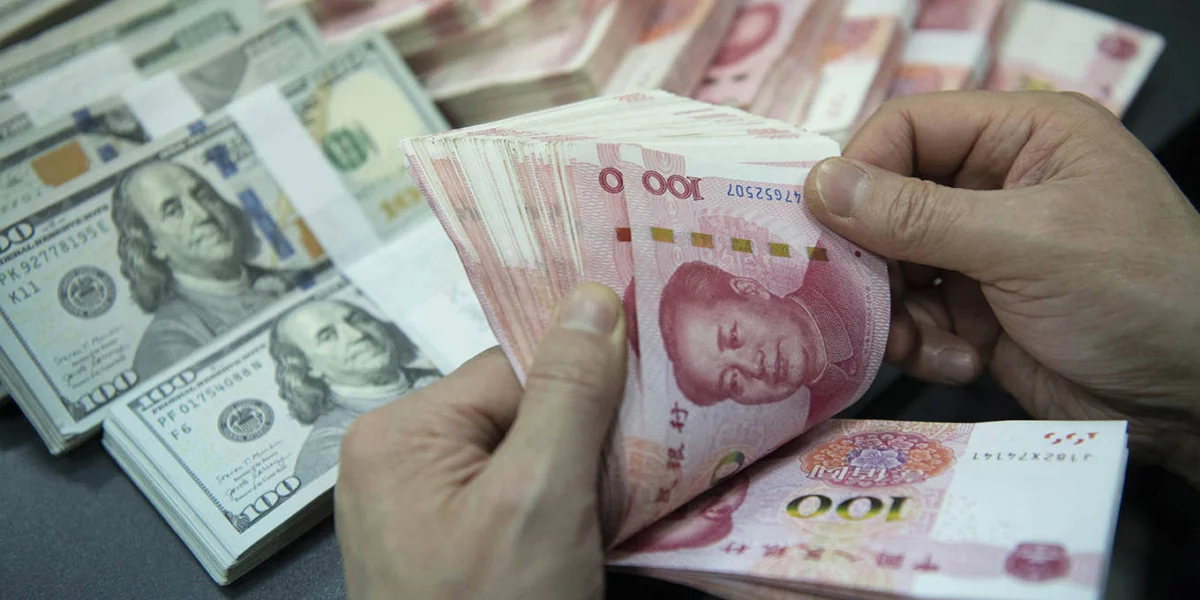
The renminbi’s appreciation would not, on its own, rebalance China’s economy and eliminate its massive surpluses. But by increasing households’ purchasing power over imports and compressing tradable-sector margins, it would raise the cost of avoiding reform.
LONDON – August 7, 2026 – The persistent undervaluation of China’s renminbi, long viewed by international observers as a mere symptom of the nation’s underlying economic imbalances and persistent trade surpluses, is being reframed by analysts as a deliberate policy choice with significant consequences. Rather than an observable marker of an ailment, the exchange rate is increasingly understood as a price point actively managed by the Chinese government, one that not only obscures underlying economic distortions but actively hinders the natural mechanisms for their correction. This strategic manipulation, according to a growing consensus among economists, amounts to a calculated policy of self-harm, perpetuating inefficiencies and delaying essential structural reforms.
The Exchange Rate as a Policy Lever
For years, the prevailing narrative surrounding China’s economic model has centered on its prodigious export capacity, fueled by a manufacturing base that benefits from low labor costs and, critically, a deliberately managed currency. The renminbi, or yuan, has historically traded at a level below its purchasing power parity, making Chinese goods cheaper for foreign buyers and imports more expensive for domestic consumers. This strategy has been instrumental in building China’s vast foreign exchange reserves and accumulating substantial trade surpluses, particularly with Western economies.
However, this approach has come at a significant cost. By suppressing the renminbi’s value, Beijing has effectively subsidized its export sector, incentivizing production for overseas markets at the expense of domestic consumption. This has led to a skewed economic structure where investment and exports dominate, while household consumption, a key driver of sustainable economic growth and rebalancing, remains relatively subdued. The suppressed exchange rate acts as a barrier to increased imports, limiting Chinese consumers’ access to a wider variety of goods and services and keeping domestic prices artificially low for tradable goods.
Historical Context and Chronology of Renminbi Management
China’s approach to managing its currency has evolved over time. Following the Asian Financial Crisis of 1997-1998, Beijing maintained a tight peg to the U.S. dollar, which was widely seen as a stabilizing force for the region. As China’s economy grew and its trade surplus ballooned in the early 2000s, international pressure mounted for the renminbi to appreciate.
In July 2005, China announced a significant shift, revaluing the renminbi by 2.1% and transitioning to a managed float system, allowing the currency to move within a band against a basket of currencies. This marked the beginning of a period of gradual appreciation. However, the pace of this appreciation has often been perceived as too slow to offset the fundamental imbalances, and at times, China has intervened in currency markets to curb further gains or even engineer modest declines.
The period leading up to and following the 2008 Global Financial Crisis saw a renewed focus on export-led growth, with some critics suggesting that China allowed the renminbi to weaken or remain largely stable to boost its export competitiveness during a global downturn. Since then, while the renminbi has experienced periods of both appreciation and depreciation, its overall trajectory has been managed with a keen eye on maintaining export competitiveness and financial stability, often at the expense of more aggressive rebalancing. More recently, in the years leading up to 2026, there have been fluctuations influenced by global economic conditions, trade tensions, and domestic policy objectives, but the underlying principle of managed exchange rate policy has remained a constant.
Supporting Data: The Persistence of Surpluses and Imbalances
The economic data paints a clear picture of the ongoing impact of the managed exchange rate. China has consistently reported substantial current account surpluses, often exceeding 3% of its Gross Domestic Product (GDP) in recent years. For instance, in 2023, China’s current account surplus reached a record high, driven by a surge in goods exports, further underscoring the reliance on external demand.
According to data from the International Monetary Fund (IMF) and the World Bank, China’s household consumption as a percentage of GDP has remained significantly lower than in most advanced economies and other developing nations. While advanced economies typically see household consumption contribute 50-60% of GDP, China’s figure has hovered around 35-40% in recent years. This stark difference highlights the extent to which the economy is driven by investment and net exports, a pattern directly influenced by exchange rate policy.
Furthermore, the profitability of China’s tradable sector, particularly its export-oriented manufacturing, has been maintained through a combination of low input costs, including labor and energy, and the competitive advantage afforded by the undervalued currency. This has created a disincentive for these companies to invest in innovation, upgrade their technology, or shift towards higher-value production.
Analysis of Implications: The Cost of Avoiding Reform
The argument that an appreciated renminbi would force China to confront its economic imbalances stems from several key mechanisms:
- Increased Purchasing Power for Households: A stronger renminbi would make imports cheaper for Chinese consumers. This would not only expand the variety of goods and services available to households but also increase their real purchasing power. With more affordable imported goods, consumers would have a greater incentive to spend, thereby boosting domestic demand and shifting the economic structure away from its heavy reliance on exports.
- Compressed Tradable Sector Margins: Conversely, a stronger renminbi would make Chinese exports more expensive for foreign buyers. This would reduce the profit margins for Chinese exporters, particularly those operating in highly competitive global markets. Faced with diminished profitability, these companies would be compelled to seek efficiencies, invest in productivity improvements, and potentially diversify their business models.
- Higher Cost of Avoiding Reform: The sustained undervaluation of the renminbi has allowed China to postpone difficult but necessary structural reforms. These reforms include measures to boost domestic consumption, such as strengthening social safety nets, improving income distribution, and encouraging greater private sector investment in services. By making exports artificially cheap and imports artificially expensive, the exchange rate policy has masked the underlying weaknesses in the domestic economy, reducing the urgency for these reforms. An appreciated currency would remove this "mask," making the need for such adjustments more apparent and the cost of inaction higher.
Official Responses and International Pressure
While the Chinese government has historically emphasized its right to manage its currency for domestic economic stability and development, the international community, including major trading partners like the United States and the European Union, has consistently called for greater exchange rate flexibility and appreciation.
The U.S. Treasury Department, in its semi-annual currency report, has at various times labeled China a "currency manipulator" or placed it on a "monitoring list," citing concerns about the renminbi’s undervaluation and its impact on global trade imbalances. These designations, while not always leading to immediate sanctions, exert significant diplomatic pressure and can influence international financial institutions’ assessments of a country’s economic policies.
Beijing’s official stance has typically been that the renminbi’s exchange rate is determined by market forces, albeit within a managed framework, and that its appreciation must be gradual and sustainable to avoid disrupting economic growth and financial stability. They often point to efforts to liberalize capital accounts and reform state-owned enterprises as evidence of their commitment to rebalancing, arguing that currency appreciation alone is insufficient.
Broader Impact and Implications for Global Economy
The continued undervaluation of the renminbi has profound implications not only for China’s domestic economy but also for the global economic landscape.
- Trade Imbalances: Persistent large trade surpluses for China contribute to trade deficits for its partners, potentially leading to protectionist pressures and trade disputes. A more appreciated renminbi could help to mitigate these imbalances, fostering a more equitable global trade environment.
- Global Demand: By suppressing domestic consumption, China’s exchange rate policy effectively relies on external demand to drive its growth. This can create vulnerabilities for the global economy, as China’s economic performance becomes increasingly tied to the fortunes of its trading partners. A rebalanced China, with stronger domestic demand, could become a more stable and significant engine of global growth.
- Investment Flows: A stronger renminbi could also influence global investment flows. As imports become cheaper and domestic purchasing power increases, China could become a more attractive destination for foreign investment in consumer-oriented sectors. Conversely, the reduced profitability of its export sector might spur Chinese companies to invest more overseas in higher-value activities.
- Geopolitical Ramifications: Economic imbalances, often exacerbated by currency policies, can have significant geopolitical ramifications. The ongoing trade tensions between the U.S. and China, for instance, have been partly fueled by disputes over trade practices and currency valuations. A more balanced economic relationship, facilitated by a more realistic renminbi exchange rate, could contribute to a more stable and cooperative international order.
In conclusion, the debate over the renminbi’s exchange rate is far more than a technical economic discussion. It is central to China’s long-term economic strategy, its integration into the global economy, and its ability to transition from an export-driven growth model to one based on sustainable domestic consumption and innovation. While the path to rebalancing is complex and multifaceted, the strategic management of the renminbi remains a critical, albeit often contentious, element in this ongoing transformation. The question for 2026 and beyond is whether Beijing will embrace the catalyst for reform that currency appreciation represents, or continue to bear the self-imposed costs of maintaining an artificially suppressed exchange rate.
